
A review on Pakistani telefilm, Javaid Shampoo (2004). This telefilm is directed by Bilal Minto & Faisal Rehman. Javaid Shampoo was broadcasted on Indus TV channel in 2004.
+ Crew
- Directed by Bilal Minto & Faisal Rehman
- Written by Bilal Minto & Faisal Rehman
- Cinematography by Mansoor Malik & Khurram Butt
- Edited by Ahmer Khan & Fabi Khan
- Produced by Turun Talkie Presentation & Niu Media Production
+ Note
Javaid Shampoo is a post 9/11 view of Pakistan where the telefilm explores class mobility, brain drain and disillusionment of the young adults from a chaotic political landscape. As the disparity engulfs the youth, they turn to alcohol, pessimism and cynicism for solace. Previously, Bilal Minto & Faisal Rehman have written and directed another telefilm World Ka Center (2002) which was broadcasted at Geo TV.
+ Main Cast
- Mehr Tarar
- Sahir
- Wajahat Malik
- Zainub Abbas
- Saniya Ansari
- Bilal Minto
- Murtaza Razvi
- Ibrahim Jamal Khan
- Nasreen Qureshi
- Asim Bokhari
- Tasnim Kausar
- Ghayur Akhtar
+ Plot
Javaid Shampoo is a story centered around several main protagonists from completely different social classes. Set in the city of Lahore, the telefilm follows a young man whose family sells counterfeit shampoos of famous brands. Eventually, Javaid is hired by a private jewelry artist and inadvertently, an entry to the urban high society class. With Javaid stuck between a rock and a hard place, things start to spiral out of control.
+ High Points
i – Javaid Shampoo is undoubtedly a daring and unique film of its time. One could frame it as a time capsule of the Pakistani youth in early 2000s. It explores the angst and frustration of young and older alike from different social classes of Lahore. The anxiety and disillusionment from their homeland and religion sparks an intriguing discourse which leads from rebellion to utter numbness.
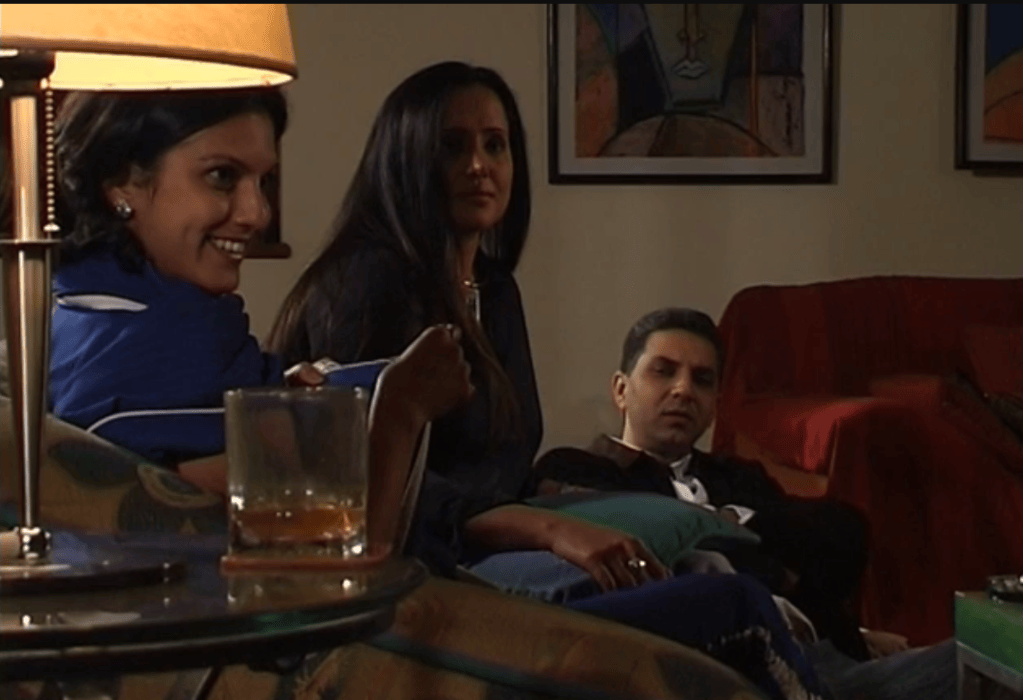
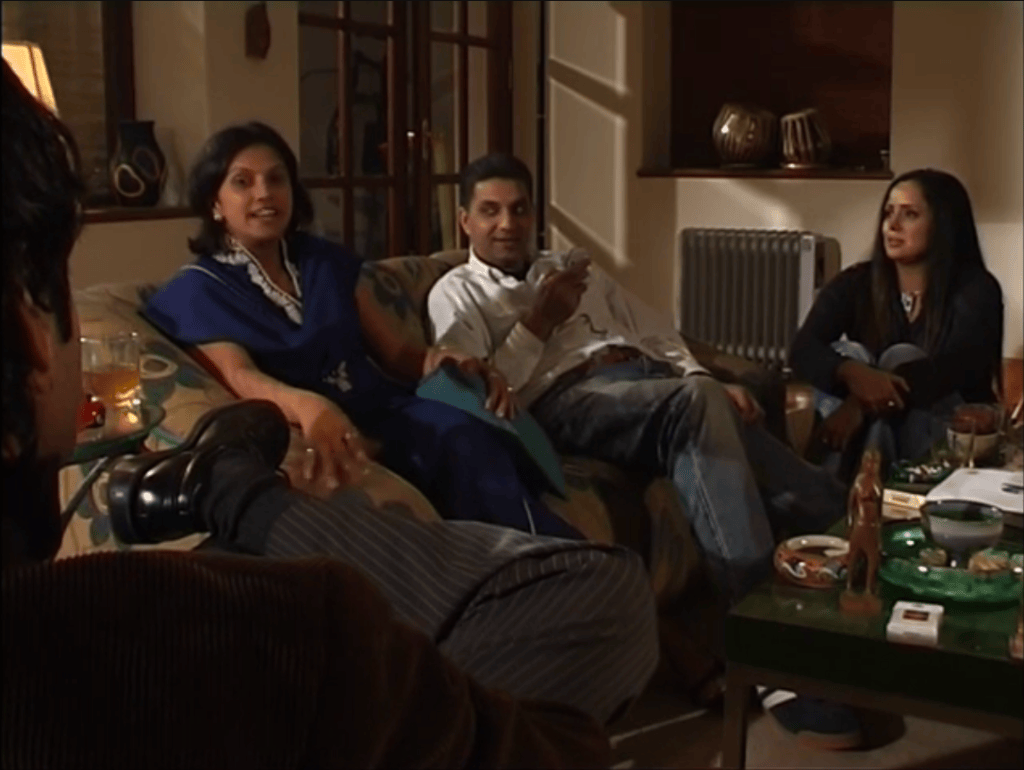
ii – The large cast of characters are interesting to explore as each individual has a unique brand of thoughts and conclusions to solving the world’s problems. As they gather at a drawn out party filled with alcohol and anxiety, they begin to discover their deep, embedded frustrations with their societal issues. And as the night further progresses, they desperately start lashing out at each other for some moral comfort and intellectual validity.
+ Low Points
i – While one can appreciate the ideas and motivations behind Javaid Shampoo, the telefilm is executed very poorly. The cinematography is erratic and confusing, there are audio issues throughout its runtime, music is blasting in the foreground, making it difficult to understand what is being said. Frankly, I have seen student films with more technical calibre than this.
ii – The script is undercooked with no sense of pacing as the telefilm flies from one scene to the next, bombarding information too fast and erratic for the audience to process. Furthermore, the telefilm is very dialogue heavy, cramming too much unnecessary information which does not progress the plot at all. The script could have easily gotten rid of some characters as they play no major role in the overall premise.
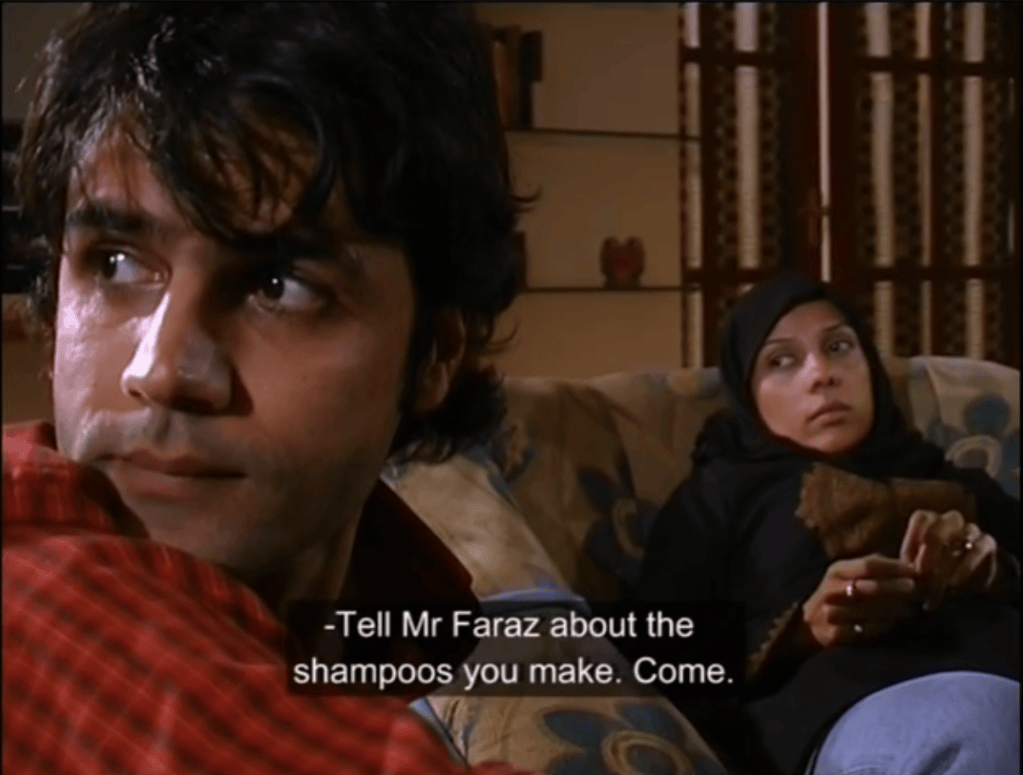
iii – There are countless abrupt cuts of television randomly playing in the foreground with no pay off at the end. This ranges from the film Chucky’s Bride, an interview with the late Benazir Bhutto, Geo News and Star Plus soap operas. They are jarring, distracting and completely unnecessary to the plot.
iv – The telefilm is also frustrating in understanding what message it is trying to convey to us. That the corruption of youth is inevitable? That there is no accountability for the wicked? As previously mentioned, it’s an interesting premise but execution fails on almost every level.
v – Some of the dialogue also feels unnatural. At one point, the female lead Saba encourages Javaid to try “mugging” Lahories on the street to help his financial vows. Is this supposed to be satire? Why would someone from a higher social class encourage a working class man to rob when they could easily be the next target? Apparently it is supposed to be some clever commentary that seems only visible to the filmmakers.
vi – Some scenes play no part in advancing the plot and feel like fillers to fulfill its telefilm runtime. For example, the audience is forced to sit through a modeling photoshoot that goes on for five minutes with no reason for its inclusion in the film.
+ Overall
I wish I could claim Javaid Shampoo to be this hidden cult, indie gem of the 2000s Pakistan television that never got the recognition that it deserved but unfortunately, it fails to live up to its expectations on every level.