TV series

Mr. Khan’s Review on Raqeeb Se – Episode XVI (2021)

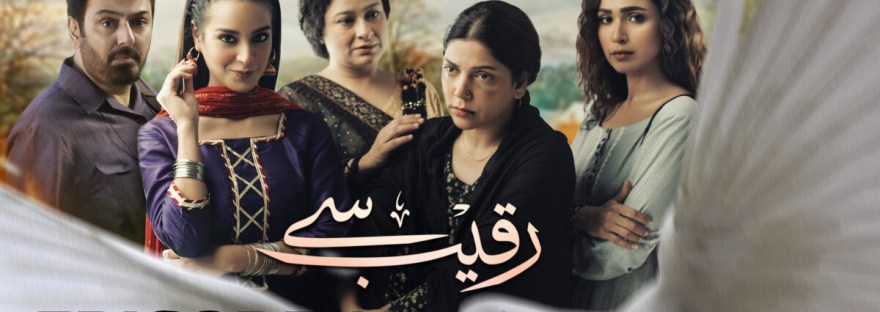
A review on Pakistani drama TV series, Raqeeb Se – Episode 16 (2021). The new TV series is directed by Kashif Nisar and is a production of Momina Duraid Productions. Raqeeb Se is a HUM TV Production.

(Note: If you’ve already read the review of the previous episode, you can skip directly ahead to the High points section).

+ Crew

  • Directed by Kashif Nisar
  • Written by Beegul
  • DOP by Hassam Mairaj
  • Music Composed by Hadiqa Kiani
  • Produced by Momina Duraid Productions

+ Note

Raqeeb Se is the newest HUM TV Production and is once again the collaboration of the award winning Writer/ Director duo of Bee Gul and Kashif Nisar. 

The title of the show is heavily inspired by a poem from the legendary poet Faiz Ahmed Faiz when the young poet fell in love with a girl next door in Sialkot. But alas, as luck would have it, she one day unexpectedly left the city, only to be reunited years later when Faiz was already an established poet in the circles of Urdu literature. This encounter inspired Faiz to write a poem “Raqib Se!”. The backstory of this poem plays a crucial role in the premise of the show.

 + Main Cast

  1. Hadiqa Kiani as Sakina
  2. Noman Ijaz as Maqsood
  3. Sania Saeed as Hajra
  4. Faryal Mehmood as Insha
  5. Iqra Aziz as Ameera
  6. Saqib Sameer as Rafiq

+ Plot

Raqeeb Se is a call of Maqsood’s dark past that could potentially destroy his present life. In order to escape her abusive husband, Sakina, along with her daughter Ameera, flees from her village to find shelter at her former lover’s place, Maqsood. Unfortunately Maqsood, who still holds a grudge against Sakina’s past actions, refuses to aid her in her most dire situation. But his wife, Hajra, seems much more sympathetic to the situation and lets Sakina stay at their home till things are figured out for the future.

But can Sakina be trusted to stay out of Maqsood’s life or will they be tempted to rekindle their lost love and in the process, destroy what Maqsood and his wife Hajra have built together?

+ High Points

i – Even after Insha’s nika, she still feels alienated from the rest of the family. Maqsood and Hajira are, at this point, completely obsessed with the situation of Sakina. So much in fact that they are neglecting their own child in the process. That is some clever storytelling, both Noman Ijaz and Sania Saeed were fantastic in this episode.

ii – The continuing tensions between Maqsood and Ameera is a great way to show how young minds can easily be fascinated (or abused) as they are incredibly impressionable. The bedroom scene was brilliantly handled with Iqra Aziz’s performance living up to the task at hand. Well known for being such a chatterbox, Maqsood is probably the only person who could leave Ameera for loss of words.

iii – The change in scenery from city to village is always a nice visual touch to keep the audience’s attention going. The location scouting of the show has always been top notch and feels quite authentic.

iv – (SPOILER ALERT! If you would like to avoid it, please skip to the Low Points section).

This episode finally makes the move to let Sakina go back home to her abusive husband. Of course, morally it’s an appalling move but the show had been teasing this for so long and could bring up potential interesting plot elements for the show. Sakina would rather sacrifice her well being in order to disappear from Maqsood’s life once and for all. The obverse relationship dynamic between Sakina and Rafiq Ali is brilliantly handled. On one hand, Rafiq wants to treat her nicer by buying her food at the train station but still will never let go of the notion that she is his property and is now being “returned” back to him. Rafiq is a despicable, cowardly man and for once, the show brought this to the forefront with such tenacity.

 + Low Points

i – One of the annoying things that Raqeeb Se does is that after a cliffhanger from the last episode, there is no pay off to it. The last episode ended with Hajira about to reveal her past till Maqsood enters the room and in this episode, that scene is completely ignored. No reaction from Insha. Nothing. As if that scene never happened. She at least should have protested why she has not been given any answers to mother’s past yet.

ii – Although the performances are good in this episode, not much noteworthy happens. Still the same old problems. No real plot or character exploration.

iii – The sporadic fight between Insha and Abdul was awkwardly presented. I can understand if Insha is the one who instigates it since she has a lot of frustrations regarding her family’s secrets but why Abdul? Why the sudden jealousy to her cousin Kashif? Has the nika ceremony instantly made him a grumpy husband?

+ Overall

Episode 16 was good but nothing extraordinary in terms of character development. Still, the performances were great enough to breeze through the episode.

 Rate: 3.0 out of 5 stars

TV series, Uncategorized

Mr. Khan’s Review on The Falcon and The Winter Soldier (2021)

A review on American Television miniseries, The Falcon and The Winter Soldier (2021). The 6 episode mini-series is directed by Kari Skogland and stars Anthony Mackie as Sam Wilson/ The Falcon and Sebastian Stan as James “Bucky” Barnes/ The Winter Soldier. The show is a continuation of the saga from the Marvel Cinematic Universe and is a Disney Plus Original series.

+ Crew

  • Directed by Kari Skogland
  • Cinematography by P.J. Dillon
  • Music by Henry Jackman
  • Produced by Ariella Blejer and Dawn Kamoche
  • Created by Malcolm Spellman
  • Production by Marvel Studios
  • Distributed by Disney Platform Distribution 

+ Note

The idea for The Falcon and The Winter Soldier was conceived not long after 2018 where the creators at Marvel Studios felt that side characters in the MCU could be further explored with the launch of Disney’s very own streaming service. The mastermind behind the Marvel Cinematic Universe Kevin Feige was fully onboard with the idea of Falcon and Winter Soldier having their own spinoff show. The previous films such as Captain America: The Winter Soldier (2014) and Captain America: Civil War (2016) displayed the talents of Anthony Mackie and Sebastian Stan budding heads together and starring their own “buddy cop”-esque show. But the show wanted to explore much beyond Superhero drama. As did Captain America: The Winter Soldier, the show was keen on exploring relevant, political topics of the present such as race, social class, refugees and the price for freedom. The Falcon and The Winter Soldier is also an exploration of the aftermath of Avengers: Endgame and its consequences on the rest of the humanity. 

The show is the second MCU TV series after WandaVision earlier in the year. The Falcon and The Winter Soldier was met with fairly positive reviews from critics and fans alike.

+ Main Cast

  1. Sebastian Stan as James “Bucky” Barnes / Winter Soldier 
  2. Anthony Mackie as Sam Wilson / Falcon 
  3. Wyatt Russell as John Walker 
  4. Erin Kellyman as Karli Morgenthau
  5. Danny Ramirez as Joaquin Torres
  6. Daniel Brühl as Helmut Zemo
  7. Emily VanCamp as Sharon Carter

+ Plot

After the retirement of Steve Rogers as Captain America, a void has appeared as to who will take up the mantle of the Stars and Stripes once again. Due to respect for Steve Rogers, Sam Wilson aka Falcon refuses the honor and decides to continue on as The Falcon. Meanwhile, Bucky Barnes aka The Winter Soldier is still suffering from his mysterious past as the Red Spy and is trying to search for answers in order to redeem himself. But when a new threat of Super Soldiers emerge and threaten to destroy the stability of the country, it is up to Falcon and Winter Soldier to join forces and save the day once again.

+ High Points

i – I have to admit, I didn’t have a lot of hope going into this show. As WandaVision’s premise intrigued me right from the get go, The Falcon and The Winter Soldier just felt retreading previous waters that MCU has displayed onto the silver screens time and time again. In short, this show felt like filler content for Disney’s new streaming service. But surprise surprise, the show turned out better than expected. The story pacing was good, there were some pivotal character development moments, some new characters also turned out great and could have a lot of potential as the MCU progresses into its Phase 4. Although the conclusion was a disappointment, the show is still definitely worth a watch if you find Marvel films entertaining and/ or have been a fan of the Captain America/ Russo Brothers espionage/ superhero action films.

SPOILER ALERT!: (From here on out, there will be spoilers for the show as it is impossible to discuss the plot points without spoiling anything. If you still haven’t seen the show and would like to see it, you can skip directly to Overall section)

ii – Ironically, the show is at its best when there are no action scenes, The banter/ character building moments between Falcon and Bucky are some of the best moments of the series. Both actors play well off one another and have fun chemistry in front of the camera. The Falcon and The Winter Soldier is essentially a buddy cop show between a clean cut protege of Captain America vs an ex enemy spy with a dubious past come together to fight a common threat and in the process, learn and inspire from each other’s flaws and merits.

iii – There are some story beats in The Falcon and The Winter Soldier that I just find excellent. Namely, John Walker aka the new Captain America. His story arc from introduction up until the 5th episode was excellently handled. The conflicts that he had to face in order to live up to the legacy of Steve Rogers is unfair but yet very real. Which makes it even more natural for him to succumb to the dark side. He is mostly never appreciated by his superhero counterparts and needs to improve fast in order to fight hand to hand combat with antagonists with super soldier serums. His evolution from a clean cut boy scout to eventually murdering someone in cold blood was brilliantly written (up till the last episode which I will get to soon).

iv – Daniel Brühl as Baron Zemo was just so much fun to watch. He provided a bit of levity but with a tragic, dramatic edge to it. Although in Captain America: Civil War, he was still mourning the loss of his family but now, he has learned to live with his pain and has a dark yet nihilistic look on life now.

v – The secrets uncovered behind the Super Soldier experiment and its continuation well into the 50s was a neat way to add layers to the overarching plot. The whole subplot of a Black Captain America in the first few episodes was great but entirely plausible look on America and its treatment of non-white citizens. The MCU may not be known for political commentary but when done right, can be incredibly rewarding.

vi – As was WandaVision, the production of the show is excellent and on par with the MCU feature length films. In comparison with DC’s CW Network shows are night and day. The production budget behind these shows are clear evidence that Disney has full faith in these shows continuing on the Marvel Cinematic Universe on a streaming platform.

+ Low Points

i – The final episode. The show had such a great setup but was squandered away for a safe, dull payoff. The action heavy scenes made the episode ironically dull to watch, the cringeworthy speech made by Falcon at the end was laughable at best and the Sharon Carter twist near the end was just… meh. Marvel really needs to learn how to finish a show on a high note. And that doesn’t necessarily mean that it all should be action driven nonsense. 

ii – John Walker’s turn to the “good side” at the end made absolutely no sense in terms of his previous character development. It felt forced and unnatural. The reason John Walker was an interesting character to begin with was his fall from grace, his muddled sense of morality, his failure to live up to the legacy of Steve Rogers as Captain America. We already have Falcon as Captain America now, why do we need another one (or as the show names him, U.S. Agent.. ugh). Without a shadow of a doubt, John Walker should have been revealed to be the main protagonist! Instead, we got stuck with….

iii –  A ginger girl who feels that her people have been mistreated and seeks revenge on a global scale. I appreciate that Marvel is trying something new but Erin Kellyman as Karli Morgenthau just unfortunately fails as the main antagonist of the show. There needed to be some more personal stakes at hand. In The Winter Soldier conclusion, Captain America had to face his long lost, brainwashed comrade Bucky Barnes in a final epic battle. They had personal history together which made the conclusion so much more entertaining to watch. And this is exactly the shoes John Walker could’ve filled in for an epic finale. Karli has nothing much going for her and is a complete letdown to the rest of the show.

iv – Even though I praised the production value above, when it comes to creativity, it is definitely passe and insipid. There is not one single sequence or shot that I could remember that I found inspiring. The visuals are pretty much forgettable. And also the shaky cam during fight scenes don’t help.

v – Which brings me to the fight choreography. I wish I could comment on it if I actually understood what was happening during those fight scenes. A single shot stays not long enough for the viewer to grasp exactly what is happening. A barrage of quick edits makes the visuals disorienting and a massive blur at the end of the scene.

vi – I sincerely feel that Marvel needs to move slightly away from the status quo. Take more risk with their properties. Just as Guardian Of The Galaxy or the Avengers: Infinity War were. It will be evidently a lot more rewarding in the long run. Many non Marvel fans complain that the ‘Marvel formula’ never really gives room for creativity. And judging by this show, I can’t disagree with them.

+ Overall

Even though The Falcon and The Winter Soldier starts off very promising, all the hype gets fizzled out with a safe but disappointing conclusion to the show. But regardless of its obvious shortcomings,The Falcon and The Winter Soldier is still an entertaining watch.

Rate : 3.0 out of 5 stars

TV series

Mr. Khan’s Review on Raqeeb Se – Episode XV (2021)

A review on Pakistani drama TV series, Raqeeb Se – Episode 15 (2021). The new TV series is directed by Kashif Nisar and is a production of Momina Duraid Productions. Raqeeb Se is a HUM TV Production.

(Note: If you’ve already read the review of the previous episode, you can skip directly ahead to the High points section).

+ Crew

  • Directed by Kashif Nisar
  • Written by Beegul
  • DOP by Hassam Mairaj
  • Music Composed by Hadiqa Kiani
  • Produced by Momina Duraid Productions

+ Note

Raqeeb Se is the newest HUM TV Production and is once again the collaboration of the award winning Writer/ Director duo of Bee Gul and Kashif Nisar. 

The title of the show is heavily inspired by a poem from the legendary poet Faiz Ahmed Faiz when the young poet fell in love with a girl next door in Sialkot. But alas, as luck would have it, she one day unexpectedly left the city, only to be reunited years later when Faiz was already an established poet in the circles of Urdu literature. This encounter inspired Faiz to write a poem “Raqib Se!”. The backstory of this poem plays a crucial role in the premise of the show.

 + Main Cast

  1. Hadiqa Kiani as Sakina
  2. Noman Ijaz as Maqsood
  3. Sania Saeed as Hajra
  4. Faryal Mehmood as Insha
  5. Iqra Aziz as Ameera
  6. Saqib Sameer as Rafiq

+ Plot

Raqeeb Se is a call of Maqsood’s dark past that could potentially destroy his present life. In order to escape her abusive husband, Sakina, along with her daughter Ameera, flees from her village to find shelter at her former lover’s place, Maqsood. Unfortunately Maqsood, who still holds a grudge against Sakina’s past actions, refuses to aid her in her most dire situation. But his wife, Hajra, seems much more sympathetic to the situation and lets Sakina stay at their home till things are figured out for the future.

But can Sakina be trusted to stay out of Maqsood’s life or will they be tempted to rekindle their lost love and in the process, destroy what Maqsood and his wife Hajra have built together?

+ High Points

i – Confrontations! Finally! It’s been a long time coming. From the cliffhanger from the last episode to the beginning of episode 15, Sakina is now under scrutiny from Maqsood’s side of the family. The scene was engaging, dramatic and helluva entertaining way to kickstart the episode!

ii – What is always great also about Raqeeb Se’s supporting cast is that although they are undoubtedly colorful, they are never over the top with their mannerisms. The older brother/ politician and his sassy Punjabi wife are (in their own respect) a godsend to the show. They bring a much needed levity without overstaying their welcome. This is where a lot of Pakistani dramas fail to find a balance between drama and timid comedy but Raqeeb Se nails it to almost perfection. 

iii – For once, Hajira also displays slightly more character than just repeating how great Maqsood sahib is. There were a couple of great interactions of hers with the rest of the cast including one where she is found frying a fresh omelette for her husband when even though there is plenty left on the kitchen table. These sort of subtle actions show that perhaps Hajira is somewhat suffering from emotional Stockholm Syndrome. She has to always subconsciously please her husband and show that she can also reach the level where Maqsood has placed Sakina on.

iv – Episode 15 did display some great Mano-a-Mano interactions, especially the one with Maqsood and his older brother. Just a mere few dialogue between them shows how different characteristics they have from one another. Also the brother sticking his political campaign sticker on Maqsood’s shirt was kind of hilarious. The show is not really known for comedy but such short gags are always welcome.

v – Once again, a strong cliffhanger to end the episode. Hopefully, the viewers will be receiving a few answers regarding Hajira’s past. And honestly, its way overdue at this point of the show. I would be extremely disappointed if we again end up with nothing in the next episode. 

 + Low Points

i – The whole flashback scene with Maqsood’s brother and Rafiq Ali randomly visiting him was kind of awkwardly executed. It took me a while to realise that it was a flashback and not the present time. Why didn’t Maqsood’s brother just explain him that? The audience is intelligent enough to understand that without any visual depiction of Rafiq Ali visiting him. Felt a bit unnecessary.

ii – For once, Sakina stood up for herself…. But it was incredibly brief. And then, she went once again into her self-hating mode. Let Sakina’s character grow more, let her journey have a purpose in the end. I hope the creative team has a good conclusion in mind for her character because she does deserve it.

iii – In this particular episode, Maqsood doesn’t come off likeable at all. It almost feels like he has taken Hajira as a hostage. In the episode, Maqsood literally states that he “doesn’t need anyone permission to marry Sakina… except yours”. It was a bit of relief that he mentioned that last part but it almost felt like an afterthought for Maqsood. Also later in the episode, Maqsood asks Hajira if she keeps tabs on him when it comes to him and Sakina. Hajira swiftly replies negatively but Maqsood then retorts “Maybe you should”. 

 I suppose the question is if the show wants us to like Maqsood for his nobility or if we should question his morality. Up till now, Raqeeb Se has not shown itself anything against our main protagonist.

iv- After a great, dramatic start to the episode, the rest of it just felt a bit tame and didn’t had too much to contribute to the storyline. Just a minor complaint.

+ Overall

With each passing episode, Raqeeb Se is slowly but surely, improving and becoming must see TV. Let’s hope that the trend continues till the end.

 Rate: 3.5 out of 5 stars

TV series

Mr. Khan’s Review on Raqeeb Se – Episode XIV (2021)

A review on Pakistani drama TV series, Raqeeb Se – Episode 14 (2021). The new TV series is directed by Kashif Nisar and is a production of Momina Duraid Productions. Raqeeb Se is a HUM TV Production.

(Note: If you’ve already read the review of the previous episode, you can skip directly ahead to the High points section).

+ Crew

  • Directed by Kashif Nisar
  • Written by Beegul
  • DOP by Hassam Mairaj
  • Music Composed by Hadiqa Kiani
  • Produced by Momina Duraid Productions

+ Note

Raqeeb Se is the newest HUM TV Production and is once again the collaboration of the award winning Writer/ Director duo of Bee Gul and Kashif Nisar. 

The title of the show is heavily inspired by a poem from the legendary poet Faiz Ahmed Faiz when the young poet fell in love with a girl next door in Sialkot. But alas, as luck would have it, she one day unexpectedly left the city, only to be reunited years later when Faiz was already an established poet in the circles of Urdu literature. This encounter inspired Faiz to write a poem “Raqib Se!”. The backstory of this poem plays a crucial role in the premise of the show.

 + Main Cast

  1. Hadiqa Kiani as Sakina
  2. Noman Ijaz as Maqsood
  3. Sania Saeed as Hajra
  4. Faryal Mehmood as Insha
  5. Iqra Aziz as Ameera
  6. Saqib Sameer as Rafiq

+ Plot

Raqeeb Se is a call of Maqsood’s dark past that could potentially destroy his present life. In order to escape her abusive husband, Sakina, along with her daughter Ameera, flees from her village to find shelter at her former lover’s place, Maqsood. Unfortunately Maqsood, who still holds a grudge against Sakina’s past actions, refuses to aid her in her most dire situation. But his wife, Hajra, seems much more sympathetic to the situation and lets Sakina stay at their home till things are figured out for the future.

But can Sakina be trusted to stay out of Maqsood’s life or will they be tempted to rekindle their lost love and in the process, destroy what Maqsood and his wife Hajra have built together?

+ High Points

i – Great episode! The pacing, interactions between characters, the continuing tensions between Maqsood and his lover(s); everything worked out quite well. After numerous filler episodes, Raqeeb Se is finally now becoming a weekly rewarding experience for its viewers.

ii – It’s always amusing to see Ameera interact with her crush Maqsood as she tries her utmost best to engage Maqsood in a conservation of his interests (or at best, make him laugh). Its also fascinating that Ameera is probably the only one that can bring out actual human emotions locked within Maqsood. Noman Ijaz and Iqra Aziz’s performances worked great off one another and were involved in some of the best scenes in this episode.

iii – It’s charming to see ‘lover’s quarrel’ between Insha and Abdul. The Tea house scene was short but a gratifying way of them teasing but in the process, displaying love for one another.

iv – In this episode, Sakina is depicted a lot more character without needless dialogue. The dramatic Mother/ daughter interaction also was powerful and impactful to the overall narrative of the show.

v – Once again, the cinematography and production of the episode was excellent. What I love about Raqeeb Se is that the show is not afraid to let certain scenes play out without heavy use of closeups. Sometimes a wide shot can capture distinctive body movements that close ups can’t. A lot of credit should go to Hassam Mairaj and his crew. Raqeeb Se is still one of the most unique looking shows out there. Fantastic work!

vi – Great cliffhanger! Another episode that makes you impatient till the next one comes out. 

 + Low Points

i – One of the potential flaws that is obvious in the show right now is unfortunately the worship of Maqsood sahib. Up until now, the show has put Maqsood on a high pedestal of morality; a man who is protecting his ex lover even though she broke her heart years ago. That is the level of selflessness that Maqsood pertains within himself. But is he that noble and admirable? Apparently all three women are probably in love with him (for some reason) and especially for Ameera, the show has never really given a valid reason why. 

ii – Hajira is still by far the most unsympathetic character on the show and this episode changes absolutely nothing about it. There still lack answers as to why she is so overly passive when it comes to her husband and his ex lover. The answers probably lie in the final episodes but up till now, there is not much content that could make the viewer empathize with her.

iii – Once again, we get an obligatory scene of Sakina and Hajira where she painstakingly explains to the audience how Maqsood has only loved Sakina his whole life. The show can easily utilize that TV time to further develop Hajira’s backstory and motivations.

+ Overall

Fourteen Episodes in, Raqeeb Se is finally picking up steam with its narrative pacing and characters. Makes one quite curious how all of this will conclude.

 Rate: 3.5 out of 5 stars

TV series

Mr. Khan’s Review on Mohabat Subh Ka Sitara Hai (2013)

A review on Pakistani drama TV series, Mohabat Subh Ka Sitara Hai (2013). The 23 Episode limited TV series is directed by Sakina Samo and is a Momina Duraid production. Mohabat Subh Ka Sitara Hai was aired on HUM TV from Dec 2013 till May 2014.

+ Crew

  • Directed by Sakina Samo
  • Written by Umera Ahmed
  • Edited by Tanveer Alam and Afzal Fayaz
  • DOP by Ilyas Kashmiri
  • Music Composed by Shani
  • Opening Theme song “Ye Jo Ik Subha Ka Sitara” by Harshdeep Kaur
  • Produced by Momina Duraid

+ Note

Mohabat Subh Ka Sitara Hai is a case study on family politics and how wealth could potentially always be the root cause of Evil. Sanam Jung plays the part of Romaisa who, due to her father’s valuable lessons in Life, is apparently left uncorrupted by envy and greed that plagues humanity since the beginning of time. When Romaisa was young, her father told her the tale of the mysterious morning star. Even though the star is always visible, one cannot see it just through vision but with the aid of their heart. Throughout the show, Romaisa is constantly in search of that star, the one that could finally bring peace and happiness in her Life.

At 3rd Hum Awards in 2014, Mohabat Subh Ka Sitara Hai won ‘Best Actor” by Mikaal Zulfiqar and “Best Supporting Actress” by Mansha Pasha.

 + Main Cast

  1. Sanam Jung as Romaisa Sikandar
  2. Mikaal Zulfiqar as Nabeel Sikandar
  3. Adeel Hussain as Zeeshan Sikandar
  4. Mansha Pasha as Aliya, Romaisa’s aunt daughter.
  5. Mira Sethi as Rabia, Zeeshan ex-wife
  6. Farah Shah as Romaisa’s Khala

 + Supporting Cast

  1. Naeem Tahir as Nabeel and Zeeshan’s father
  2. Aini Zaidi as Nabeel and Zeeshan’s Mother
  3. Ali Tahir as Nabeel’s elder brother
  4. Tara Mehmood as Nabeel’s brother wife
  5. Hira Tareen as Hamna, Nabeel’s sister and Romaisa’s sister in law
  6. Hassan Noman as Hassan, Hira’s husband and Nabeel’s brother in law
  7. Sania Shamshad as Nayab, Nabeel brother’s wife sister (Guest Appearance/cameo)
  8. Rashid Farooqi as Romaisa’s father (only flashbacks)
  9. Kiran Fatima Bader as Jameela, Romaisa’s sister friend

+ Plot

Romaisa (played by Sanam Jung) is a young, orphan girl who, after the death of her father, is adopted by her aunt and her daughters. But life has never been easy for Romaisa as, due to her pure heart and kindness, is always taken advantage of by the people who surround her. In comes Nabeel (Mikaal Zulfiqar), a wealthy businessman who, due to Romaisa’s innocence and purity, falls head over heels in love with her. But as Life would have it, things do not go according to plan and Romaisa needs to search for that “morning star” so that she could finally achieve inner peace and happiness in her Life.

+ High Points

i – Mohabat Subh Ka Sitara Hai is fantastic in its execution when it comes to characterizations. Each of the main cast and side characters’ motivations are very well defined and depicted onscreen for the audience. And each character is not just a stereotypical version of themselves but rather, have subtle complexities within them. 

ii – Speaking of subtle complexities, the family drama is one of the key aspects of the show. And Mohabat Subh Ka Sitara Hai’s star shines the brightest when it comes to interaction with various family members. From the confident and brash to the weak and incompitent, the Sikandar family has it all. And the show was always compelling when the episodes solely focused on these integral dynamics between the siblings and in laws.

iii – Even though the performance was not always consistently flawless, Adeel Hussian as Zeeshan did a decent job in conveying his character to its fullest potential. As the story progressed, it became obvious that Zeeshan had to play a crucial part later in the show and the performance was more than up for the task.

iv – As a viewer, it’s also exciting to see how people from different social classes massively differ from one another. From the brash, sassy aunt of Romaisa and her daughters to the timid but cruel family members of the Sikandar family. And on some level, they still all seem very human. Credit here should go to Umera Ahmed’s writing and how her strength always lies in capturing different aspects of life within the city of Karachi.

v– The whole “Cinderella” story of Romaisa and her cruel Stepmother/ sisters who eventually meets her prince charming Nabeel was meretriciously integrated into the plot of the show. Mohabat Subh Ka Sitara Hai does have a very strong fairytale vibe to it and plays off seamlessly through its various characters and situational drama.

vi– An argument could be very well made that it is in fact the supporting cast of the show that makes it so compelling to watch. While the main cast does come off as bland and uninteresting at times, supporting characters such as Romaisa’s Aunt (Farah Shah) or Mansha Pasha who bring some life into the show.

 + Low Points

i – While the setup is interesting and the supporting cast is always fun to watch, Mohabat Subh Ka Sitara Hai has major flaws when it comes to the pacing and execution of the show. Firstly, the drama series did not need to be 23 episodes long. The length does not justify the time the viewer invested into the show, especially during the later half where the plot progression seemingly comes to a screeching halt. Almost a half of the supporting cast just disappears from the show and the themes of wealth and respect became incredibly repetitious till the last episode. Mohabat Subh Ka Sitara Hai starts off promising but is arguably a let down by the end.

ii – When it comes to the lead protagonist, the casting and writing of that character can either make or break the show. Even though Sanam Jung as Romaisa was fairly decent, the writing felt desperate in making her likeable for the audience who just ends up feeling incredibly naive and unintelligent at times. And if I be so honest, Romasia is not a likeable character at all. She comes off as a person who lets people emotionally abuse her for no good reason other than the fact that she wants everyone to like her. And what’s worse, this continues on till the last episode of the show! There is absolutely no character arc or a journey for Romaisa which is extremely disappointing for audiences who are supposed to empathize with her plight. And to top it off, even her future husband Nabeel makes fun of how naive and clueless she is about life. Initially, this is all justifiable as long as her character learns in the end to overcome her flaws. But sadly, that is not the case. 

I do not blame Sanam Jung because she did exactly what the script wanted her to do. It is clearly the writing which is at fault.

iii – As someone who has read my reviews before, knows beforehand that I am a fan of Umera Ahmed’s writing. I believe she has written great dramas and telefilms in the past but unfortunately, Mohabat Subh Ka Sitara Hai is one of her weakest works that I have come across. Most scenarios or vital scenes don’t feel organic but forced because the script wants it to happen. Case in point…

iv – The love story between Romaisa and Nabeel is incredibly forced and absurd. At first glance, how could Nabeel know that Romaisa is the one with “pure heart”? How much time did they spend talking to each other? Throughout the earlier episodes, Nabeel only comes off creepy who forces Romaisa into “dates” and lunches which she is visibly not very fond of. Only when she is forcefully married to Nabeel, does she “learn” to love her husband. How and why? What changed? Nothing is explained other than the fact that it needed to happen so the show could progress. Normally, one could claim that the male creatives write such depthless female characters but in this case, the writer and director are both women! There is no excuse for such terrible writing and reinforces the fact that a woman just needs a man to show her the way in life. Utterly disappointing.

v –  The production of the show is nothing special. Even with its various locations, the moving pictures are dower and bland. And that’s a real shame.

vi – There are way too many flashbacks of Romaisa and her father, always exclusively discussing what the morning star means. Does she literally have no other memories of her father? She is depicted to be around 7-8 years of age at the time so I’m sure she remembers a lot more than that.

vii – SPOILER ALERT!!! In the next point, I will talk about the ending of the show. You can skip directly to Overall if you would like to avoid it:

As a viewer, I waited for the episode where Romaisa finally stood up for herself and took control of her own life. But sadly, nothing such happens. Instead, Zeeshan comes up to her and painstakingly explains to her why she should’ve stood up for herself. What? What is the point in that? Why did Romaisa’s character arc not naturally bring that to the conclusion of the show? And apparently, that speech by Zeeshan made Romaisa finally see her “morning star”? The ending is so absurd and illogical. It ultimately leaves the viewer exhausted as to why he/ she invested so much time into this show.

+ Overall

Mohabat Subh Ka Sitara Hai starts off strong but ends with a whimper. The main protagonist is not sympathetic enough to sustain the audience’s interest throughout its 23 episodes. While there are some beacons of engagement with its colorful supporting cast, it unfortunately does not justify the time the viewer needs to invest in the show.

 Rate: 2.25 out of 5 stars

TV series

Mr. Khan’s Review on Raqeeb Se – Episode XIII (2021)

A review on Pakistani drama TV series, Raqeeb Se – Episode 13 (2021). The new TV series is directed by Kashif Nisar and is a production of Momina Duraid Productions. Raqeeb Se is a HUM TV Production.

(Note: If you’ve already read the review of the previous episode, you can skip directly ahead to the High points section).

+ Crew

  • Directed by Kashif Nisar
  • Written by Beegul
  • DOP by Hassam Mairaj
  • Music Composed by Hadiqa Kiani
  • Produced by Momina Duraid Productions

+ Note

Raqeeb Se is the newest HUM TV Production and is once again the collaboration of the award winning Writer/ Director duo of Bee Gul and Kashif Nisar. 

The title of the show is heavily inspired by a poem from the legendary poet Faiz Ahmed Faiz when the young poet fell in love with a girl next door in Sialkot. But alas, as luck would have it, she one day unexpectedly left the city, only to be reunited years later when Faiz was already an established poet in the circles of Urdu literature. This encounter inspired Faiz to write a poem “Raqib Se!”. The backstory of this poem plays a crucial role in the premise of the show.

 + Main Cast

  1. Hadiqa Kiani as Sakina
  2. Noman Ijaz as Maqsood
  3. Sania Saeed as Hajra
  4. Faryal Mehmood as Insha
  5. Iqra Aziz as Ameera
  6. Saqib Sameer as Rafiq

+ Plot

Raqeeb Se is a call of Maqsood’s dark past that could potentially destroy his present life. In order to escape her abusive husband, Sakina, along with her daughter Ameera, flees from her village to find shelter at her former lover’s place, Maqsood. Unfortunately Maqsood, who still holds a grudge against Sakina’s past actions, refuses to aid her in her most dire situation. But his wife, Hajra, seems much more sympathetic to the situation and lets Sakina stay at their home till things are figured out for the future.

But can Sakina be trusted to stay out of Maqsood’s life or will they be tempted to rekindle their lost love and in the process, destroy what Maqsood and his wife Hajra have built together?

+ High Points

i – Thirteen episodes in, Raqeeb Se is finally picking up its pace. This episode in particular had much more memorable moments and interactions between the main cast. While there is still some room for improvement, Raqeeb Se is slowly but surely becoming compelling television every week.

ii – The mystery surrounding Insha and Maqsood is fairly interesting. Insha apparently despises her father on some level, perhaps finds him quite arrogant in his beliefs. Which makes as a viewer wonder if there is more than meets the eye?

iii – Any episode that Saba Faisal is involved in, becomes an entertaining watch by default. In every scene, she just dominates the scene with her mere presence and her sassy Punjabi brings endless joy and entertainment for a show which is inherently dower. 

iv – Surprisingly, Insha and Abdul’s expository dialogue has massively evolved and refined since the first episode. Both actors play off well from each other and their side romantic storyline is a welcome addition to the show.

v – The last scene and cliffhanger was great. It sets up a very important crossroad of how far Hajira is willing to go with Maqsood sahib and how this will affect Insha, their daughter in the process. This was a great way to end an episode.

 + Low Points

i – Raqeeb Se is in the process of developing its storyline on a regular basis but still needs a lot of work. With each coming episode, the audience would like answers for once and be toyed with. So far, Raqeeb Se feels like its on the right path but needs a lot of ground to cover in the next coming episodes in order to justify us investing an hour of our time each week.

ii – The ‘spilling of the Kavaa’ was an eye roller of a scene and tacky at best. I’m sure the writer can come up with something better for Maqsood and Sakina to have physical interaction than this. 

iii – So far, Rafiq Ali has been all bark and no bite. Since Episode 1, he was described as a ruthless, wife beater who always takes the bull by the horns but instead, he has done nothing significantly evil onscreen for the audience to hate this character. Make him do something! If he is indeed one of the antagonists of the show then give us a reason to hate him other than something happening off screen.

+ Overall

Another good episode! Raqeeb Se is now improving every week which is indeed a sight for sore eyes. Let us hope this trend continues till the last episode.

 Rate: 3.5 out of 5 stars

Feature Length Films

Mr. Khan’s Review on Tere Bin Laden (2010)

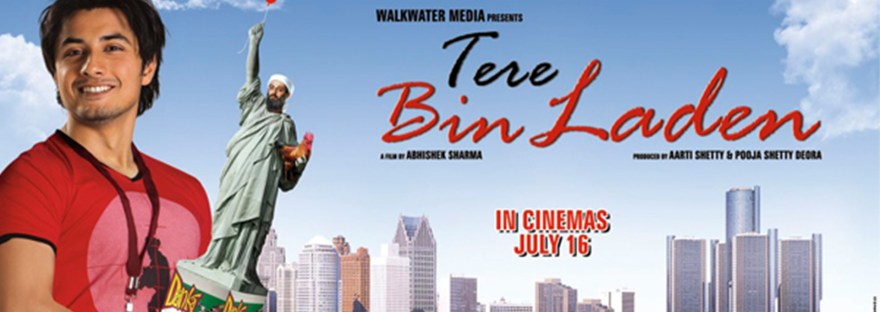
A review on Indian satirical comedy film, Tere Bin Laden (2010) starring famous Pakistani Singer Ali Zafar in his debut acting role. The film is written/ directed by Abhishek Sharma and is distributed by UTV Motion Pictures.

+ Crew

  • Directed by Abhishek Sharma
  • Written by Abhishek Sharma
  • Cinematography by Santosh Thundiyil
  • Music by Shankar-Ehsaan-Loy
  • Produced Pooja Shetty Deora and Aarti Shetty

+ Note

Tere Bin Laden is essentially a satirical comedy on the mass paranoia that erupted after the 9/ 11 bombings. According to the legend, the concept of the film was conceived when, due to a severe headache, Abhishek Sharma wrapped a cloth around his forehead to ease the pain which led to someone commenting that he resembled ‘Osama Bin Laden’. This got Sharam to write the first initial draft of the film. 

For this screwball comedy, Ali Zafar was apparently the first actor to be cast for the lead role since Abhishek Sharma thought that his “quirkiness and wit” from his music videos would suit perfectly for the film. The most difficult role to cast was indeed the role of fake Osama Bin Laden. After a long tedious process of casting, Sharma finally decided upon Pradhuman Singh who later studied tapes of Osama and learnt Arabic within 8 months of preparations. In order to depict Karachi in the film, the production was held in Mumbai and Hyderabad to resemble the setting as much as possible. 

Understandable, the film was proven to be controversial in some nations and many middle eastern countries outright banned the film from being released there. The critical and commercial response was mixed but the film was a decent box office success which promoted a sequel Tere Bin Laden: Dead or Alive in 2016.

 + Main Cast

  1. Ali Zafar as Ali Hassan
  2. Pradhuman Singh Mall as Noora / Osama Bin Laden
  3. Sugandha Garg as Zoya Khan
  4. Nikhil Ratnaparkhi as Gul
  5. Piyush Mishra as Majeed Khan
  6. Rahul Singh as Qureishi
  7. Seema Bhargav as Shabbo

 + Supporting Cast

  1. Barry John as Ted Wood (Ted-ji)
  2. Chirag Vohra as Lateef
  3. Chinmay Mandlekar as Usmaan
  4. Rajendra Sethi as Jamal Bhai (Travel agent)
  5. Harry Josh as Security guard
  6. Masood Akhtar as Goga from Rahim Yar Khan
  7. Sudipto Balav as an ISI agent

+ Plot

Ali Zafar plays the role of an ambitious reporter who badly wants to migrate to the US but does not possess the finances to do so. After shooting a report on a local Chicken show, Ali meets Noora who is the exact doppelganger of the most wanted man in the world, Osama bin Laden. This gives Ali an idea to disguise Noora as the infamous personality and sell the threatening videos to local news channels for profit.

+ High Points

i – Tere Bin Laden has a great premise for a screwball, satirical comedy. The idea works on so many levels and just the concept alone was enough for the audience who bought the ticket in the cinema. So major props for Abhishek Sharma for creating the perfect “hook” for the cinemagoers.  

ii – I think the biggest question going into this film on everyone’s minds was “Can Ali Zafar act?”. And the answer is; yes, yes he can. At least he did exactly what the script required of him. Could any other more seasoned actor have done a better job? Probably but after watching the film till the end, Ali Zafar did not feel out of place so some praise should go to his performance in the film.

iii – Talk about perfect casting; Pradhuman Singh as “Osama” was picture perfect. This film would have never worked if “Osama” was not visually convincing enough to fool the characters in the film but with good casting of fake Osama, Tere Bin Laden pulled the stunt successfully in the end. 

iv – From beginning to end, the story flows smooth and doesn’t feel stagnated at all. Around the 90 minute mark, Tere Bin Laden has the perfect length which neither feels too long or too short. 

v– To the film’s credit, the greed and hunger for success and capital is evenly depicted between all facets of this “War on Terror”. Al Qaeda is out there killing innocent bystanders in their Holy War while the U.S authorities are there to deceive the world as saviours but instead are making profit off human lives. There’s a good line of dialogue from the FBI agent Ted Wood after being asked why he ordered to bomb Afghanistan if Osama is hiding within Pakistan:

“We have a 100 Billion Dollar budget for hunting down Osama, I can’t spend all of that on sipping coffee!”

 + Low Points

i – Tere Bin Laden commits the most cardinal sin imaginable for any comedy film; too many bad jokes. The film can easily be described as the feature length version of ‘Kapil Sharma show’. With obnoxious “funny” sound effects and over the top acting, the film just utterly fails to live up to its interesting premise. Abhishek Sharma is unfortunately not talented enough to create a good satire out of this premise. He just ends up doing what he can do, creating an unfunny, unintelligible “comedy”.

ii – For a story satirising such serious, real life events, the film also needed to be convincing when it comes to creating the atmosphere. But unfortunately, Tere Bin Laden also utterly fails in that department. The film is supposed to be taking place in Karachi but being a fellow Karachitie, it felt nothing like the city that I’ve grown up in! The city itself is obviously Mumbai, no real effort was made to disguise it as the city of Lights (also, slapping a mere PIA logo on a shop in the background does not automatically make it Karachi!). And since the majority of the actors are Indian, they can only deliver their dialogues in Hindi/ Mumbai slang and nothing even comes close to it even remotely sounding like a Karachite! It was utterly embarrassing how badly the film fails in this aspect. And there is no one to blame for this other than the director Abhishek Sharma for this.

iii – The film is just utterly ridiculous. And I don’t mean it in a good way. The comedy, dialogue, performances, production/ set design, everything feels so cheap and disposable. Abhishek Sharma was sitting on a gold mine with such a unique premise but due to lack of actual writer/ directorial skills, Tere Bin Laden fails to become even remotely what the potential was behind such a premise.

iv – The characterization of each individual felt like they just walked off the variety hour TV set. Why does the TV news CEO wear a wig? Why is a communist a being a part of this scheme? Why did Osama’s look alike needed to be obsessed with chickens? None of this makes any sense and was only there for the sole purpose of a second long gag which they can stretch for 90 minutes. When it comes to comedy, Tere Bin Laden lacks real effort. The script needed a lot of work before it would’ve been remotely ready for production.

v – Although the jingle is memorable, the songs themselves are nothing praiseworthy. They are cheap renditions of thousand other Bollywood film songs.

vi – “White people are always idiots!”. Or at least that’s what every Bollywood film wants you to believe. And this film is no different. It’s obvious that Tere Bin Laden needs a bit of “suspension of disbelief” but there is also a limit to how far the viewer can go with this. The American authority figures are depicted as complete buffoons who can’t differentiate what is real and what is fake.

vii – So the main protagonist Ali Hassan creates a fake Osama Bin Laden video, threatening a Holy War against the US army which leads to them bombing Afghanistan in return, killing hundreds of innocent civilians. Are we supposed to root for our protagonist? Was he unaware this would eventually happen? I’m completely baffled what the intention of the director was with this film. Although later in the film, Ali Hassan tries to make things right, it’s too late for that. The civilians are already dead. As a viewer, why should I now even care if Ali Hassan would get to fulfill his lifelong dream of becoming big in the US? It’s very insensitive to the people who have actually become victims in this War on Terror. 

viii – The conclusion of the film also made absolutely no sense. It’s obvious that the writer was stumped on how to conclude the story so he just decided to ignore logic altogether.

+ Overall

With such an interesting premise, Tere Bin Laden fails due to lack of effort in every department. From script to production to performances, the film could’ve been a sharp, satirical look on post 9/11 paranoia but instead, ends up being just another run of the mill Bollywood “comedy”. Talk about wasted potential.

Rate: 1.75 out of 5 stars

TV series

Mr. Khan’s Review on Raqeeb Se – Episode XII (2021)

A review on Pakistani drama TV series, Raqeeb Se – Episode 12 (2021). The new TV series is directed by Kashif Nisar and is a production of Momina Duraid Productions. Raqeeb Se is a HUM TV Production.

(Note: If you’ve already read the review of the previous episode, you can skip directly ahead to the High points section).

+ Crew

  • Directed by Kashif Nisar
  • Written by Beegul
  • DOP by Hassam Mairaj
  • Music Composed by Hadiqa Kiani
  • Produced by Momina Duraid Productions

+ Note

Raqeeb Se is the newest HUM TV Production and is once again the collaboration of the award winning Writer/ Director duo of Bee Gul and Kashif Nisar. 

The title of the show is heavily inspired by a poem from the legendary poet Faiz Ahmed Faiz when the young poet fell in love with a girl next door in Sialkot. But alas, as luck would have it, she one day unexpectedly left the city, only to be reunited years later when Faiz was already an established poet in the circles of Urdu literature. This encounter inspired Faiz to write a poem “Raqib Se!”. The backstory of this poem plays a crucial role in the premise of the show.

 + Main Cast

  1. Hadiqa Kiani as Sakina
  2. Noman Ijaz as Maqsood
  3. Sania Saeed as Hajra
  4. Faryal Mehmood as Insha
  5. Iqra Aziz as Ameera
  6. Saqib Sameer as Rafiq

+ Plot

Raqeeb Se is a call of Maqsood’s dark past that could potentially destroy his present life. In order to escape her abusive husband, Sakina, along with her daughter Ameera, flees from her village to find shelter at her former lover’s place, Maqsood. Unfortunately Maqsood, who still holds a grudge against Sakina’s past actions, refuses to aid her in her most dire situation. But his wife, Hajra, seems much more sympathetic to the situation and lets Sakina stay at their home till things are figured out for the future.

But can Sakina be trusted to stay out of Maqsood’s life or will they be tempted to rekindle their lost love and in the process, destroy what Maqsood and his wife Hajra have built together?

+ High Points

i – Episode 12 pertains nothing new when it comes to plot development but was a breeze to watch thanks to interesting banter between the main cast of the show. This time, the episode was rich rather in character development and explored more the motivations and struggles of each individual locked within the world of Maqsood and his past.

ii – “So what do you enjoy in Life, Maqsood sahib?”

The back and forth between Maqsood and Ameera was excellent in this scene. It really showed the contrast of personalities or perhaps… Maqsood outer exterior is one hammer strike away from opening up to reveal his true emotions? Great stuff.

iii – It’s satisfying to watch that in this episode, Abdul finally fulfills a milestone in his own personal achievements and when done right, the scenes between Insha and Abdul can be very charming to watch.

iv – A new character has been introduced into the show and without revealing anything, I think he/ she could prove to be a valuable asset to the show.

v – Because of the emotional struggle that Sakina and Hajira face within themselves, they now (understandably) share an unspoken bond between each other. This is good writing from Beegul and breaks the stereotype that women who love the same man just need to constantly throw venomous insults at one another.

vi – The production value of the episode is once again top notch in quality. As said before, Raqeeb Se is the most unique looking show right now on Pakistani television. It relies on its skills of setting up lighting and contrast with shadows rather than just pulling the saturation high to hide its lack of team’s skills behind the camera.

 + Low Points

i – Raqeeb Se has always been a slow burn of a show. But regular plot progression is absolutely necessary in a weekly televised show if it wants to maintain its audience on a weekly basis. Although Episode 12 was not the worst offender, I really hope the show picks up its pace pretty soon.

ii – There has been too much teasing going on about why Hajira is really grateful to Maqsood and why she decided to marry him even though she knew he could never be hers. The revelation at this point of the show is necessary in order for the audience to feel empathy towards her. Right now, it just feels that show needs to go through this monotonous routine of:

“Maqsood has done so much for me…”

“But what has he really done?”

(Change of subject matter).

iii – Faryal Mehmood’s performance can be very effective in short bursts but in Episode 12, she has a long monologue just unfortunately felt slightly awkward due to her dialogue delivery. But with the right direction from Kashif Nisar, I’m certain she can improve upon this hurdle in her performance.  

+ Overall

Episode 12 is a definite improvement from the last few weeks and if the lack of regular plot progression is resolved within the coming weeks, Raqeeb Se has the potential to become must see TV.

 Rate: 3.25 out of 5 stars

Tele-Films

Mr. Khan’s Review on Behadd (2013)

A review on Pakistani telefilm Drama, Behadd (2013). The TV film is a directorial debut by Asim Raza and is written by the Urdu novelist Umera Ahmad. The film stars Nadia Jamil, Fawad Khan and the young Sajjal Ali. This telefilm is produced by Momina Duraid and is a HUM TV production.

+ Crew

  • Directed by Asim Raza
  • Written by Umera Ahmad
  • Edited by Kashif Ahmad and Wasim
  • DOP by Suleman Razzaq
  • Theme music by Fawad Khan
  • Music Composed by Hasil Qureshi
  • Produced by Momina Duraid

+ Note

The famous commercial TV director/ producer Asim Raza announced to the press beforehand that Behadd is going to be his directorial debut in the world of telefilms. As many of Umera Ahmad’s screenplays, Behadd serves also as a ‘slice of life’ tale and explores the relationship between a widowed mother and her young teenage daughter. The telefilm indulges in themes such as single parenthood and ‘selflessness’ verses ‘selfishness’. How important is one’s own happiness as compared to your child’s. 

The film was primarily shot in Karachi, Sindh and used real locations and settings of the city. After its release, Behadd received praise from critics and viewers alike and was the recipient of Hum Awards for Best Producer in 2014.

 + Main Cast

  1. Fawad Khan as Jamal “Jo” Ahmed
  2. Nadia Jamil as Masooma “Mo” Jamal
  3. Sajal Ali as Maha
  4. Nadia Afgan as Shafaq
  5. Nasheen Masud as Popi “Po” Masood
  6. Rahma Saleem as Fareena

 + Supporting Cast

  1. Adnan Siddiqui as Hassan (Masooma’s husband)
  2. Adnan Jaffar as Shafaq’s husband
  3. Shamoon Abbasi as Masooma’s boss
  4. Hira Tareen as Shaista (Jo’s proposal)

+ Plot

After the unfortunate death of her husband, Masooma (Nadia Jamil) is left to take care of their daughter Maha (Sajal Ali) all on her own. Along her journey to single parenthood, Masooma ends up meeting her old friend’s brother Jamal (Fawad Khan) and they both quickly realize that they have much more in common than they could ever hope for. 

+ High Points

i – Behadd’s ‘slice of Life’ plot is what makes most Pakistani Television so appealing to watch. With Umera Ahmad’s impeccable writing and Asim Raza’s meticulous direction, the telefilm works pretty much on every facet of successful storytelling. Even if you have never had a child or been a single parent, Behadd just feels so magnificently real and relatable. 

“If you indeed have to be selfless, how far can you take it?”

“What if your selflessness and wellbeing is being detrimental to those around? Should you then focus on your own happiness?” 

These are incredibly valid questions that we, in our line of duty of being a parent, tend to forget. 

ii – Brilliant performances all around but what stands tall above the rest is Nadia Jamil’s depiction as an overzealous single parent. Her reading of dialogue and body language conveys greatly her anguish and suffering behind the facade of being strong for her daughter.

iii – Some of the best scenes came not only from the climactic scenes of the telefilm but also the much quieter moments when Masooma is just casually interacting with her friends and colleagues in the office. The nonchalant manner of speech and dialogue is so crucial in inviting the audience to become part of the scene itself and Behadd’s writing and supporting cast exactly does that.

iv – And of course, the breakout performance by Sajal Ali as Maha was also a valiant effort in making this telefilm a success. Her performance was essential in order to captivate the audience into buying into this tale of mother/ daughter relationship. 

v– Behadd is a perfect example of why a show/ telefilm doesn’t need overbearing music and editing to force the audience into feeling sympathy with the characters. The writing and performances have to be good enough to invite their audience into that. Never did my attention falter or felt manipulated in any way. And that’s a sign of pure class from the creative team behind this telefilm.

vi– The song “Nindiya Re” by Kaavish is how seemlessly music and visuals can create the perfect rhythm. Perfect selection for Behadd’s OST.

vii– The conclusion of the story was also brilliantly handled and executed. Considering the circumstances of the storyline, this was probably the most logical conclusion that could have occured. Kudos to the entire team behind this telefilm!

 + Low Points

i – Honestly, whatever low points I have are mostly nitpicks but are still issues with the telefilm’s onset production. Namely, the overuse of Close Ups. Now close ups can be very impactful in visual language but only if they are used sparingly. Behadd unfortunately indulges in it a tad bit too much and it does lose its impact after a while. 

ii – And speaking of close ups, the cinematography is also nothing to admire at. Although it’s fairly competent by Suleman Razzaq, he did not use the visual language to its full potential and now just comes off sub par in contrast to the brilliant writing and performances of the telefilm.

iii – As much as I adore Behadd, it also suffers from the “rich people with rich people problems” syndrome. Now being wealthy does not equate to happiness, that’s fairly obvious but almost all Pakistani dramas/ telefilms shoot in lavious, massive houses so that they visually look pleasing to the eye and almost never a decision made based on the script. But have to give credit to Behadd as they did explain that they are living in the house as tenants. 

+ Overall

A well written script, brilliant performances, no overbearing use of music/ dramatic effects, Behadd is what every Pakistani telefilm should strive to be.  

Rate: 4.25 out of 5 stars

TV series

Mr. Khan’s Review on Raqeeb Se – Episode XI (2021)

A review on Pakistani drama TV series, Raqeeb Se – Episode 11 (2021). The new TV series is directed by Kashif Nisar and is a production of Momina Duraid Productions. Raqeeb Se is a HUM TV Production.

(Note: If you’ve already read the review of the previous episode, you can skip directly ahead to the High points section).

+ Crew

  • Directed by Kashif Nisar
  • Written by Beegul
  • DOP by Hassam Mairaj
  • Music Composed by Hadiqa Kiani
  • Produced by Momina Duraid Productions

+ Note

Raqeeb Se is the newest HUM TV Production and is once again the collaboration of the award winning Writer/ Director duo of Bee Gul and Kashif Nisar. 

The title of the show is heavily inspired by a poem from the legendary poet Faiz Ahmed Faiz when the young poet fell in love with a girl next door in Sialkot. But alas, as luck would have it, she one day unexpectedly left the city, only to be reunited years later when Faiz was already an established poet in the circles of Urdu literature. This encounter inspired Faiz to write a poem “Raqib Se!”. The backstory of this poem plays a crucial role in the premise of the show.

 + Main Cast

  1. Hadiqa Kiani as Sakina
  2. Noman Ijaz as Maqsood
  3. Sania Saeed as Hajra
  4. Faryal Mehmood as Insha
  5. Iqra Aziz as Ameera
  6. Saqib Sameer as Rafiq

+ Plot

Raqeeb Se is a call of Maqsood’s dark past that could potentially destroy his present life. In order to escape her abusive husband, Sakina, along with her daughter Ameera, flees from her village to find shelter at her former lover’s place, Maqsood. Unfortunately Maqsood, who still holds a grudge against Sakina’s past actions, refuses to aid her in her most dire situation. But his wife, Hajra, seems much more sympathetic to the situation and lets Sakina stay at their home till things are figured out for the future.

But can Sakina be trusted to stay out of Maqsood’s life or will they be tempted to rekindle their lost love and in the process, destroy what Maqsood and his wife Hajra have built together?

+ High Points

i – Episode 11 brings slight closure between Sakina and Hajira. They have a brief interaction about Life choices and how they were at times forced to continue those choices against their will. Although brief, this was a good scene for the audience to sympathise with the two characters who have had (unfortunately) the least amount of development throughout the show up till now.

ii – I have to admit, it is kinda fun to see Ameera try her hardest to please Maqsood sahib. She sometimes moves away from her personality just to be a bit more like her mother Sakina because it is her that Maqsood sahib fell in love with in the first place. 

iii – The confrontation between Maqsood and Sakina was the highlight of the show. His frustrations towards Sakina’s lack of self respect indulges him to face his past and make Sakina realize that she needs to grow as a person in order to have a better future. I can’t help but wonder that (like the audience) even Maqsood got sick of Sakina just moping and cursing her own fate.

iv – The show has always had great production value and this episode was no exception. Camera work, lighting and set design were all once again top notch!

 + Low Points

i – It is extremely odd that even with a few confrontational scenes between the main cast in this episode, nothing ever really happens in this show. As a viewer, you don’t feel as if the story has progressed, or the satisfaction of investing your time watching this show. Perhaps the reason is that the status quo of the show never ever changes; Maqsood sahib is always grumpy, Sakina is always whining about her fate, Hajira always acts like a doormat, Ameera acts erratic and Insha goes to her boyfriend to complain about her family. And it’s unfortunately getting real old now.

ii – In Episode 11, the scene between Insha and Abdul once again turned into unnecessary expository dialogue. Yes, Insha’s family is dysfunctional, we as an audience just saw that. Why repeat that same information? It’s just a waste of a scene which the writer could easily use to further develop the storyline. 

iii – Awkward greenscreen during car driving scenes of the show. Doesn’t look good to a show which otherwise, has good production value.

iv – Maqsood sahib’s anger outbursts in each single episode is becoming tiresome real fast. It’s obvious that he is frustrated with the current state of affairs but anger outbursts are only impactful if done seldom. 

+ Overall

Episode 11 is yet another tale in the life of Maqsood sahib and the women around him. Even though there are a few good scenes, the storyline still remains unmoved.

 Rate: 2.5 out of 5 stars