TV series

Mr. Khan’s Review on Tan Man Neel o Neel (2024)

A review on Pakistani drama TV series, Tan Man Neel o Neel (2024). The eleven episode TV mini-series is directed by Saife Hassan and written by Mustafa Afridi. Tan Man Neel o Neel is a story of the Pakistani dance entertainment industry along with the politics and corruption that surrounds it.  Tan Man Neel o Neel was aired on HUM TV late 2024.

+ Crew

  • Directed by Saife Hassan
  • Written by Mustafa Afridi
  • Produced by Sultana Siddiqui

+ Note

Tan Man Neel o Neel might have a deceivingly simple narrative on paper but it pertains dark complexity within its plot dealing with controversial issues like sexual abuse, corruption, torture and blasphemy.

 + Main Cast

  1. Shuja Asad as Sonu
  2. Seher Khan as Rabi
  3. Sammiya Mumtaz
  4. Saleem Mairaj
  5. Nadia Afgan
  6. Nauman Masood
  7. Muhammad Usman Javed
  8. Haseeb Khan

+ Plot

The story takes place in a city of dreams where Sonu (played by Shuja Asad) wants to become a professional dancer in the Entertainment Industry. After his performance in a small gig, he comes across Rabi (played by Seher Khan), a social media video blogger, who takes a shine at Sonu and forms a professional business partnership with him. After Sonu’s dancing partner becomes a victim of an unspeakable incident, Sonu and Rabi fight to find justice in a society where corruption runs the entire system.

+ High Points

i – This drama serial takes a massive chance with its highly controversial subject matter. Tan Man Neel o Neel is inadvertently a throwback to a time in the 90s where Pakistani dramas did not shy away from dealing with subjects that were detrimental to our society. Unfortunately I cannot discuss this “controversial subject matter” for readers who have not seen the show but will discuss it below in the spoiler section.

ii – Although I was not fully convinced in the beginning with the performances of our two young main leads, they did kind of grow on me as the series progressed. The naivety and lack of experience actually proved to be vital in their characterizations. Sonu grew up with a single parent while Rabi’s parents are loving and at times, lenient with her adventures into a dangerous, rogue world of online entertainment. Seher Khan’s interpretation of Rabi is a bold faced sweetheart who is never shy to speak her mind whereas Shuja Asad’s Sonu thinks perhaps a bit too much, before he speaks. In the world of Television, they are made for one another.

iii – The very first episode itself has a gut punch prepared for its audience with one, very controversial scene. It is very subtle in its visual and spoken presentation but for most viewers, it is obvious what has just happened to Sonu’s close friend. Without spoiling any plot point, let’s just say I did not expect a Pakistani TV drama to tackle such a taboo subject on public television. Kudos to the creative team for going through this.

iv – I always love watching Sammiya Mumtaz on screen. Her calm yet emotional performances always bring out the best in any TV show she is a part of. She plays a retired singer who is haunted by her past. As the show progresses, we get to learn more and more about it which involves her, her fiance and a jealous lover. This side story is well written and honestly, could have been a separate show in itself.

v – The surroundings of old city Punjab plays a vital role in creating an atmosphere for the show. I love the small, narrow streets, filled with deteriorating rows and rows of apartment buildings, wet clothes hanging on wires, rooftops, kite flying and so on. 

vi – The cinematography and framing at times, is so brilliant. The interior architecture is perfectly utilized in capturing the essence of the scene. Take for example this picture below, Rabi’s father had just revealed a terrible secret to his wife and the framing conveys the emotional claustrophobia that they feel now within the situation. Such visual storytelling adds so much to the entire atmosphere of the show.

SPOILER!!! If you haven’t seen the show yet, please skip to the ‘Low Points’ section below:

vii – The crescendo to the show, the plot that was leading up to the final confrontation; the blasphemy law. This law that has been shoved into Pakistan’s Penal Code since the early 90s, has been responsible for countless deaths of innocent muslims and non-muslims. This modern day witch hunt destroys the vision of Quaid’s Pakistan to its very founding principles. Salman Taseer, a Pakistani PPP politician was assassinated just for tackling this highly controversial topic and since then, no serious opposition was ever brought up against it due to backlash or worse, death. 

I genuinely applaud the creative team behind Tan Man Neel o Neel for actually tackling this topic head on and making it very clear where they stand on this issue. And the ending itself is not just used for mere shock value. If we listen closely to the dialogue with each episode, the topic was hinted at beforehand and is cleverly executed. 

+ Low Points

i – With all its strong characterization and brilliant pacing, the plot can get slightly repetitive and convoluted at times. With each episode, the revenge scenario between different factions started dominating the show a bit too much and as a viewer, one can easily be confused where our sympathies are supposed to lie.

ii – The “singing” sequences were badly synchronized with the actors. The show did not even attempt to make them believable. Obviously they had a professional singer singing on behalf of Seher Khan but the audio mixing was utter nonsense and laughable. Thankfully these scenes were very few but nonetheless, took me out of the scene every single time.

iii – When it comes to the antagonists of the show, nothing really stood out for me. Nauman Masood’s performance was commendable but the characterization and motivation was quite two dimensional. He is a terrible person because the script requires it. There was no nuance, no hint of what shaped his character in such a way. He’s just a troublemaker who wants to control Rabi.

+ Overall

Tan Man Neel o Neel is unapologetically a controversial show and it lives by that reputation. 

TV series

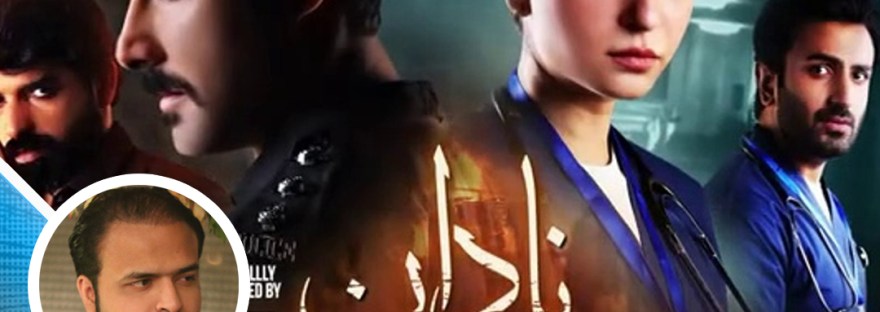
Mr. Khan’s Review on Nadaan – Episode V-VIII (2024)

A review on Pakistani drama TV series, Nadaan Episode 5-8 (2024). The new TV series is directed by Mehreen Jabbar and written by Saji Gul. Nadaan is a story of an honest police officer, trapped in a world of corruption and deception. Can he defy all odds and stand up for justice? Nadaan is a Moomal Productions and HUM TV Production.

+ Crew

  • Directed by Mehreen Jabbar
  • Written by Saji Gul
  • Produced by Sultana Siddiqui 
  • Production by Moomal Productions

+ Note

‘Nadaan’ plot tackles the complexity of a police officer in search of justice from a corrupt system driven by outerior forces of religion, money and power. The plot displays how naivety can lead citizens into believing myths of miracle cure as opposed to medicine and doctors.

 + Main Cast

  1. Ahmed Ali Akbar       as Officer Haider
  2. Ramsha Khan           as Dr. Tabeer
  3. Hammad Shoaib
  4. Ahmed Ali Akbar
  5. Kashif Hussain
  6. Ahmed Randhawa
  7. Ali Gul Mallah

+ Plot

In search of justice, a police officer Haider ends up entrenched in the world of corruption, drug addiction and societal follies. Along the way, he is befriended by a young Dr. Tabeer who is willing to join him in the battle to protect the vulnerable and expose the wrongdoers.

+ High Points

i –  Episode 5 started off with a bang! The plot takes a major turn and all hell breaks loose. Now the lives of Dr. Tabeer and the medical staff are in severe danger as the radical mob tries to overthrow and burn down the hospital itself. But could Officer Haider save the day? Episode 5 was truly intense and the most engaging episode of the entire series.

Major SPOILERS ahead. If you would like to avoid it, please skip to Overall section:

ii – As I have previously mentioned before Kashif Hussain’s performance as the devious second in command is truly remarkable. He is perfectly casted and lives up to his role quite magnificently. His performance entails various sets of emotions; from his disturbing devotion to his Peer to utter insanity at the end, Kashif Hussain proves his wide range of acting masterclass throughout the series.

iii – I also found the plot redirection of Peer’s wife taking over the empire quite an interesting take with such great opportunity for further plot development. From the meek, obedient wife to powerhouse overlord; her sudden character development had great potential to bring something new and unpredictable to the show.

iv – The romance between Officer Haider and Dr. Tabeer is much better handled in the last four episodes as the dangerous circumstances naturally bring them closer to each other. This, I believe, is a much more convincing way of creating chemistry between the two protagonists as in comparison to some forced conversations and dialogues in the earlier episodes.

v – I love this shot (pictured below). The bars of prison visually divide the two protagonists but as they talk through their past trauma, it threatens to break the walls that divide them and bring them closer together.

vi – The last shot and the wrapping up of the plot from past to present is well executed and nicely brings the story to a close. 

+ Low Points

i – I was not a fan of the last episode. The overall conclusion felt abrupt and rushed as too many plot threads were quickly resolved because the story needed to end at this point. It also felt very unrealistic how quickly the wife of the late Peer was convinced of the innocence of Dr. Tabeer and quick turnaround of the mob against Tayeeb. The series could have used an extra episode to wrap things up in a proper and natural way.

ii – Also I felt there were way too many instances where Dr. Tabeer was arrested and then set free but then once again arrested. This whole plotline felt a bit convoluted and repetitive. 

iii – The plot twist with the wife of the late Peer, taking over the empire was a completely wasted opportunity. It was such an interesting move by the writer but was way too quickly resolved. The sudden loss of her husband could have had some severe consequences and made her into the new villain of the show. And perhaps she did not even need to turn “good” by the end. The corruption of power could have left her in a state of agony. Nonetheless, it was disappointing that the show did not follow through with this plotline.

+ Overall

Nadaan was a short but exciting TV series with some good performances and an engaging plotline but due to its not following through its plot into bold new directions, I cannot claim it to be one of Mehreen Jabbar’s best works to date.

TV series

Mr. Khan’s Review on Nadaan – Episode I-IV (2024)

A review on Pakistani drama TV series, Nadaan Episode 1-4 (2024). The new TV series is directed by Mehreen Jabbar and written by Saji Gul. Nadaan is a story of an honest police officer, trapped in a world of corruption and deception. Can he defy all odds and stand up for justice? Nadaan is a Moomal Productions and HUM TV Production.

+ Crew

  • Directed by Mehreen Jabbar
  • Written by Saji Gul
  • Produced by Sultana Siddiqui 
  • Production by Moomal Productions

+ Note

‘Nadaan’ plot tackles the complexity of a police officer in search of justice from a corrupt system driven by outerior forces of religion, money and power. The plot displays how naivety can lead citizens into believing myths of miracle cure as opposed to medicine and doctors.

 + Main Cast

  1. Ahmed Ali Akbar       as Officer Haider
  2. Ramsha Khan           as Dr. Tabeer
  3. Hammad Shoaib
  4. Ahmed Ali Akbar
  5. Kashif Hussain
  6. Ahmed Randhawa
  7. Ali Gul Mallah

+ Plot

In search of justice, police officer Haider ends up entrenched in a world of corruption, drug addiction and societal follies. Along the way, he is befriended by a young Dr. Tabeer who is willing to join him in the battle to protect the vulnerable and expose the wrongdoers.

+ High Points

i –  Mehreen Jabbar is always known for her unique storytelling and fantastic backdrops of the underbelly of Pakistani society. And ‘Nadaan’ is thankfully no different. Director Jabbar always brings the ‘realism’ to the table; not just the grittiness and despair but also human interaction, the kindness that a good samaritan displays in need of help. And thus, her shows feel so much more authentic and ‘lived in’ as compared to many tv shows distracted with displaying only wealth and power as a background for a melodramatic storyline. In short, Mehreen Jabar’s shows are always a breath of fresh air for Pakistani television.

ii – The casting of the show is one of the main reasons for its success. Ahmed Ali Akbar as the guilt ridden police officer along with Ramsha Khan as the kind hearted doctor is a good dynamic for some interesting chemistry. Kashif Hussain as the devious antagonist along with other supporting cast makes each scene of the show lively and there’s hardly a dull moment.

iii – The central plot of the show is by far, the best aspect of the show. Writer Saji Gul does not shy away from the dangers of ‘personality worship’ as many locals tend to follow their ‘pirs’ for miracle cures rather than qualified doctors. The misuse of religion, the dangers of drug addiction and abuse of power play pivotal roles in bringing this show to light. Although it is heavily dramatized, the plot itself feels realistic and believable. 

iv – As mentioned above, the locations, set design and costumes all blend well into the gritty atmosphere the show is trying to create. 

v – Love the fact that the show starts off with a flashback of a ‘crossroads’ moment in the life of our protagonist and then it cuts back to the beginning of the story. This keeps the viewers engaged into the storyline and ultimately root for the redemption of our protagonist.

vi – The main theme of the show is melodic and fits perfectly to the show’s atmosphere. The soundtrack itself is well orchestrated and enhances the emotion of each and every scene of the show. 

+ Low Points

i – With all the right moves to have yet another classic Mehreen Jabbar show, it doesn’t hit its mark as well as it should have. The plot seems to be mostly predictable and by the numbers. One can almost anticipate each scene that will drive the narrative forward. The predictable romance between the police officer and the doctor seems out of place and plays no role in adding any depth to the narrative. ‘Nadaan’ is not a bad show by any stretch of imagination and it’s miles better than most shows we currently watch on our television but for some reason, Mehreen Jabbar chose to play safe with this show (even if the plot is quite an interesting one). The twist and turns of the show are entirely predictable and never left me at the edge of my sofa.  

ii – Even with a predictable show, perhaps the performances of the actors can make the show worth watching, right? Well, it is worth a watch but the actors are not at their “A” game. For one reason or another, the performances feel at times, lifeless and formulaic. And it is utterly surprising that even Ahmed Ali Akbar falls into this trap. The only performance that left me wanting for more was Kashif Hussain as his character is by far, the most fascinating of all.

iii – In the first episode , there were some audio issues with the microphone of Ramsha Khan. Perhaps the microphone was not attached properly but nonetheless was very noticeable and distracting throughout.

iv – I also felt that the romance of the show was way too quickly developed between the police officer and the doctor. They hardly shared a single emotional scene together and for some reason, that was enough. Frankly, I would have preferred without any romance angle as it adds nothing to the main plot of the show. 

+ Overall

Four episodes in, ‘Nadaan’ is still an interesting watch but not to the levels of what one would expect from the talent of Mehreen Jabar. 

Tele-Films

Mr. Khan’s Review on Zara Si Aurat (1992)

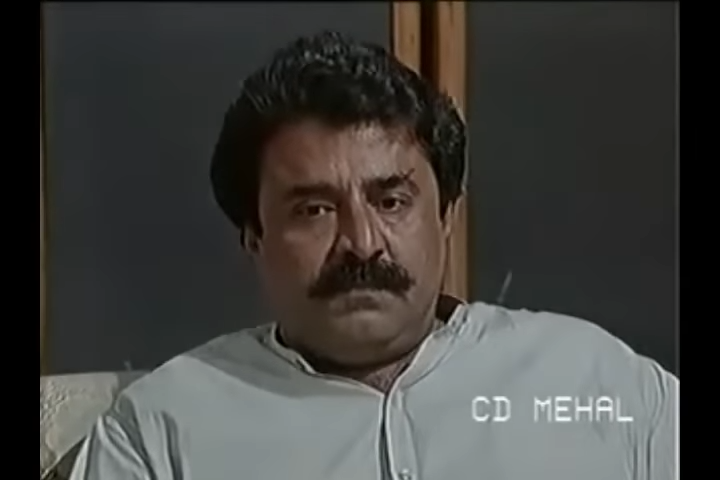
A review on Pakistani classic telefilm, Zara Si Aurat (1992). This telefilm is directed by Sultana Siddiqui and written by Noor ul Huda Shah. Zara Si Aurat was part of the PTV ‘Tele-Theater’ program.

+ Crew

  • Directed by Sultana Siddiqui 
  • Written by Noor ul Huda Shah

+ Note

Zara Si Aurat is a case study of what it means to be a married woman who is torn apart between the wishes of her family and her sense of eternal happiness. Envy and lack of empathy plays an integral role in this melodrama as the protagonist is torn apart between Independence and loyalty to her family.

+ Main Cast

  1. Bushra Ansari as Qudsia 
  2. Shafi Muhammad  as Asad
  3. Behroze Sabzwari as Ahmed

+ Plot

Qudsia (Bushra Ansari) is trapped in the world of endearment. Her task of a model housewife for her husband Asad (Shafi Muhammad) is destroying her career and worse, her sense of happiness. Enter; Qudsia’s cousin Ahmed (Behroze Sabzwari) who makes a surprise visit to her home. As they both feel compatible with each other’s misery, this leads to anger, envy and despair.

+ High Points

i – ‘Zara Si Aurat’ is undoubtedly a daring piece of small screen cinema. The premise of the Tele Theater starts off as a character study but then swiftly turns into a Shakespearean tragedy. The main protagonists of the telefilm mostly play their roles with conviction and a poignant sense of self-realization.

ii – Bushra Ansari has always been an epitome of revolution in Pakistani television. And ‘Zara Si Aurat’ is one of her finest performances on the small screen. 

One of the more memorable dialogue comes early on in the telefilm as Qudsia feels degraded by her husband. She confesses to her friend that she feels like a ‘lesser woman’. A living being without any sense of happiness on the horizon. And hence, comes the title of the Long play.

Qudsia’s character struggles to maintain her identity while being a good wife and a mother. And ultimately, her loyalty leads to her downfall.

iii – Another outstanding performance from the telefilm was from Shafi Muhammad. In all of his previous roles, Shafi has always played the calm, kind hearted man who is empathetic to his fellow man or woman. But not this time. Here, we get to see his sinister side, his pragmatic and contempt for his partner. Shafi Muhammad gives such a unique performance which is a strong departure from all of his previous well renowned roles.

iv – The writer of the telefilm Noor ul Huda Shah did a fantastic job in bringing this story to life. The plot moves at a brisk pace and as the story progresses, the tension becomes more and more intense and with the third act of the telefilm, one is completely engrossed into the narrative of the film.

v – One factor that I always highlight about the Telefilms of the 90s is that they never shy away from powerful endings. And ‘Zara Si Aurat’ is no exception.

+ Low Points

i – Behroze Sabzwari is one of few factors that did not help the telefilm live up to its true potential. This is not a knock against Behroze as an actor but clearly, his performance felt slightly out of place and mildly annoying. So his ‘happy go lucky’ attitude was indeed intentional but a bit of restraint to his performance would have elevated the telefilm towards absolute brilliance. Sadly, his performance did hinder its success.

ii – Of course when it comes to the technical aspects of the telefilm, ‘Zara Si Aurat’ is a victim of its times. The shot composition, the melodramatic music seems bland and ultimately forgettable. The strength of telefilm lies with its premise and brilliant performances from its main cast.

+ Overall

 ‘Zara Si Aurat’ has a fantastic premise and a memorable ending. One of the best telefilms from the 90s era of Pakistani television.

Rate: out of 5 stars