TV series

Mr. Khan’s Review on Nadaan – Episode I-IV (2024)

A review on Pakistani drama TV series, Nadaan Episode 1-4 (2024). The new TV series is directed by Mehreen Jabbar and written by Saji Gul. Nadaan is a story of an honest police officer, trapped in a world of corruption and deception. Can he defy all odds and stand up for justice? Nadaan is a Moomal Productions and HUM TV Production.

+ Crew

  • Directed by Mehreen Jabbar
  • Written by Saji Gul
  • Produced by Sultana Siddiqui 
  • Production by Moomal Productions

+ Note

‘Nadaan’ plot tackles the complexity of a police officer in search of justice from a corrupt system driven by outerior forces of religion, money and power. The plot displays how naivety can lead citizens into believing myths of miracle cure as opposed to medicine and doctors.

 + Main Cast

  1. Ahmed Ali Akbar       as Officer Haider
  2. Ramsha Khan           as Dr. Tabeer
  3. Hammad Shoaib
  4. Ahmed Ali Akbar
  5. Kashif Hussain
  6. Ahmed Randhawa
  7. Ali Gul Mallah

+ Plot

In search of justice, police officer Haider ends up entrenched in a world of corruption, drug addiction and societal follies. Along the way, he is befriended by a young Dr. Tabeer who is willing to join him in the battle to protect the vulnerable and expose the wrongdoers.

+ High Points

i –  Mehreen Jabbar is always known for her unique storytelling and fantastic backdrops of the underbelly of Pakistani society. And ‘Nadaan’ is thankfully no different. Director Jabbar always brings the ‘realism’ to the table; not just the grittiness and despair but also human interaction, the kindness that a good samaritan displays in need of help. And thus, her shows feel so much more authentic and ‘lived in’ as compared to many tv shows distracted with displaying only wealth and power as a background for a melodramatic storyline. In short, Mehreen Jabar’s shows are always a breath of fresh air for Pakistani television.

ii – The casting of the show is one of the main reasons for its success. Ahmed Ali Akbar as the guilt ridden police officer along with Ramsha Khan as the kind hearted doctor is a good dynamic for some interesting chemistry. Kashif Hussain as the devious antagonist along with other supporting cast makes each scene of the show lively and there’s hardly a dull moment.

iii – The central plot of the show is by far, the best aspect of the show. Writer Saji Gul does not shy away from the dangers of ‘personality worship’ as many locals tend to follow their ‘pirs’ for miracle cures rather than qualified doctors. The misuse of religion, the dangers of drug addiction and abuse of power play pivotal roles in bringing this show to light. Although it is heavily dramatized, the plot itself feels realistic and believable. 

iv – As mentioned above, the locations, set design and costumes all blend well into the gritty atmosphere the show is trying to create. 

v – Love the fact that the show starts off with a flashback of a ‘crossroads’ moment in the life of our protagonist and then it cuts back to the beginning of the story. This keeps the viewers engaged into the storyline and ultimately root for the redemption of our protagonist.

vi – The main theme of the show is melodic and fits perfectly to the show’s atmosphere. The soundtrack itself is well orchestrated and enhances the emotion of each and every scene of the show. 

+ Low Points

i – With all the right moves to have yet another classic Mehreen Jabbar show, it doesn’t hit its mark as well as it should have. The plot seems to be mostly predictable and by the numbers. One can almost anticipate each scene that will drive the narrative forward. The predictable romance between the police officer and the doctor seems out of place and plays no role in adding any depth to the narrative. ‘Nadaan’ is not a bad show by any stretch of imagination and it’s miles better than most shows we currently watch on our television but for some reason, Mehreen Jabbar chose to play safe with this show (even if the plot is quite an interesting one). The twist and turns of the show are entirely predictable and never left me at the edge of my sofa.  

ii – Even with a predictable show, perhaps the performances of the actors can make the show worth watching, right? Well, it is worth a watch but the actors are not at their “A” game. For one reason or another, the performances feel at times, lifeless and formulaic. And it is utterly surprising that even Ahmed Ali Akbar falls into this trap. The only performance that left me wanting for more was Kashif Hussain as his character is by far, the most fascinating of all.

iii – In the first episode , there were some audio issues with the microphone of Ramsha Khan. Perhaps the microphone was not attached properly but nonetheless was very noticeable and distracting throughout.

iv – I also felt that the romance of the show was way too quickly developed between the police officer and the doctor. They hardly shared a single emotional scene together and for some reason, that was enough. Frankly, I would have preferred without any romance angle as it adds nothing to the main plot of the show. 

+ Overall

Four episodes in, ‘Nadaan’ is still an interesting watch but not to the levels of what one would expect from the talent of Mehreen Jabar. 

Short Films & Documentaries

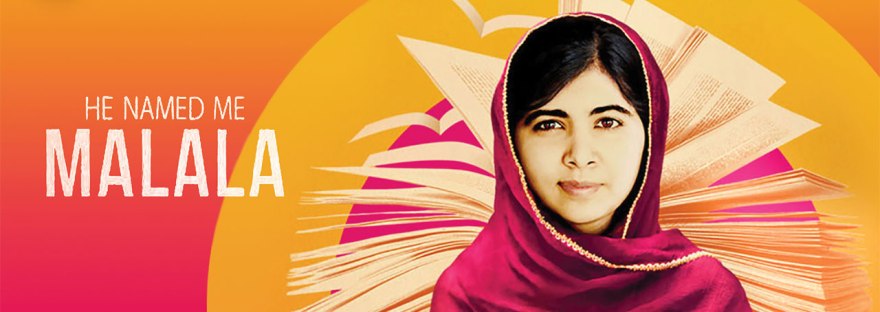
Mr. Khan’s Review on He Named Me Malala (2015)

A review on American Documentary film, He Named Me Malala (2015) based on the Pakistani Human rights activist Malala Yousafzai. The film is directed by Davis Guggenheim and is distributed by Fox Searchlight Pictures and National Geographic Channel.

+ Crew

  • Directed by Davis Guggenheim
  • Cinematography by Erich Roland
  • Music by Thomas Newman
  • Edited by Greg Finton, ACE, Brian Johnson and Brad Fuller
  • Produced by Walter Parkes, Laurie MacDonald and Davis Guggenheim
  • Produced by (Production companies) Imagenation Abu Dhabi FZ and Participant Media

+ Note

Under Guggenheim’s direction, we get to see Malala, not only as a role model for many young girls all over the world, but also in her home interacting with her family. She shares her personal experiences living in a foreign country while unintentionally serving as a “controversial figure” within her own homeland. By learning the ways of the West, Malala wants to also promote her own customs and religion, serving as the “tolerant” face of Islam. Her social activism includes travelling to different parts of the world such as Nigeria, Syria and many other war torn countries. The documentary includes short animated sequences, depicting the origin of her name and her past life in the Swat Valley. We also get to see many unseen family photographs of hers and also how her father’s activism has been a major influence on herself while stating that being a “female role model” was a decision of no one but herself.

 + Main Cast

  1. Malala Yousafzai
  2. Ziauddin Yousafzai

+ Plot

He Named Me Malala follows the life of young Malala Yousafzai who, while attending all girls school in Swat Valley in KP, Pakistan, was shot and injured by the Taliban. After recovery, Malala and her family (due to relentless threats from the Taliban) decided to stay in England while continuing on as a role model for Female education throughout the world. In 2013, Malala Yousafzai was awarded the Nobel Peace Prize and became the youngest recipient of the prestigious award. 

+ High Points

i – Malala is undoubtedly considered a divisive figure in Pakistan where the opinions reign strong from “the resistance of female empowerment” to “a propaganda piece for the Western Media”. In his documentary, Guggenheim tries to explore the “girl” behind the persona. What makes her happy, what does her family and her younger brothers mean to her, does she like living in the UK, what celebrities does she have a crush on. This undoubtedly “humanizes” Malala for the viewer and gives a chance for us to relate to her. In Spite of so much media coverage, Malala does come off as an extremely likeable young woman who not only wants to fight for Women’s rights but also live a normal, happy life with her family. No matter what your views are on her, no one can deny that every person on planet earth deserves that.

ii – The animated story sequences work quite well in conveying almost “fairy tale” like elements of storytelling. The tale of how she got her name and what it represents tied brilliantly to the overarching narrative of the documentary. The art style is also a subtle, crayonic portrayal of landscapes which blurs the line of fiction and reality.

iii – By interviewing the whole Yousafzai family, one gets to learn the roots of activism that stems from their blood. Perhaps in some way, fate had a strong hold in diverging Malala to this path of activism. But at the same time, Malala does not stray away from her past. Her stance on “peaceful Islam” and her being a role model for it is shared within her family (especially her father). Whether much truth was into this angle of documentary is anyone’s guess but was undeniably effective for the documentary in the long run.

iv – The music accompanying the visuals were subtle but melodic. Thomas Newman did a wonderful job in conveying the buried emotions of Malala on being forced to leave her homeland and pursue her goals in changing her own homeland from a distance.

 + Low Points

i – Going into this documentary, I was weary of the fact that how much of the different facets of truth Guggenheim is willing to depict in his documentary and the answer is an unfortunate; not many. The documentary plays it quite safe, never changing the subjects or status quo of the western media. Due to this safer route, the documentary does come off as bland and uninteresting in the long run. There is a short scene where Malala meets President Obama and the director asks Malala “Did you ask him about the drone strikes?” to which, she replies “Of course I did!”. Why was this not expanded upon? What is her view on this? Why was her hometown Swat Valley infested with conservative monsters like the Taliban? Should the western powers be held accountable for the rise in extremism in Pakistan? But most importantly, what does Malala think of all this? It’s nice to see Malala being a normal, teenage girl but what are her own political goals in Life? How does she believe that extremism can be eliminated in Pakistan or in the Middle East? Its all just surface level themes and ideas like “Tablian bad, Women’s Education good”. As a viewer, I didn’t really understand the ideology that Malala believes in. Only what she wants to accomplish. Sometimes the way is even more vital than the destination.

ii – Speaking of Hoggwash, there was unfortunately no political or historical backdrop given to any of the events mentioned in the documentary. How were the Taliban able to gain strong control in the KP region? Or perhaps mentioning why the KP region in Pakistan has always been a region of conflict. And most importantly, how the northern areas of Pakistan vastly differ from the majority of Pakistan. For the western audience, most cannot differentiate Pakistan from the Middle East so when they hear Tablian beheading people for speaking against them, attacking families who let their girls get proper education, they would most likely believe that the whole of Pakistan is engulfed in extremist war of ideologies. It’s a lazy, self fulfilling ideology of most Western media who are solely interested in war torn set pieces of the East without any real context or the bigger picture. Sadly, He Named Me Malala is another cog in the deranged western perception of Islam and the East.

iii – For around 90 min runtime, the film did not have enough material to follow through its runtime. 50 minutes in, I was checking my watch as the themes of Malala’s traumatic past became repetitive. The story itself is fantastic for film and well worth being told onscreen but perhaps He Named Me Malala would have served better as a television length documentary rather than a feature length one.

iv – He Named Me Malala was never egregious in any way but if you have kept up with the news, I don’t think you will learn much about her than you already know. The documentary is not ground shattering by any stretch of the imagination but after watching till the end, I did not feel rewarded at all.

+ Overall

Whether you see Malala as a role model for women all over the world or a figure of western media propaganda, He Named Me Malala depicts the human side of a young girl who wants to live a happy, meaningful life. But admittedly, the documentary could’ve been so much more than it ended up being.

Rate: 3.0 out of 5 stars