TV series

Mr. Khan’s Review on Raqeeb Se – Episode VIII (2021)

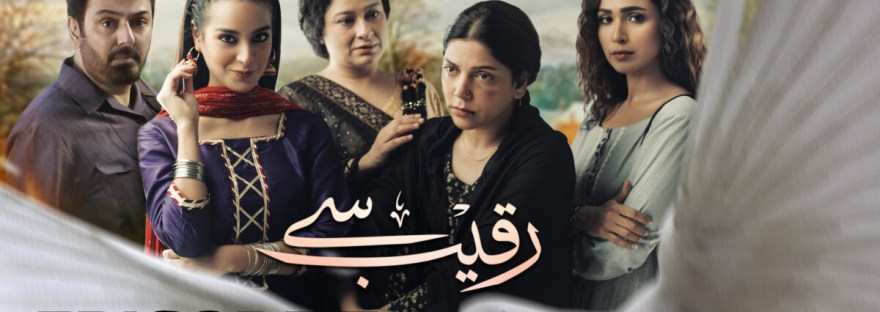
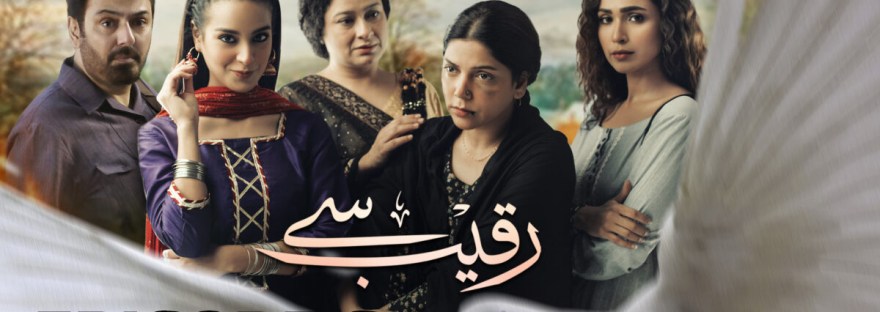
A review on Pakistani drama TV series, Raqeeb Se – Episode 8 (2021). The new TV series is directed by Kashif Nisar and is a production of Momina Duraid Productions. Raqeeb Se is a HUM TV Production.

(Note: If you’ve already read the review of the previous episode, you can skip directly ahead to the High points section).

+ Crew

  • Directed by Kashif Nisar
  • Written by Beegul
  • DOP by Hassam Mairaj
  • Music Composed by Hadiqa Kiani
  • Produced by Momina Duraid Productions

+ Note

Raqeeb Se is the newest HUM TV Production and is once again the collaboration of the award winning Writer/ Director duo of Bee Gul and Kashif Nisar. 

The title of the show is heavily inspired by a poem from the legendary poet Faiz Ahmed Faiz when the young poet fell in love with a girl next door in Sialkot. But alas, as luck would have it, she one day unexpectedly left the city, only to be reunited years later when Faiz was already an established poet in the circles of Urdu literature. This encounter inspired Faiz to write a poem “Raqib Se!”. The backstory of this poem plays a crucial role in the premise of the show.

 + Main Cast

  1. Hadiqa Kiani as Sakina
  2. Noman Ijaz as Maqsood
  3. Sania Saeed as Hajra
  4. Faryal Mehmood as Insha
  5. Iqra Aziz as Ameera
  6. Saqib Sameer as Rafiq

+ Plot

Raqeeb Se is a call of Maqsood’s dark past that could potentially destroy his present life. In order to escape her abusive husband, Sakina, along with her daughter Ameera, flees from her village to find shelter at her former lover’s place, Maqsood. Unfortunately Maqsood, who still holds a grudge against Sakina’s past actions, refuses to aid her in her most dire situation. But his wife, Hajra, seems much more sympathetic to the situation and lets Sakina stay at their home till things are figured out for the future.

But can Sakina be trusted to stay out of Maqsood’s life or will they be tempted to rekindle their lost love and in the process, destroy what Maqsood and his wife Hajra have built together?

+ High Points

i – Whenever Sabiq Sameer and Saba Faisal are part of an episode, that is where Raqeeb Se shines the most. Their performances and characters are compelling enough to keep you interested throughout the episode. Salman Shahid’s introduction in the past few episodes is also a great addition to lower the monotony of the four main core characters.

ii – Episode 8 might be the first time that Abdul showed some depth in his characterization. His inability to find a decent, secure job makes him uncomfortable in front of his lover and brings some inferiority complex into the mix. Great! This actually gives a purpose of sorts why the viewer should be interested in the development of their relationship. More of this please!

iii – The tension and banter between Maqsood and Rafiq is always fun to watch. Noman Ijaz and Saqib Sameer always have great onscreen chemistry together and their performances show that they are having fun playing their respective roles.

iv – When it comes to production, Raqeeb Se is one of the best looking TV dramas in Pakistan. The cinematography, lighting, editing (with exception to music selection) are all brilliant. What is commendable about the show is that even with minimal plot progression, the visuals command the audience to continue watching the show. 

v – The dynamics between Maqsood and his estranged elder Brother is intriguing and would love to see where it develops by the end of the show. The car scene near the end of the episode was a clear reminder that Raqeeb Se can have great writing and excellent conflicts whenever it needs to. 

 + Low Points

i – Raqeeb Se is primarily a show centered around its five main protagonists and its takes its time with its plot progression. Which is all great but you need sharp writing in order to pull this off. And unfortunately, this show does not accomplish that. The characters are not compelling enough to rely solely on them and therefore, suffers from repetitive scenarios and plot stagnation. 

ii – Even though Hadiqa Kiani has mostly been great throughout the show, Episode 8 was not her best outing to date. Her character Sakina has slowly become a one note character, crying and complaining about leaving back to her village, never should’ve set foot at Maqsood sahib’s door etc. Due to repetitive writing and lack of developing character arcs, Hadiqa Kiani’s acting chops are also proving to be monotonous, one note dialogues. Please give her something else to do. I’m sure Hadiqa Kiani is more than up for the task of showing a different range of emotions!

iii – Faryal Mehmood and Hamza Sohail still remain the two sore spots of the show as their performances are significantly lesser in quality compared to the other leads of the show like Noman Ijaz, Sania Saeed, Saqib Sameer  or even Iqra Aziz. But they are not the ones at fault here. They both feel uncomfortable whenever they are sprouting out their dialogues which clearly shows that the director Kashif Nisar is not guiding them enough with their performances. 

Iv– Even if Episode 8 was a slight improvement from the previous one, the show still lacks stakes and has major pacing issues. And with lack of plot progression from episode to episode, the characters are not interesting enough to hold the viewer’s interest on their own. And sadly, I don’t see any new developments in the near future.

+ Overall

Episode 8 showed some signs of improvement but the core pacing issue of the show is still a major factor for me to further recommend this show. Raqeeb Se is far from engaging television but at least it’s great to have something in the background if you have some free time on your hands.

 Rate: 2.75 out of 5 stars

TV series

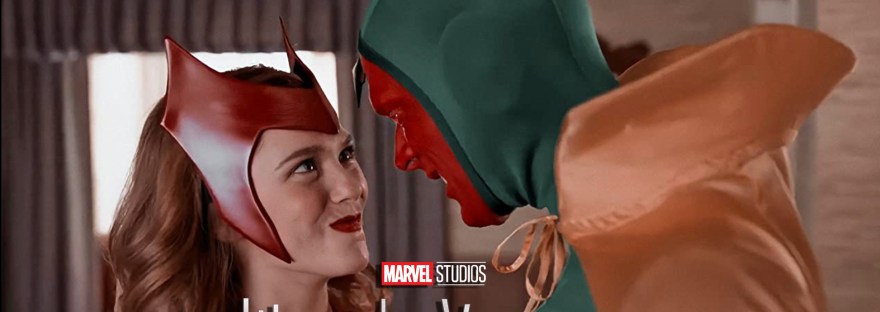
Mr. Khan’s Review on WandaVision (Ep VII-IX) – Series Finale! (2021)

A review on American Television miniseries, WandaVision ep VII- IX (2021) which marks the finale of the show. The mini-series is directed by Matt Shakman and stars Elizabeth Olsen as Wanda and Paul Bettany as Vision. The show is a continuation of the saga from the Marvel Cinematic Universe and is a Disney Plus Original series.

(Note: If you’ve already read the review of the previous episodes, you can skip directly ahead to the High points section).

+ Crew

  • Directed by Matt Shakman
  • Cinematography by Jess Hall
  • Music by Christophe Beck
  • Produced by Chuck Hayward
  • Created by Jac Schaeffer
  • Production by Marvel Studios
  • Distributed by Disney Platform Distribution 

+ Note

WandaVision is continuation of the Marvel Cinematic Universe (Phase 4) where we get to explore more the relationship between the two popular Marvel characters; Scarlet Witch and Vision. The series is cleverly disguised as an American vintage sitcom with multi camera shots and canned Laughter from the audience in a (supposedly) TV Studio. WandaVision is clearly inspired from 50s-60s sitcoms like ‘I Love Lucy’, ‘Bewitched’ and later in color, ‘The Brady Bunch’, where situational comedy plays a key role to the show.

+ Main Cast

  1. Elizabeth Olsen as Wanda Maximoff / Scarlet Witch
  2. Paul Bettany as Vision
  3. Debra Jo Rupp as Mrs. Hart
  4. Fred Melamed as Arthur Hart
  5. Kathryn Hahn as Agnes
  6. Teyonah Parris as Monica Rambeau
  7. Kat Dennings as Darcy Lewis
  8. Randall Park as Jimmy Woo

+ Plot

WandaVision starts off in 1950s suburban America. A husband and a loving wife have just moved in the neighborhood and get along with their neighbors quite well. But unbeknownst to the neighbourhood, they are no ordinary couple. In fact, they are the famous Avengers; Scarlet Witch and Vision who hide their super powers in order to live a happy, wholesome life. But something doesn’t seem right about this scenario. It’s almost too… perfect? How did present day Avengers end up in decades old American TV sitcoms? Where or how did they enter this delightful comedy of errors? What is exactly wrong with WandaVision?

+ High Points

SPOILER ALERT!: (From here on out, there will be spoilers for the show as it is impossible to discuss the plot points without spoiling anything. If you still haven’t seen the show and would like to see it, you can skip directly to Overall section below).

i – So the last three episodes of the show have all been about ‘Revelations’. Agnes, the nosy neighbor from the previous episodes, is the master manipulator Agatha Harkness who played the puppet master of sorts behind the curtain. Kathryn Hahn’s heel turn has been magnificently handled by the actress and was fully aware of the fine balance between campy and solemnity when necessary. Although it was far from perfect, Agnes serves great and memorable as Scarlet Witch’s formidable adversary in the series finale (and the catchy jingle at the end of episode 7 was just the icing on the cake!).

ii – Episode 8 “Previously On” was the best episode in the series. The emotional journey of what Wanda had to go through to become what she is now, was brilliantly handled and executed. It is indeed tragic to see in the past few MCU movies, how Wanda slowly lost everyone she ever cared for; her brother Pietro Maximoff (aka Quicksilver) to Vision’s sacrifice in Avengers: Infinity War (2018). The scene when Wanda has to witness the autopsy/ dismemberment of Vision’s body was gut wrenching and one could easily forget that WandaVision is supposed to be a mere superhero show. The question was set up in the first episode; why or what is WandaVision? And the answer has been well delivered. Kudos to the writing of the show.

iii – Although very short lived, the dynamics of Wanda’s family; her husband Vision and her twin sons, was fantastic. The actors work great off one another and bring a much needed warmth and empathy to the show.

iv – The newly designed costume of Scarlet Witch is slick but also does not deviate too far from its source material. The leathery, muted red can work very well on the silver screen.

v – Once again, I have to praise the lead actors of WandaVision. They were incredibly well rehearsed with the script, delivered with such impeccable precision and skill that quite frankly, is hard to pull off. WandaVision was comedic and dramatic whenever it needed to be and none of this would have been possible if not for Elizabeth Olsen and Paul Bettany’s outstanding onscreen chemistry together. WandaVision is essentially a tragic love story between a Witch and an A.I. And as silly as it sounds, the lead actors managed to make it not only believable but relatable at the same time.

vi – While in the previous episodes, the scenes involving the S.W.O.R.D. were the more ‘boring’ aspects of the show, the last three episodes manage to make them more essential and interesting for the developing plot so that the center conflict of the show could flourish. As the show went on, the characters of Jimmy Woo and Rambeau became more central and integral to the plot and with good writing, became much more fleshed out as the show reached its climax.

vii – Even with the greenscreen fight scene at the end, the Special Effects were brilliant throughout the show and never faltered at any point. 

viii – After reaching its conclusion, one can mention countless assets to credit WandaVision’s success but none can be more important than the writing itself. Jac Schaeffer and co. really knocked this one out of the park and while the finale did turn out to be just another epic MCU battle in the sky (more on that in the Low Points section), the writing was consistent in quality throughout its nine episodes. And it cannot be emphasized enough how integral the writing was to WandaVision’s success.

ix – The emotional send off from Wanda to her family was tragic but beautifully handled. After 9 Episodes, the show gave enough time and space to understand Wanda’s actions and her motivations. The loss of her loved one and her wish to have a family became a distant dream. The show meticulously handles Wanda’s character arc, the crescendo and the finale of it. Where will Wanda go from here? That is a question MCU fans will be eagerly looking forward to. 

+ Low Points

i – With all that was great about the show, the finale was a disappointment of sorts. Instead of a clever and unique way to resolve the conflict, the producers felt the necessity to end this in the most generic fashion they could think of. Wanda battles Harkness in the red greenscreened sky, shooting magic lasers out of their hands. Yawn. The show really lost its luster during the fight and will leave viewers and fans disappointed with lack of creativity. Come on, Jac Schaeffer. I’m sure your team could have come up with something more inventive than that…

ii – It was also a disappointment that Evan Peters’ introduction as Quicksilver in the MCU was used as a punchline for a lackluster joke. Why? Evan Peters was fantastic as Quicksilver and a major asset to the franchise. Why throw it all away? A baffling decision really. 

iii –  So the two Visions have a go at one another, they talk and for some reason, the reprogramed ‘white’ Vision just gets up and leaves? Were the writers really clueless what to do with him? I understand they will introduce him later on sometime in MCU but this whole conflict turned out to be pretty forgettable at the end.

iv – By taking the whole town of Westview hostage, Wanda was psychologically torturing the citizens of the town. In the end, Wanda does the right thing and gives up on her fantasy life to release the Westview citizens of torment but are there no repercussions to Wanda’s actions? Is the S.W.O.R.D.  just going to let Wanda walk away from all this? Although it is understandable that the anguish Wanda had to endure after losing her loved ones but for Wanda to just walk away from all this scott free….it just feels wrong.

+ Overall

WandaVision is a show of many accomplishments. Not only was it engaging television but it proved that even with the current pandemic, Marvel Cinematic Universe can still flourish as a miniseries on the streaming platform Disney Plus. The finale was an unfortunate and predictable letdown but nonetheless, the show was still a triumph and a brilliant in depth look into the psyche and relationship of Wanda and Vision. 

The 9 episode mini-series is now complete and available on Disney Plus.

Rate (Ep VII – IX): 3.5 out of 5 stars

Rate (WandaVision): 4.0 out of 5 stars

TV series

Mr. Khan’s Review on Raqeeb Se – Episode VII (2021)

A review on Pakistani drama TV series, Raqeeb Se – Episode 7 (2021). The new TV series is directed by Kashif Nisar and is a production of Momina Duraid Productions. Raqeeb Se is a HUM TV Production.

(Note: If you’ve already read the review of the previous episode, you can skip directly ahead to the High points section).

+ Crew

  • Directed by Kashif Nisar
  • Written by Beegul
  • DOP by Hassam Mairaj
  • Music Composed by Hadiqa Kiani
  • Produced by Momina Duraid Productions

+ Note

Raqeeb Se is the newest HUM TV Production and is once again the collaboration of the award winning Writer/ Director duo of Bee Gul and Kashif Nisar. 

The title of the show is heavily inspired by a poem from the legendary poet Faiz Ahmed Faiz when the young poet fell in love with a girl next door in Sialkot. But alas, as luck would have it, she one day unexpectedly left the city, only to be reunited years later when Faiz was already an established poet in the circles of Urdu literature. This encounter inspired Faiz to write a poem “Raqib Se!”. The backstory of this poem plays a crucial role in the premise of the show.

 + Main Cast

  1. Hadiqa Kiani as Sakina
  2. Noman Ijaz as Maqsood
  3. Sania Saeed as Hajra
  4. Faryal Mehmood as Insha
  5. Iqra Aziz as Ameera
  6. Saqib Sameer as Rafiq

+ Plot

Raqeeb Se is a call of Maqsood’s dark past that could potentially destroy his present life. In order to escape her abusive husband, Sakina, along with her daughter Ameera, flees from her village to find shelter at her former lover’s place, Maqsood. Unfortunately Maqsood, who still holds a grudge against Sakina’s past actions, refuses to aid her in her most dire situation. But his wife, Hajra, seems much more sympathetic to the situation and lets Sakina stay at their home till things are figured out for the future.

But can Sakina be trusted to stay out of Maqsood’s life or will they be tempted to rekindle their lost love and in the process, destroy what Maqsood and his wife Hajra have built together?

+ High Points

i – Regardless of the problems with writing and plot development, what Raqeeb Se has been consistently good with is its presentation. The Director of Photography Hassam Mairaj’s work has been great throughout the show. And the praise should also be upheld for the entire crew behind the camera. 

ii – Saba Faisal’s performance as the sassy, uptight Punjabi lady is outstanding. Since her introduction, she is magnetic in every scene she is a part of and brings a much needed flair to the show.

iii – Even though nothing much happens in Episode 7, the interaction between characters with conflicting personalities was interesting enough for the episode to breeze through.

iv – The short biryani scene between Insha and her lover was a nice touch and visually depicted that even with so much uncertainty surrounding their secure future, they still love each other enough to just simply enjoy the finer moments in Life.

 + Low Points

i – “Like watching paint dry…”. This perfectly sums up Raqeeb Se’s plot development since its premiere on Hum TV. Episode 7 yet again adds nothing to the overall plot development of the show. It’s characteristically tedious and lingers far too long on its premise than it has any right to. And the worst part is, Raqeeb Se has such a stellar cast and creative team but nothing engaging to offer to its viewers. It’s been quite a letdown up till now.

ii – It has to be mentioned that Insha’s interaction with her parents is extremely cold and alien at times. There seems to be a total loss of love and affection that one has for her parents. She even sometimes refers to her father as “Maqsood sahib”. Even with the backstory of Maqsood that we know now, her actions are not justifiable. Is there any other reasoning behind all this that has currently not been revealed?

iii – Hajra is unconvincingly depicted as extremely naive and quite frankly, ridiculous at times. She has mentioned a couple of times how Maqsood has done so much for her but why is Hajra so eager to keep Sakina at their place when ultimately, it’s clear that this will bring nothing but trouble to her marriage? The writing of the show is very vague and inconsistent on this issue and it’s getting really hard and frustrating for the viewer to sympathise with Hajra anymore.

+ Overall

Although Episode 7 was interesting enough through its compelling characters, the consistent plot development is still severely lacking in order to make the viewer look forward every week to watch the show. But with the recent cliffhanger of Episode 7, can Raqeeb Se make a comeback?

 Rate: 2.75 out of 5 stars

Feature Length Films

Mr. Khan’s Review on His House (2020)

A review on British Horror feature length film, His House (2020). The film is the directorial debut by Remi Weekes who is most commonly known for working as a Film Editor in the Industry. The film is co-produced by BBC Films and after premiering at the Sundance Film Festival 2020, His House was acquired by Netflix for distribution.

+ Crew I

  • Directed by Remi Weekes
  • Cinematography by Jo Willems
  • Screenplay by Remi Weekes
  • Edited by Julia Bloch
  • Music by Roque Banos
  • Produced by Aidan Elliott, Martin Gentles, Arnon Milchan, Ed King and Roy Lee

+ Crew II (Production Houses)

  • Regency Enterprises
  • BBC Films
  • Vertigo Entertainment
  • Starchild Pictures

+ Note

His House is an independent British film by Remi Weekes and it is a tale of countless horror experiences that refugees have to face in order to enter their “promised land”. Although His House is essentially a horror film, Weekes indulges further into what it’s like adjusting in a foreign country, facing racism on a semi-regular basis while maintaining the phrase “But we’re one of the good ones…”. The allocated house is a complete dump, there are countless holes in the walls but that is only where the nightmares are about to begin. The film emphasizes themes like traumatic pasts which the director cleverly converts into visual memories, curses and undying spirits coming back to haunt you.

+ Main Cast

  1. Wunmi Mosaku as Rial
  2. Sope Dirisu as Bol
  3. Matt Smith as Mark
  4. Javier Botet and Cornell John as The Witches
  5. Emily Taaffe as Dr. Hayes
  6. Malaika Abigaba as Nyagak

+ Plot

A refugee couple from South Sudan escape their terrorized village in order to seek asylum in Great Britain. Upon receiving their newly allocated home, they realize that the nightmares that the couple left behind have only been lurking deep within their own psyche.

+ High Points

i – What’s always great about Independent films and debut directors is that they are fearless with their art. They have a clear vision and they are not afraid to pull any punches toward making you as a viewer squirm in the comfort of your home. His House is masterful storytelling. The delicate blend of horror and drama brings the poignant premise out on the forefront. And Weekes directorial debut shows a lot of promise and conviction in his art.

ii – Since the film is a chamber play for the most part, the two leads (Mosaku and Dirisu) are superb throughout the film. Their chemistry is what makes this film so utterly convincing and heartbreaking. Although I was never a refugee nor did I have to endure the pain that the two characters went through, I do know what it’s like to adjust in a foregin land, trying to please people, make them believe that you are “the good one”. Weekes’ screenwriting hits its mark with such persuasion and tenacity. 

iii – The horror of the film is timed and executed with perfection. His House relies heavily on the “drama” aspect of the premise which was undoubtedly the right decision for this subject matter. Visuals are meaningless if they do not provoke any emotion into you. The film knows that very well which is why it stands tall above any other low budget horror film out there.

iv – The visual effects are (for the most part) surprisingly convincing and do not ever overstay their welcome. Most of the CGI masked characters are in the shadows which is always a clever way to disguise the film’s lack of budget.

v – The dinner table scene is exceptional with its pacing and visuals. This one scene alone can encapsulate the sense of dread and solitude the film entails within its masterful storytelling.

vi – The Soundtrack of the film (by Roque Banos) is beautiful and haunting. With its synthesized and minimal instrumentals, the music will linger within your mind long after you are done watching the movie.

+ Low Points

i – As mentioned, His House has great visual effects for an Independent film but there are some sore spots here and there, mainly the zombie-like figures. They look great in short bursts but if revealed for too long, one can begin to see the cracks.

ii – The third act is slightly lacking in what the first two accomplished. The visual composite of “Fear” at the end was a slightly underwhelming conclusion to a gem of a film.

+ Overall

A haunting, excellent tale on Humanity, His House is the perfect example of why we always need to encourage and promote Independent filmmakers and their abundant creativity that comes with it. This film deserves to be seen by the mainstream audience.

Rate: 4.5 out of 5 stars

Feature Length Films

Mr. Khan’s Review on The White Tiger (2021)

A review on American feature length film, The White Tiger (2021). The film is directed by Irani/ American filmmaker Ramin Bahrani. Based on the best selling Indian book The White Tiger by Arvind Adiga, the film stars Adarsh Gourav, Priyanka Chopra and Rajkummar Rao. The White Tiger is distributed by Netflix.

+ Crew I

  • Directed by Ramin Bahrani
  • Cinematography by Paolo Carnera
  • Screenplay by Ramin Bahrani
  • Edited by Tim Streeto and Ramin Bahrani
  • Music by Danny Bensi and Saunder Jurriaans
  • Produced by Mukul Deora, Ramin Bahrani, Priyanka Chopra and Ava DuVernay

+ Crew II (Production Houses)

  • Lava Media
  • ARRAY
  • Noruz Films
  • Purple Pebble Pictures

+ Note

The White Tiger by Arvind Adiga was published back in 2008, dealing with the intricate sociological infrastructure of the caste system in India and its consequences. Producer Mukul Deora bought the rights to the novel immediately and chose Ramin Bahrani as the director to bring this story to fruition. Bahrani is well renowned in the film industry for being the voice for the “underbelly” of society with such films as Man Push Cart (2005) and Chop Shop (2007). In order to bring authenticity to the story, Bahrani did not want to cast a well known, handsome Bollywood super star in the lead role but instead opted for Adarsh Gourav, who is hardly renowned for any film work within the public sphere. In order to play the lead role, Gourav went deep into Method acting, spent months in India riding local buses, working 12 hours a day, washing plates for a living. 

With the film well underway into Production, Priyanka Chopra also joined as a co-Producer to the team. The film was mostly shot in New Delhi and the production wrapped around the end of December 2019. The White Tiger was released in selected theaters and a worldwide release on Netflix.

+ Main Cast

  1. Adarsh Gourav as Balram Halwai
  2. Priyanka Chopra Jonas as Pinky
  3. Rajkummar Rao as Ashok
  4. Mahesh Manjrekar as The Stork
  5. Vijay Maurya as Mukesh ‘The Mongoose’
  6. Kamlesh Gill as Granny

+ Plot

The White Tiger is a once in a lifetime creature; the beast who seizes his moment by force. Such is Balram Halwai from the Indian Halwai lower caste. Balram wants to leave his life of poverty and serve his master in the city. But upon witnessing the injustice between the elite and the poor, Balram has a change and heart and decides to cultivate his own fate.

+ High Points

i – What I absolutely love about Ramin Bahrani’s films is that no matter which country or background, the films he makes are extremely authentic and true to the land/ culture where the film takes place in. Of all the good India has, The White Tiger is also the unfortunate part of the real India. The caste system is extremely prevalent within the country side and into the Indian culture. And Bahrani highlights this problem with such ease and delicacy. 

ii – Adarsh Gourav playing the role of Balram Halwai is picture perfect casting and undoubtedly, the highlight of the film. As mentioned in the ‘Note’ section, his dive deep into method acting makes Gourav not only physically believable as the ‘common Indian man’ but also with every physical inflection and unspoken facial emotion of the actor. I cannot (for the life of me) ever imagine Aamir Khan or any other Bollywood Superstar playing this role. It would’ve totally tanked the credibility of the story but luckily, Bahrani’s insistence on choosing a relatively unknown actor for the lead role was the defining factor of the film.

iii – The script is adapted incredibly well onscreen by Bahrani (who serves as the sole writer of the screenplay). The film sets up the disparity (financially as well as psychologically) right from the start, allowing anyone unfamiliar with Hindu customs understand what the caste system is and how deeply ingrained it is into the Indian culture.

iv – The character arc of Balram from wide eyed naive boy who dreams of becoming big into a cynical, hopeless realist is written with such care and attention. Although he is never likable throughout his journey, you have to sympathize with his anguish and poisonous hatred for the elite as day by day, he realises how unfair life is and how there is no place for someone as naive as him to exist and not be taken advantage of.

v – The wide angle lens is extensively used throughout the film by the cinematographer Paolo Carnera and serves quite well in depicting the madness and claustrophobia of living in a busy city like New Dehli.

vi – The White Tiger is what Slumdog Millionaire should have been; a hard, unforgiving depiction of the reality of Indian Poverty and the workings of the horrendous caste system. The film is unapologetic (which might turn some viewers away) but it is a story that must be told. There are millions of ‘Balrams’ living in India who have no voice, who are faceless in the world where injustice prevails. The film absolutely does not sugarcoat any of the harsh realities of life in India and that, for me, was highly appreciable. 

+ Low Points

i – While the first and second act of the story are brilliantly realised onscreen, where The White Tiger unfortunately fails for me is the third act. All that great buildup is ultimately paid off in such a whimper of a fashion where the story just ‘ends’ and as a viewer, you are left wanting more and ultimately, left unsatisfied with the conclusion. Perhaps that is what the director intended but it sadly doesn’t make for compelling storytelling.

ii – It must be mentioned that as a fan of Bahrami’s work, I do miss his earlier, neo realist, documentary style of filmmaking (Man Push Cart, Chop Shop) as opposed to later in his career, more cinematic approach (99 Homes, The White Tiger). Perhaps the authenticity of the story of The White Tiger would have been even more prevalent if the film was shot with slightly less polished cinematography and editing, bringing a more documentary, realist look to it.

iii – After watching the film, The White Tiger does leave you dower and ‘indifferent’. And that is unfortunate because Gurav is such a sympathetic and likable character but the twist and turns of the last act leaves nothing worth rooting for.

+ Overall

The White Tiger is an emotional, moving story of millions of Indians who are forced and brainwashed to live in the brutal, centuries old caste system. Even though the third act fails to deliver, The White Tiger is still an essential journey that everyone should go through.

Rate: 3.5 out of 5 stars

TV series

Mr. Khan’s Review on Raqeeb Se – Episode VI (2021)

A review on Pakistani drama TV series, Raqeeb Se – Episode 6 (2021). The new TV series is directed by Kashif Nisar and is a production of Momina Duraid Productions. Raqeeb Se is a HUM TV Production.

(Note: If you’ve already read the review of the previous episode, you can skip directly ahead to the High points section).

+ Crew

  • Directed by Kashif Nisar
  • Written by Beegul
  • DOP by Hassam Mairaj
  • Music Composed by Hadiqa Kiani
  • Produced by Momina Duraid Productions

+ Note

Raqeeb Se is the newest HUM TV Production and is once again the collaboration of the award winning Writer/ Director duo of Bee Gul and Kashif Nisar. 

The title of the show is heavily inspired by a poem from the legendary poet Faiz Ahmed Faiz when the young poet fell in love with a girl next door in Sialkot. But alas, as luck would have it, she one day unexpectedly left the city, only to be reunited years later when Faiz was already an established poet in the circles of Urdu literature. This encounter inspired Faiz to write a poem “Raqib Se!”. The backstory of this poem plays a crucial role in the premise of the show.

 + Main Cast

  1. Hadiqa Kiani as Sakina
  2. Noman Ijaz as Maqsood
  3. Sania Saeed as Hajra
  4. Faryal Mehmood as Insha
  5. Iqra Aziz as Ameera
  6. Saqib Sameer as Rafiq

+ Plot

Raqeeb Se is a call of Maqsood’s dark past that could potentially destroy his present life. In order to escape her abusive husband, Sakina, along with her daughter Ameera, flees from her village to find shelter at her former lover’s place, Maqsood. Unfortunately Maqsood, who still holds a grudge against Sakina’s past actions, refuses to aid her in her most dire situation. But his wife, Hajra, seems much more sympathetic to the situation and lets Sakina stay at their home till things are figured out for the future.

But can Sakina be trusted to stay out of Maqsood’s life or will they be tempted to rekindle their lost love and in the process, destroy what Maqsood and his wife Hajra have built together?

+ High Points

i – Episode Six entails more characters (Maqsood’s older brother and his wife) which is a blessing for the show since the same four main cast of characters in every episode was becoming stale fast.

ii – In my last review, I mentioned that Hajira’s character needed more exploration. Thankfully, this was already in the cards of Raqeeb Se’s creative team as there are subtle hints of Hajira’s eventual outburst against the rekindled relationship between Sakina and Maqsood.

iii – The low lighten, illuminated backgrounds of each scene plays nicely to the overall dower atmosphere of the show. It visually conveys the anguish and seriousness of the plot.

Iv– There were some experimental camera angles used in between the episode which (for the most part) worked quite well. A shot through the glass where a window frame separates the two characters and their conflicting point of views was a nice touch.

 + Low Points

i – This show is incredibly repetitious and uncompelling for the most part.  No matter how many layers there are to the Maqsood/ Sakina story, the pacing is slow, each scene lingers on much longer than it should and an iteration of the same themes of “will Sakina leave or stay?” is already a monotonous premise at this stage of the show. The plot and character arcs need to develop at a much faster pace than this as it is currently an ordeal to watch through.

ii – SPOILER ALERT!!! (skip to next point if you would like to avoid it)

The revelation that Ameera is possibly in love for Maqsood sahib is… well, disturbing to say the least. Yes, younger women do get fascinated with older men but just the fact that Maqsood was almost engaged to be married to her mother is (quite frankly) repulsive to say the least. Whether there will be any feeling from Maqsood sahib remains to be seen but is this really the direction the show wants to go to?

iii – The whole sequence of Sakina leaving for her village and then eventually, Maqsood Sahib bringing her back seemed utterly pointless and was quite obviously a tactic to prolong the episode to an hour long TV show.

iv – Near the end of the episode, Faryal Mehmood’s malicious dialogue towards Sakina felt quite out of character. Although it’s already established that she doesn’t like this whole arrangement, the threatening tone seems so out of the blue and felt as if the writer got Ameera’s dialogue mixed up with Insha’s.

+ Overall

Even with a shocking revelation, Episode 6 once again falls back to mediocrity and serves nothing to the overall plot in the long run.  

 Rate: 2 out of 5 stars

Feature Length Films

Mr. Khan’s Review on The Dark Knight (2008)

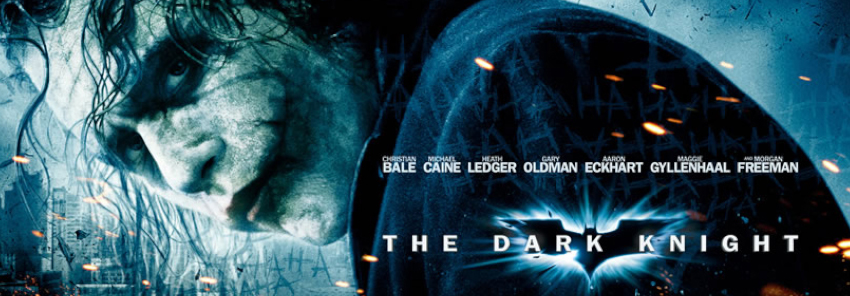
A review on Hollywood feature length film, The Dark Knight (2008). The film is directed by Christopher Nolan and is the second film in the Dark Knight trilogy. The film is distributed by Warner Bros. Pictures.

+ Crew I

  • Directed by Christopher Nolan
  • Cinematography by Wally Pfister
  • Story by Christopher Nolan and David S. Goyer
  • Screenplay by Jonathan Nolan and Christopher Nolan
  • Edited by Lee Smith
  • Produced by Emma Thomas, Charles Roven and Christopher Nolan

+ Crew II (Production Houses)

  • Warner Bros. Pictures
  • DC Comics
  • Legendary Pictures
  • Syncopy

+ Note

After the success of Batman Begins which rebooted the Batman franchise for a new generation of fans, Christopher Nolan was given full reign to create a sequel for Warner Bros. with the continuation of the Dark Knight saga. The budget this time around was significantly larger and Nolan brought in his brother Jonathan Nolan to co-write the screenplay with him. Two new villains were to be introduced; Heath Ledger as the Joker and Aaron Eckhart as Harvey Dent/ Two Face. 

Interestingly enough, Nolan originally wanted Ledger to play Batman in the first film but was ultimately rejected. Many prominent actors such as Adrian Brody, Robin Williams and Paul Bettany sparked interest for the role of the Joker but Nolan was adamant on Ledger for the Clown Prince of Crime. As was the realistic tone of the first film, Nolan wanted Ledger to move far away from Jack Nicholson’s portrayal of the Joker in Tim Burton’s Batman (1989) and bring his own psychotic interpretation of the character. And with that, it was mostly all Ledger from there. The iconic Chemical Factory mishap origin story was retconned and instead, the messy face paint makeup and scarred smile became the character’s iconic personification. The scenes of Handy cam Footage of the Joker were all staged and planned by Heath Ledger himself. During Production, everyone was at awe with Ledger’s performance and knew it was “something special”. Sadly such intense method acting also encouraged the actor into increasing his prescription drugs which ultimately took his own life before the film was even released.

With the sequel, Nolan wanted to experiment more with Batman’s detective skills while Havery Dent served the role as his counterpart. One of the main reasons for the addition of Two Face was to garner sympathy from the audience that the Joker character could not provide in the film. The filming started around 2007 and was primarily shot in the city of Chicago, USA. Even before the film’s release, The Dark Knight was already being hailed as a “Masterpiece” in the Superhero genre, particularly Ledger’s ecstatic performance. The film turned out to be a massive hit at the box office, earning $ 1 Billion worldwide and thus, Batman was once again the superhero of this generation.

+ Main Cast

  1. Christian Bale as Bruce Wayne / Batman
  2. Michael Caine as Alfred Pennyworth
  3. Heath Ledger as the Joker
  4. Aaron Eckhart as Harvey Dent
  5. Maggie Gyllenhaal as Rachel Dawes
  6. Gary Oldman as James Gordon
  7. Morgan Freeman as Lucius Fox
  8. Cillian Murphy as Dr. Jonathan Crane / Scarecrow

+ Plot

After the events of Batman Begins, detective Gordon and Batman combine forces to clean the streets of Gotham from the corruption and terror that it once consumed. The district attorney Havery Dent plans on destroying the criminal infrastructure himself which could leave the Dark Knight’s role ‘obsolete’ as the masked vigilante. Meanwhile, a mysterious psychopath in clown makeup is terrorizing the underworld, calling himself the Joker. He plans nothing more than throwing the city into total anarchy. 

Could Batman and Dent save the city from this monster or will one of them fall into the dark path of utter chaos and destruction of Humanity?

+ High Points

i – To call The Dark Knight  a mere ‘great superhero movie’ is such an understatement. The Dark Knight IS a great film. Period. Nolan’s impeccable direction sets a new bar of what action/ Blockbuster films can be. From the opening Bank Robbery scene to the caped crusader riding on his Bat motorcycle away into the night, every moment, every scene is masterfully crafted. The character arcs, the pacing of each scene, everything is carefully and meticulously preconceived and executed, easily making the film to be one of the Best Films of the Decade. In 2002, Sam Raimi’s Spider-man may have kicked off this super hero revival but it is The Dark Knight that elevated it to an immense high standard of filmmaking.

ii – The Dark Knight is what every sequel should be. It is what The Godfather II was, what Terminator 2 accomplished. Whatever flaws the first film had, Nolan ironed out all the creases and relied heavily on his strengths and allowed his actors to bring their own set of skills to the table. This film is a textbook example of how a sequel should be made.

iii – The film entails excellent performances but all of them get overshadowed by the legendary performance of Heath Ledger as the Joker (and with good reason!). His mysterious ‘multiple choice’ past, his eccentric mannerisms, the antithesis of Batman makes Joker such a unique portrayal that we had perhaps never witnessed on the big screen. With immense heavy method acting, Ledger plunged deep into the psyche of the Joker and easily dominated every scene he was a part of. Although the film is called The Dark Knight, it is in fact the Joker who steals the show.

iv – Even though David Goyer is a great storyteller, it is the Nolan brothers that translate that work onscreen as a masterful three act structure of filmmaking. It is a perfect blend of high intensity scenes and the quieter moments of the film, serving as textbook screenwriting for every other action film hereafter.

v – What is the distinction between Good and Evil? Are they both different sides of the same coin? Is Evil only a misguided personification of Good? Do some good people only need one bad day to turn sides? The question was first asked in the epic Batman graphic novel ‘The Killing Joke’ and has now been immensely explored in The Dark Knight. This brings such high voltage tension between good and evil throughout the film. As a viewer, you are constantly engaged in a battle of who to sympathize and who to root for till the end of the film. It’s not a coincidence that many fans flocked towards the Joker’s perception of the world (even though it is highly flawed and inhumane).

vi – The film starts off with an absolutely fantastic opening Bank Robbery scene. Perfectly sets the tone and pacing of the narrative right from the get-go. And it’s one helluva ride from thereon out!

vii – The car chase scene through the gritty streets of ‘Gotham’ is alone a strong conviction that The Dark Knight is like no other superhero film before it. Nolan’s insistence on shooting with Film and practical effects are highly rewarding onscreen. It is one of the greatest action scenes ever put in modern American filmmaking.

viii – The supporting cast is also no pushover. Every actor brings their A game onto this epic journey and thus, every scene feels intense and exciting to witness. Gary Oldman (once again) is exceptionally brilliant as Detective Gordon and the only ally to the masked vigilante. 

ix – Even though the ‘realistic’ world of Nolan’s Batman might prove too bleak for some viewers, there is not a single moment throughout the film where Nolan is not in control of his work. The city of Chicago (where the film was mostly shot in) creates a plausible depiction of a ‘realistic’ Batman of today without indulging in excessive brute force and losing the sense of Batman’s character (something Zack Synder’s Batman v Superman utterly failed to accomplish). Most violence and blood spree is kept off screen, creating a sense of dread and despondence in the atmosphere. The film shows how well rehearsed Nolan and his team were with the Dark Knight from its source material and reimagined it in such a convincing fashion.

x – I cannot conclude the ‘High Points’ without mentioning its undeniable influence onto American cinema. Unsurprisingly, the film was a massive success at the Box Office, elevating the Superhero genre of films to a whole new level. Even after more than a decade, its impact on superhero/ action films is unquestionable. Although Marvel Studios cracked the formula of superhero Blockbuster success, The Dark Knight still sits high on its throne due to its craftsmanship.

+ Low Points

i – With such masterful filmmaking on display, not everything is (unfortunately) flawless about the film. The character arc of Harvey Dent is slightly rushed and not given enough time for the viewer to sympathise with his inevitable downfall from grace. Perhaps if Harvey Dent was briefly introduced in Batman Begins to the audience, his plunge into insanity in this film would’ve proven much more impactful.  

ii – With such brilliant practical effects throughout the film, the sparingly used CGI unfortunately sticks out like a sore thumb (namely, Two Face’s CGI face).

iii – While the city of Chicago serves well in Nolan’s world as Gotham City, it does come off as somewhat bland and turns out to be unmemorable in the long run.

+ Overall

The testament of every great film has to be its influence and contribution to Cinema and the art of filmmaking. And this film has it in spades. With superb performances, impeccable direction and memorable moments, The Dark Knight is still the pinnacle and one of the very best in the genre. True, not every superhero film needs to be The Dark Knight but every superhero film deserves to be compared to it.

Rate: 5 out of 5 stars

TV series

Mr. Khan’s Review on Daam (2010)

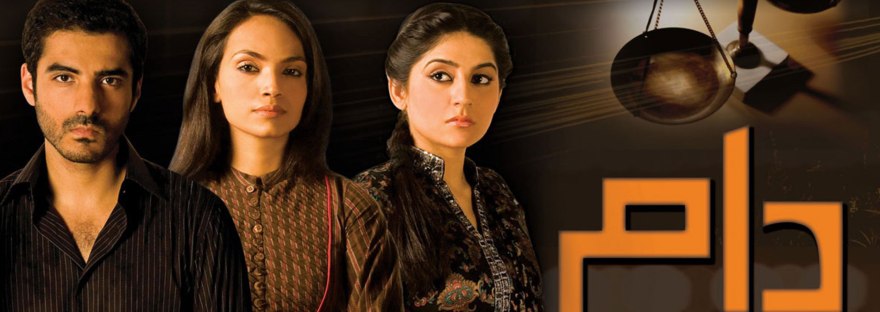
A review on Pakistani drama TV series, Daam (2010). The 18 episodes limited TV series is directed by Mehreen Jabbar and is a production of 7th Sky Entertainment. Daam is an ARY DIGITAL Production.

+ Crew

  • Directed by Mehreen Jabbar
  • Written by Umera Ahmed
  • Edited by Mehreen Jabbar
  • DOP by Asad Malik
  • Music Composed by Ustaaz
  • Opening Theme song “Daam Tha” by Zeb Bangash and Haniya Aslam
  • Produced by Humayun Saeed and Abdullah Kadwani

+ Note

Daam is a “coming of age” tale of young Karachities who dream big and stars soon to be famous actors like Sanaam Baloch, Aamina Sheikh and Adeel Hussain. This show  is the brainchild of the famous Urdu novelist Umera Ahmed who has been credited to writing more than 30 books in her career, most notably ‘Peer-e-Kamil’ and ‘Meri Zaat Zara-e-Benishan’. Most of the TV series has been shot in the city of Karachi and is filmed on real locations. When first premiered, Daam became an instant rating sensation for ARY Digital and in 2015, made its premiere in India on Zindagi TV.

Daam indulges in social themes like friendship, betrayal and of course, the price of Happiness. 

 + Main Cast

  1. Sanam Baloch as Zara
  2. Aamina Sheikh as Maleeha
  3. Adeel Hussain as Junaid
  4. Nimra Bucha as Aasma
  5. Sanam Saeed as Fiza
  6. Pari Hashmi as Mano
  7. Muhammad Yasir as Jamaal (Zara’s brother)
  8. Lubna Aslam as Amna (Zara’s mother)
  9. Shahid Naqvi as Hidayatullah (Zara’s father)

 + Supporting Cast

  1. Faisal Shah as Yasir
  2.  Muhammad Ahmed as Sami (Maleeha’s father)
  3. Parveen Malik as Maleeha’s mother
  4. Behroze Sabzwari as Haji Saab
  5. Atif Badar as Ghulam Ali (The Shopkeeper)
  6. Farah Nadir as Mumani
  7. Ahmed Zeb as Jibran

+ Plot

Daam is the story of a group of young adults, living in the city of Karachi who (regardless of their social classes) have a strong bond of friendship that binds them together through thick and thin of Pakistani societal hardships. This all changes when Maleeha (from a financially well off family) finds out that her best friend Zara (from a lower middle class family) is in love with Maleeha’s brother Junaid and are engaged to be married. 

Can relationships be bought and sold in the market of Life? Daam is the story of the price that Maleeha has to pay to her best friend in order to stop the marriage and retain the status quo of social norm of Life.

+ High Points

i – The success story of Daam has to be credited to the brilliant talented team behind it. Mehreen Jabaar’s impeccable direction throughout the series brought the hardships of Life out on the forefront. Jabbar is excellent when it comes to directing a large cast of actors and Daam was no exception. Her talents are best utilized when she is given free reign to make her actors emote tension, excitement and sorrow and inturn, create exciting Television for her viewers. Although Jabbar has also indulged in Cinema, her strength has always been in Television and Daam is a prime example.

ii – The TV show entails incredible, highly convincing performances from its lead actors; Sanam Baloch, Aamina Sheikh and Adeel Hussain. Whenever they were together onscreen, it was evident with every dialogue and physical interaction, they were in fact, not mere actors but actual characters that they were portraying on screen. After the premiere of the show, all three went on with their own career success stories and Daam could very well be the pinnacle of where it all began for them. 

iii – But it’s not just the lead actors, the supporting cast of Daam was also a major contributing factor to the show’s success. The parents of each character led out love, anger and empathy in such a convincing manner that one cannot help but compare them to someone we know in our own lives! The intercracy of marriages and family life in a Pakistani society is extremely vital and Daam’s depiction was of incredible depth and delicacy that the story so richly deserved.

iv – Some say that behind each great performance, it is the writing that holds it all together and for Daam, it could very well be the case. Umera Ahmed’s brilliant writing was probably a major contributing factor for the TV show’s success. The elegance in her writing dialogues and set pieces makes you as a viewer utterly convinced by the sheer urgency and warmth behind each character and the emotions behind the facade. Regardless of male or female character, Umera’s writing is frightently convincing and sometimes, the simplicity and naturalness of her dialogue makes you forget that you are in fact watching a scripted TV show.

v– The pacing of the show from beginning to the end was superb. Each episode was crafted with such precision by Umera Ahmed that every single one of them can be seen solely on its own personal merit and still, the narrative of the show was simplistic to follow through.

vi– The set design, locations and costumes play such a key role in presenting the reality of societal hardships and Daam seamlessly shifted back and forth between the divide of rich and poor communities of Karachi. 

vii– The soundtrack ‘Daam tha’ by Zeb & Haniya for the show is fantastic with its slight Jazz influences and melodramatic traditional music that leaves you humming each time you are through with an episode!

viii– A lot of TV shows start off great but by the end, fizzle out and become a mere relic of how great they once were. Not this show. Daam was carefully planned, right from the getgo and the plot seamlessly flowed from the first episode till the last. The show ends on such a high note that will leave a lingering thought in your mind for weeks to come. And that for me, is a sign that Mehreen Jabbar and ARY Digital really made something special.

 + Low Points

i – While Daam is flawless in almost every way when it comes to narrative, plot development and characters, it does unfortunately lack in its technical execution; namely the sound mixing. Numerous times, it was evident that the collar mics got muffled in between characters hugging each other or the audio levels were extremely off; some scenes too loud, echoing can clearly be heard in some locations. Such a great show but tad bit disappointing that the audio team behind the show did not do a decent job that the show deserved.

ii – But the problem is sadly not only limited to Audio; the editing of the show was incredibly amateurish. The editing and pacing at times was out of sync with the flow of each particular set piece. For example, Telephone calls were edited one dialogue from each character at a time which makes the scene incredibly monotonous and boring to observe/ listen to. With each scene, the editor needs to decide where the emphasis of the scene should lie and cut accordingly. One to one editing has the tendency to make scenes much more tedious than they should be. Since Mehreen Jabbar credits herself to be the sole editor of the show, it can be safely concluded that while Jabbar is excellent in directing her actors, she is also unfortunately in love with every image she shoots with her Director of Photography. Perhaps the show would’ve benefited much more if an external Editor was hired to edit the show for a more polished look.

iii – There were numerous repetitions of the ‘city of Karachi’ scenes in between scenes. Within a single episode, the exact same main road scene was seen twice within a 15 min span. That’s unfortunately just lazy editing and momentarily takes the viewer out of the show.

iv – There were perhaps too many flashback scenes at times in the later episodes. It is obvious that the show wants to keep their new viewers up to date as to what is happening but the show would’ve benefited if they kept some flashback scenes out, especially when you saw that scene just in the last episode!

+ Overall

With excellent performances, superb direction and writing, Daam is one of the best modern dramas Pakistani television has ever produced. Even with its obvious technical flaws, the show speaks to its audience like no other. Daam is one for the ages.

 Rate: 4.25 out of 5 stars

TV series

Mr. Khan’s Review on Raqeeb Se – Episode V (2021)

A review on Pakistani drama TV series, Raqeeb Se – Episode 5 (2021). The new TV series is directed by Kashif Nisar and is a production of Momina Duraid Productions. Raqeeb Se is a HUM TV Production.

(Note: If you’ve already read the review of the previous episode, you can skip directly ahead to the High points section).

+ Crew

  • Directed by Kashif Nisar
  • Written by Beegul
  • DOP by Hassam Mairaj
  • Music Composed by Hadiqa Kiani
  • Produced by Momina Duraid Productions

+ Note

Raqeeb Se is the newest HUM TV Production and is once again the collaboration of the award winning Writer/ Director duo of Bee Gul and Kashif Nisar. 

The title of the show is heavily inspired by a poem from the legendary poet Faiz Ahmed Faiz when the young poet fell in love with a girl next door in Sialkot. But alas, as luck would have it, she one day unexpectedly left the city, only to be reunited years later when Faiz was already an established poet in the circles of Urdu literature. This encounter inspired Faiz to write a poem “Raqib Se!”. The backstory of this poem plays a crucial role in the premise of the show.

 + Main Cast

  1. Hadiqa Kiani as Sakina
  2. Noman Ijaz as Maqsood
  3. Sania Saeed as Hajra
  4. Faryal Mehmood as Insha
  5. Iqra Aziz as Ameera
  6. Saqib Sameer as Rafiq

+ Plot

Raqeeb Se is a call of Maqsood’s dark past that could potentially destroy his present life. In order to escape her abusive husband, Sakina, along with her daughter Ameera, flees from her village to find shelter at her former lover’s place, Maqsood. Unfortunately Maqsood, who still holds a grudge against Sakina’s past actions, refuses to aid her in her most dire situation. But his wife, Hajra, seems much more sympathetic to the situation and lets Sakina stay at their home till things are figured out for the future.

But can Sakina be trusted to stay out of Maqsood’s life or will they be tempted to rekindle their lost love and in the process, destroy what Maqsood and his wife Hajra have built together?

+ High Points

i – Finally, some plot progression! In Episode 5, there are some key revelations about Maqsood sahib and Sakina’s mysterious past. And for the most part, they are quite satisfying.

ii – This bears repetition but Hadiqa Kiani’s performance (especially as a non actor) is great and a clear highlight of the show. Her subtle, nuance spoken words and gestures give her character the much needed depth that she so richly deserves. Judging solely by her performance, it is entirely convincing that Sakina has gone through some clear domestic trauma.

iii – Although we again return to the same , chamber play location of the bungalow, the house plays a crucial role in creating a claustrophobic atmosphere for the plot revelation that accompanies Episode 5. One of the most consistent bright spots of the show has been the selection of its locations and set design. They ultimately bring some tension that you can literally cut with a sharp kitchen knife.

Iv– The flashback scene in the village was incredibly well staged and directed. The lighting, cinematography, the gritty, intense music; everything about the sequence was brilliantly played out.

v– After a hiatus of a few lackluster episodes, we finally have a cliffhanger to an episode which would hopefully make its viewers come back for more.

 + Low Points

i – Music selection during tense or comic relief scenes are still a massive problem with this show. Even with good dialogue and performances, the tension in the scene is instantly deflated with poor music selection that is at complete odds with the tone of that set piece. Also the few tracks that they have are now becoming quite repetitious and the show needs to diversify its music library a bit more.

ii – Faryal Mehmood’s performance is noticeably below par as compared to the rest of the main cast. Her stiff dialogue delivery and lack of emotions prove detrimental to each scene she is supposed to take center stage in.

iii – Even though Episode 5 was eventful as compared to others, Raqeeb Se needs to pick up its pace a bit with its plot development. Otherwise they constantly risk losing viewership each week.

iv – It is fairly obvious that Hajira’s character needs some depth. At the moment, she noticeably just blends into the background whenever she is part of an essential scene. Of course, her character is naturally timid and forgiving but she needs some flair and detail to her personality.

+ Overall

With new plot revelations, Episode 5 proves that Raqeeb Se still has something engaging to offer to its viewers. Although the flaws of the show are painfully obvious, it is primarily the performances of its lead actors that are capable of producing engaging set pieces and great melodrama. But with that in mind, falling back to its slow lingering plot development could also prove the downfall of the show.

 Rate: 3 out of 5 stars

TV series

Mr. Khan’s Review on WandaVision (Ep IV-VI) (2021)

A review on American Television miniseries, WandaVision ep IV-VI (2021). The miniseries is directed by Matt Shakman and stars Elizabeth Olsen as Wanda and Paul Bettany as Vision. The show is a continuation of the saga from the Marvel Cinematic Universe and is a Disney Plus Original series.

(Note: If you’ve already read the review of the previous episode, you can skip directly ahead to the High points section).

+ Crew

  • Directed by Matt Shakman
  • Cinematography by Jess Hall
  • Music by Christophe Beck
  • Produced by Chuck Hayward
  • Created by Jac Schaeffer
  • Production by Marvel Studios
  • Distributed by Disney Platform Distribution 

+ Note

WandaVision is continuation of the Marvel Cinematic Universe (Phase 4) where we get to explore more the relationship between the two popular Marvel characters; Scarlet Witch and Vision. The series is cleverly disguised as an American vintage sitcom with multi camera shots and canned Laughter from the audience in a (supposedly) TV Studio. WandaVision is clearly inspired from 50s-60s sitcoms like ‘I Love Lucy’, ‘Bewitched’ and later in color, ‘The Brady Bunch’, where situational comedy plays a key role to the show. Since Disney Plus has only released three episodes up till now, it is still unclear where they are heading with this but one can safely assume, WandaVision is unlike anything MCU has produced up till now.

+ Main Cast

  1. Elizabeth Olsen as Wanda Maximoff / Scarlet Witch
  2. Paul Bettany as Vision
  3. Debra Jo Rupp as Mrs. Hart
  4. Fred Melamed as Arthur Hart
  5. Kathryn Hahn as Agnes
  6. Teyonah Parris as Monica Rambeau
  7. Kat Dennings as Darcy Lewis
  8. Randall Park as Jimmy Woo

+ Plot

WandaVision starts off in 1950s suburban America. A husband and a loving wife have just moved in the neighborhood and get along with their neighbors quite well. But unbeknownst to the neighbourhood, they are no ordinary couple. In fact, they are the famous Avengers; Scarlet Witch and Vision who hide their super powers in order to live a happy, wholesome life. But something doesn’t seem right about this scenario. It’s almost too… perfect? How did present day Avengers end up in decades old American TV sitcoms? Where or how did they enter this delightful comedy of errors? What is exactly wrong with WandaVision?

+ High Points

i – Since the last three episodes, many lingering questions have been finally answered as to what is actually happening in WandaVision and most of them have been fairly satisfying. What’s excellent about the show is that it has been brilliantly structured; Firstly, it lets you as the viewer in on the absurdity of the premise without giving much away. Secondly, it lets out short pieces of information which allows the audience to gather them together to fit the overall puzzle of the narrative. Say what you want about the Marvel Cinematic Universe but the creative team has a very clear vision and control over the plot and their interconnected Cinematic universe. The writers pay attention to every single detail in the show and Marvel rewards you for being a loyal, long time fan.

SPOILER ALERT!: (From here on out, there will be spoilers for the show as it is impossible to discuss the other plot points without spoiling anything. If you still haven’t seen the show and would like to see it, you can skip directly to Overall section)

ii – So Episode IV “We Interrupt This Program” was the expository episode in the series which explains what exactly is going on in WandaVision. Since the climax of Avengers: Infinity War, some heroes failed to make it out alive through this catastrophic world changing event, one being Wanda’s husband Vision. This prompted Wanda (through her magically, psyche manipulation powers) to take control of a town called ‘Westview’ and create a utopian, make believe world of her own which of course includes the American nuclear family; consisting of her, Vision and their twin children. This is such an excellent character development of Wanda, tapping into the unknown potential of her powers and in the process, also explains the Homage to American sitcoms throughout the decades of American Television. WandaVision is not a show taking place in a vacuum, it is directly and harshly affected by the cataclysmic events of the previous films. It’s a brilliant direction for the MCU and as a viewer, keeps you on your toes as to what could develop next in the overarching narrative of WandaVision. 

iii – I love that WandaVision is playing around, taking risks with their established characters. While It is still not a debate yet if Wanda has turned her back on humanity, one can sincerely sympathise with her emotional pain. Her loss of her brother in Avengers: Age of Ultron and her husband Avengers: Infinity War has left her emotionally in shambles and yearns for the perfect, happy world that she envisioned within herself. This character progression is organic and makes absolute sense to Wanda’s overall character arc.

iv – The “recasting” of Evan Peters as Quicksilver. And let’s be honest, the X-Men films’ Quicksilver is clearly the better choice here. He is infinitely the more charming and interesting one.

v – The eventual realization of Vision of how he might not even exist brings a great conflict to the forefront of the show. In Avengers: Infinity War, Vision was straight up murdered by Thanos and perhaps he will not take it too kindly that he has forcefully been revived by Wanda to take part in her fantasy of a perfect world.

vi – The Episode VI; “All-New Halloween Spooktacular!” comic accurate costumes for Scarlet Witch, Vision and Quicksilver were a cheeky touch and shows Kevin Feige’s respect for the source material.

vii – The visual effects by numerous SFX houses are top notch. This clearly shows that DIsney Plus always had strong faith and was 100% behind this show.

+ Low Points

i – Although WandaVision shines the most when the show is having fun with its own premise, it bogs down to a halt when we are forcefully thrown back into the “expository dialogue” scenes at the S.W.O.R.D. camp. The jokes seem forced, the dialogue is bare minimum and it only serves its purpose of moving the plot along so we can get back to Wanda and her family. It is obvious that expository dialogue is necessary but none of the characters there are engrossing enough to keep you interested.

ii – Up till now, Episode IV “We Interrupt This Program” was by far the weakest one and it’s no surprise that the majority of it took place at the S.W.O.R.D. base camp. Jimmy Woo, Monica Rambeau and Darcy Lewis; none of them are compelling enough characters to drive the episode through.

iii – Of all the characters they could have brought back for WandaVision, why did the writers decide on Kat Dennings’ Darcy Lewis? She is unfunny, fails to serve as a comedic relief and brings no urgency to the plot. It’s obvious that the Marvel Cinematic Universe has good and mediocre films along its three Phases. Why not settle for characters that were proven to be more likable?

+ Overall

Six episodes in and WandaVision still refuses to fade your interest away. It’s dark, unique and a shining beacon of hope that even after 12 years, MCU is still capable of coming up with fresh new ideas for its fan base and beyond. Although expository scenes can be made much more interesting, it is Wanda/ Vision that take the center stage and they have proven more than capable enough to captivate your attention through.

Rate: 4.25 (subject to change) out of 5 stars