TV series

Mr. Khan’s Review on Khaas (2019)

A review on Pakistani drama TV series, Khaas (2019). The 27 Episode limited TV series is directed by Danish Nawaz and is a Momina Duraid production. Khaas was aired on HUM TV.

+ Crew

  • Directed by Danish Nawaz
  • Written by Sarwat Nazir
  • Edited by Mehmood Ali and Nasir Inayat
  • DOP by Tameen Nizami
  • Music Composed by Sohail Haider
  • Opening Theme song “Woh Jo Tha Bahut Hi Khaas” by Natasha Baig
  • Produced by Momina Duraid

+ Note

Back in 2019, Khaas was a show which strived to be unlike any no other on Pakistani Television. On the surface level, Khaas could be your typical run of the mill drama between In laws and daughter in law but Sarwat Nazir’s writing strives the show to be much more than what it seems to be. Khaas is about an emotional plight of a woman in a male dominated culture. Where certain expectations are required from the woman of the house. The show is primarily a case study of what emotional abuse a woman has to face in order to be loved and respected by the Pakistani society; be that sustaining composure while your Husband makes hurtful jokes about you or extinguishing your goals and ambitions in order to please the traditional “norm” of being a housewife. Although this word is treated as poision by most of the Pakistani community, Khaas is in fact a ‘feminist’ drama in which the target audience is not necessarily women but also the male counterparts of our everyday life.

Khaas was a critical and commercial success throughout the country, garnering praise and applause from audiences who saw themselves in the protagonist Saba. The drama was nominated by Lux Style Awards for Best Writing and Best Original Soundtrack.

 + Main Cast

  1. Sanam Baloch as Saba Faraz
  2. Ali Rehman Khan as Ammar Saud
  3. Haroon Shahid as Fakhir
  4. Behroze Sabzwari as Faraz Ahmed; Saba’s father
  5. Lubna Aslam as Sadaf Faraz; Saba’s mother
  6. Saba Faisal as Kanwal Saud; Ammar’s mother
  7. Mashal Khan as Sonia
  8. Anam Goher as Nida Saud
  9. Sajida Syed as Nusrat

 + Supporting Cast

  1. Natasha Ali as Farah
  2. Amna Malik as Javeria
  3. Shehryar Zaidi as Saud; Ammar’s father
  4. Sonia Nazir as Anam
  5. Areesha Shah as Mehak Faraz
  6. Sanam Baloch as Fakhir’s late mother 
  7. Danish Nawaz as Fakhir’s late father (only seen in flashbacks)
  8. Hira Tareen as Salma

+ Plot

Khaas is a story of an ambitious woman named Saba (played by Sanam Baloch) who strives for her career and other goals in Life. That all unfortunately gets cut short once Ammar (Ali Rehman Khan) proposes to her and her family. Due to unwarranted pressure from her parents and society, Saba accepts the proposal and focuses on her married life instead. Even though Ammar is considered charming and loved by everyone around him, something seems not right about him. Slowly, the façade of Ammar breaks down and Saba gets to see what lies behind the curtain.

Meanwhile Fakhir (Haroon Shahid), a timid, shy artist who falls in love with Saba and steadily, a friendship brews between them, proving that within all that is dark, there is a glimpse of light at the end of the tunnel.

+ High Points

i – Khaas is a textbook example of how it should be done! Engaging storyline, memorable characters, cliffhangers after each episode, never once did my attention span falter while watching the show. The show hit every narrative beat picture perfect and its success and admiration by the fans is the living proof of it. 

ii – A lot of praise and attention should be devoted towards the main cast as each one of them portrayed their characters with absolute perfection. Sana Baloch as the strong yet sympathetic protagonist, Ali Rehman Khan as the narcissistic, petty manchild and Haroon Shahid as the shy, timid artist who sees good in everything. That’s a perfect dynamic of characters one could have for any TV show. And their performances were excellent throughout the series. 

iii – The character arcs of each of the main cast is also incredibly well written and realized onto the small screen. As a viewer, you can empathize with Saba’s journey from a shy, dominated girl to an empowered, striving woman. Experiences made her change, become more stronger in a cut throat environment of male domination. In Pakistan, men usually get away with a whole lot more than a woman can and Khaas highlights that aspect with total honesty and sincerity. And that is one of the main reasons why Khaas was such a mainstream success.

iv – Apart from the main cast, some of the supporting characters also resonate incredibly well, mainly Saba Faisal as Ammar’s mother. Saba is such a versatile actress that she could adapt to any character she would like and this one is no exception. Her perception towards womanhood and blindness towards her son Ammar is a story seen numerous times in our culture. Men mainly get away with such ruthless behaviour because there are certain women who support and tolerate them.

v– The production of the show is also a key aspect of its success. The colors are vibrant, the sets and costumes are adapted well to its narrative. Momina Duraid’s shows are usually top notch in quality and Khaas is no different.

vi– The story progression of the show is meticulously handled and executed. With each episode, you get to learn more about each of our main cast of characters, their motivations and their ambitions in life. Each episode just revealed enough for the audience to eagerly anticipate what would happen next.

vii– The dream sequence scene involving Fakhir’s parents was inventive and brilliantly executed. Especially casting Sanam Baloch as the mother (since Fakhir sees his mother in Saba) and the father played the director of the show Danish Nawaz.

viii– SPOILER ALERT!!! In the next point, I will talk about the controversial ending of the show. You can skip directly to the Low Points if you would like to avoid it:

So the most vital question in each viewer’s mind was how the show will conclude? Would Saba and Fakhir live happily ever after? Would Ammar learn the error of his ways and rekindle his love with Saba? The answer is; perhaps a little bit of it all? A lot of people were disappointed not to see Saba and Fakhir happily living together and granted, his supposed life threatening accident was a forced narrative decision (which I will elaborate more in the Low Points) but to see Saba, even in her most vulnerable position with her new born child, reject Ammar’s proposal for remarriage was the absolute right outcome. Fakhir’s untimely death and Saba’s decision to live her own life the way she wants it is the most logical conclusion to the story. She needed the conflict of decision making when life doesn’t go as planned. 

Saba’s experiences living under Ammar’s thumb and eventually self-emancipating herself from the shackles of society would have been in vain if not for this conclusion. Fakhir taught her to be responsible, to live her own life the way she sees fit. With his passing away, Saba can put all of this to the test. Whether she would ever remarry, could be anyone’s guess but Saba decided to raise her child on her own was the right outcome of the show. And a lot of praise and admiration should go to the writer Sarwat Nazir for making this happen in a mainstream TV show.

 + Low Points

i – While I really applaud the show’s audacity and determination to show such a unique storyline of how women are emotionally abused in Pakistani culture, what Khaas really should’ve done is make the show as close to reality as possible. This was necessary in order for the audience to relate to the protagonist beyond the world of TV dramas. Unfortunately, this is what the show failed to accomplish. The script is merely written for the sole purpose of melodrama entertainment. And sadly, that is what Khaas ends up being. A TV show. There are too many unrealistic scenarios, coincidences (in convenience to the plot), characters act completely dumb in order for the misunderstandings to happen, too many times where two characters gossip about someone and that “someone” is eavesdropping at that exact moment. Yes, it is possible to brush all of this off and say “It is just a TV show!”. Well, that is why one cannot take the story of Khaas seriously. It’s only true within the confines of your TV screen.

ii – Speaking of dumb characters, Behroze Sabzwari as Saba’s dad should really be awarded the “Worst Father of the Year” award. Judging how the character was written, even the slightest words of encouragement from anyone in the show would persuade him to jump off a cliff. Unless of course, you are his daughter. Then he will not believe a single word you could say. Saba’s father was incredibly dumb and gullible whenever the script wanted him to be. He was written with absolutely zero intelligence, arriving at the most awkward of moments and did not possess the intelligence to even put 2 and 2 together. Sabzwari ‘s character is by far one of the worst written characters I have come across and is the embodiment of what a bad writing looks like.

iii – There are way too many flashbacks in the show. There are several flashbacks of scenes and dialogues that happened just a few minutes ago! Does the show think we have a memory of a goldfish? It’s a bad move from the creative team’s part to treat its audience like they are not intelligent enough to follow a single episode without a reminder every five minutes of each character’s motivations. 

iv – Whenever a dramatic moment occurs, this show just abuses it with a barrage of slow motions, melodramatic cheesy music and anything they could get their hands on. The first episode especially was the worst offender in all this. In visual art, subtlety is always the best option and Mehreen Jabbar’s TV dramas have proven that.

v –  That “twisted ankle and rubbing ointment on it” scene. Just a perfect example of forced romantic moments between the two protagonists. Ugh.

vi – SPOILER ALERT!!! In the next point, I will talk about the controversial ending of the show. You can skip directly to Overall section if you would like to avoid it:

Even though I praised the ending of the show above, the demise of Fakhir’s character was incredibly lazy writing. In every good script, there needs to be a set up and a pay off. Granted, Fakhir had this one nightmare and kept reminding Saba to be brave if she ends up alone but that is not enough to earn that pay off. A terminal illness of Fakhir could’ve been hinted at right at the beginning of the show and then his passing away in the final episode would’ve made a lot more sense. In short, the script wanted to kill off Fakhir so Saba could have her moment of realization that she could live and be happy on her own. It feels very unearned and possibly divides the audience on this decision.

+ Overall

Khaas has a very unique story to tell. It is bold and pulls no punches when it comes to exposing the hypocrisy against women in Pakistani culture. Unfortunately it also gets muddled up with too many TV drama cliches and mediocre writing. But at the end of the day, it is the cast of the show that makes Khaas special. True, the show could’ve accomplished a lot more than it ended up with but for what the show is, Khaas is definitely worth your time.

 Rate: 3.25 out of 5 stars

TV series

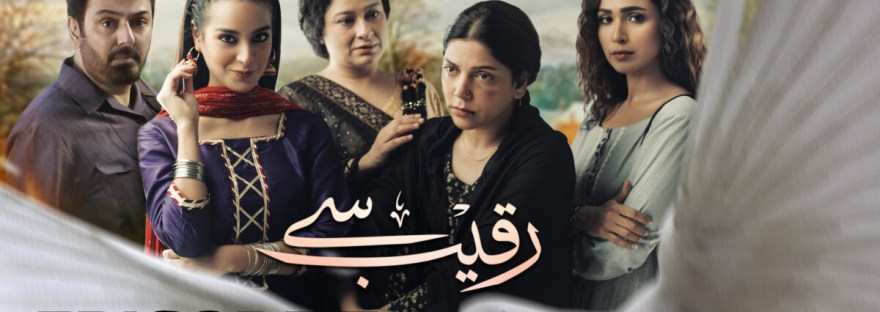
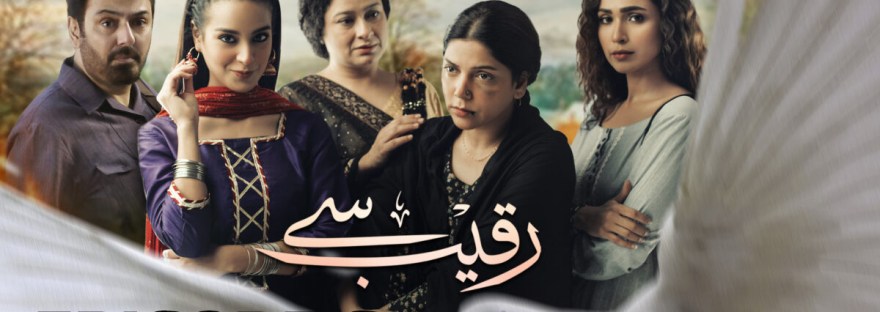
Mr. Khan’s Review on Raqeeb Se – Episode IX (2021)

A review on Pakistani drama TV series, Raqeeb Se – Episode 9 (2021). The new TV series is directed by Kashif Nisar and is a production of Momina Duraid Productions. Raqeeb Se is a HUM TV Production.

(Note: If you’ve already read the review of the previous episode, you can skip directly ahead to the High points section).

+ Crew

  • Directed by Kashif Nisar
  • Written by Beegul
  • DOP by Hassam Mairaj
  • Music Composed by Hadiqa Kiani
  • Produced by Momina Duraid Productions

+ Note

Raqeeb Se is the newest HUM TV Production and is once again the collaboration of the award winning Writer/ Director duo of Bee Gul and Kashif Nisar. 

The title of the show is heavily inspired by a poem from the legendary poet Faiz Ahmed Faiz when the young poet fell in love with a girl next door in Sialkot. But alas, as luck would have it, she one day unexpectedly left the city, only to be reunited years later when Faiz was already an established poet in the circles of Urdu literature. This encounter inspired Faiz to write a poem “Raqib Se!”. The backstory of this poem plays a crucial role in the premise of the show.

 + Main Cast

  1. Hadiqa Kiani as Sakina
  2. Noman Ijaz as Maqsood
  3. Sania Saeed as Hajra
  4. Faryal Mehmood as Insha
  5. Iqra Aziz as Ameera
  6. Saqib Sameer as Rafiq

+ Plot

Raqeeb Se is a call of Maqsood’s dark past that could potentially destroy his present life. In order to escape her abusive husband, Sakina, along with her daughter Ameera, flees from her village to find shelter at her former lover’s place, Maqsood. Unfortunately Maqsood, who still holds a grudge against Sakina’s past actions, refuses to aid her in her most dire situation. But his wife, Hajra, seems much more sympathetic to the situation and lets Sakina stay at their home till things are figured out for the future.

But can Sakina be trusted to stay out of Maqsood’s life or will they be tempted to rekindle their lost love and in the process, destroy what Maqsood and his wife Hajra have built together?

+ High Points

i – These past few episodes has really fleshed out the love story of Abdul/ Insha and is finally now being integrated into the overall narrative of the show. Also the development of both characters has significantly been improved upon and is slowly becoming the highlight of each episode.

ii – In Episode 9, the dramatic tension within Maqsood sahib’s compound was very well written and brought some life into the ongoing tense moments of the show (which for the past few episodes have been frankly dull and repetitive).

iii – Noman Ijaz as Maqsood finally gets to emote and show his full potential in this episode. Maqsood eventually breaks his stoic mannerisms and lets his true emotions be put on display for the audience to witness. Noman Ijaz seems very comfortable playing the main protagonist who has an obvious chip on his shoulder.

iv – With tense, visual atmosphere and soft lighting, Raqeeb Se might be one of the best looking TV dramas out there at the moment. Even if the narrative falters at times, the visuals are always pleasant to marvel at.

v – Compared to other episodes, Episode 9 had good pacing/ plot progression and was a slight improvement from the rest of the show. The scenes were well set up, the actors got to display their acting chops; from here on-out, this is how the show should move forward!

 + Low Points

i – Hadiqa Kiani as Sakina has really become a drag to watch. Her one note line delivery and lack of any character development has really hurt her performance in the show. She has never had anything interesting to say, her regret of “setting foot into Maqsood sahib’s house” is over and done with by now. The show really needs to give her something more interesting to do than just mop and whine about her fate. 

ii – As far as one note characters, Hajira’s motivations have also not developed since the first episode. She is by far the least interesting character of the main cast. She has nothing to do throughout the show other than to remind the audience how grateful she is to Maqsood sahib and lacks any motivations of her own. The manner in which Hajira is written makes her a mere “plot device” to the overall narrative rather than having a character of her own.

iii – Although the cliffhanger of the show was an interesting one, let us also not forget that Hajira is not onboard with any of Maqsood’s decisions. Are we supposed to sympathize with how noble Maqsood is in vowing to take care of Sakina? If his own wife is not completely in agreement with this “new arrangement” then it is not a noble but selfish act from Maqsood’s part. If the show wants us to sympathize with Maqsood’s selflessness without his wife’s consent then that is an abhorrent decision from the creative team of Raqeeb Se. Whether the show runners will work on this upcoming angle remains to be seen…

+ Overall

Episode 9 brings back some of the tension and drama from the first few episodes. It’s a much needed character dynamic that the show was lacking in the previous few weeks. With a stellar cast like this, Raqeeb Se most certainly has the potential to become a must see television show.

 Rate: 3.0 out of 5 stars

TV series

Mr. Khan’s Review on Raqeeb Se – Episode VIII (2021)

A review on Pakistani drama TV series, Raqeeb Se – Episode 8 (2021). The new TV series is directed by Kashif Nisar and is a production of Momina Duraid Productions. Raqeeb Se is a HUM TV Production.

(Note: If you’ve already read the review of the previous episode, you can skip directly ahead to the High points section).

+ Crew

  • Directed by Kashif Nisar
  • Written by Beegul
  • DOP by Hassam Mairaj
  • Music Composed by Hadiqa Kiani
  • Produced by Momina Duraid Productions

+ Note

Raqeeb Se is the newest HUM TV Production and is once again the collaboration of the award winning Writer/ Director duo of Bee Gul and Kashif Nisar. 

The title of the show is heavily inspired by a poem from the legendary poet Faiz Ahmed Faiz when the young poet fell in love with a girl next door in Sialkot. But alas, as luck would have it, she one day unexpectedly left the city, only to be reunited years later when Faiz was already an established poet in the circles of Urdu literature. This encounter inspired Faiz to write a poem “Raqib Se!”. The backstory of this poem plays a crucial role in the premise of the show.

 + Main Cast

  1. Hadiqa Kiani as Sakina
  2. Noman Ijaz as Maqsood
  3. Sania Saeed as Hajra
  4. Faryal Mehmood as Insha
  5. Iqra Aziz as Ameera
  6. Saqib Sameer as Rafiq

+ Plot

Raqeeb Se is a call of Maqsood’s dark past that could potentially destroy his present life. In order to escape her abusive husband, Sakina, along with her daughter Ameera, flees from her village to find shelter at her former lover’s place, Maqsood. Unfortunately Maqsood, who still holds a grudge against Sakina’s past actions, refuses to aid her in her most dire situation. But his wife, Hajra, seems much more sympathetic to the situation and lets Sakina stay at their home till things are figured out for the future.

But can Sakina be trusted to stay out of Maqsood’s life or will they be tempted to rekindle their lost love and in the process, destroy what Maqsood and his wife Hajra have built together?

+ High Points

i – Whenever Sabiq Sameer and Saba Faisal are part of an episode, that is where Raqeeb Se shines the most. Their performances and characters are compelling enough to keep you interested throughout the episode. Salman Shahid’s introduction in the past few episodes is also a great addition to lower the monotony of the four main core characters.

ii – Episode 8 might be the first time that Abdul showed some depth in his characterization. His inability to find a decent, secure job makes him uncomfortable in front of his lover and brings some inferiority complex into the mix. Great! This actually gives a purpose of sorts why the viewer should be interested in the development of their relationship. More of this please!

iii – The tension and banter between Maqsood and Rafiq is always fun to watch. Noman Ijaz and Saqib Sameer always have great onscreen chemistry together and their performances show that they are having fun playing their respective roles.

iv – When it comes to production, Raqeeb Se is one of the best looking TV dramas in Pakistan. The cinematography, lighting, editing (with exception to music selection) are all brilliant. What is commendable about the show is that even with minimal plot progression, the visuals command the audience to continue watching the show. 

v – The dynamics between Maqsood and his estranged elder Brother is intriguing and would love to see where it develops by the end of the show. The car scene near the end of the episode was a clear reminder that Raqeeb Se can have great writing and excellent conflicts whenever it needs to. 

 + Low Points

i – Raqeeb Se is primarily a show centered around its five main protagonists and its takes its time with its plot progression. Which is all great but you need sharp writing in order to pull this off. And unfortunately, this show does not accomplish that. The characters are not compelling enough to rely solely on them and therefore, suffers from repetitive scenarios and plot stagnation. 

ii – Even though Hadiqa Kiani has mostly been great throughout the show, Episode 8 was not her best outing to date. Her character Sakina has slowly become a one note character, crying and complaining about leaving back to her village, never should’ve set foot at Maqsood sahib’s door etc. Due to repetitive writing and lack of developing character arcs, Hadiqa Kiani’s acting chops are also proving to be monotonous, one note dialogues. Please give her something else to do. I’m sure Hadiqa Kiani is more than up for the task of showing a different range of emotions!

iii – Faryal Mehmood and Hamza Sohail still remain the two sore spots of the show as their performances are significantly lesser in quality compared to the other leads of the show like Noman Ijaz, Sania Saeed, Saqib Sameer  or even Iqra Aziz. But they are not the ones at fault here. They both feel uncomfortable whenever they are sprouting out their dialogues which clearly shows that the director Kashif Nisar is not guiding them enough with their performances. 

Iv– Even if Episode 8 was a slight improvement from the previous one, the show still lacks stakes and has major pacing issues. And with lack of plot progression from episode to episode, the characters are not interesting enough to hold the viewer’s interest on their own. And sadly, I don’t see any new developments in the near future.

+ Overall

Episode 8 showed some signs of improvement but the core pacing issue of the show is still a major factor for me to further recommend this show. Raqeeb Se is far from engaging television but at least it’s great to have something in the background if you have some free time on your hands.

 Rate: 2.75 out of 5 stars

TV series

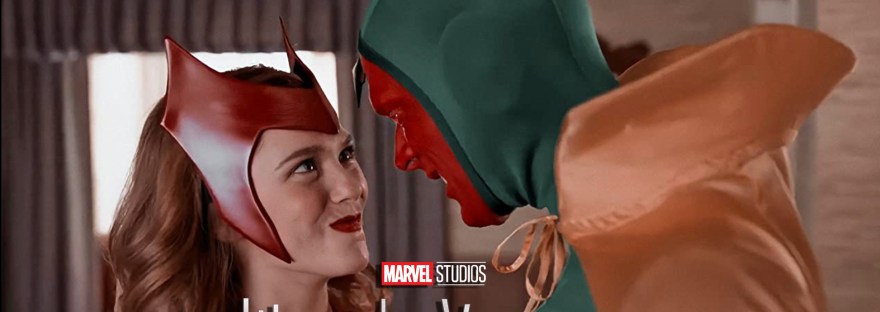
Mr. Khan’s Review on WandaVision (Ep VII-IX) – Series Finale! (2021)

A review on American Television miniseries, WandaVision ep VII- IX (2021) which marks the finale of the show. The mini-series is directed by Matt Shakman and stars Elizabeth Olsen as Wanda and Paul Bettany as Vision. The show is a continuation of the saga from the Marvel Cinematic Universe and is a Disney Plus Original series.

(Note: If you’ve already read the review of the previous episodes, you can skip directly ahead to the High points section).

+ Crew

  • Directed by Matt Shakman
  • Cinematography by Jess Hall
  • Music by Christophe Beck
  • Produced by Chuck Hayward
  • Created by Jac Schaeffer
  • Production by Marvel Studios
  • Distributed by Disney Platform Distribution 

+ Note

WandaVision is continuation of the Marvel Cinematic Universe (Phase 4) where we get to explore more the relationship between the two popular Marvel characters; Scarlet Witch and Vision. The series is cleverly disguised as an American vintage sitcom with multi camera shots and canned Laughter from the audience in a (supposedly) TV Studio. WandaVision is clearly inspired from 50s-60s sitcoms like ‘I Love Lucy’, ‘Bewitched’ and later in color, ‘The Brady Bunch’, where situational comedy plays a key role to the show.

+ Main Cast

  1. Elizabeth Olsen as Wanda Maximoff / Scarlet Witch
  2. Paul Bettany as Vision
  3. Debra Jo Rupp as Mrs. Hart
  4. Fred Melamed as Arthur Hart
  5. Kathryn Hahn as Agnes
  6. Teyonah Parris as Monica Rambeau
  7. Kat Dennings as Darcy Lewis
  8. Randall Park as Jimmy Woo

+ Plot

WandaVision starts off in 1950s suburban America. A husband and a loving wife have just moved in the neighborhood and get along with their neighbors quite well. But unbeknownst to the neighbourhood, they are no ordinary couple. In fact, they are the famous Avengers; Scarlet Witch and Vision who hide their super powers in order to live a happy, wholesome life. But something doesn’t seem right about this scenario. It’s almost too… perfect? How did present day Avengers end up in decades old American TV sitcoms? Where or how did they enter this delightful comedy of errors? What is exactly wrong with WandaVision?

+ High Points

SPOILER ALERT!: (From here on out, there will be spoilers for the show as it is impossible to discuss the plot points without spoiling anything. If you still haven’t seen the show and would like to see it, you can skip directly to Overall section below).

i – So the last three episodes of the show have all been about ‘Revelations’. Agnes, the nosy neighbor from the previous episodes, is the master manipulator Agatha Harkness who played the puppet master of sorts behind the curtain. Kathryn Hahn’s heel turn has been magnificently handled by the actress and was fully aware of the fine balance between campy and solemnity when necessary. Although it was far from perfect, Agnes serves great and memorable as Scarlet Witch’s formidable adversary in the series finale (and the catchy jingle at the end of episode 7 was just the icing on the cake!).

ii – Episode 8 “Previously On” was the best episode in the series. The emotional journey of what Wanda had to go through to become what she is now, was brilliantly handled and executed. It is indeed tragic to see in the past few MCU movies, how Wanda slowly lost everyone she ever cared for; her brother Pietro Maximoff (aka Quicksilver) to Vision’s sacrifice in Avengers: Infinity War (2018). The scene when Wanda has to witness the autopsy/ dismemberment of Vision’s body was gut wrenching and one could easily forget that WandaVision is supposed to be a mere superhero show. The question was set up in the first episode; why or what is WandaVision? And the answer has been well delivered. Kudos to the writing of the show.

iii – Although very short lived, the dynamics of Wanda’s family; her husband Vision and her twin sons, was fantastic. The actors work great off one another and bring a much needed warmth and empathy to the show.

iv – The newly designed costume of Scarlet Witch is slick but also does not deviate too far from its source material. The leathery, muted red can work very well on the silver screen.

v – Once again, I have to praise the lead actors of WandaVision. They were incredibly well rehearsed with the script, delivered with such impeccable precision and skill that quite frankly, is hard to pull off. WandaVision was comedic and dramatic whenever it needed to be and none of this would have been possible if not for Elizabeth Olsen and Paul Bettany’s outstanding onscreen chemistry together. WandaVision is essentially a tragic love story between a Witch and an A.I. And as silly as it sounds, the lead actors managed to make it not only believable but relatable at the same time.

vi – While in the previous episodes, the scenes involving the S.W.O.R.D. were the more ‘boring’ aspects of the show, the last three episodes manage to make them more essential and interesting for the developing plot so that the center conflict of the show could flourish. As the show went on, the characters of Jimmy Woo and Rambeau became more central and integral to the plot and with good writing, became much more fleshed out as the show reached its climax.

vii – Even with the greenscreen fight scene at the end, the Special Effects were brilliant throughout the show and never faltered at any point. 

viii – After reaching its conclusion, one can mention countless assets to credit WandaVision’s success but none can be more important than the writing itself. Jac Schaeffer and co. really knocked this one out of the park and while the finale did turn out to be just another epic MCU battle in the sky (more on that in the Low Points section), the writing was consistent in quality throughout its nine episodes. And it cannot be emphasized enough how integral the writing was to WandaVision’s success.

ix – The emotional send off from Wanda to her family was tragic but beautifully handled. After 9 Episodes, the show gave enough time and space to understand Wanda’s actions and her motivations. The loss of her loved one and her wish to have a family became a distant dream. The show meticulously handles Wanda’s character arc, the crescendo and the finale of it. Where will Wanda go from here? That is a question MCU fans will be eagerly looking forward to. 

+ Low Points

i – With all that was great about the show, the finale was a disappointment of sorts. Instead of a clever and unique way to resolve the conflict, the producers felt the necessity to end this in the most generic fashion they could think of. Wanda battles Harkness in the red greenscreened sky, shooting magic lasers out of their hands. Yawn. The show really lost its luster during the fight and will leave viewers and fans disappointed with lack of creativity. Come on, Jac Schaeffer. I’m sure your team could have come up with something more inventive than that…

ii – It was also a disappointment that Evan Peters’ introduction as Quicksilver in the MCU was used as a punchline for a lackluster joke. Why? Evan Peters was fantastic as Quicksilver and a major asset to the franchise. Why throw it all away? A baffling decision really. 

iii –  So the two Visions have a go at one another, they talk and for some reason, the reprogramed ‘white’ Vision just gets up and leaves? Were the writers really clueless what to do with him? I understand they will introduce him later on sometime in MCU but this whole conflict turned out to be pretty forgettable at the end.

iv – By taking the whole town of Westview hostage, Wanda was psychologically torturing the citizens of the town. In the end, Wanda does the right thing and gives up on her fantasy life to release the Westview citizens of torment but are there no repercussions to Wanda’s actions? Is the S.W.O.R.D.  just going to let Wanda walk away from all this? Although it is understandable that the anguish Wanda had to endure after losing her loved ones but for Wanda to just walk away from all this scott free….it just feels wrong.

+ Overall

WandaVision is a show of many accomplishments. Not only was it engaging television but it proved that even with the current pandemic, Marvel Cinematic Universe can still flourish as a miniseries on the streaming platform Disney Plus. The finale was an unfortunate and predictable letdown but nonetheless, the show was still a triumph and a brilliant in depth look into the psyche and relationship of Wanda and Vision. 

The 9 episode mini-series is now complete and available on Disney Plus.

Rate (Ep VII – IX): 3.5 out of 5 stars

Rate (WandaVision): 4.0 out of 5 stars

TV series

Mr. Khan’s Review on Raqeeb Se – Episode VII (2021)

A review on Pakistani drama TV series, Raqeeb Se – Episode 7 (2021). The new TV series is directed by Kashif Nisar and is a production of Momina Duraid Productions. Raqeeb Se is a HUM TV Production.

(Note: If you’ve already read the review of the previous episode, you can skip directly ahead to the High points section).

+ Crew

  • Directed by Kashif Nisar
  • Written by Beegul
  • DOP by Hassam Mairaj
  • Music Composed by Hadiqa Kiani
  • Produced by Momina Duraid Productions

+ Note

Raqeeb Se is the newest HUM TV Production and is once again the collaboration of the award winning Writer/ Director duo of Bee Gul and Kashif Nisar. 

The title of the show is heavily inspired by a poem from the legendary poet Faiz Ahmed Faiz when the young poet fell in love with a girl next door in Sialkot. But alas, as luck would have it, she one day unexpectedly left the city, only to be reunited years later when Faiz was already an established poet in the circles of Urdu literature. This encounter inspired Faiz to write a poem “Raqib Se!”. The backstory of this poem plays a crucial role in the premise of the show.

 + Main Cast

  1. Hadiqa Kiani as Sakina
  2. Noman Ijaz as Maqsood
  3. Sania Saeed as Hajra
  4. Faryal Mehmood as Insha
  5. Iqra Aziz as Ameera
  6. Saqib Sameer as Rafiq

+ Plot

Raqeeb Se is a call of Maqsood’s dark past that could potentially destroy his present life. In order to escape her abusive husband, Sakina, along with her daughter Ameera, flees from her village to find shelter at her former lover’s place, Maqsood. Unfortunately Maqsood, who still holds a grudge against Sakina’s past actions, refuses to aid her in her most dire situation. But his wife, Hajra, seems much more sympathetic to the situation and lets Sakina stay at their home till things are figured out for the future.

But can Sakina be trusted to stay out of Maqsood’s life or will they be tempted to rekindle their lost love and in the process, destroy what Maqsood and his wife Hajra have built together?

+ High Points

i – Regardless of the problems with writing and plot development, what Raqeeb Se has been consistently good with is its presentation. The Director of Photography Hassam Mairaj’s work has been great throughout the show. And the praise should also be upheld for the entire crew behind the camera. 

ii – Saba Faisal’s performance as the sassy, uptight Punjabi lady is outstanding. Since her introduction, she is magnetic in every scene she is a part of and brings a much needed flair to the show.

iii – Even though nothing much happens in Episode 7, the interaction between characters with conflicting personalities was interesting enough for the episode to breeze through.

iv – The short biryani scene between Insha and her lover was a nice touch and visually depicted that even with so much uncertainty surrounding their secure future, they still love each other enough to just simply enjoy the finer moments in Life.

 + Low Points

i – Like watching paint dry…”. This perfectly sums up Raqeeb Se’s plot development since its premiere on Hum TV. Episode 7 yet again adds nothing to the overall plot development of the show. It’s characteristically tedious and lingers far too long on its premise than it has any right to. And the worst part is, Raqeeb Se has such a stellar cast and creative team but nothing engaging to offer to its viewers. It’s been quite a letdown up till now.

ii – It has to be mentioned that Insha’s interaction with her parents is extremely cold and alien at times. There seems to be a total loss of love and affection that one has for her parents. She even sometimes refers to her father as “Maqsood sahib”. Even with the backstory of Maqsood that we know now, her actions are not justifiable. Is there any other reasoning behind all this that has currently not been revealed?

iii – Hajra is unconvincingly depicted as extremely naive and quite frankly, ridiculous at times. She has mentioned a couple of times how Maqsood has done so much for her but why is Hajra so eager to keep Sakina at their place when ultimately, it’s clear that this will bring nothing but trouble to her marriage? The writing of the show is very vague and inconsistent on this issue and it’s getting really hard and frustrating for the viewer to sympathise with Hajra anymore.

+ Overall

Although Episode 7 was interesting enough through its compelling characters, the consistent plot development is still severely lacking in order to make the viewer look forward every week to watch the show. But with the recent cliffhanger of Episode 7, can Raqeeb Se make a comeback?

 Rate: 2.75 out of 5 stars

TV series

Mr. Khan’s Review on Raqeeb Se – Episode VI (2021)

A review on Pakistani drama TV series, Raqeeb Se – Episode 6 (2021). The new TV series is directed by Kashif Nisar and is a production of Momina Duraid Productions. Raqeeb Se is a HUM TV Production.

(Note: If you’ve already read the review of the previous episode, you can skip directly ahead to the High points section).

+ Crew

  • Directed by Kashif Nisar
  • Written by Beegul
  • DOP by Hassam Mairaj
  • Music Composed by Hadiqa Kiani
  • Produced by Momina Duraid Productions

+ Note

Raqeeb Se is the newest HUM TV Production and is once again the collaboration of the award winning Writer/ Director duo of Bee Gul and Kashif Nisar. 

The title of the show is heavily inspired by a poem from the legendary poet Faiz Ahmed Faiz when the young poet fell in love with a girl next door in Sialkot. But alas, as luck would have it, she one day unexpectedly left the city, only to be reunited years later when Faiz was already an established poet in the circles of Urdu literature. This encounter inspired Faiz to write a poem “Raqib Se!”. The backstory of this poem plays a crucial role in the premise of the show.

 + Main Cast

  1. Hadiqa Kiani as Sakina
  2. Noman Ijaz as Maqsood
  3. Sania Saeed as Hajra
  4. Faryal Mehmood as Insha
  5. Iqra Aziz as Ameera
  6. Saqib Sameer as Rafiq

+ Plot

Raqeeb Se is a call of Maqsood’s dark past that could potentially destroy his present life. In order to escape her abusive husband, Sakina, along with her daughter Ameera, flees from her village to find shelter at her former lover’s place, Maqsood. Unfortunately Maqsood, who still holds a grudge against Sakina’s past actions, refuses to aid her in her most dire situation. But his wife, Hajra, seems much more sympathetic to the situation and lets Sakina stay at their home till things are figured out for the future.

But can Sakina be trusted to stay out of Maqsood’s life or will they be tempted to rekindle their lost love and in the process, destroy what Maqsood and his wife Hajra have built together?

+ High Points

i – Episode Six entails more characters (Maqsood’s older brother and his wife) which is a blessing for the show since the same four main cast of characters in every episode was becoming stale fast.

ii – In my last review, I mentioned that Hajira’s character needed more exploration. Thankfully, this was already in the cards of Raqeeb Se’s creative team as there are subtle hints of Hajira’s eventual outburst against the rekindled relationship between Sakina and Maqsood.

iii – The low lighten, illuminated backgrounds of each scene plays nicely to the overall dower atmosphere of the show. It visually conveys the anguish and seriousness of the plot.

Iv– There were some experimental camera angles used in between the episode which (for the most part) worked quite well. A shot through the glass where a window frame separates the two characters and their conflicting point of views was a nice touch.

 + Low Points

i – This show is incredibly repetitious and uncompelling for the most part.  No matter how many layers there are to the Maqsood/ Sakina story, the pacing is slow, each scene lingers on much longer than it should and an iteration of the same themes of “will Sakina leave or stay?” is already a monotonous premise at this stage of the show. The plot and character arcs need to develop at a much faster pace than this as it is currently an ordeal to watch through.

ii – SPOILER ALERT!!! (skip to next point if you would like to avoid it)

The revelation that Ameera is possibly in love for Maqsood sahib is… well, disturbing to say the least. Yes, younger women do get fascinated with older men but just the fact that Maqsood was almost engaged to be married to her mother is (quite frankly) repulsive to say the least. Whether there will be any feeling from Maqsood sahib remains to be seen but is this really the direction the show wants to go to?

iii – The whole sequence of Sakina leaving for her village and then eventually, Maqsood Sahib bringing her back seemed utterly pointless and was quite obviously a tactic to prolong the episode to an hour long TV show.

iv – Near the end of the episode, Faryal Mehmood’s malicious dialogue towards Sakina felt quite out of character. Although it’s already established that she doesn’t like this whole arrangement, the threatening tone seems so out of the blue and felt as if the writer got Ameera’s dialogue mixed up with Insha’s.

+ Overall

Even with a shocking revelation, Episode 6 once again falls back to mediocrity and serves nothing to the overall plot in the long run.  

 Rate: 2 out of 5 stars

TV series

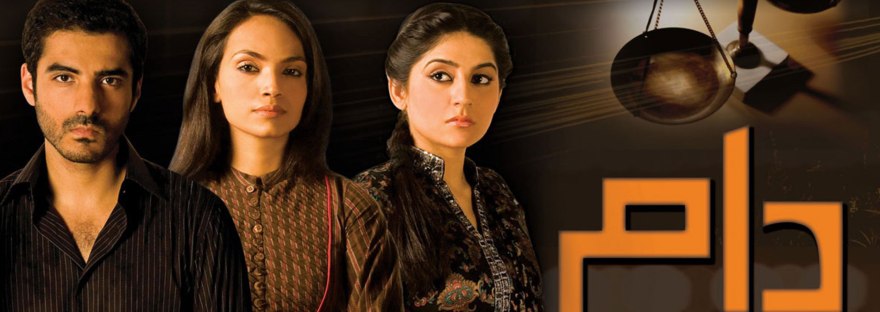
Mr. Khan’s Review on Daam (2010)

A review on Pakistani drama TV series, Daam (2010). The 18 episodes limited TV series is directed by Mehreen Jabbar and is a production of 7th Sky Entertainment. Daam is an ARY DIGITAL Production.

+ Crew

  • Directed by Mehreen Jabbar
  • Written by Umera Ahmed
  • Edited by Mehreen Jabbar
  • DOP by Asad Malik
  • Music Composed by Ustaaz
  • Opening Theme song “Daam Tha” by Zeb Bangash and Haniya Aslam
  • Produced by Humayun Saeed and Abdullah Kadwani

+ Note

Daam is a “coming of age” tale of young Karachities who dream big and stars soon to be famous actors like Sanaam Baloch, Aamina Sheikh and Adeel Hussain. This show  is the brainchild of the famous Urdu novelist Umera Ahmed who has been credited to writing more than 30 books in her career, most notably ‘Peer-e-Kamil’ and ‘Meri Zaat Zara-e-Benishan’. Most of the TV series has been shot in the city of Karachi and is filmed on real locations. When first premiered, Daam became an instant rating sensation for ARY Digital and in 2015, made its premiere in India on Zindagi TV.

Daam indulges in social themes like friendship, betrayal and of course, the price of Happiness. 

 + Main Cast

  1. Sanam Baloch as Zara
  2. Aamina Sheikh as Maleeha
  3. Adeel Hussain as Junaid
  4. Nimra Bucha as Aasma
  5. Sanam Saeed as Fiza
  6. Pari Hashmi as Mano
  7. Muhammad Yasir as Jamaal (Zara’s brother)
  8. Lubna Aslam as Amna (Zara’s mother)
  9. Shahid Naqvi as Hidayatullah (Zara’s father)

 + Supporting Cast

  1. Faisal Shah as Yasir
  2.  Muhammad Ahmed as Sami (Maleeha’s father)
  3. Parveen Malik as Maleeha’s mother
  4. Behroze Sabzwari as Haji Saab
  5. Atif Badar as Ghulam Ali (The Shopkeeper)
  6. Farah Nadir as Mumani
  7. Ahmed Zeb as Jibran

+ Plot

Daam is the story of a group of young adults, living in the city of Karachi who (regardless of their social classes) have a strong bond of friendship that binds them together through thick and thin of Pakistani societal hardships. This all changes when Maleeha (from a financially well off family) finds out that her best friend Zara (from a lower middle class family) is in love with Maleeha’s brother Junaid and are engaged to be married. 

Can relationships be bought and sold in the market of Life? Daam is the story of the price that Maleeha has to pay to her best friend in order to stop the marriage and retain the status quo of social norm of Life.

+ High Points

i – The success story of Daam has to be credited to the brilliant talented team behind it. Mehreen Jabaar’s impeccable direction throughout the series brought the hardships of Life out on the forefront. Jabbar is excellent when it comes to directing a large cast of actors and Daam was no exception. Her talents are best utilized when she is given free reign to make her actors emote tension, excitement and sorrow and inturn, create exciting Television for her viewers. Although Jabbar has also indulged in Cinema, her strength has always been in Television and Daam is a prime example.

ii – The TV show entails incredible, highly convincing performances from its lead actors; Sanam Baloch, Aamina Sheikh and Adeel Hussain. Whenever they were together onscreen, it was evident with every dialogue and physical interaction, they were in fact, not mere actors but actual characters that they were portraying on screen. After the premiere of the show, all three went on with their own career success stories and Daam could very well be the pinnacle of where it all began for them. 

iii – But it’s not just the lead actors, the supporting cast of Daam was also a major contributing factor to the show’s success. The parents of each character led out love, anger and empathy in such a convincing manner that one cannot help but compare them to someone we know in our own lives! The intercracy of marriages and family life in a Pakistani society is extremely vital and Daam’s depiction was of incredible depth and delicacy that the story so richly deserved.

iv – Some say that behind each great performance, it is the writing that holds it all together and for Daam, it could very well be the case. Umera Ahmed’s brilliant writing was probably a major contributing factor for the TV show’s success. The elegance in her writing dialogues and set pieces makes you as a viewer utterly convinced by the sheer urgency and warmth behind each character and the emotions behind the facade. Regardless of male or female character, Umera’s writing is frightently convincing and sometimes, the simplicity and naturalness of her dialogue makes you forget that you are in fact watching a scripted TV show.

v– The pacing of the show from beginning to the end was superb. Each episode was crafted with such precision by Umera Ahmed that every single one of them can be seen solely on its own personal merit and still, the narrative of the show was simplistic to follow through.

vi– The set design, locations and costumes play such a key role in presenting the reality of societal hardships and Daam seamlessly shifted back and forth between the divide of rich and poor communities of Karachi. 

vii– The soundtrack ‘Daam tha’ by Zeb & Haniya for the show is fantastic with its slight Jazz influences and melodramatic traditional music that leaves you humming each time you are through with an episode!

viii– A lot of TV shows start off great but by the end, fizzle out and become a mere relic of how great they once were. Not this show. Daam was carefully planned, right from the getgo and the plot seamlessly flowed from the first episode till the last. The show ends on such a high note that will leave a lingering thought in your mind for weeks to come. And that for me, is a sign that Mehreen Jabbar and ARY Digital really made something special.

 + Low Points

i – While Daam is flawless in almost every way when it comes to narrative, plot development and characters, it does unfortunately lack in its technical execution; namely the sound mixing. Numerous times, it was evident that the collar mics got muffled in between characters hugging each other or the audio levels were extremely off; some scenes too loud, echoing can clearly be heard in some locations. Such a great show but tad bit disappointing that the audio team behind the show did not do a decent job that the show deserved.

ii – But the problem is sadly not only limited to Audio; the editing of the show was incredibly amateurish. The editing and pacing at times was out of sync with the flow of each particular set piece. For example, Telephone calls were edited one dialogue from each character at a time which makes the scene incredibly monotonous and boring to observe/ listen to. With each scene, the editor needs to decide where the emphasis of the scene should lie and cut accordingly. One to one editing has the tendency to make scenes much more tedious than they should be. Since Mehreen Jabbar credits herself to be the sole editor of the show, it can be safely concluded that while Jabbar is excellent in directing her actors, she is also unfortunately in love with every image she shoots with her Director of Photography. Perhaps the show would’ve benefited much more if an external Editor was hired to edit the show for a more polished look.

iii – There were numerous repetitions of the ‘city of Karachi’ scenes in between scenes. Within a single episode, the exact same main road scene was seen twice within a 15 min span. That’s unfortunately just lazy editing and momentarily takes the viewer out of the show.

iv – There were perhaps too many flashback scenes at times in the later episodes. It is obvious that the show wants to keep their new viewers up to date as to what is happening but the show would’ve benefited if they kept some flashback scenes out, especially when you saw that scene just in the last episode!

+ Overall

With excellent performances, superb direction and writing, Daam is one of the best modern dramas Pakistani television has ever produced. Even with its obvious technical flaws, the show speaks to its audience like no other. Daam is one for the ages.

 Rate: 4.25 out of 5 stars

TV series

Mr. Khan’s Review on Raqeeb Se – Episode V (2021)

A review on Pakistani drama TV series, Raqeeb Se – Episode 5 (2021). The new TV series is directed by Kashif Nisar and is a production of Momina Duraid Productions. Raqeeb Se is a HUM TV Production.

(Note: If you’ve already read the review of the previous episode, you can skip directly ahead to the High points section).

+ Crew

  • Directed by Kashif Nisar
  • Written by Beegul
  • DOP by Hassam Mairaj
  • Music Composed by Hadiqa Kiani
  • Produced by Momina Duraid Productions

+ Note

Raqeeb Se is the newest HUM TV Production and is once again the collaboration of the award winning Writer/ Director duo of Bee Gul and Kashif Nisar. 

The title of the show is heavily inspired by a poem from the legendary poet Faiz Ahmed Faiz when the young poet fell in love with a girl next door in Sialkot. But alas, as luck would have it, she one day unexpectedly left the city, only to be reunited years later when Faiz was already an established poet in the circles of Urdu literature. This encounter inspired Faiz to write a poem “Raqib Se!”. The backstory of this poem plays a crucial role in the premise of the show.

 + Main Cast

  1. Hadiqa Kiani as Sakina
  2. Noman Ijaz as Maqsood
  3. Sania Saeed as Hajra
  4. Faryal Mehmood as Insha
  5. Iqra Aziz as Ameera
  6. Saqib Sameer as Rafiq

+ Plot

Raqeeb Se is a call of Maqsood’s dark past that could potentially destroy his present life. In order to escape her abusive husband, Sakina, along with her daughter Ameera, flees from her village to find shelter at her former lover’s place, Maqsood. Unfortunately Maqsood, who still holds a grudge against Sakina’s past actions, refuses to aid her in her most dire situation. But his wife, Hajra, seems much more sympathetic to the situation and lets Sakina stay at their home till things are figured out for the future.

But can Sakina be trusted to stay out of Maqsood’s life or will they be tempted to rekindle their lost love and in the process, destroy what Maqsood and his wife Hajra have built together?

+ High Points

i – Finally, some plot progression! In Episode 5, there are some key revelations about Maqsood sahib and Sakina’s mysterious past. And for the most part, they are quite satisfying.

ii – This bears repetition but Hadiqa Kiani’s performance (especially as a non actor) is great and a clear highlight of the show. Her subtle, nuance spoken words and gestures give her character the much needed depth that she so richly deserves. Judging solely by her performance, it is entirely convincing that Sakina has gone through some clear domestic trauma.

iii – Although we again return to the same , chamber play location of the bungalow, the house plays a crucial role in creating a claustrophobic atmosphere for the plot revelation that accompanies Episode 5. One of the most consistent bright spots of the show has been the selection of its locations and set design. They ultimately bring some tension that you can literally cut with a sharp kitchen knife.

Iv– The flashback scene in the village was incredibly well staged and directed. The lighting, cinematography, the gritty, intense music; everything about the sequence was brilliantly played out.

v– After a hiatus of a few lackluster episodes, we finally have a cliffhanger to an episode which would hopefully make its viewers come back for more.

 + Low Points

i – Music selection during tense or comic relief scenes are still a massive problem with this show. Even with good dialogue and performances, the tension in the scene is instantly deflated with poor music selection that is at complete odds with the tone of that set piece. Also the few tracks that they have are now becoming quite repetitious and the show needs to diversify its music library a bit more.

ii – Faryal Mehmood’s performance is noticeably below par as compared to the rest of the main cast. Her stiff dialogue delivery and lack of emotions prove detrimental to each scene she is supposed to take center stage in.

iii – Even though Episode 5 was eventful as compared to others, Raqeeb Se needs to pick up its pace a bit with its plot development. Otherwise they constantly risk losing viewership each week.

iv – It is fairly obvious that Hajira’s character needs some depth. At the moment, she noticeably just blends into the background whenever she is part of an essential scene. Of course, her character is naturally timid and forgiving but she needs some flair and detail to her personality.

+ Overall

With new plot revelations, Episode 5 proves that Raqeeb Se still has something engaging to offer to its viewers. Although the flaws of the show are painfully obvious, it is primarily the performances of its lead actors that are capable of producing engaging set pieces and great melodrama. But with that in mind, falling back to its slow lingering plot development could also prove the downfall of the show.

 Rate: 3 out of 5 stars

TV series

Mr. Khan’s Review on WandaVision (Ep IV-VI) (2021)

A review on American Television miniseries, WandaVision ep IV-VI (2021). The miniseries is directed by Matt Shakman and stars Elizabeth Olsen as Wanda and Paul Bettany as Vision. The show is a continuation of the saga from the Marvel Cinematic Universe and is a Disney Plus Original series.

(Note: If you’ve already read the review of the previous episode, you can skip directly ahead to the High points section).

+ Crew

  • Directed by Matt Shakman
  • Cinematography by Jess Hall
  • Music by Christophe Beck
  • Produced by Chuck Hayward
  • Created by Jac Schaeffer
  • Production by Marvel Studios
  • Distributed by Disney Platform Distribution 

+ Note

WandaVision is continuation of the Marvel Cinematic Universe (Phase 4) where we get to explore more the relationship between the two popular Marvel characters; Scarlet Witch and Vision. The series is cleverly disguised as an American vintage sitcom with multi camera shots and canned Laughter from the audience in a (supposedly) TV Studio. WandaVision is clearly inspired from 50s-60s sitcoms like ‘I Love Lucy’, ‘Bewitched’ and later in color, ‘The Brady Bunch’, where situational comedy plays a key role to the show. Since Disney Plus has only released three episodes up till now, it is still unclear where they are heading with this but one can safely assume, WandaVision is unlike anything MCU has produced up till now.

+ Main Cast

  1. Elizabeth Olsen as Wanda Maximoff / Scarlet Witch
  2. Paul Bettany as Vision
  3. Debra Jo Rupp as Mrs. Hart
  4. Fred Melamed as Arthur Hart
  5. Kathryn Hahn as Agnes
  6. Teyonah Parris as Monica Rambeau
  7. Kat Dennings as Darcy Lewis
  8. Randall Park as Jimmy Woo

+ Plot

WandaVision starts off in 1950s suburban America. A husband and a loving wife have just moved in the neighborhood and get along with their neighbors quite well. But unbeknownst to the neighbourhood, they are no ordinary couple. In fact, they are the famous Avengers; Scarlet Witch and Vision who hide their super powers in order to live a happy, wholesome life. But something doesn’t seem right about this scenario. It’s almost too… perfect? How did present day Avengers end up in decades old American TV sitcoms? Where or how did they enter this delightful comedy of errors? What is exactly wrong with WandaVision?

+ High Points

i – Since the last three episodes, many lingering questions have been finally answered as to what is actually happening in WandaVision and most of them have been fairly satisfying. What’s excellent about the show is that it has been brilliantly structured; Firstly, it lets you as the viewer in on the absurdity of the premise without giving much away. Secondly, it lets out short pieces of information which allows the audience to gather them together to fit the overall puzzle of the narrative. Say what you want about the Marvel Cinematic Universe but the creative team has a very clear vision and control over the plot and their interconnected Cinematic universe. The writers pay attention to every single detail in the show and Marvel rewards you for being a loyal, long time fan.

SPOILER ALERT!: (From here on out, there will be spoilers for the show as it is impossible to discuss the other plot points without spoiling anything. If you still haven’t seen the show and would like to see it, you can skip directly to Overall section)

ii – So Episode IV “We Interrupt This Program” was the expository episode in the series which explains what exactly is going on in WandaVision. Since the climax of Avengers: Infinity War, some heroes failed to make it out alive through this catastrophic world changing event, one being Wanda’s husband Vision. This prompted Wanda (through her magically, psyche manipulation powers) to take control of a town called ‘Westview’ and create a utopian, make believe world of her own which of course includes the American nuclear family; consisting of her, Vision and their twin children. This is such an excellent character development of Wanda, tapping into the unknown potential of her powers and in the process, also explains the Homage to American sitcoms throughout the decades of American Television. WandaVision is not a show taking place in a vacuum, it is directly and harshly affected by the cataclysmic events of the previous films. It’s a brilliant direction for the MCU and as a viewer, keeps you on your toes as to what could develop next in the overarching narrative of WandaVision

iii – I love that WandaVision is playing around, taking risks with their established characters. While It is still not a debate yet if Wanda has turned her back on humanity, one can sincerely sympathise with her emotional pain. Her loss of her brother in Avengers: Age of Ultron and her husband Avengers: Infinity War has left her emotionally in shambles and yearns for the perfect, happy world that she envisioned within herself. This character progression is organic and makes absolute sense to Wanda’s overall character arc.

iv – The “recasting” of Evan Peters as Quicksilver. And let’s be honest, the X-Men films’ Quicksilver is clearly the better choice here. He is infinitely the more charming and interesting one.

v – The eventual realization of Vision of how he might not even exist brings a great conflict to the forefront of the show. In Avengers: Infinity War, Vision was straight up murdered by Thanos and perhaps he will not take it too kindly that he has forcefully been revived by Wanda to take part in her fantasy of a perfect world.

vi – The Episode VI; “All-New Halloween Spooktacular!” comic accurate costumes for Scarlet Witch, Vision and Quicksilver were a cheeky touch and shows Kevin Feige’s respect for the source material.

vii – The visual effects by numerous SFX houses are top notch. This clearly shows that DIsney Plus always had strong faith and was 100% behind this show.

+ Low Points

i – Although WandaVision shines the most when the show is having fun with its own premise, it bogs down to a halt when we are forcefully thrown back into the “expository dialogue” scenes at the S.W.O.R.D. camp. The jokes seem forced, the dialogue is bare minimum and it only serves its purpose of moving the plot along so we can get back to Wanda and her family. It is obvious that expository dialogue is necessary but none of the characters there are engrossing enough to keep you interested.

ii – Up till now, Episode IV “We Interrupt This Program” was by far the weakest one and it’s no surprise that the majority of it took place at the S.W.O.R.D. base camp. Jimmy Woo, Monica Rambeau and Darcy Lewis; none of them are compelling enough characters to drive the episode through.

iii – Of all the characters they could have brought back for WandaVision, why did the writers decide on Kat Dennings’ Darcy Lewis? She is unfunny, fails to serve as a comedic relief and brings no urgency to the plot. It’s obvious that the Marvel Cinematic Universe has good and mediocre films along its three Phases. Why not settle for characters that were proven to be more likable?

+ Overall

Six episodes in and WandaVision still refuses to fade your interest away. It’s dark, unique and a shining beacon of hope that even after 12 years, MCU is still capable of coming up with fresh new ideas for its fan base and beyond. Although expository scenes can be made much more interesting, it is Wanda/ Vision that take the center stage and they have proven more than capable enough to captivate your attention through.

Rate: 4.25 (subject to change) out of 5 stars

TV series

Mr. Khan’s Review on Raqeeb Se – Episode IV (2021)

A review on Pakistani drama TV series, Raqeeb Se – Episode 4 (2021). The new TV series is directed by Kashif Nisar and is a production of Momina Duraid Productions. Raqeeb Se is a HUM TV Production.

(Note: If you’ve already read the review of the previous episode, you can skip directly ahead to the High points section).

+ Crew

  • Directed by Kashif Nisar
  • Written by Beegul
  • DOP by Hassam Mairaj
  • Music Composed by Hadiqa Kiani
  • Produced by Momina Duraid Productions

+ Note

Raqeeb Se is the newest HUM TV Production and is once again the collaboration of the award winning Writer/ Director duo of Bee Gul and Kashif Nisar. 

The title of the show is heavily inspired by a poem from the legendary poet Faiz Ahmed Faiz when the young poet fell in love with a girl next door in Sialkot. But alas, as luck would have it, she one day unexpectedly left the city, only to be reunited years later when Faiz was already an established poet in the circles of Urdu literature. This encounter inspired Faiz to write a poem “Raqib Se!”. The backstory of this poem plays a crucial role in the premise of the show.

 + Main Cast

  1. Hadiqa Kiani as Sakina
  2. Noman Ijaz as Maqsood
  3. Sania Saeed as Hajra
  4. Faryal Mehmood as Insha
  5. Iqra Aziz as Ameera
  6. Saqib Sameer as Rafiq

+ Plot

Raqeeb Se is a call of Maqsood’s dark past that could potentially destroy his present life. In order to escape her abusive husband, Sakina, along with her daughter Ameera, flees from her village to find shelter at her former lover’s place, Maqsood. Unfortunately Maqsood, who still holds a grudge against Sakina’s past actions, refuses to aid her in her most dire situation. But his wife, Hajra, seems much more sympathetic to the situation and lets Sakina stay at their home till things are figured out for the future.

But can Sakina be trusted to stay out of Maqsood’s life or will they be tempted to rekindle their lost love and in the process, destroy what Maqsood and his wife Hajra have built together?

+ High Points

i – Since the last episode, the only character that has been entertaining throughout is Saqib Sameer’s Rafiq Ali. From his performance, it’s fairly obvious that Saqib is having a lot of fun playing Rafiq. From his small physical inflictions to his exaggerating his thick, Punjabi village accent; Saqib is a treat to watch in what can be best described as a long drawn out slog of an episode.

ii – The episode depicts a lucious, green Punjab countryside which inturn, creates gorgeous imagery onto the small screen. Even if nothing engaging is happening on screen, one can at least admire the beauty of the countryside.

iii – Even though Hadiqa Kiani had nothing to do in the past 3 episodes, her acting chops are still sharp as ever. With better character development, she could very well bring some much needed new life for this TV show.

 + Low Points

i – Episode 4 contributes absolutely nothing to the overall narrative. Apart from the short, vague backstory of Hajra, there is absolutely no reason whatsoever to watch this week’s episode. Episode 3 and 4 could’ve simply been merged together to create a more coherent storytelling.

ii – Faryal Mehmood and her lover’s scenes are still meaningless and tiresome to watch. Why should we care about them? What emotional stakes are involved that would make me as a viewer interested in their plotline? 

iii – Raqeeb Se, as I understand, is primarily a character driven soap opera. While the plot is minimal, it’s the compelling characters that are supposed to drive the narrative through with their individual character arcs. Unfortunately, that is not the case. There has been absolutely no character development since the first episode. Sadly, this makes the TV show unengaging to watch and as a soap opera, that is a detrimental sin. One needs story progression, character arcs to keep the viewer interested to watch the next episode. And Raqeeb Se is failing at that.

iv – Up until now, Maqsood sahib’s trip back to the village brought nothing new onto the table. Raqib Ali is an abhorrent man, yes. But we already knew that since the first episode. What else noteworthy was added in these past two episodes?

v – Even though Raqib Ali always wants to “cut little pieces of (insert name here)’s body and throw them in the river”, visually his character appears goofy and non-threatening. I guess this could be the case of ‘his bark worse than his bite’ but as a viewer, you need a strong antagonist onscreen to hate and a protagonist to root for. This has sadly not been the case up until now.

 + Overall

Episode 4 is nothing but a repeat of the last episode. There was no character development or story progression at all. Whatever entertainment came was solely from Saqib Sameer’s character. The rest feels arbitrary and pointless to watch. 

Raqeeb Se needs to make things happen. Otherwise it risks falling into obscurity of stale, mediocre dramas of HUM TV.

 Rate: 2 out of 5 stars