Tele-Films

Mr. Khan’s Review on Half Plate (1991)

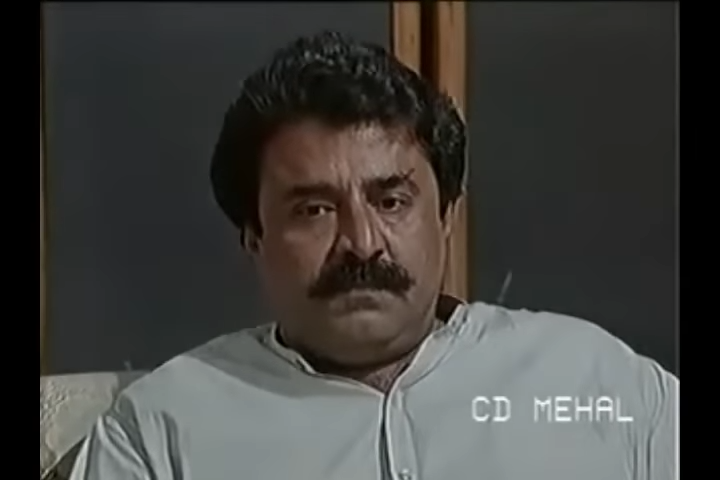
A review on Pakistani drama Long Play, Half Plate (1991). This PTV Long Play is directed by Syed Mohsin Ali and written by the great Anwar Maqsood. This play was a series of projects starring the most beloved collaboration of Talents between Anwar Maqsood as the writer and Moin Akhtar as the Lead Actor. Half Plate is a Long Play produced as part of PTV’s famous ‘Tele Theater’ series and was aired on Pakistan Television in 1991.

+ Crew

  • Directed by Syed Mohsin Ali
  • Written by Anwar Maqsood
  • Produced by Pakistan Television

+ Note

The Term Half Plate in South Asia, is referred to a ‘light meal’ as the 70 minute Long Play entails a short, satirical comedy sketch between an aging married couple.

 + Main Cast

  1. Moin Akhtar
  2. Khalida Riasat
  3. Badar Khalil
  4. Jamshed Ansari
  5. Latif Kapadia
  6. Arshad Mehmood
  7. Afzal Syed
  8. Jaffar Hussain
  9. Meraj Habib

+ Plot

Half Plate is a Kammerspiel theatrical play where an aged failed Urdu poet (played by Moin Akhtar) lives with his wife (played by Khalida Riasat) who are now far away from the twilight years of their lives.

+ High Points

i – Half Plate is considered a legendary and memorable Longplay featuring the duo of Maqsood/ Akhtar and it is quite evident why it is fondly remembered even decades later. Although the plot is pretty elementary, what keeps the Longplay interesting is the writing of Anwar Maqsood and the banter between Moin Akhtar and Khalida Riasat. As clearly evident from their performances, they had great chemistry together and even with minimal plot progression, they knew how to keep the viewer engaged till the very end.

ii – There are certain moments in this Longplay where Half Plate shines the brightest, namely the sequence with Badar Khalil where her flitatious ways are not enough to swing Moin Akhtar’s aged poet away from his principles. The combination between Akhtar’s over the top antics and Khalil’s subtle charm churns out a great scene between the two.

iii – Despite the fact that Half Plate has an extraordinary set of characters, the one that stood out for me was Jamshed Ansari as the naïve son of a failed Urdu poet. His dialogue delivery and verbal slapstick mishaps brought the best comedic moments of this Longplay.

iv – I have to be honest, I do miss this era of PTV dramas where Longplays dominated fictional television shows. A self-contained story, 70 or so minutes long, each one more memorable than the last, displaying talents of such legends like Moin Akhtar… it is a real shame that we can never go back to this format of entertainment because of obvious commercial reasons.

v – In one of his interviews, Anwar Maqsood revealed that he wrote this long play solely for the actress Khalida Riyasat because she was suffering (at the time) from a life threatening disease and would not live for long. While the inception of the script springs from tragedy, Khalida Riyasat gave her most celebrated performance.

+ Low Points

i – As far as PTV “Tele Theater” Longplays go, this is not one of the best. In fact, it’s a very timid effort from the legendary duo of Maqsood and Akthar. The writing is not as sharp and witty as one would expect from the two. There is an entire plot point devoted to “kebabs” which I found utterly unfunny, stretched out and although they tried to tie it in at the end with a sombre ending, it still does not justify its place in the script. 
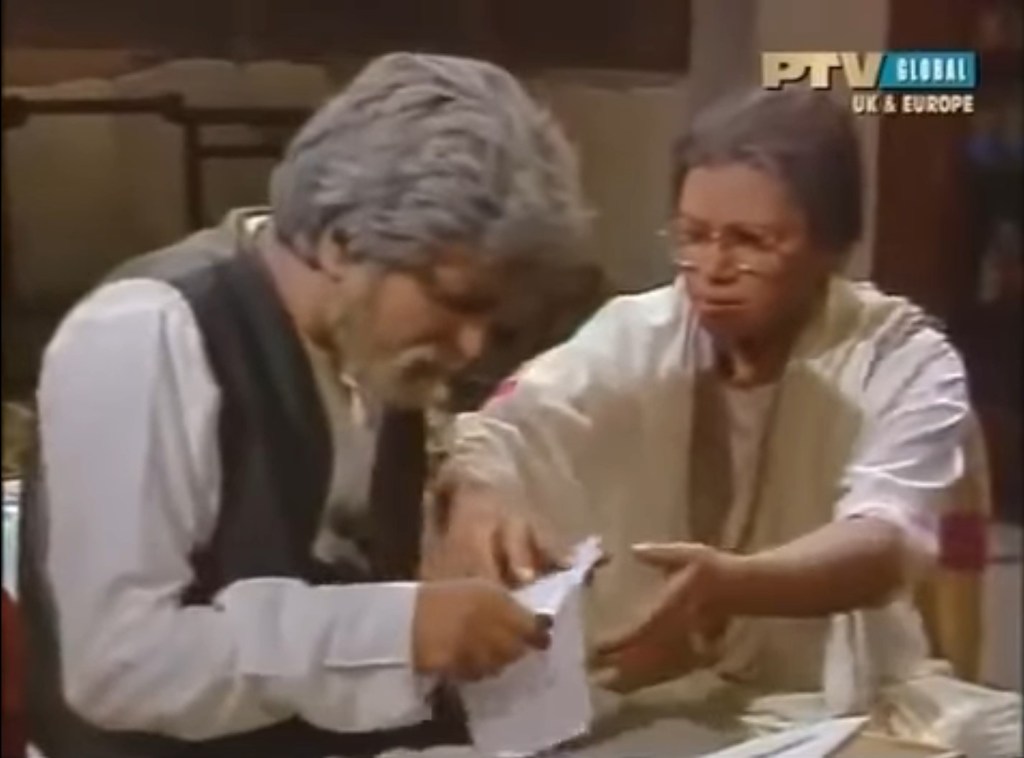
ii – Unfortunately this is also not one of Moin Akhtar’s best work. Its really one of the few times where he just went too nonsensical and implausible with his portrayal. if I’m being truly honest. His mannerism of an old, jaded Urdu poet are truly exaggerated to a point of farce. This type of performance might suit well on a theatre stage but not in front of a camera.  

iii – The “sappy” ending comes out of nowhere and it feels very abrupt and unearned. The plot progression of the wife’s critique towards her husband’s passion work is always played for laughs but in the last 5 minutes of the Longplay, writer Maqsood wanted to end it on a more “thoughtful” note which unfortunately does not work.

+ Overall

Half Plate is truly a mixed plate of delicious kebabs and wet/ soggy Biryani. With names such as Moin Akhtar and Khalida Riasat attached to it, you would naturally expect more.

Tele-Films

Mr. Khan’s Review on Zara Si Aurat (1992)

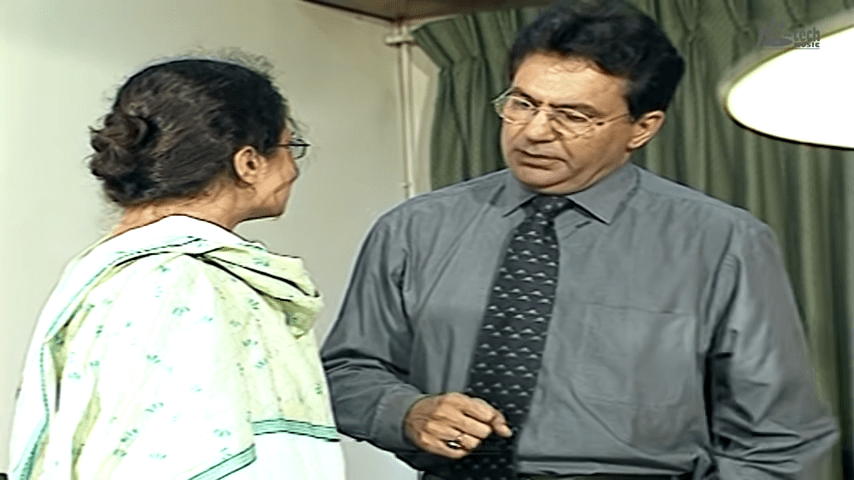
A review on Pakistani classic telefilm, Zara Si Aurat (1992). This telefilm is directed by Sultana Siddiqui and written by Noor ul Huda Shah. Zara Si Aurat was part of the PTV ‘Tele-Theater’ program.

+ Crew

  • Directed by Sultana Siddiqui 
  • Written by Noor ul Huda Shah

+ Note

Zara Si Aurat is a case study of what it means to be a married woman who is torn apart between the wishes of her family and her sense of eternal happiness. Envy and lack of empathy plays an integral role in this melodrama as the protagonist is torn apart between Independence and loyalty to her family.

+ Main Cast

  1. Bushra Ansari as Qudsia 
  2. Shafi Muhammad  as Asad
  3. Behroze Sabzwari as Ahmed

+ Plot

Qudsia (Bushra Ansari) is trapped in the world of endearment. Her task of a model housewife for her husband Asad (Shafi Muhammad) is destroying her career and worse, her sense of happiness. Enter; Qudsia’s cousin Ahmed (Behroze Sabzwari) who makes a surprise visit to her home. As they both feel compatible with each other’s misery, this leads to anger, envy and despair.

+ High Points

i – ‘Zara Si Aurat’ is undoubtedly a daring piece of small screen cinema. The premise of the Tele Theater starts off as a character study but then swiftly turns into a Shakespearean tragedy. The main protagonists of the telefilm mostly play their roles with conviction and a poignant sense of self-realization.

ii – Bushra Ansari has always been an epitome of revolution in Pakistani television. And ‘Zara Si Aurat’ is one of her finest performances on the small screen. 

One of the more memorable dialogue comes early on in the telefilm as Qudsia feels degraded by her husband. She confesses to her friend that she feels like a ‘lesser woman’. A living being without any sense of happiness on the horizon. And hence, comes the title of the Long play.

Qudsia’s character struggles to maintain her identity while being a good wife and a mother. And ultimately, her loyalty leads to her downfall.

iii – Another outstanding performance from the telefilm was from Shafi Muhammad. In all of his previous roles, Shafi has always played the calm, kind hearted man who is empathetic to his fellow man or woman. But not this time. Here, we get to see his sinister side, his pragmatic and contempt for his partner. Shafi Muhammad gives such a unique performance which is a strong departure from all of his previous well renowned roles.

iv – The writer of the telefilm Noor ul Huda Shah did a fantastic job in bringing this story to life. The plot moves at a brisk pace and as the story progresses, the tension becomes more and more intense and with the third act of the telefilm, one is completely engrossed into the narrative of the film.

v – One factor that I always highlight about the Telefilms of the 90s is that they never shy away from powerful endings. And ‘Zara Si Aurat’ is no exception.

+ Low Points

i – Behroze Sabzwari is one of few factors that did not help the telefilm live up to its true potential. This is not a knock against Behroze as an actor but clearly, his performance felt slightly out of place and mildly annoying. So his ‘happy go lucky’ attitude was indeed intentional but a bit of restraint to his performance would have elevated the telefilm towards absolute brilliance. Sadly, his performance did hinder its success.

ii – Of course when it comes to the technical aspects of the telefilm, ‘Zara Si Aurat’ is a victim of its times. The shot composition, the melodramatic music seems bland and ultimately forgettable. The strength of telefilm lies with its premise and brilliant performances from its main cast.

+ Overall

 ‘Zara Si Aurat’ has a fantastic premise and a memorable ending. One of the best telefilms from the 90s era of Pakistani television.

Rate: out of 5 stars 

Tele-Films

Mr. Khan’s Review on Achanak! (1993)

A review on Pakistani classic telefilm, Achanak! (1993). This telefilm is directed by Iqbal Ansari and written by Asghar Nadeem Syed. Achanak! was part of the PTV ‘Tele-Theater’ program.

+ Crew

  • Directed by Iqbal Ansari
  • Written by Asghar Nadeem Syed
  • Set Design by Qaisar Abbas

+ Note

Achanak! deals with the subject of what it means to be in love with a partner who is significantly older in age and stature. In contrast, the story also tries to unravel the concept of unconditional love between a man and a woman.

+ Main Cast

  1. Talat Hussain as Ahmed Naseem
  2. Fazila Qaisar  as Saba
  3. Khalid Zafar as Qadri
  4. Badar Khalil as Irfan Ki Ammi
  5. Dilshad Sabir as Irfan
  6. Wakeel Farooqi as Postman 
  7. Rashida Yaqoob as Nokrani 
  8. Azmat Ansari as Lateef 
  9. Aslam Sheikh as Journalist 
  10. Anil Bhatti as Journalist 
  11. Abu-ul-Kalam as Journalist

+ Plot

Ahmed Naseem is an accomplished Urdu novelist who is fascinated by the differences between a man and a woman in a romantic relationship. During this time, Ahmed Naseem’s young wife Saba has been receiving anonymous love letters but decides to keep it a secret from her husband. How will Naseem react once he discovers his wife’s secret love affair?

+ High Points

i – Achanak is the kind of Long play that keeps its viewers guessing throughout its runtime. The dramatic tension between Naseem and his young wife Saba is imminently felt through their minimal dialogues, disguised as ‘everyday’ small talk. And that is what makes tele theater so special. The play starts off with a premise but refuses to reveal its cards till the very end.

ii – Talat Hussian is once again brilliant as the disgruntled, cynical writer who (like a true artist) blends the fictional world with reality. Naseem is fully self-aware of his shortcomings as a husband and a lover. Although his wife is always loyal and obedient by embracing the role of a perfect housewife, Naseem knows that he lacks the compassion that his wife desires. His afternoon conversations with his fellow intellectual reveal his inner fear of betrayal. Naseem contemplates day and night that his wife might leave him for a more suitable partner. Someone younger, more down to earth. Perhaps Naseem’s articulate perception of the world forces him away from the immediate reality of his wife and family but the angst constantly remains within his subconsciousness. 

iii – Fazila Qaisar plays the wife who longs for love and compassion in her life. While Naseem treats her well, he is handicapped when it comes to unconditional love. At first, Saba finds the anonymous romantic letters abhorrent but eventually, they play the strings of her heart with uttermost precision. It’s as if this person knows what she secretly desires out of a relationship. There might be perhaps some viewers who would perceive Saba as an “unfaithful” wife but that would be severely ignoring Naseem’s role in this telefilm. The story never takes sides and evaluates the flaws in both of these main protagonists.

iv – The ending seemed very befitting to the story. Some viewers might have already predicted halfway through the telefilm but nonetheless, the emotional aspect of the writing plays a vital role in luring in the viewers right till the very end.

+ Low Points

i – Although the writing of the telefilm is good for the most part, the character development of our two leads is quite minimal to the context of the story. It is never made clear why Saba decided to marry Naseem in the first place. Was it an arranged marriage without her consent? Or did she merely desire being married to a writer? By not exploring the characters earlier on, the plot suffers a bit later on when the two leads start to drift apart from one another.

ii – Even though I praised the performances from our two leads above, they do not feel on the same page. Talat Hussian’s approach to acting has always been very ‘Theatrical’ and captivating while Fazila Qaisar’s performance is subtle and more grounded. Now, one could say that Naseem is a writer so naturally, his perception of reality would be noticeably more exuberant than others but it unfortunately works against the tone that the show is trying to set. Is Achanak theatrical in tone or set in the real world?

 Apart from our main leads of the show, it is the supporting cast which is the biggest letdown. Either their performances are too timid or unnecessarily exaggerated which clashes heavily (once again) with the tone of the play. 

iii – There’s a fairly odd scene where Naseem returns home late in the evening on a horse carriage. Usually, horse carriage rides are utilized by tourists from foreigners who want to experience sightseeing in the city for the first time. Narratively, this scene makes no sense but I suppose the horse carriage visually presents itself better than an enclosed taxi.

iv – Visually, Achanak is once again a product of its time. The images are flat and uninteresting to look at, the shot composition is standard filmmaking 101. Of course, with the time and budget that these productions had, one cannot solely blame the director for it.

+ Overall

The series of ‘Tele Theater’ long plays were known for their hard hitting social questions and Achanak is definitely one of their most memorable entries.  

Rate: out of 5 stars 

Tele-Films

Mr. Khan’s Review on Adam, Hawwa aur Shaitan (1994)

A review on Pakistani classic telefilm, Adam, Hawwa aur Shaitaan (1994). This telefilm is directed by M. Zaheer Khan and written by Naheed Akhtar Sultana. Adam, Hawwa aur Shaitaan was part of the ‘Tele-Theater’ program and aired on PTV in 1994.

+ Crew

  • Directed by M. Zaheer Khan
  • Written by Naheed Akhtar Sultana
  • Music by Javed Allah Ditta
  • Cinematography by Asrar Nadim, Muhammad Ijaz, Salman Naji Abdul Mujeeb and Abdul Muhammad

+ Note

In the 1990’s, PTV Tele-Theater was famous for its low budget production but tackled daring societal issues of Pakistan. Adam, Hawwa aur Shaitaan takes its cues (as the name suggests) from the verses of the Holy Quran where Hazrat Adam and Bibi Hawwa were misled by Shaitaan and were then banished by God from Heaven forever. 

 + Main Cast

  1. Shafi Muhammad Shah as Hafeez
  2. Zahin Tahira  as Buwa
  3. Humaira Zaheer   as  Husna
  4. Wakeel Farooqi  as Naseer
  5. Abdullah Kadwani  as Muzammil
  6. Rashida Yaqoob  as Zoni
  7. M.D Gul   as Basheer (Doodh Wala)
  8. Mehmood Ali  as Imam Masjid

+ Plot

Hafeez is a successful Real Estate agent who yearns for romantic fulfillment in his life. After a woman by the name of Husna approaches him for a hand in marriage in order to avoid certain pending problems, Hafeez accepts the offer and it seems like Adam has finally met his Hawwa. Unfortunately, their marriage quickly dissolves into chaos as Husna gets seduced by ‘Shaitan’ who goes by the name of Naseer.

+ High Points

i – Regardless of its low budget, there is a certain charm and a daring sense of realism behind PTV’s Tele-Theater days. And this unfortunately cannot be said for the current TV dramas. The question of infidelity and marital problems create intriguing melodrama for the plot as Hafeez, who is perhaps twice the age of his spouse, cannot keep her content because she yearns for something that he cannot provide. Even though the telefilm takes its time to set up the story and its characters, it does reward its viewers for their patience with excellent performances and wonderful dramatic set pieces.

ii – I’ve always been a fan of Shafi Muhammad Shah. He was unique in his quiet yet stern performances and there has been no other actor in Pakistani television who could ever replicate his talent on screen. His enigmatic and captivating performance as Hafeez is memorable as he pays the ultimate price for his generosity.

iii – The main cast of the show is unique in its characterization and fairly well balanced. Each character’s motivations and desires are well defined to set up the core conflict of the telefilm.

iv – As expected, the story between ‘Adam and Hawwa’ does not end well for either side and once again, just goes to show how bold and fearless the content was on mainstream Pakistani television back then. Admittedly, the production quality was mediocre at best but the writing and performances brought so much to the table. These shows lingered on with you in your thoughts long after the show ended and Adam, Hawwa aur Shaitaan is no exception.

+ Low Points

i – As previously mentioned, the production of the show is obviously bare minimum. There is a single set location of a street which is repeatedly used throughout its runtime, the camera work is unimaginative and there is absolutely nothing that could visually entice you as a viewer. Modern viewers might easily be discouraged due to its slow pacing, darb colors and uninspired visual presentation.

ii – While the characters are all enigmatic, the show does not really allow the viewer to decide who they should root for. Clearly we are led to sympathize with Hafeez who, as a good husband, provides a comfortable life for his wife Husna but in return, she just wants more out of life. It is indeed greed that destroys any chance of happiness for Buwa as she gets seduced by the ‘devil’ Naseer who makes false promises to her and takes advantage of her vulnerability. 

There is some degree of reasoning given for Husna’s erratic, impulsive behavior, hidden in the form of massive age difference between her and the husband but it is not nearly enough to sway the viewers away from understanding Husna’s point of view.

+ Overall

Adam, Hawwa aur Shaitaan is a cautionary tale of Love, Hatred and Innocence. This telefilm is yet another example why the present TV dramas are spineless in comparison to the golden years of Pak television.

Rate: out of 5 stars 

Tele-Films

Mr. Khan’s Review on Pehli Chori (1999)

A review on Pakistani classic telefilm, Pehli Chori (1999). This low budget telefilm is directed by Khursheed-ul-Hassan and written by Banoo Qudsia. Pehli Chori was aired on PTV in 1999.

+ Crew

  • Directed by Khursheed-ul-Hassan
  • Written by Banoo Qudsia
  • Cinematography by Aslam Sheikh
  • Editing by M. Hamza Max
  • Production by Rahim Khan and Naveed Ahmad

+ Note

Pehli Chori is a showcase of future Pakistani television talents, Sania Saeed and Nauman Ijaz. The telefilm is primarily visualized as a long stage play, tackling issues like poverty and abuse of higher power. 

 + Main Cast

  1. Noman Ijaz  as Ali
  2. Sania Saeed  as Bushra
  3. Firdous Jamal  as Doctor Daud Kazmi
  4. Roohi Khan  as Kishwar
  5. Khyam Sarhadi  as Baba Roray Maar
  6. Tariq Mustafa  as Azhar

+ Plot

Bushra and Ali are a middle aged married couple who are financially struggling to maintain their status quo. As their young son falls fatally ill, the parents are struggling to pay for his medical treatment by any means necessary.

+ High Points

i – If you are a fan of Nauman Ijaz or Sania Saeed, its great to see them as young and upcoming talents of Pakistani television. Even with budgetary and creative constraints, the chemistry between the two actors is fairly evident and noteworthy. Their performances might be a bit rough around the edges but one can see how these veteran actors have grown throughout the decades to improve upon their craft as legends in the business.

ii – Even though the production standards are incredibly outdated, the thematic elements of the telefilm have not. The issues of unemployment and abuse of power are still as prevalent as they were 25 years ago. Inadvertently, it also portrays issues that are severely lacking from the Pakistani television of today. No ‘Saas/ Bahu’ melodramas but rather, addressing societal issues head on.    

iii – Pehli Chori has a good heart but the execution of the script, production and some of the performances cannot be ignored. But all that said, I do have to admit, the telefilm had the courage to give it an appropriate bleak ending. This is undoubtedly a bold move that I cannot ever imagine happening in the television of our present day.

+ Low Points

i – Clocking in at an hour’s length, Pehli Chori is a hard watch for sure. Tonal inconsistencies, terrible production work, some fairly oddball performances from the supporting cast makes Pehli Chori a difficult time to sit through. And it’s a shame because even back then, it was fairly obvious that Sania Saeed and Nauman Ijaz work so well together onscreen. Their pairing makes the telefilm almost worth a watch.

ii – It is by no means an exaggeration when I say that Pehli Chori has terrible production (even for its time!). The camerawork seems completely amateurish as there are multiple scenes with overexposed backgrounds, the music is at times overlapping on spoken dialogues, scenes purposefully shot in a single take in order to save time and budget, odd music choices that misrepresent the tone of the scene and I could just go on. Technically, this telefilm should have never been allowed to air on national television with this quality of production.

Whenever I watch a classic Pakistani drama, I always try to keep in mind the budgetary/ skill limitations of the production as well as the censorship but unfortunately, Pehli Chori was fairly outdated even back then.

iii – On one hand, Bushra accuses her husband Ali of infidelity and it is always played for laughs for some reason. But as Bushra confronts her employer regarding the cash she needs for her son’s treatment, the topic of infidelity is now all of a sudden supposed to be taken with utmost seriousness. You cannot have your cake and eat it too, one needs to establish a tone for their show in the first 5 minutes and follow through with it.

iv – Firdous Jamal as Doctor Daud Kazmi was arguably the most absurd performance I have seen in all of my classic reviews. While the other actors’ performances imitated reality, Firdous Jamal went for a more “Shakespearean” route for some reason. The inner monologues, the random emphasizes on certain phrases, the absurd dialogue delivery which felt so out of place for the telefilm; I can just imagine the director was nervous enough not to fill in Jamal sahib that this is a telefilm replicating reality and not a punjabi stage play.

+ Overall

Pehli Chori has a lot of heart behind its shoestring budget and terrible production quality but ultimately, it is a tough gig to sit through. Only recommended for diehard Nauman Ijaz/ Sania Saeed fans who would like to witness the genesis of their onscreen chemistry together.

Rate: out of 5 stars 

Tele-Films

Mr. Khan’s Review on Aik Hai Nigar (2021)

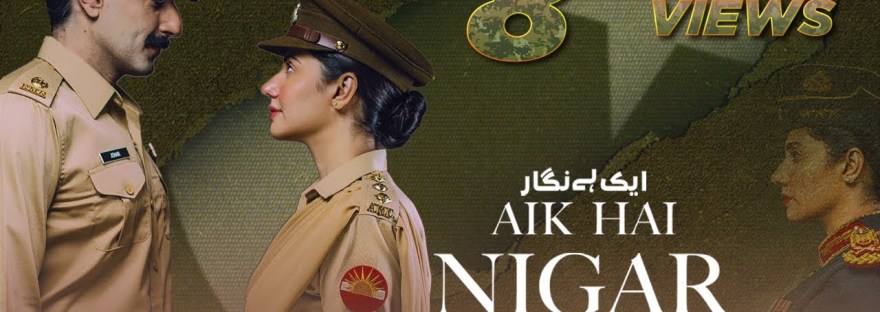
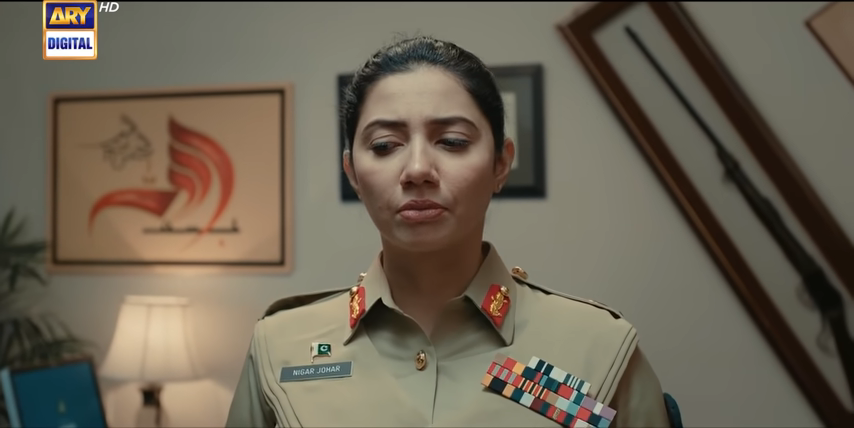
A review on Pakistani telefilm Drama, Aik Hai Nigar (2021). The ARY Digital telefilm is directed by Adnan Sarwar and starring Mahira Khan as the famous Lt General Nighar Johar. The telefilm also stars Bilal Ashraf, Khushal Khan and Sohail Samee. 

+ Crew

  • Directed by Adnan Sarwar
  • Written by Umera Ahmed
  • Edited by Rizwan AQ
  • DOP by Omar Daraz
  • Music Composed by Abbas Ali Khan
  • Produced by Nina Kashif & Mahira Khan

+ Note

Aik Hai Nigar is a biopic on Pakistan’s first and only female lieutenant general of the Pakistan Army. She has been a part of Pakistan Army Medical Corps and has been serving as a surgeon general. 

 + Main Cast

  1. Mahira Khan as Nigar
  2. Bilal Ashraf as Johar Ali Khan
  3. Khushhal Khan as Shahid
  4. Sohail Sameer
  5. Sara
  6. Iman Shahid

+ Plot

Nigar Johar is a girl who aspires to be big. She wants to become Pakistan Army’s first ever female lieutenant general. Even though she has to face hardships of misogyny and personal despair, Nigar is determined to achieve her goal in life. Along the journey, she meets her life partner Johar Ali Khan who encourages her to pursue her career goal and make history in the nation of Pakistan.

+ High Points

i – Mahira Khan and Bilal Ashraf have good on screen chemistry with one another. Even though there were one too many private life scenes in the telefilm, they complimented each other’s performances very well.

ii – It is also admirable that (judging from the personal photos at the end), the costume designer, make up artist and casting director tried to emulate Nigar’s real life family and friends to the best of their abilities. 

 + Low Points

i – Aik Hai Nigar has unfortunately nothing to offer. It is a dry, insipid take on the life of Nigar Johar; a woman who surely had many hardships to face throughout her career. Sadly none of it is depicted on screen. The telefilm rather focuses much more on her personal hardships which (quite frankly) never proved to be engaging television. It is a baffling decision from the writer Umera Ahmed to ignore the most exciting part of her professional career but rather focus on timid aspects of her personal life. The film failed to educated its audience on her on field accomplishments in a male dominated field of armed forces. What an unfortunate wasted opportunity this telefilm turned out to be!

ii – Speaking of writing, this is probably one of Umera Ahmed’s laziest attempts at penning down a script. Aik Hai Nigar is an incredibly superficial take on the life of Nigar Johar. From cliched, bland dialogues to lack of any flow to the narrative; Aik Hai Nigar is an astoundingly forgettable experience.

iii – Sadly, Mahira Khan does not possess the grittiness required to play the role of a female Lieutenant General. She clearly seemed like an actress playing the role in a movie rather than an actress completely embellished and morphed into Nigar Johar on screen. Whether it was lack of proper rehearsals or understanding her role, Mahira Khan is entirely unconvincing in her lead role.

iv – The makeup has to be one of the worst aspects of the telefilm. From the year 1987 till present day, Mahira Khan as Nigar Johar never grew older. Her skin complexion, her hair, every physical aspect remained of a young mid 30 year old. A personal note to the production team of the telefilm; suspension of disbelief will only take you so far, at least attempt at making her age through makeup! This is just not acceptable in such a star studded cast production!

v – After watching the telefilm, I honestly have no idea what I got out of this. For being a biopic of Pakistan Army’s first ever female lieutenant general, I learned nothing as to what hardships one had to do to accomplish such a massive feat. There were some throwaway one off scenes like “But sir, she’s a woman!” to which they replied “So what? She is very capable!”. And that is how misogyny in the Pakistani Army was resolved. Wish it was that easy.

vi – While watching the telefilm, it quickly became evident the film was not really that interested in portraying Nigar’s professional life but focused heavily on her personal life. Numerous scenes were solely devoted to her romance with her husband, the personal tragedy she had to face and a real attempt to mold Nigar’s life into a stereotypical Pakistani drama. And that seemed entirely unfair to the dedication and hardwork that Nigar had to put in order to achieve her goal. And even with her scenes with the husband, it seemed incredibly superficial and perfect, as if they never had an argument or even a disagreement over a decision. Johar Ali Khan is in fact the flawless husband. The perfect atmosphere just seemed detrimental to the authenticity of the story.

A good biopic always keeps a steady balance between the professional and personal aspects of the character’s life. Aik Hai Nigar unfortunately just straight out ignored to even attempt to understand her professional career.

+ Overall

Aik Hai Nigar is a lazy attempt to capture the life of Pakistan Army’s first female Lieutenant General on screen. It’s misguided, insipid and by the end of it, will seem like an entirely forgettable experience.

Rate: out of 5 stars

Tele-Films

Mr. Khan’s Review on Neeli Dhoop (1994)

A review on Pakistani longplay Drama, Neeli Dhoop (1994). The PTV classic longplay is directed by Nariman and is written/ starring the veteran actress of Pakistani Industry, Bushra Ansari. The longplay also stars Sajid Hasan and Nighat Chodhri. This telefilm was aired on Pakistan Television in 1994.

+ Crew

  • Directed by Nariman
  • Written by Bushra Ansari
  • Edited by Fakhar-ul-Hasnain Zaidi
  • DOP by Salman Naji, Ibnul-Hashim and Mohammad Moiz Khan
  • Music Composed by Javed Allah Ditta
  • Produced by Meera

+ Note

Neeli Dhoop is the debut of Bushra Ansari as a writer for Pakistani Television. The longplay deals with such heavy themes like late marriage and the societal complications that come with it. Just by viewing the longplay, one could tell how personal the project of Neeli Dhoop was for the veteran actress. With the direction of the elder daughter of Bushra herself, Nariman brings the camera up close and personal, challenging the norms of a society and misperception regarding customs and religion. According to a DAWN newspaper interview of Dec 19 2010, Bushra Ansari came up with the script after she met a woman in a similar situation about 12 years ago before the release of the longplay. Upon release, Neeli Dhoop was relatively a critical and commercial success.

 + Main Cast

  1. Bushra Ansari as Nasira
  2. Sajid Hasan as Mansoor
  3. Nighat Chodhri as Rani
  4. Shahood Alvi as Shahood
  5. Arjumand Rahim as Naveeda
  6. Faryal Ali as Mano
  7. Mubassir Khan as Mrs. Barki
  8. Shahzad as Pervez
  9. Nilofar Khan as Shaila

+ Plot

Nasira (Bushra Ansari) is content with her life or at least she thinks she is. Although she became a widow some decades ago, she is happy to see their daughter start a family of her own. But with each passing day, the solitude of old age creeps upon her. After a marriage proposal from her cousin Mansoor (Sajid Hasan), Nasira reluctantly accepts it but ends up being mocked and ridiculed by the society and people around her. 

+ High Points

i – I don’t think anyone can start this review without addressing the controversial subject matter of Neeli Dhoop. Back in 1994, this was such a daring topic to engulf upon the Pakistani audience. Although the concept of late marriage is approved by Islam, it is still a controversial subject to bring upon the dinner tables of all Pakistani households. If a woman lost her husband at an early age and decided to not remarry right away, she is forever damned to remain lonely and unhappy for the rest of her life rather than finding happiness on her own later on in Life. High Art is a concept which is supposed to challenge the viewer’s perception on life and his/ her surroundings and Neeli Dhoop’s unapologetic wallop with the face of truth makes it such an engaging watch. Personally, I miss 90s Pakistani Television where they dared to be bold and different, where the only subject for each drama wasn’t a “love triangle” between three handsome co-stars. The content made you think, left a lingering thought long after the show was over. And Neeli Dhoop does exactly that.

ii – While also serving as the writer for the longplay, Bushra Ansari is enigmatic and fully in control of her performance as always. It is admirable how easily she could mold her acting skills with each passing scene, creating a concucment of happiness and despair. Perhaps an obvious statement but a longplay like this would’ve never worked if not for Bushra Ansari’s meticulously calculated performance.

iii – But all is not gloomy and dark, Sajid Hasan brings a much needed levity and comedic relief to the longplay. Whenever onscreen, Sajjid is fun to watch but most importantly, the quips and jokes never overstay their welcome. They are pretty much timed according to where the script could serve best. Watching two veterans of Pakistani television; Bushra and Sajjid on screen together is always a delight for the viewers.

iv – It is hard to imagine that this was Bushra Ansari’s first ever debut script for Pakistani television. The scenes blend well with each other, creating a perfect narrative flow throughout its 90 min runtime. But most importantly, it is the dialogues that are incredibly down to earth, giving the viewer a sense of “familiarity” and a certain attachment to its characters. They transcend beyond “written literature” and are casual enough for the audience to undoubtedly relate to the characters they are witnessing onscreen. Some of the off-hand jokes and observations of Sajjid Khan genuinely made me chuckle. 

v– The interactions between characters feel real. They never come off staged or exaggerated to enhance the audience’s perception of the emotions that the longplay is conveying. It never insults your intelligence nor does it look down upon you. Perhaps the greatest accomplishment of Neeli Dhoop is that it encourages you to elevate yourself and look at the longplay straight in its eyes and choose to either admire it or hate it.

vi– While giving away no spoilers, the ending pulls no punches. The longplay ends exactly how it was meant to be; bold and uncompromising. With all honestly, I really admire Bushra Ansari to take the high route and not succumb to false, unrealistic resolutions.

 + Low Points

i – Since Neeli Dhoop is a 90s production, it does have the obvious 90s production tropes. The camerawork is insipid, mainly working with mid close to close ups of actors, music is forgettable, sound design is non-existent. Neeli Dhoop solely works as a longplay solely due to its tight script and performances. 

ii – While I did praise the conclusion for its boldness, it does admittedly feel a bit abrupt with many threads left tangled. But I suppose that’s how real life is. A minor complaint but perhaps a better resolution was needed between characters that we grew to love and care about. I wasn’t expecting them to ride together into the sunset but I suppose some vital questions were deliberately left unanswered, mainly the daughter and mother relationship at the end.

+ Overall

“They don’t make them like they used to!”. Nope they sure don’t. With so much monotony and insipid TV shows of today, Neeli Dhoop blows all of them out of the water with its bold and courageous storyline and characters. It is a hidden gem that every Pakistani drama lover should watch.

Rate: 4.5 out of 5 stars

Tele-Films

Mr. Khan’s Review on Do Bata Aath (2021)

A review on Pakistani telefilm Comedy, Do Bata Aath (2021). The TV film is directed by Kamran Akbar Khan and is written by Rizwan Hassan. The telefilm stars the comedian Ahmad Ali Butt and Maria Wasti as leads with Ahmed Hassan and Zhalay Sarhadi serving as supporting cast. As the name suggests, the telefilm also includes eight child actors. Do Bata Aath is a Momina Duraid/ HUM TV Production and was aired on the 3rd Day of Eid-ul-Fitr 2021 Special.

+ Crew

  • Directed by Kamran Akbar Khan
  • Written by Rizwan Hassan
  • Cinematography by Abdul Qadoos
  • Editing by Sheeraz Fayaaz
  • Produced by Momina Duraid
  • Production House: MD Production

+ Note

Do Bata Aath serves essentially as a 75 min situational comedy, where the comedic antics are always connected to the vast number of children that the married couple has. The premise can be attributed to a Hollywood comedy classic of the 2000s Cheaper By The Dozen (2003) starring Steve Martin and Bonnie Hunt. The telefilm also creates hilarious situations out of handling day to day life in the Faraz Family. Do Bata Aath is presented as the “lighter side of Life” and was a special broadcast on the 3rd day Eid-ul-Fitr 2021.

 + Main Cast

  1. Ahmad Ali Butt as Faraz
  2. Maria Wasti as Aleena
  3. Ahmed Hassan as Faraz’s Boss
  4. Zhalay Sarhadi as Biloo

+ Plot

There’s always fun and trouble brewing in the Faraz Family. While handling eight kids simultaneously with his wife, Faraz (Ahmad Ali Butt) struggles to make ends meet… or even remember the names of his kids or who came before or after. After not being appreciated enough for her efforts, Aleena (Maria Wasti) decides to take an indefinite hiatus off her motherly duties and let Faraz take her place in taking care of the kids instead. Hijinks ensue and now Faraz needs to find a balance between family life and maintaining his sanity in the process.

+ High Points

i – Maria Wasti was probably picture perfect casting as the grizzly, overworked mom of eight children. She not only looked the part but her performance matched well to her character. Probably the least offender from the whole bunch of terrible performances.

 + Low Points

i – Do Bata Aath had ONE joke throughout its entire runtime; “Hey, isn’t it funny that the family consists of EIGHT children?”. And five minutes into the telefilm, this joke got old real fast. For a comedy, there was absolutely nothing funny about this. All the jokes and setups were lazy and uninspired. The writer Rizwan Hassan probably wrote the script in an hour’s time as I refuse to believe any effort was put into this project. It’s nonsensical and unfunny throughout its runtime. You can find more comedy in the evening news than this pile of garbage.

ii – The performances are just way too ridiculous and over the top. Since the dialogue is so abhorrent, the actors are directed to over exaggerate their acting to compensate but ends up making it much worse. I don’t understand what people see in Ahmad Ali Butt but he’s not a good comedian by any stretch of my imagination. When it comes to comedy, Pakistani TV shows/ telefilms just fail miserably at it. Subtlety is not even in the cards, every performance needs to be like they are on an Umer Shareef Theater show. While Theater thrives on exaggerated performances, Television/ Film needs subtlety because the camera is much closer and personal to the actors. Why is this such a difficult idea to comprehend for Pakistani Television Production?

iii – Also the whole family dynamic makes no sense. Unlike Cheaper By The Dozen, all the children are more or less the same age. How is that even possible? Did they adopt kids in between? Were they born in pairs? What possessed them to have so many children if they clearly can’t afford all of them? It also seems obvious that there is no real ‘fatherly love’ to the kids as Faraz half the time doesn’t even remember their names or birthdays. Some context or backstory was needed for this comedy to work but the audience is given no explanation. The idea was there but absolutely nothing was built upon it. The whole telefilm relies on cheap comedy antics from its co-stars.

iv – Of all the performances, Ahmed Hassan as Faraz’s disgruntled boss was the worst. I felt literally embarrassed whenever he was onscreen. I hope he made some good money from this telefilm because this is one performance he can never live down.

v – NOISE. That’s what this telefilm is. And I don’t mean just the kids shouting all the time (although that would’ve been fitting to the premise). NOISE equals Background music here. By having constant Music running in the background of every single scene without a second’s rest, the telefilm made it perfectly clear that they had absolutely no faith in their writing and performances to maintain their audience’s attention span. It’s the “shaking of the keys in front of a cat” syndrome, HUM TV knows its garbage television and they have to try everything to keep viewers from changing channels.

vi – Speaking of Production, the camerawork and editing is just awful and unpleasant to look at. Most scenes just begin with a closeup on the actors without giving any indication to the audience where exactly the scene is supposed to be taking place in.

+ Overall

Do Bata Aath is just another uninspired mess of a telefilm which is neither funny nor creative. Its 75 minutes of my life that I will never get back.  

Rate: 0.75 out of 5 stars

Tele-Films

Mr. Khan’s Review on Teri Meri Kahani (2021)

A review on Pakistani telefilm Drama, Teri Meri Kahani (2021). The TV film is directed by Aehsun Talish and is written by Saima Akram Chaudhry. The telefilm stars Haroon Kadwani and Sehar Khan as leads while veterans such as Javed Sheikh, Bushra Ansari and Usman Peerzada serve as supporting cast. Teri Meri Kahani is a Geo TV exclusive and a 7th Sky Entertainment.

+ Crew

  • Directed by Aehsun Talish
  • Written by Saima Akram Chaudhry
  • Produced by Abdullah Kadwani & Asad Qureshi
  • Production House: 7th Sky Entertainment

+ Note

Teri Meri Kahani is a light hearted portrayal of young love. It is the modern Romeo and Juliet induced romantic comedy. With this telefilm, Geo TV gave two relatively newcomers, Haroon Kadwani and Sehar Khan to play the leading roles along with veteran actors as supporting cast. This project was handed to Aehsun Talish since he already has experience directing comedy such as the TV series Suno Chanda (2018) and also has received a nomination for the Lux Style Award for Best Director.

 + Main Cast

  1. Haroon Kadwani as Arman
  2. Sehar Khan as Zara
  3. Javed Sheikh as Zara’s father
  4. Bushra Ansari as Arman’s mother
  5. Usman Peerzada as Arman’s father

+ Plot

Teri Meri Kahani plays the oldest of love tales; Arman is the son of a wealthy businessman who takes life easy and finds his passion in sports & luxury cars. Zara, on the other hand, wants to succeed in Life and make her only surviving parent proud of her accomplishments. The two play pranks at one another which eventually leads to a comedic, romantic predicament. 

+ High Points

i – The only way I could see Teri Meri Kahani being “worth a watch” if you have it in the background and you’re busy during house chores on a lazy weekend. And this is the biggest praise I could give this hot garbage.

ii – The telefilm can be unintentionally hilarious at times during its dramatic moments. While the whole film is not consistent in this tone, parts of it can fall into the “it’s so bad, its enjoyable” category.

 + Low Points

i – Teri Meri Kahani is honestly the worst telefilm/ drama I’ve reviewed on this website. It’s bad in every conceivable way; the direction is horrid, the script looks like it was written by a computer bot on the pretenses of every cliché of a romantic comedy imaginable and the actors are obviously there just to collect their paychecks. There is absolutely nothing praiseworthy about this telefilm. Its badly acted, predictable nonsense that gives television a bad reputation.

ii – The “comedy” is pathetic. The only way that this telefilm made me chuckle was how terrible and desperate it really is. To top it off, none of the veteran actors could save this abomination. 

iii – SPOILER ALERT!!! If you would like to avoid it (I’m not sure why you would even bother), skip to the next point):

(This is how probably a conservation with the creative team go regarding the plot and conclusion of this telefilm):

xxxx

Audience: Why did the protagonists fall in love with each other? They have absolutely nothing in common. Did just playing abhorrent pranks on each other somehow equals love?

Geo TV: Um…why not?

Audience: Wait, why is there a conflict all of a sudden? Why didn’t Zara’s father just ask Zara what she really thinks of Arman before having an anger fit in front of his most trusted friend? 

Geo TV: Does it matter? Oh look, Javed Sheikh is in the hospital now.

Audience: Huh? He faked his own heart attack?? And Arman’s dad was also into this? How does this all make sense? Why was this necessary?

Geo TV: Oh look, the telefilm ended. Thanks for dropping by.

xxxx

In short, conflicts are forced, resolutions are swift just as the telefilm is about to end, nothing makes sense in this world…

iv – There is absolutely no perception of the director Aehsun Talish leading his actors through each scene. It seems like the crew had probably incredibly limited days of shoot and each scene has the exact same flow, regardless of how lighthearted or essential that scene is to the narrative. It’s obviously terrible writing but even worse how minimal effort you find from the director and crew themselves.

v – If you ever want to see money being burnt on screen well, there you have it folks! It is fascinating that with all the budget, luxury mansions, lavish gardens you see on your TV screens, the telefilm still somehow looks incredibly cheap. Perhaps it lacks the talent or artistry that you need to make good Set designs or even just a sense of what visually looks good on screen and what looks tacky. And no money on earth can buy you that kind of talent.

vi – Bushra Ansari’s character is apparently an addict to Pakistani dramas but not any other dramas… no, no….only Geo TV dramas of course! Did that play any role or quirk to her character? Nope. Just a cheap, pathetic way for Geo TV to promote their content onto the viewers.

vii – I can’t fault the young talent for being part of this telefilm as they have a massive opportunity to be the leads of a telefilm but the veterans? Don’t they have any sense of moral integrity? I was embarrassed just to see them being actively part of this monstrosity. How they didn’t feel uncomfortable to be part of this project is beyond me.

viii – The sound editing/ mixing is one of the worst offenders of this telefilm. Each emotion has to be spoon fed to the audience because the creatives behind this project have zero confidence in their skills to convey emotions on screen with skilful dialogue and meaningful performances.

+ Overall

Teri Meri Kahani is devoid of any sort of originality. Its writing is terrible, acting is insanely exaggerated, it’s arguably one of the worst Pakistani telefilms I’ve ever seen. Avoid it like the plague.

Rate: 0.5 out of 5 stars

Tele-Films

Mr. Khan’s Review on Zikr Hai Kai Saal Ka! (1995)

A review on Pakistani longplay Drama, Zikr Hai Kai Saal Ka! (1995). The PTV classic longplay is directed by the veteran Sahira Kazmi and is written by Dr. Anwar Sajjad. The longplay stars Rahat Kazmi and Atiqa Odho. This telefilm was aired on Pakistan Television in 1995.

+ Crew

  • Directed by Sahira Kazmi
  • Written by Dr. Anwar Sajjad
  • Edited by Salman Zaidi
  • DOP by Tanvir Malik
  • Theme Song Lyrics by Momin Khan Momin
  • Music Composed by Arshad Mehmood
  • Produced by Sahira Kazmi

+ Note

Zikr Hai Kai Saal Ka! is an in-depth look into such vital themes as marriage and relationship which are the cornerstone of Pakistani culture. Is it better to be married and unhappy or long for the one who you are truly content with? How does staying in a despondent marriage affect your children? Is it better off to be separated but happy instead? The longplay is an exploration of regret and remorse of past decisions and if we are forever damned to perish through them for the rest of our lives. Even back in 1995, this was a very controversial topic to discuss on National Television but Rahat and Sahira Kazmi both felt it was an essential social theme to explore in post Zia ul Haq’s Pakistani society.

 + Main Cast

  1. Rahat Kazmi as Sikandar
  2. Atiqa Odho as Neelofer
  3. Ali Kazimi as Suhail
  4. Arshad Mehmood as Amin
  5. Amber Rizvi as Fouzia
  6. Naveen Anwar as Nida

+ Plot

Sikandar (Rahat Kazmi) and Fouzia (Amber Rizvi) are confined in an unhappy marriage. After years of being together, bearing two kids, the couple has grown apart from one another and Sikandar contemplates if marrying Fouzia was the biggest mistake he made in his life. Upon travelling on a business trip to Karachi, Sikandar ends up meeting his previous love, Neelofer (Atiqa Odho). After a brief interaction with one another, they both realize that they still have feelings for one another. But with Sikandar now with his wife and family, is it wise for him to relive his past love or continue in remorse for the rest of his life?

+ High Points

i – Zikr Hai Kai Saal Ka! is considered a classic amongst the 90s Pakistani dramas and longplays. It touches upon such intricate yet human themes like marriage and happiness. Dr. Anwar Sajjad’s brilliant writing gives us a keen understanding behind the so-called formula of a perfect, content life. Is it necessary for us to be married at a certain stage in life, regardless if you are unsure of your decision? Are we even allowed to regret our past decisions and seek true happiness? It’s an excellent piece of storytelling, themes that are still essential to our society. Zikr Hai Kai Saal Ka! is a harsh look into our pakistani society and as decades have gone by, the longplay has aged like fine wine.

ii – Of course, the thematic elements in the longplay would’ve never been successfully conveyed to the audience if not for outstanding performances by Rahat Kazmi and Atiqa Odho. Whenever they are both onscreen, it is obvious that they have shared a past together, the endearment that they still have for one another is now unfortunately a relic of sorts. But can they reclaim it? Can they relive their past? Not taking anything away from Dr. Anwar Sajjad’s writing but just from instinct, I could tell that the delivery of some dialogues had been slightly improvised to give it a more “humane” touch to it. And that usually happens when the actors are in complete control of their characters in front of the camera. The performances from both leads show how deep they dived into their respective characters and made them sympathetic and relatable onscreen. I have to admit, this is arguably one of the best Rahat Kazmi’s performances I have ever witnessed. 

iii – Apart from the leads, even the supporting cast brings a lot of vibrance into the scenes. Amber Rizvi as the disgruntled mother and both the child actors (Ali Kazimi and Naveen Anwar) bring intriguing introspective into the life of the Sikandar family. A look into how unhappy marriages affect the children who are always the main casualties in such scenarios. 

Ali Kazimi (the real life son of Rahat Kazmi) plays off naturally to his father’s lead, bringing such a unique father and son dynamic that could potentially only occur if they also share a bond offscreen as well. Suhail looks up to his father but at the same time feels disoriented when he witnesses his father’s unsurety towards life. Perhaps he wonders: “will I also suffer the fate of uncertainty towards life?”. Of course, now Ali Kazimi is a well established Television actor but it’s fascinating to see such humble beginnings.

iv – Zikr Hai Kai Saal Ka! Is essentially driven by its set pieces. The narrative seamlessly flows from the dysfunctional family life to a life of endless possibilities. A chance for Sikandar to relive his past, rekindle his love with Neelofer. Fate has given an opportunity to perhaps correct his past mistake and have another shot at happiness once again. But is it all an illusion at the end? A lot of credit goes to Sahira Kazmi’s seamless direction which leads the viewer throughout Sikandar’s character arc and perhaps a definitive realization at the end.

v– The scene at the Karachi beach, the emotional confrontation between Sikandar and Neelofer is undoubtedly the highlight of the longplay. That scene alone defines why this longplay is fondly remembered as a classic of Pakistani television.

vi– The theme song/ Ghazal “Zikr Hai Kai Saal Ka!” by Nayyara Noor is absolutely gorgeous to listen to. It fits just fine with themes like reminiscing over the past and longing for unattainable happiness.

vii– The longplay ends on a perfect note, leaving the audience with a lingering thought of what might have been the right outcome from all this. It gives the viewer no definite answers but leaves them to ponder long after the end credits have rolled. It’s a perfect end to a brilliant PTV classic.

 + Low Points

i – For all that’s great about this longplay, Zikr Hai Kai Saal Ka! (in terms of its production) does feel like a product of its time. The camerawork is uninspiring at best, sound editing is amateurish, the mention of “dish antenna” was already dated in four years time and there is an incredibly corny “reminisenting of past love” montage which is just as cheesy as you would expect from a 90s TV drama. Thankfully, it’s only a one and done scene.

ii – Even though Arshad Mehmood as Amin is entertaining, it’s a tad bit hard to believe that he was a “class fellow” of Sikandar and Neelofer when he clearly looks a lot more older than them. 

+ Overall

With exceptional writing, brilliant performances from the two leads and a perfect conclusion, Zikr Hai Kai Saal Ka! is and will always remain a classic and pinnacle of Pakistani television.

Rate: 4.25 out of 5 stars

Click here for a short interview with Naveen Anwar, the child actress from Zikr Hai Kai Saal Ka! :