Feature Length Films

Mr. Khan’s Review on The Fantastic Four: First Steps (2025)

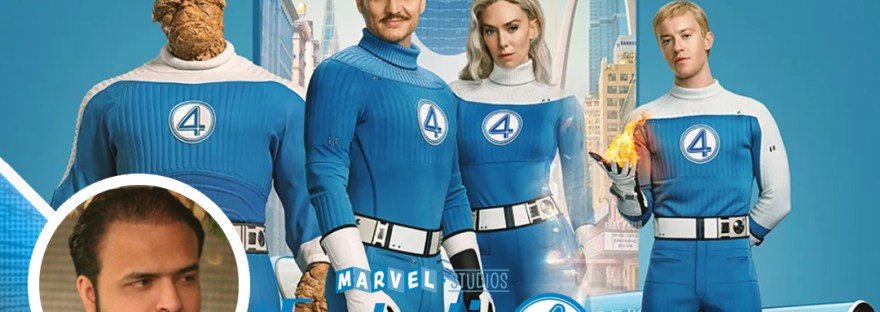
A review on Hollywood feature length film, The Fantastic Four: First Steps (2025). The feature length is directed by Matt Shakman. The film stars Pedro Pascal, Vanessa Kirby, Ebon Moss-Bachrach and Joseph Quinn. The Fantastic Four: First Steps (2025) is the third reboot of the characters of Fantastic Four on the silver screen and the first time they have been integrated into the Marvel Cinematic Universe.

+ Crew

  • Directed by Matt Shakman
  • Screenplay by Josh Friedman, Eric Pearson, Jeff Kaplan and Ian Springer
  • Cinematography by Jess Hall
  • Edited by Nona Khodai and Tim Roche
  • Music by Michael Giacchino
  • Produced by Kevin Feige
  • Distributed by Walt Disney Studios Motion Pictures

+ Note

After the conclusion of the ‘Third Phase’ of Marvel Cinematic Universe, Marvel Studios has struggled to maintain its box office dominance that it once had. With the introduction of the new streaming service ‘Disney +’, the output of Marvel content dramatically increased which directly led to decrease in quality of the content. On the other hand, Fantastic Four had been a movie property of 20th Century Fox and the studio has tried twice to make the brand a viable movie franchise. In order to regain the rights of their Marvel characters, Disney ended up purchasing 20th Century Fox altogether (which included the X-Men and Fantastic Four properties), ready to be used and integrated in their cinematic universe. And thus, we have this year’s The Fantastic Four: First Steps. 

After many mediocre attempts, Marvel Studios is desperate to regain the trust of its core and casual audience by placing a lot of care and attention to the first modern Superhero family of comics. 

 + Main Cast

  1. Pedro Pascal as Reed Richards / Mister Fantastic
  2. Vanessa Kirby as Sue Storm / Invisible Woman
  3. Ebon Moss-Bachrach as Ben Grimm / The Thing
  4. Joseph Quinn as Johnny Storm / Human Torch
  5. Julia Garner as Shalla-Bal / Silver Surfer

+ Plot

In Earth 828, the Fantastic Four protect the Earth and its inhabitants. They are already an established force with the support of the US government and its people. But when an alien lifeform visits New York City and warns them of the inevitable destruction of their entire planet at the hands of a cosmic entity named Galactus, the Fantastic Four must do everything to ensure that they are capable of protecting the earth and its people. 

+ High Points

i – Fantastic Four, on the silver screen, has always spelled disaster. Whether its the non-released Roger Corman’s The Fantastic Four (1994), the clunky, comedic 2005 film or the disastrous, ultra dark 2015 film by Josh Trank. It was proven time and time again that Fantastic Four cannot be adapted to the big screen. Until now…

Yes. The Fantastic Four: First Steps accomplishes what others failed to do so. Kevin Feige (the producer) and Marvel Studios took their time and attention to adapt the charm, goofiness and the adventurous nature of Fantastic Four to their cinematic universe. As a long time fan of Fantastic Four from the comics (especially the Lee/ Kirby era), I was relieved to see the characters faithfully portrayed without overstepping their boundaries.

ii – As mentioned above in the Plot section, the film takes place on Earth 828. I believe this was a smart move as this led the writers to not carry the “baggage” of previous 15 or so MCU films. No questions can come up like “Why doesn’t Iron man or Avengers come and help?” or “Where were they when Thanos was whipping half of the earth’s population?”. It’s a self contained universe with Fantastic Four being the only Superheroes. The film obviously gives a very “1960s vibe” but doesn’t specifically state it out loud. Most likely a “Fantastic Four meet the Jetsons” look. The superhero team has an established headquarters, has the faith of the US government and its people and fights monsters and super villains on a regular basis. Which is why I’m glad that they kept the Fantastic Four universe separate from the rest…. At least for now. Eventually, we all want them to interact with the other superheroes but for now, they need to have their own separate adventure.

iii – I found the plot and the pacing of the film quite different from any other Marvel film I have seen before. The film takes its time to introduce the brand new world to the audiences, no constant quips or jokes that undercut a dramatic scene, the three act structure itself plays very “low key” and forgoes the importance of forced universe building over focusing on the central plot of this film alone. It clearly shows that Marvel did finally listen to its criticisms and tiredness of the “Marvel formula” being forced into each and every one of their films and acted upon it.

iv – The characterizations of all four protagonists was well executed. Whether it’s the brilliant but complex thoughts of Reed Richards, the down to earth approach of Sue Storm, the cocky yet heroic Johnny Storm or the loveable yet tragic figure of Ben Grimm; none of their character traits were ever forced or overstayed their welcome. They all played their parts well and had a reason to be there. The character that the audiences were most skeptical about was Pedro Pascal as Reed Richards and honestly, I think he did a much better job than I would’ve hoped for. Ultimately yes, it does seem like Pascal is holding a lot of his “charm” but that was not required for this role. Reed Richards as a character is an anomaly of this world. His brilliant mind alienates him from the rest of his family but at the same time, Reed knows that he cannot live without them.

I also thought that Vanessa Kirby as Sue Storm was incredible who went beyond the stereotype of “the only girl of the team” by having no real motive in the plot of the film. She actually had some of the biggest setpieces of the film centered around her which was great. Joseph Quinn as Johnny Storm was of course, cocky and head on but never overplayed his role. His quips and comedic antics were lowkey and fit perfectly to the tone of the film.

v – As mentioned above, the futuristic 1960s aesthetic of the film is very charming and pleasant to watch. The addition of H.E.R.B.I.E. the robot from the cartoon show was a great move which cemented the “Jetsons’ vibe “ even further.

vi – One aspect that is almost always mediocre in superhero films (especially Marvel films) is the score of the film. Every dramatic set piece of the film was accompanied by Michael Giacchino’s outstanding music that elevated the scene even further. It’s perhaps comical to even mention this but while watching the film, I actually noticed the music being played in the background! Hallelujah! 

vii – Speaking of setpieces, the second act of the film when the Fantastic Four visit outer space was amazing and truly, one of the best scenes of the entire Marvel Cinematic Universe. It captured the essence of the source material so perfectly. 

+ Low Points

i – Because of the film’s unusual pacing, some viewers might find the film “dull” and I can understand it to some extent. The tone of the film is deliberately sombre and lowkey. The emotions do not flare up and the superhero team discusses its matters in a more calm and collective way (at least for the most part). So if you’re a fan of previous MCU films, watch this film with an open frame of mind. It is a stand alone film and refrains from any previous MCU events.

ii – Even though I liked that they mostly skipped the “origin story” aspect and replaced it with newsreels explaining the characters and their backstories, I felt like it was a bit too short for my liking. A little more explanation of these characters and their superpowers would’ve been welcomed. The first half of the film is at times, rushing through the plot points and would have preferred if the film stopped and took a deep breath before moving forward.

iii – Ebon Moss-Bachrach as Ben Grimm was not as much explored as I would have liked. In the earlier comics, the fact that Ben was the only one in the group who got turned into a hideous monster tears him emotionally apart. He is the only member of the group dissatisfied with his new found powers and questions his own mortality. In the film, we get to witness that very briefly before moving on with the storyline. Maybe a lot of such character building scenes ended up on the cutting room floor but they could have kept some of it as the film is less than 2 hours (including credits!).

iv – I’m not sure if having Galactus as the antagonist in the very first film was the right choice. Having a cosmic entity leaves very little room to “humanize” the villain so there’s almost nothing that the Fantastic Four can bounce off of when it comes to interacting with the enemy (so to speak). Its well known fact that the MCU is saving Dr. Doom for the upcoming Avengers films so they couldn’t work with him either I suppose.

v – Julia Garner as Silver Surfer also felt “underexplored”. I realise that Silver Surfer was transformed into a woman for the film so that Johnny could have someone outside to interact with but we never really get to understand her backstory until this brief scene near the end of the film which also felt rushed and unsatisfying. 

+ Overall

This film is exactly what it says in the tagline: First Steps’. And these steps are essential in making Fantastic Four a doorway to Marvel’s greatness in superhero films once again. 

Feature Length Films

Mr. Khan’s Review on Superman (2025)

A review on Hollywood feature length film, Superman (2025). The feature length film is directed by James Gunn. The film stars David Corenswet as the Man Of Steel, Rachel Brosnahan as tough as nails reporter Lois Lane and Nicholas Hoult as the diabolical Lex Luthor. Superman (2025) serves as the first film in the new DC Film Universe headed by James Gunn with many other DC film projects planned ahead.

+ Crew

  • Directed by James Gunn
  • Written by James Gunn
  • Cinematography by Henry Braham
  • Edited by William Hoy and Craig Alpert
  • Music by John Murphy and David Fleming
  • Produced by Peter Safran and James Gunn
  • Distributed by Warner Bros. Pictures

+ Note

Due to the financial and critical failures of the Zack Snyder DC Universe, Warner Bros. decided to reboot the entire DC Film Universe and hired James Gunn to serve as the head of this new Superhero franchise. Due to his critical and commercial successes in the Guardians Of The Galaxy films for Marvel Studios, Warner Bros. decided to take a chance with James Gunn by hiring him first as the director for the Suicide Squad (2021) film (reboot). While not as popular as the Marvel films, the film was a modest success which grew further faith in James Gunn to head the entire DC Film Franchise. In order to bring the characters back to their roots, Gunn’s vision promises to be much more connected to the Comic folklore which also serves as a clear distinction from the gritty, dark realism of the Zack Snyder films. Superman (2025) mainly takes inspiration from the 2005 limited comic book series All-Star Superman from Grant Morrision and Frank Quietly. 

 + Main Cast

  1. David Corenswet as Clark Kent / Superman
  2. Rachel Brosnahan as Lois Lane
  3. Nicholas Hoult as Lex Luthor
  4. Edi Gathegi as Michael Holt / Mister Terrific
  5. Anthony Carrigan as Rex Mason / Metamorpho
  6. Nathan Fillion as Guy Gardner / Green Lantern
  7. Isabela Merced as Kendra Saunders / Hawkgirl

+ Plot

The film takes place in a world where Superman has already been introduced to the city of Metropolis. But he is caught up between learning how to balance between real world politics and serving humanity. When Lex Luthor (Superman’s arch rival) discovers a secret Kryptonian message from Superman’s birth parents and reveals it to the world, Superman is left with either conforming to the will of the powerful or fighting for the truth, justice and the Human way.

+ High Points

i – Whether you are a fan of the Zack Snyder DC Universe or the original Richard Donner Superman films from the 70s and 80s, no one can deny the fact that James Gunn knows the genre of Superheroes quite extensively. He was undoubtedly one of the best candidates to reboot the entire DC Film Franchise. Superman (2025) is supposed to be the launching pad for this new universe and a lot of money and faith is riding on this project. Does it deliver? Short answer; yes, it does. Optimism and Color. Two major two aspects that I found missing from the Snyder films have again returned for Superman. Gunn’s vision of Superman is young, naive and empathetic to a fault. His vision of a superhero world makes the corniness of comics much more natural and acceptable. The daily occurrences of a giant monster destroying Metropolis is served as a minor inconvenience for the innocent bystander. There is a clear homage to the wackiness of the Golden and Silver Age comics (case in point, Krypto the superdog). Its very refreshing to have a balance between the grittiness of the Snyder films and the quippy one liners of the standard Marvel films. If the film turns out to be a critical and commercial success then Superhero films are back in a big way!

ii – David Corenswet is the best portrayal I have seen of the Big Blue on the big screen since Christopher Reeves. His natural charisma, naivety, the ‘gee golly’ approach to Life is perfect. He can play the timid, mild mannered reporter Clark Kent as well as the dashing superhero. 

iii – Speaking of great casting, Rachel Brosnahan amazingly brought Lois Lane to life. Her tomboyish mannerism, straight forward/ head on approach to Life is wonderful and comic accurate. And so was Nicholas Hoult as the devious, cynical Lex Luthor. Hoult’s performance is calculating, menacing and for me, the best portrayal of Lex Luthor on the big screen (move over Gene Hackman!). 

 iv – Then you have other minor side characters like Jimmy Olsen who’s little subplot channeled a lot of his 60s/ 70s comic book series ‘Superman’s Pal Jimmy Olsen’ adventures (loved it!). Also one cannot forget the “Justice Gang”, Nathan Fillion killed it as the arrogant knucklehead Guy Gardner. Every single minor character, including Anthony Carrigan as Metamorpho, was so impressive that we really have to give credit to James Gunn for juggling so many side characters and still giving them a reason to exist for the plot of the film.

v – Even though Superman is a fictional character in a fictional universe, I can truly admire the fact that James Gunn did not shy away from dealing with ‘real world issues’. I will not spoil it here of course but lets just say that its a very prevalent topic right now and it was great to see what Superman would’ve done if he actually existed. And suffice to say, he stands on the side of the oppressed (as he should). 

 vi – When I first came across the trailer for the film, I was worried that a CGI dog is going to make it overbearing for the entire runtime of the film. That was pleasantly not the case. While Krypto was indeed in large chunks of the film, his presence was limited and adorable.

vii – The romance between Lois and Clark was perfect. From their performances, you can feel the chemistry and tension as their relationship grows from a casual office fling to a serious one. While not as memorable as the Interview with Superman scene in Superman (1978), I did always enjoy whenever they both were onscreen.

viii – While I am not in love with the costume of Superman, it did eventually grow on me. But the best part is of course that it makes the color prominent and dominating whenever its onscreen. You just can’t miss it.

ix – Superman is portrayed as a man with values. Empathy, Kindness and Justice. These three key elements have always defined Superman for who he is and were sadly missing (or obscured at best) from the Zack Snyder films. I am glad that this time, its front and center because the world needs this Superman right now. In the face of real life tyranny and injustice, we need a Superman to help us remind ourselves what makes us Human in the first place.

+ Low Points

i – For the audience members who are not really aware of Superman and his mythos, I can understand the first half an hour of the film can be VERY confusing and narratively disorienting. The film does not retread waters of origin story but the introduction of a barrage of completely new characters can be overbearing to many casual viewers.

ii – The music was a major letdown for the film. Throughout the film, one could hear a few notes of the famous John Williams’ score but none of the other music from the film ever stuck with me. This problem, unfortunately, is very prevalent in modern superhero films. For whatever reason, the music is the most forgettable part of these films.

iii – Amongst all the minor characters, I think Perry White suffered the most. Mainly because he was never given anything to do in the film. Lois got a small story arc, so did Olsen. Hell, even Mister Terrific got one. Perry White is a very prominent character from the comics and was hoping he would get something substantial to do but guess we’ll have to wait for the sequel.

iv – From a technical standpoint, the film is nothing special. The cinematography was not outstanding or memorable. There were one too many close ups of Superman flying which made it hard to figure out what was really happening at times. Especially during fight scenes.

v – A direct note to James Gunn; please bring others in the Superman rogues gallery to the big screen! I am so sick of just Lex Luthor being portrayed on screen for the 1045th time. Where is Braniac? Metallo? Parasite? Hell, even Titano the Giant Ape? In the sequel, I would like to see at least one of these Super Villains fight Superman!

+ Overall

Charming, fun and adventurous; James Gunn’s vision of Superman hits the mark in all the right places.  

Feature Length Films

Deadpool & Wolverine (2024)

A review on Hollywood feature length film, Deadpool & Wolverine (2024). The feature length is directed by Shawn Levy. The film stars Ryan Reynolds, Hugh Jackman, Emma Corrin and Matthew Macfadyen. The film continues Wade Wilson aka Deadpool’s journey to find his sense of purpose in Life. Deadpool & Wolverine is part of the Marvel Cinematic Universe.

+ Crew

  • Directed by Shawn Levy
  • Written by Ryan Reynolds, Rhett Reese, Paul Wernick, Zeb Wells and Shawn Levy
  • Cinematography by George Richmond
  • Edited by Shane Reid and Dean Zimmerman
  • Music by Rob Simonsen
  • Produced by Kevin Feige, Lauren Shuler Donner, Ryan Reynolds and Shawn Levy

+ Note

Deadpool & Wolverine is a swansong for the 21st Century Fox era of superhero films. The film brings major elements of the X-men franchise back into play to the current Deadpool mythos and functions as a buddy cop story of two characters with opposite personalities. Even after the purchase of 21st Century Fox by Disney, Ryan Reynolds was insistent that Deadpool always remained ‘R-rated’ to which Disney head Bob obliged. Another aspect that Reynolds was insistent upon was the return of Hugh Jackman in the film. Although Jackman was at first reluctant to revive his character Wolverine back from the dead, he was quickly convinced due to working alongside Reynolds.

Before its release, the film was heavily marketed with Ryan Reynolds and Hugh Jackman appearing as themselves in multiple advertisements including the Euro 2024. Since Avengers: Endgame (2019), the Marvel Cinematic Universe has been on a downward spiral of mediocre films and TV shows. Could Deadpool & Wolverine finally be the breakthrough that Disney is hoping for?

 + Main Cast

  1. Ryan Reynolds as Wade Wilson / Deadpool
  2. Hugh Jackman as Logan / Wolverine
  3. Emma Corrin as Cassandra Nova
  4. Morena Baccarin as Vanessa Carlysle
  5. Rob Delaney as Peter Wisdom
  6. Leslie Uggams as Blind Al
  7. Aaron Stanford as John Allerdyce / Pyro
  8. Matthew Macfadyen as Mr. Paradox

+ Plot

In an alternative Universe, Deadpool has it all; loving girlfriend, trustworthy friends and all round comfortable life. Enter: Time Variance Authority. After informing Deadpool that his timeline is on the brink of annihilation, Deadpool needs to team up with his ‘anchor being’ Wolverine in order to defeat Paradox and save his universe in the process.

+ High Points

i – As expected, Deadpool & Wolverine is filled with provocative humor. Some of it works, others do not. But the ones that do are laugh out loud moments of the film. The self-deprecating humor has now officially entered the MCU and through Deadpool, Marvel can easily poke fun at their failures for the past 3-4 months.  

ii – In the comics, Deadpool is famously identified as ‘Merc with a mouth’. And when it comes to the big screen, Deadpool’s bag of gags can become easily tiresome. But with the straight man of Wolverine, Deadpool has someone to play his jokes off from. And that is indeed an important aspect to the film. Reynolds and Jackman have natural chemistry with one another. The film heavily depended on the two protagonists and they did not disappoint.

iii – The Marvel Cinematic Universe is not known for its memorable villains. Apart from Thanos, Loki and a few others, most Marvel villains are under-developed at best. While Emma Corrin as Cassandra Nova may not be a high tier villain in the MCU, she works perfectly as the ever powerful antagonist for Deadpool & Wolverine. Her mind blending, fingers through the skull effect is one of the most visually unique powers that has ever been put on the silver screen. It looks extremely uncomfortable and bizarre. Perfect and memorable for the villainess. Also Corrin does a fantastic job in bringing the character to the big screen.

 iv – The opening credits scene was fun and full of dark humor. It is clearly obvious that Ryan Reynolds has been very passionate about the character of Deadpool since its debut in X-Men Origins: Wolverine (2009) and will always go the extra mile in his performance.  

v – The Honda Odyssey fight scene! It was absurd, gory, unapologetic and masterful. While the MCU is not known for its creativity, this fight scene was glorious and brilliantly executed. 


vi – In most of my reviews, you would almost never find me praising the use of licensed music in films but Deadpool & Wolverine did an amazing job in integrating the music into the tone of the film. None of it felt out of place nor forced. From Nsync to Madonna, the pop songs played a key role in fleshing out each and every scene of the film.

vii – The cameos served a role in the story and never felt out of place. Were they mostly fan service? Yes, I am a fan and I was indeed served. And at the same time, the cameos never took me out of the narrative of the film.

+ Low Points

i – Deadpool & Wolverine has some flaws and they are evidently present throughout its runtime. Let’s start with the humor. I believe this one sentence could summarize the film’s comedic direction: “Hey, isn’t homosexual sex hilarious?”. Unfortunately the jokes that do not land might prove to be detrimental to the film for some viewers. 

ii – The villainess of the film Cassandra is extremely powerful. Yes, she is the twin sister of Charles Xavier aka Professor X but the film had almost no answers on how to neutralize her. Perhaps she needed more screen time to fully develop her character but nevertheless, characters are only interesting if weaknesses are also conveyed to the audience.

iii – I also believe that the film overstays its welcome. Clocking at around 129 minutes, it is 15 minutes too long. And there are plentiful scenes that could have ended up on the cutting room floor.

iv – I think we can all safely say that the concept of Multiverse has become tiresome in superhero movies now. It was unique and special when Spiderverse was introduced back in 2018 but by now, it is damaging the investment of the viewer for certain characters as they know that death has no consequences as their “variant” can easily be integrated into the sequel. 

+ Overall

Despite its obvious flaws, Deadpool & Wolverine promises a good time. The humor might not be for everyone but then again, Deadpool has always been a divisive character to begin with.

Rate: out of 5 stars 

Feature Length Films

Mr. Khan’s Review on Zindagi Tamasha (2019)

A review on Pakistani feature length film, Zindagi Tamasha (2019). The feature length is directed by Sarmad Khoosat. The film stars Arif Hassan, Samiya Mumtaz and Eman Suleman. The film is produced by Khoosat Films and is distributed by IMGC Global.

+ Crew

  • Directed by Sarmad Khoosat
  • Written by Nirmal Bano
  • Cinematography by Khizer Idrees
  • Music by Saakin and Shamsher Rana
  • Produced by Kanwal Khoosat

+ Note

Zindagi Tamasha is one of many films that have been a target of censorship in Pakistan. Although the film was ready for domestic release in 2019, it had since been halted by the local Ulma for various reasons (namely the depiction of the religious Ulma in Pakistan). The film was subjected to heavy criticism by Tehreek-e-Labbaik who proclaimed the film portrays “blasphemous” material concerning the Ulma. 

Even though the film was passed by the main Censorship Board of Pakistan, the film continued to conjure up controversy from various religious factions concerning the “disturbing” nature of the film. The filmmaker Sarmad Khoosat was subjected to death threats which ultimately led him to put the film’s release on hold. During the three to four year period, Zindagi Tamasha won numerous awards in International film festivals including the Kim Ji-Seok Award at the Busan International Film Festival. On 3rd of August 2023, the filmmaker decided to release the film to the public online on Youtube and other social platforms. In an emotionally charged introduction before the film, Sarmad explains the reasoning for this decision and urges the public to judge the film for themselves. 

The film has been positively received by the viewers, praising the storytelling and direction. Zindagi Tamasha was also sent as an official entry from Pakistan for the 93rd Academy Awards for Best foreign language film.

 + Main Cast

  1. Arif Hassan as Rahat Khawaja
  2. Samiya Mumtaz as Farkhanda
  3. Eman Suleman as Sadaf
  4. Ali Kureshi as Danish
  5. Arslan Khan as Asad
  6. Adeel Afzal as Usman

+ Plot

Rahat Khawaja is a devout Muslim who sings hymns, praising the Prophet Muhmammad (PBUH) in a local Ulma. But Rahat also has another hidden passion of interest; his love for old Punjabi films. While attending a local wedding, Rahat dances to an old, raunchy Punjabi song that secretly gets filmed and is leaked to the general public. And thus, his life devolves into complete chaos.

+ High Points

i – Zindagi Tamasha is not just a film about Pakistan; it is a universal story. It touches and seeps into every culture and society where intolerance is prevalent, where empathy is nowhere to be found. Zindagi Tamasha is one of those films that need to be seen by every Pakistani. And as it was clearly evident from the trailers, the film is neither against any particular Ulma nor does it portray being “a devout muslim” in a negative light. It is simply a story of lack of tolerance that plagues our society, where we cannot stand a person living their life the way they want to. Sarmad Khoosat has done a fantastic job in bringing this story onto the silver screen.

ii – There could not have been a better casting than Arif Hassan as the blacklisted Ulma. Perhaps there could have been dozens of other actors who could surpass him when it comes to performance but his physical presence plays an integral role in the film. Just by his dejected face, one could easily sympathize with him and the hardships he has to face throughout the film. Can being an Ulma and his passion for low budget Punjabi films not co-exist? Do we all not have skeletons in our closets? Rahat does not speak much throughout the film but when he does, it undeniably grabs your attention. His character (the ill-fated Ulma) Rahat Khawaja is by no means a perfect being. He neglects his wife at times, he is oblivious to his daughter’s lack of respect for him, his obsession with old Punjabi films somehow surpasses everything else in his life but… he tries. None of us excel in whatever we try to accomplish in our lives but in order to tackle our own personal failures, we need to sprinkle a bit of unimportant distractions in our lives. 

iii – The cinematography by Khizer Idrees was simply outstanding. The framing of each scene visually communicated what our main protagonist was going through at the time. And this is what great visual storytelling is all about. The elimination of expository dialogue was smartly replaced by a static frame of visual poetry.  


iv – The supporting cast also played an integral role in displaying the world Rahat lives in. Eman Suleman plays the role of Sadaf, the daughter of Rahat who is severely disillusioned by her father’s nonchalant attitude towards life. She expects her father to take better care of her bed-ridden mother. The leaked video merely plays a catalyst which further ignites her hatred towards her father. These are all key elements in creating drama just through good writing and one really has to applaud Nirmal Bano for all her efforts as the screenwriter of the film.

 v – The mise-en-scene of the film feels utterly authentic in every way possible. Each corner of the street feels real, each background extra feels like someone you briefly met with in your past. Sarmad Khoosat and his team made extra strides to make the world of Zindagi Tamasha as authentic as possible. The scene during the 12th Rabi ul Awal felt like a fever dream as the disillusioned Rahat walks slowly back home, dejected and heartbroken. 

 vi – But the film can only be as good as it ends. But suffice to say, Zindagi Tamasha ends in the most appropriate manner possible. 

+ Low Points

i – With all its accomplishments, the narrative of the film did feel rushed at times. The most egregious example has to be the wedding scene. What compelled Rahat to suddenly perform a saucy, exotic dance, knowing full well the position he is known for in his community. This scene needed a better build to it, have his comrades force him a bit (not physically but with friendly banter), encourage him more to be “his true self” in front of his close friends. This all could have made Rahat more confident in letting his guard down and reveal his hidden love for Punjabi films.

ii – While the performance of Samiya Mumtaz as Farkhanda (Rahat’s wife) was good, her character felt more like a plot device and not an individual character of her own. Her severe illness was just there to garner sympathy from the viewers and a plot device to ignite further resentment between the father and daughter. What is Farkhanda’s character? Unfortunately I cannot answer that because there was almost no development behind it throughout the film’s runtime.

+ Overall

With tremendous storytelling, breath-taking cinematography and great direction, Zindagi Tamasha deserves a much better fate than just being uploaded on youtube.

Rate: out of 5 stars 

Feature Length Films

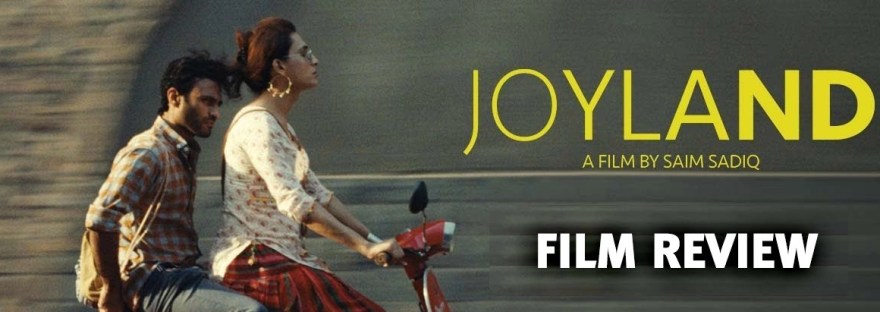
Mr. Khan’s Review on Joyland (2022)

A review on Pakistani feature length film, Joyland (2022). The controversial feature length debut is written and directed by Saim Sadiq. The film stars Ali Junejo, Rasti Farooq, Alina Khan, Sarwat Gilani, and Salmaan Peerzada. The film centers around the Rana family as the head of the family yearns for the birth of another boy from his son, Haider. Joyland is distributed by Film Constellation.

+ Crew

  • Directed by Saim Sadiq
  • Written by Saim Sadiq and Maggie Briggs
  • Cinematography by Joe Saade
  • Edited by Saim Sadiq and Jasmin Tenucci
  • Music by Abdullah Siddiqui
  • Produced by Apoorva Guru Charan, Sarmad Sultan Khoosat, Sabiha Sumar and Lauren Mann

+ Note

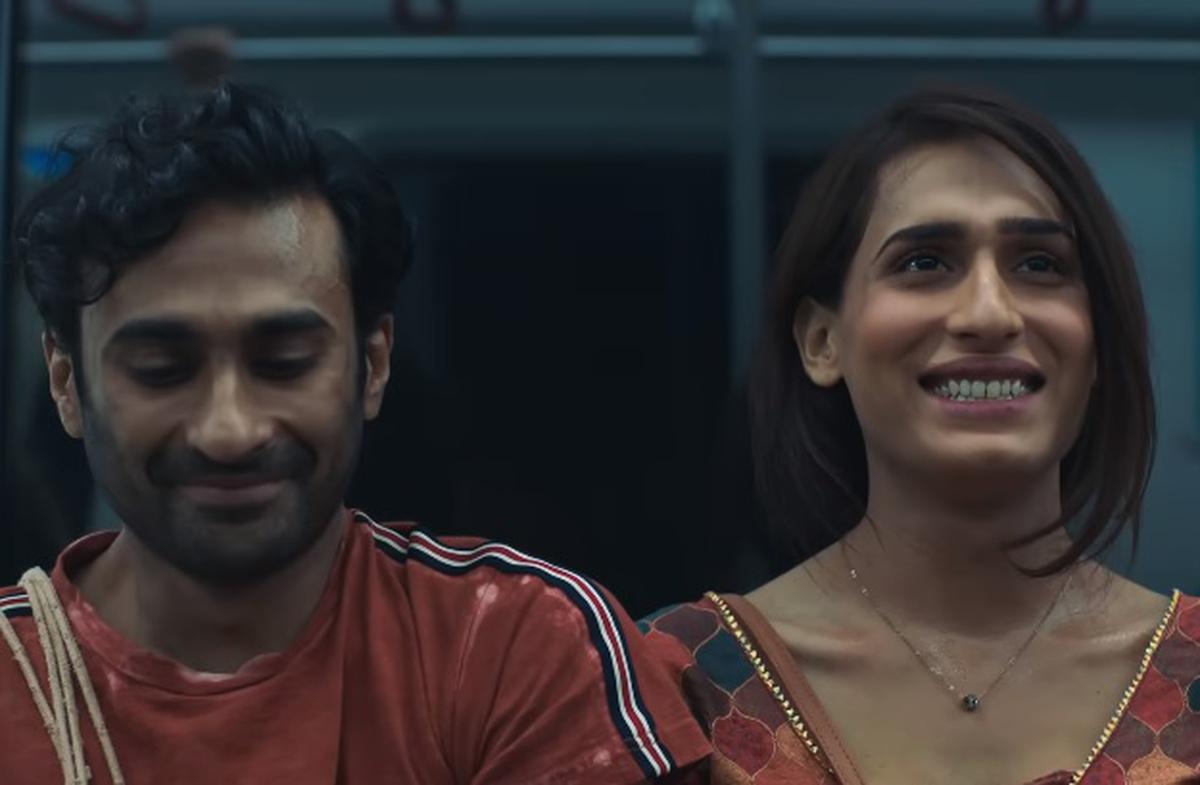
Due to its thematic elements of a married man falling in love with a transgender woman, the film Joyland has received massive criticism from religious groups within Pakistan (believing it was against “Pakistani and Islamic values”). But on the other end of the spectrum, the film has met with critical success and has been screened in film festivals around the world. Even with immense pressure from the religious groups, the film was eventually released in some parts of Pakistan (while heavily edited due to its content). Joyland was screened at the Cannes Film Festival and was short listed for Academy Awards for ‘Best Foreign Film’ but did not make the final five at the end.

 + Main Cast

  1. Ali Junejo as Haider
  2. Rasti Farooq as Mumtaz
  3. Alina Khan as Biba
  4. Sarwat Gilani as Nucchi
  5. Salmaan Peerzada as Rana Amanullah
  6. Sohail Sameer as Saleem
  7. Sania Saeed as Fayyaz

+ Plot

In the inner depths of Lahore, lives the Rana family where the father  (Salmaan Peerzada) wants his son Haider (Ali Junejo) to provide him a grandson. But with his marriage falling apart, Haider meets a transgender dancer Biba (Alina Khan) and against all odds, falls in love.

+ High Points

i – With all the hype and controversies surrounding the film, Joyland is indeed one of the best Independent films Pakistan has ever produced. The film explores the underbelly of our society as it casts a light onto individuals who apparently “do not exist” or are not worthy of being Pakistani. Joyland is a quintessential character exploration drama where our protagonist Haider is being forced to abide with the patriarchy of his father and his forefathers; he must produce a son in order to keep his family lineage going. But Haider, on the other hand, is a gentle soul who lacks the courage to stand up to his father and break the patriarchal shackles once and for all. He is afraid as we all are in our society. Afraid to stand up for one’s self. Afraid to speak out against a blatant lie. Afraid to be just ourselves. With its subject matter, Joyland undoubtedly divides its audience to the core but it also accomplished work of art by being an essential introspective of our Pakistani society.

ii – The film has a talented cast of actors. The chemistry between the onscreen married couple; Haider and Mumtaz (played excellently by Rasti Farooq) brings a sense of dread and remorse to its viewers. Haider is incapable of giving her the love and attention that she deserves. Like many Pakistanis, he is forced to live the life that fate dictates him.

Whenever the actors share a scene together, Rasti and Ali bring out the best in each other. They laugh, make fun of each other but at the same time, cannot convey the claustrophobic sense of dread that is killing them from the inside. And that, in its own way, is poetic to the landscape of cinema.

iii – The chemistry between Bibi and Haider on the other hand is vastly different. Here, Haider finally has the chance to break away from the ever watchful eye of his father and become an individual that he did not even dared in his wildest dreams. But ever the pessimist, Haider’s joke of the mosquito and chicken falling in love and eventually dying of each other’s diseases set up the tone to the life Haider is accustomed to. He knows pursuing Biba is off limits and won’t end well for either of them.

Alina Khan as Biba is abrasive but honest in her performance. To implement one’s real life experiences of being a Transgender in a conservative society like Pakistan is never an easy task but Alina gives a fantastic performance as the dream girl for Haider. The woman who can force out the hidden rebellion out of him. Joyland thrives the most when both such contrasting chemistries play on screen and make the viewers understand just a little better where Haider comes from.  

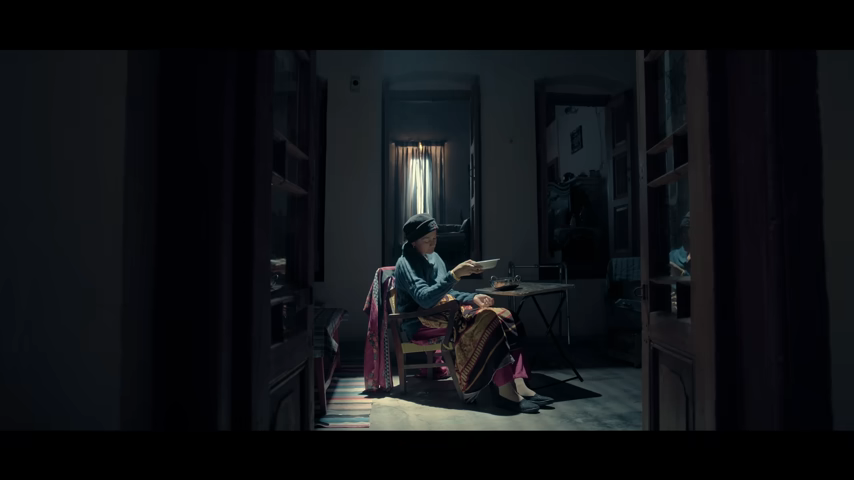
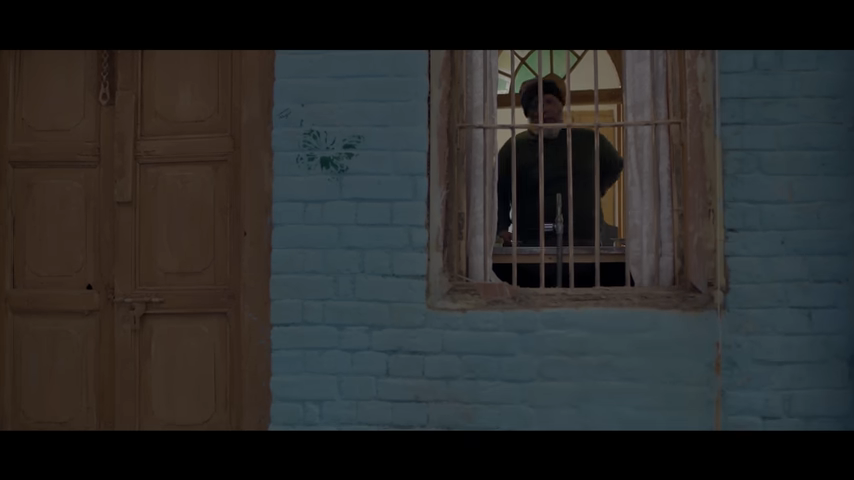
 iv – The film is shot in an aspect ratio of 4:3 (which is more of an “equal box screen size”) and it plays an essential role for the film. The aspect ratio gives the cinematographer Joe Saade ample chance to create claustrophobic images which heightens the sense of unease and angst. Our characters at times want to break through the limited space of the frame, leap out of the screen and run towards a better, carefree future. Throughout the film, we get to witness numerous close ups of individual character heads as they feel trapped inside the images, yearning to escape. The director Saim Sadiq made an excellent decision with the aspect ratio which certainly paid off for the film.

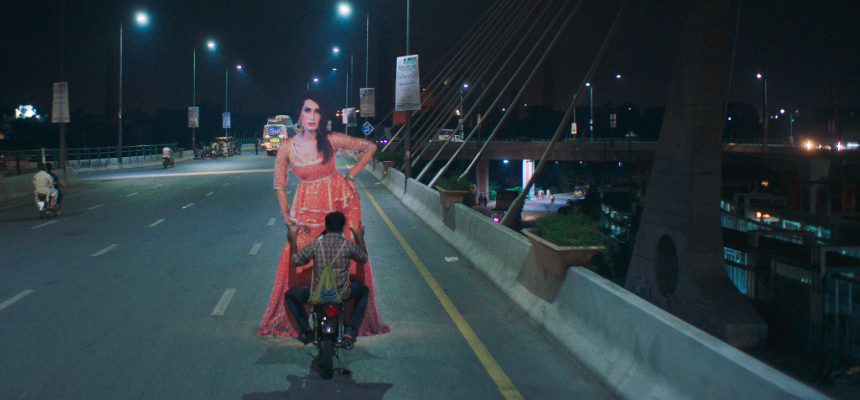
 v – There are some mesmerizing imagery in the film which bring a sense of fever dream at times. The scene where Biba and Haider share a drink in a room lit by the neon lights from the exterior was executed with perfection. Moving pictures are always visual narratives first and Saim Sadiq has a keen eye in presenting that without relying too much on spoken dialogues. The tone and the atmosphere that the film creates speaks volumes about our characters and what dystopian atmosphere they are forced to grow up in.

 vi – But all is not doom and gloom. The actual “Joyland” scene of the film is the only time where we saw our characters (just for a brief period of time) forget their troubles, their hardships, their pessimistic futures disappear just so they can enjoy this one moment in time together. On the surface level, this scene might seem inconsequential but it was essential to the overall narrative of the film.

+ Low Points

Major SPOILERS ahead. If you would like to avoid it, please skip to Overall section:

i – Joyland unfortunately suffers from a shift of narrative half way through the film which did not work. The first half of the film focuses on Haider, his struggles with the expectations from the family, his forbidden romance with Biba and coming to terms with his sexuality. The second half focuses on Mumtaz, her need of attention from her husband, the unexpected pregnancy and the eventual suicide. I am not entirely sure why the narrative of the film was constructed in such a way as it would leave many viewers perplexed as to who the main character of the film is. The first half is about the forbidden love of Haider and the second half is the consequences on his wife because of it? Would she have committed suicide regardless of Haider’s affair? On one hand, the film wants us to root for Haider to embrace his sexuality but later on, the character of Biba and the love affair is completely ignored as the film decides to focus on Mumtaz who inadvertently becomes the main character of the film.

It’s great that the film shows the consequences of the decisions that our protagonist makes onto the supporting characters but by completely shifting the focus of our main character creates such a divide and leaves the viewers with a lingering thought of what they were supposed to take out from all this?

ii – The whole father’s love affair with the neighbor felt unnecessary and a distraction to the film’s main narrative. Yes, it showed that even hardliners of the family also do not like the patriarchal system that they have been brought up in but the whole scene felt like an afterthought to the main premise of the film.

+ Overall

Abrasive, cruel and an honest case study of our society, Joyland is a film that dawns a new light onto Pakistani cinema. An essential watch.

Rate: out of 5 stars 

Feature Length Films

Mr. Khan’s Review on The Legend of Maula Jatt (2022)

A review on Pakistani feature length film, The Legend of Maula Jatt (2022). The feature length epic is written and directed by Bilal Lashari. The film is an adaptation of a 1979 Punjabi cult classic ‘Maula Jatt’ starring the legendary Sultan Rahi. The film stars Fawad Khan as the protagonist with Hamza Ali Abbasi, Humaima Malik, Faris Shafi and Mahira Khan. The Legend of Maula Jatt is produced by Encyclomedia, Lashari Films and is distributed by AAA Motion Pictures, Geo Films and Mandiwala Entertainment.

+ Crew

  • Directed by Bilal Lashari
  • Written by Nasir Adeeb and Bilal Lashari
  • Cinematography by Bilal Lashari
  • Edited by Bilal Lashari
  • Music by Sarmad Ghafoor
  • Produced by Ammara Hikmat and Asad Jamil Khan 
  • Production by Encyclomedia and Lashari Films

+ Note

The development of a new adaptation of the Punjabi cult classic started around 2013 by the director Bilal Lashari and later on, Ammara Hikmat and Asad Jamil Khan came onboard as producers for the film.  In an effort to make the film grasped firmly into the roots of the original, Nasir Adeeb (the screenwriter of the original) was hired to co-write the script. With a hefty budget of PKR 45 crore, the adaptation was initially supposed to be released around 2018/19 but due to various copyright lawsuits and the pandemic, was pushed further back. The film was finally released on 13th October 2022 and quickly became the highest grossing Pakistani film of all time.

 + Main Cast

  1. Fawad Khan as Maula Jatt
  2. Rehan Fareed Hiraj as Young Maula
  3. Hamza Ali Abbasi as Noori Natt
  4. Mahira Khan as Mukhoo Jattni
  5. Humaima Malik as Daaro Nattni
  6. Gohar Rasheed as Maakha Natt
  7. Faris Shafi as Mooda
  8. Shafqat Cheema as Jeeva Natt
  9. Saima Baloch as Rajjo
  10. Nayyer Ejaz as Jagoo Natt
  11. Ali Azmat as Gogi

+ Plot

Born out of a tragic past, Maula Jatt grows up to take revenge against the Noori Natt clan and fights for the justice of his people.

+ High Points

i – So I just would like to get this out of the way, The Legend of Maula Jatt exceeded my expectations. Not only did Bilal Lashari create an engaging, three hour long Punjabi epic with fast paced action and breathtaking visuals but it also did not forget its humble roots of our low budget Punjabi cinema. From the interesting cast of characters to the final epic battle between Maula Jatt and Noori Natt, the film will undoubtedly keep you entertained throughout its runtime. Bilal Lashari and his crew have done a marvelous job in bringing Maula Jatt to mainstream pop culture without desecrating its source material. The film rapidly became the highest grossing Pakistani film of all time and with its continuous legal troubles behind the scenes, it was well worth the wait.

ii – Bilal Lashari is undoubtedly the genius behind the film. With just his second directorial film, Lashari is also credited as the writer, cinematographer and editor of the film. This is truly a herculean effort from the filmmaker who was hellbent on bringing Maula Jatt to the big screen once again and should rightfully be applauded for all his hard work. Since it was a singular vision in a lot of aspects, it is difficult for me to distinguish each individual aspect apart. The masterful cinematography truly complimented the emotional turmoil of the character, accompanied by numerous match cut edits, making the transition brilliant from one scene to the next. The Legend of Maula Jatt could truly be Bilal Lashari’s magnum opus.

 iii – The best decision that Bilal Lashrai ever made was that he recruited Nasir Adeeb to co-write the script with him. Adeeb served as the screenwriter of  the original Maula Jatt (1979) and dialogues have been written with uttermost perfection for each and every character. Never did any set of dialogue felt out of place or unnecessary to the story but in fact, some comedic ones also left me chuckling under my breath. Apart from Lashari, Nasir Adeeb has had a major role to play in the success of this film.

 iv – As far as the performances go, I have no complaints. The theatrical, exaggerated performance of each actor complimented the essence of the source material with its core. It is one of the few instances where the film required exaggerated expressions and played quite well in creating a unique world of love, murder and vengeance. Fawad Khan, Maria Khan, Gohar Rasheed; everyone played their roles brilliantly.  But all in all, it was Hamza Ali Abbasi’s Noori Natt who stole the show for me. His tragic past, deranged concept of justice and unfiltered violence made him such a unique figure in the history of Pakistani cinema. 


v – Some audience members might have been turned off by the gratuitous violence in the film but it is an essential part of the saga. Bilal Lashrai smarty utilized such horrific imagery in order to heighten the atmosphere of the film. Maula Jatt grows up in a world of injustice and he is not afraid to use his Ghandasa in order to fight for his people. Frankly, I would have been very disappointed if they didn’t abrasively use violence in the film.

 vi – Thankfully, the film is devoid of any song and dance numbers… except for this one instance.The ‘Chann Pichay’ was a wonderful melody that was strategically placed right in the middle of the film. It was as some might say “The calm before the storm”.

 vii – The music by Sarmad Ghafoor and sound mixing did a stupendous job in bringing Maula Jatt to life. From the galloping of the horses to the verbal defiance of Maula Jatt, each scene was made engaging through its wonderful music composition and brilliant sound mixing.

viii – Now this is how you pay an homage to the source material! None of the famous dialogues of Noori Natt or Maula Jatt were misused or felt out of place in order to nudge the viewers into loving the film. All the callbacks of scenes, dialogues and violence were appropriately used to pay homage but at the end, have an identity of its own.

+ Low Points

i – The three hour runtime was never an issue for me but lack of quieter scenes unfortunately were. By the end of the film, the gratuitous violent imagery did become tad overbearing and one would imagine a couple of more character building scenes here and there might have helped the film in the long run. Such as… 

ii – Mahira Khan as Mukhoo Jattni. Her character sadly feels shortchanged as she never developed beyond the characteristic that she loves Maula more than anything. Great but what is Mukhoo herself as a person? A few more scenes could have been utilized in developing her character, her back story, what role does she play in the story apart from being our main protagonist’s love interest.

iii – This is of course, a nitpick from my side but Fawad Khan is too handsome to play the role of Maula Jatt. His performance in the role was great but visually, his movie star looks hindered my attention towards believing in him as the vengeful protagonist. Before the original 1979 film, Sultan Rahi was never perceived as a star. He always played the role of an extra in numerous films, mainly because he looked like any other person you would meet on the street. Similarly, Maula Jatt represents the common man, anyone of us can take the mantle of him. Fawad Khan’s visual appearance never went beyond ‘a movie star playing a character on screen’

+ Overall

Brilliant storytelling, great performances and direction, The Legend of Maula Jatt might just be one of the best Pakistani films ever made.

Rate: out of 5 stars

Feature Length Films

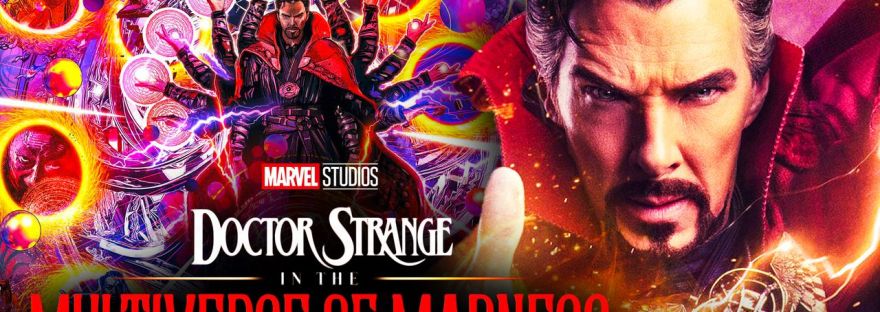
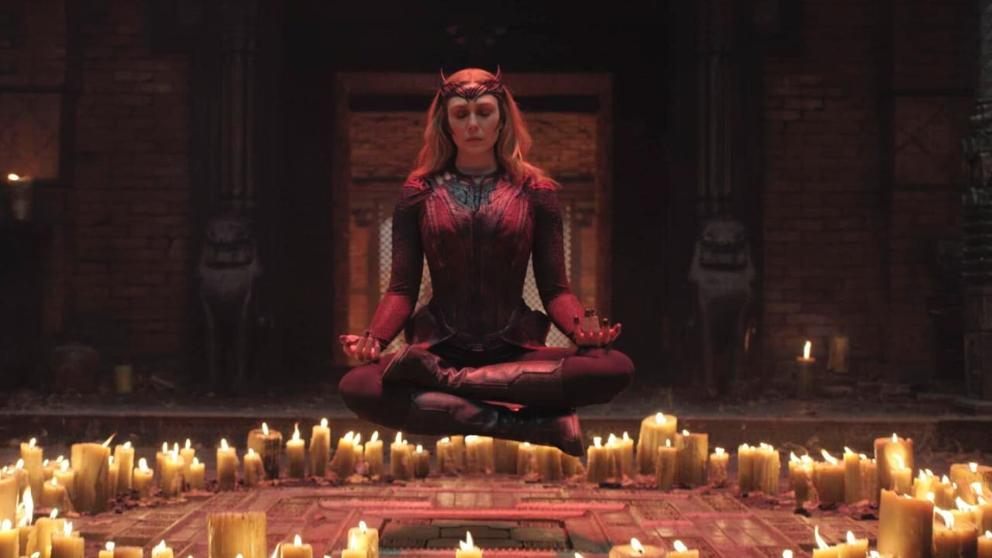
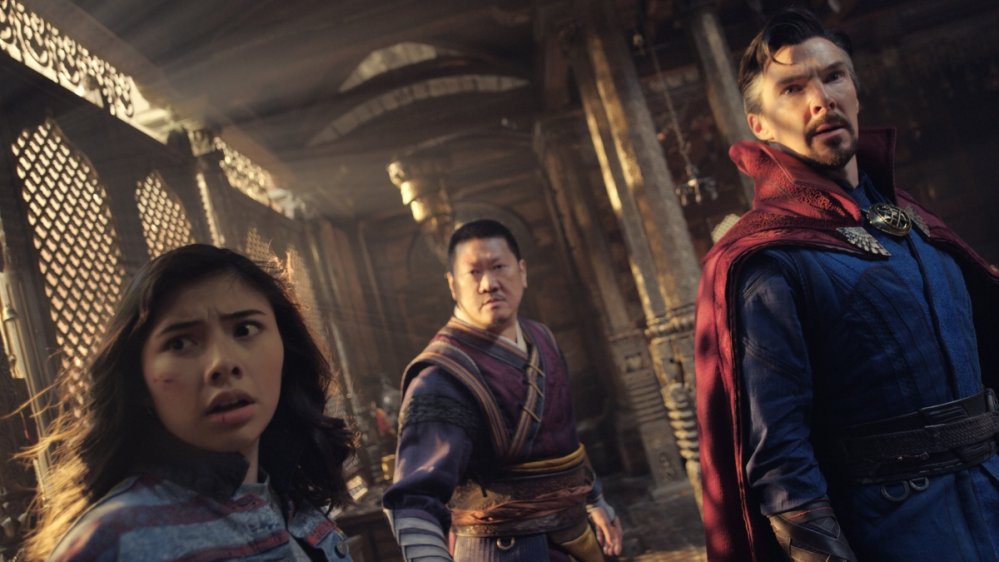
Mr. Khan’s Review on Doctor Strange in the Multiverse of Madness (2022)

A review on American Superhero film, Doctor Strange in the Multiverse of Madness (2022). The film is part of the Marvel Cinematic Universe’s Phase Four films and is directed by Sam Raimi. Benedict Cumberbatch reprises his role as the mystic doctor of magic accompanied by Elizabeth Olsen as the Scarlet Witch, Xochitl Gomez , Benedict Wong and Rachel McAdams. The film is a continuation of the saga from the Marvel Cinematic Universe and is now in cinemas.

+ Crew

  • Directed by Sam Raimi
  • Screenplay by Michael Waldron
  • Cinematography by John Mathieson
  • Music by Danny Elfman
  • Edited by Bob Murawski and Tia Nolan
  • Production by Marvel Studios
  • Distributed by Walt Disney Studios and Motion Pictures 

+ Note

Scott Derrickson, the director of the first film, was originally going to direct the sequel also but due to creative differences with the executives of Marvel Studios, he decided to step down. Enter; Sam Raimi. Ever since Spider-man 3 (2007), Raimi had not gone back to directing superhero films until he was approached by Marvel Studios to direct the sequel to Doctor Strange. Due to Raimi’s creative style of filmmaking, it was promised that the sequel would contain elements of which Raimi is revered for such as comedic gore and violence, pushing the boundaries of a PG-13 rated film. The film was also promised to be much more visually complex and creative than any other Marvel film before.

Now that Sam Raimi was set to direct, he also brought in his long time collaborator Danny Elfman to produce music for the film. Due to the pandemic, the film’s release was shifted to next year, 2022. The film is currently in cinemas with mostly positive reviews from critics and moviegoers alike. 

+ Main Cast

  1. Benedict Cumberbatch as Dr. Stephen Strange
  2. Elizabeth Olsen as Wanda Maximoff / Scarlet Witch
  3. Chiwetel Ejiofor as Karl Mordo
  4. Benedict Wong as Wong
  5. Xochitl Gomez as America Chavez
  6. Michael Stuhlbarg as Nicodemus West
  7. Rachel McAdams as Christine Palmer

+ Plot

The sequel to the first Doctor Strange film takes place directly after the WandaVision (2021) show from Disney+. The mystic doctor dreams of himself and this unknown girl who can open portals to other dimensions. After meeting the same girl in the real world, Strange quickly realizes that the dreams were in part of a multi dimensional reality that is being threatened by a mysterious evil being who is in search of this girl’s portal wielding abilities. Meanwhile Doctor Strange visits Wanda to uncover the mystery of the Multiverse. And what follows, is what the Doctor perhaps never ordered…

+ High Points

i – The film is a fun watch throughout its runtime. With Sam Raimi back in his superhero gig, his knack for fast paced storytelling combined with dark humor and lively characters is what makes the sequel of Doctor Strange standout from the rest of the MCU films. And an unusual antagonist of the film was incredibly refreshing in my book. Even with inevitable studio mandates, this is undeniably a Sam Raimi film filled with glorious, unapologetic tongue in cheek gore and violence. And I can very well imagine this will not be everyone’s cup of tea. Those who are content with the so-called “Marvel formula” will be perplexed and disappointed but honestly, MCU definitely needs more experimentation like this film or the deeply disturbing Moon Knight series on Disney+. I had a blast watching this film and with its recent box office success, I hope the MCU execs give more leverage to film directors with a clear vision. In short; less of Ant-Man and more of Doctor Strange 2.

ii – Sam Raimi, oh how I miss thee! Whether you enjoy his work or not, you cannot deny the energy and dedication that he brings to every one of his films (yes, even Spider-man 3!). As mentioned above, this film has all the Sam Raimi tropes you can think of; cheesy one liners, homage to his earlier Evil Dead series, extras who can’t act, Bruce Campbell cameo, the works. Doctor Strange in MoM is far from being Superhero film masterpiece like The Dark Knight (2008) or The Avengers (2012), but it brings a lot of energy and a sense of excitement to each and every scene. From framing, camera movement, editing or music, the director utilizes each and every aspect of its craft to elevate the capacity of filmmaking to its potential. There were numerous scenes where I went “Huh, I’ve never seen that happen in a Marvel film before..” and not since Avengers: Infinity War (2018) did I have that feeling for a MCU film.

 MoM also has a mad third act which made me enjoy the film even more. And above everything else, MoM has what the first Doctor Strange couldn’t; a sense of personality. 

iii – There are many out there who protest that this film should have been called ‘Wanda in the Multiverse of Madness’ and they are half right cause Elizabeth Olsen just stole the show away from Cumberbatch with her performance. Thrusted into a role she is not used to playing, Olsen did a great job in diving into her character’s tortured persona and bring out the pain and suffering through her acting chops. But needless to say Benedict Cumberbatch as the mystic Doctor Strange and Xochitl Gomez as America Chavez played their part in investing the viewer into the world of Doctor Strange.

iv – For the most part, MoM is a self-contained story and is not too busy paying homages or building up sequels. There are obviously some fan service cameos in the film from the characters even casual audiences can recognize but it was never egregious or out of place to the context of the film.  

v – In most cases, Dr Strange 2 can easily be described as a horror film with a cheeky sense of humor. And I am genuinely surprised that with a PG-13 rating, how Marvel managed to get away with most of its gory horror scenes. This will inevitably drive away younger audiences or in cases, will make them sleep with the night light on but if you know Sam Raimi and his previous works, you should have expected it by now. Personally, I found it thoroughly entertaining. 

vi – The score by the legendary Danny Elfman was fantastic and a massive contributing factor to the enjoyment of the film. Elfman was obviously hired due to the insistence of Raimi since they had worked together on the Spider-man trilogy.

+ Low Points

i – Doctor Strange in MoM has certain problems, mainly in the storytelling department. The pacing and flow of the narrative is not as smooth as Raimi’s previous films and feels disjointed at times, especially in the final act. Now, did it break my sense of enjoyment? Heck no but I can imagine for some, this could prove to be an issue. 

ii – With a title like ‘… in the Multiverse of Madness’, one cannot help but wonder if there could have been more ‘Madness’ added into the mix? With the premise of Multiverse, I wish we could have seen more parallel universes and different timelines with different Earths and so on. 

iii –  Even though the final act was a lot of fun to experience, the resolution did seem very ordinary and was disappointing to say the least. With all its issues, the first Doctor Strange (2017) did have an unusual resolution to a world threatening problem. If you know the premise, you know how the antagonist will be defeated.

iv – The film relies heavily on the ending to the Disney+ TV series, WandaVision (2021) and that’s not a great way to bring in new viewers. Those who are not aware of the TV series will be left confused as to what is actually going on. Make films more accessible or at least a narrative recap to the reference. The film’s plot kicks off with basically no prior explanations or recaps and hope that you are up to speed with everything Marvel. This could be one of the bigger contributing factors as to why some audience members will feel a bit lost throughout the film.

+ Overall

Doctor Strange in the Multiverse of Madness is not a perfect film by any means but it easily covers its flaws with fun, fast paced actions, tongue in cheek horror and a personality all of its own.

Rate : out of 5 stars

Feature Length Films

Mr. Khan’s Review on The Batman (2022)

A review on Hollywood feature length film, The Batman (2022). The film is directed by Matt Reeves and is yet another reboot of the Batman franchise. The film is distributed by Warner Bros. Pictures.

+ Crew I

  • Directed by Matt Reeves
  • Cinematography by Greig Fraser
  • Written by Matt Reeves and Peter Craig
  • Edited by William Hoy and Tyler Nelson
  • Music by Michael Giacchino
  • Produced by Dylan Clark and Matt Reeves

+ Crew II (Production Houses)

  • DC Films
  • 6th & Idaho
  • Dylan Clark Productions

+ Note

Since Zack Synder’s DCEU was received with mixed reviews from the fans and critics, the solo Batman film starring Ben Affleck was ultimately abandoned until further notice. The production kept getting delayed but Warner Bros. had settled on Matt Reeves to direct as early as 2017. Since Ben Affleck was preoccupied with his Alcohol Abuse issue, Matt Reeves presented his first draft of the script to the executives at Warner. Upon receiving the copy himself, It was reported that Affleck was not happy with the direction that Reeves wanted to go into and was vastly different from what DCEU Batman was originally intended to be. Eventually Warner Bros decided to go with the Reeves’ version and Ben Affleck was eventually dropped from the project with several actors being casted for role of the caped crusader. Since Reeves’ version was a take on a younger, less experienced Batman, the director and studio ultimately went with Robert Pattinson as the new dark knight. 

The film was intentionally more dark and gritty than any of the previous iterations this time around, serving as a Murder mystery/ thriller and heavily influenced by David Fincher’s previous works like Se7en (1995) and Zodiac (2008). Due to the Pandemic, the production kept getting delayed, including Robert Pattinson testing positive during production which made the release being shifted to March 2022 instead.

The Batman was eventually released on 4th March 2022 with positive critical and commercial reviews.

+ Main Cast

  1. Robert Pattinson as Bruce Wayne / Batman
  2. Zoë Kravitz as Selina Kyle / Catwoman
  3. Paul Dano as Edward Nashton / Riddler
  4. Jeffrey Wright as James Gordon
  5. John Turturro as Carmine Falcone
  6. Peter Sarsgaard as Gil Colson
  7. Andy Serkis as Alfred Pennyworth
  8. Colin Farrell as Oswald “Oz” Cobblepot / Penguin

+ Plot

Ever since the death of Thomas Wayne, the city of Gotham is in complete ruins. Corruption, street crime is rampant. The only hope this city has is in a vigilante by the name of The Batman. 

But there has been recently some retribution to all the lies that were being fed to the public by corrupt politicians across the city. A mysterious serial killer is making an example out of these representatives of the highest order through brutal violence and sadistic practices. Someone by the name of the Riddler. Will Batman be able to solve this mystery and become the savior of Gotham City in the process?

+ High Points

i – As a comic book fan, I always craved for a representation of Batman which had its own distinctive visual style but also paid homage to its source material and finally, fans like me can rejoice with this latest iteration of the dark knight. The Batman is the best, most comic accurate representation of the Caped Crusader on the Silver screen. The visuals are dark and broody, the shadows blend in seamlessly with the neon red backdrop, the city’s corruption and violence looks beyond repair and the only savior that they have is a vigilante who dresses as a bat and fights crime with the help of his detective skills. The film is an acute mixture of noir and grotesque murder mystery spliced in with occasional body horror images. The writer/ director Matt Reeves seems very well rehearsed as to what makes Batman appealing to its fans and core audience and does whatever it can not to stray away from that formula that has always worked in its source material. The film is nearly 3 hours long but due to some fantastic writing and engaging set pieces, it never felt dull even for a moment’s time. And as eloquently as Martin Scorsese might put it; The Batman is a heart pounding, thrilling amusement park ‘house of Spooky Horror’ ride from start to finish! 

ii – One of the most unique appeals of this iteration is of course Batman aka Bruce Wayne himself. This time Robert Pattinson (famous for his glittering vampire franchise ‘Twilight’) takes the reins of the dark vigilante who speaks less and investigates crime scenes more with his natural detective skills. Even the very few lines of levity come off with a sour taste of dark humor around it (which, of course I loved!). According to the film, Batman has only been cruising the streets of Gotham for two years so he is far from being the grizzled, experienced Batman that we have seen him in other iterations on screen. Which is why this version of Batman has a very distinctive character arc of learning the best possible way he could protect the city built by his father. The costume also plays a massive role in depicting the amateur years of the dark knight with layers of leather and bullet proof vests, making it combat heavy and practical instead of the stiff, visually pleasing costume of the Tim Burton era that we first introduced to. Yes, it is entirely debatable how this movie ranks with Christopher Nolan’s masterpiece The Dark Knight (2008) but as far as Batman goes on the big screen, this is the best version yet!

iii – And of course, no protagonist is complete without the wealth of side characters that accompany him throughout the film. And suffice to say, they all are unique and show stoppers in their own way, particularly Zoë Kravitz as Selina Kyle / Catwoman was outstanding as a mysterious femme fatale to the Bat. With the film nearly 3 hours long, Kravitz gets a ton of screen to play off Batman’s narrow perception towards criminals in his home city and does her part to gain his trust in their fight against the mysterious terrorist criminal mastermind. And that being of course, Paul Dano as the Riddler. 

His portrayal is vastly different from the comics, depicting him as a frustrated, ultra right wing, reddit blogger who promises to cleanse the Gotham City of “Liars” once and for all through gruesome violence against all the corrupt key representatives of the city. Admitteldy, Dano was the perfect casting for this role with his deceivingly innocent visage, sadistic crimes and childlike riddles accompanying it. Other villains in the rogue gallery include Colin Farrell as the Penguin (who is as over the top as his heavy makeup) and Jeffrey Wright as James Gordon (not yet Commissioner) who has a naive but honest take on the crime ridden world that he lives in. And last but not least, John Turturro as Carmine Falcone was menacing but much grounded than any of the other villains brought some grittiness and a clear indication as to who really pulls the strings behind the scenes.

All in all, the supporting cast goes brilliantly with the film, making most scenes memorable in their own unique way.

iv – Greig Fraser serves as the cinematographer for the film and by God, are the visuals impressive to stare at! The film at times feels claustrophobic due to its tight framing, focusing in and out from the foreground to the back, revealing information without unnecessary exposition. The color palette that Fraser uses is strictly limited, giving it a ‘noir, graphic novel’ touch to it. It was almost as if each frame was colored by a comic book colorist in post production. Although this technique might bother some, for me it worked absolutely to perfection, making it the most stylized visuals in a superhero film in a long time.

v – Michael Giacchino’s soundtrack from the film is utterly fantastic. As Batman approaches his enemies, the music transitions from distant and looming to stark and pounding, with each footstep spells as the ticking time bomb for the criminals of Gotham city. There is also some licensed soundtrack being used throughout its runtime, including Kurt Cobain’s Something in the Way. Even though the three core elements of every scene are the writing, visuals and performances, the music also plays a massive role in bringing the ‘impending doom’ to light.  

vi – While having only seen the film once, there are already some memorable scenes that shook me out of my seat, namely the Police station escape and the car chase scene. When it comes to unforgettable set pieces, Matt Reeves nearly knocked it out of the park.

vii – Although this has not to do with the content of the film, can we admire the brilliant print promotion of the film, namely the red and black poster? Fantastic, minimal art work.

+ Low Points

i – Although the film is fantastic in almost every conceivable way, there are some flaws that hinder its way in reaching its true potential. And one such hindrance can be directed towards the pacing of the film. Now, without any sense of exaggeration, the story is conveyed with a break neck speed (which is completely earned) but there were a couple of scenes that needed a breather in between, namely after the escape from the police station scene. The film did also lack at least one or two character building moments that would have made the narrative flow ever so slightly better and in the process, the suspense heavy scene even more impactful. I wish there could have been at least one or two more scenes of Bruce and Alfred interacting with one another, exploring the father/ son relationship that they share.

ii – Even though Kravitz as Catwoman is splendid in her own right, the romance between her and Batman felt clunky and at odds with one another. There was not enough romantic tension between them and I am not even sure why Bruce Wayne would fall for her of all people. But since the source material has a romantic relationship between them, so should the film I suppose. And I also felt that some of the comedic puns felt flat in the screen time they shared with jokes like ‘What? Do you live in a cave or something?’.

iii – The final Arkham Asylum scene (which I cannot elaborate more upon due to spoilers) felt very tacked on and unnecessary. Undoubtedly, this was perhaps a studio mandate in order to tease the audience for the future coming films but I sincerely hope that they do not follow in that direction as Batman has a wealth of villains who still have not made their debut onto the silver screen.

iv – Perhaps a fairly odd complaint but due to the dark visuals of the film, we hardly get to see any of the Batman gadgets that the caped crusader is known for. Because of the long dark shadows throughout its runtime, the suit, the batmobile, the bat cave get no wide angle shots to awe and admire at. In fact, I hardly even remember what they actually looked like!

+ Overall

From its visual and storytelling perspective, The Batman is an outstanding work of Art. And it stands tall as being one of the best superhero films ever made.

Rate: out of 5 stars

Feature Length Films

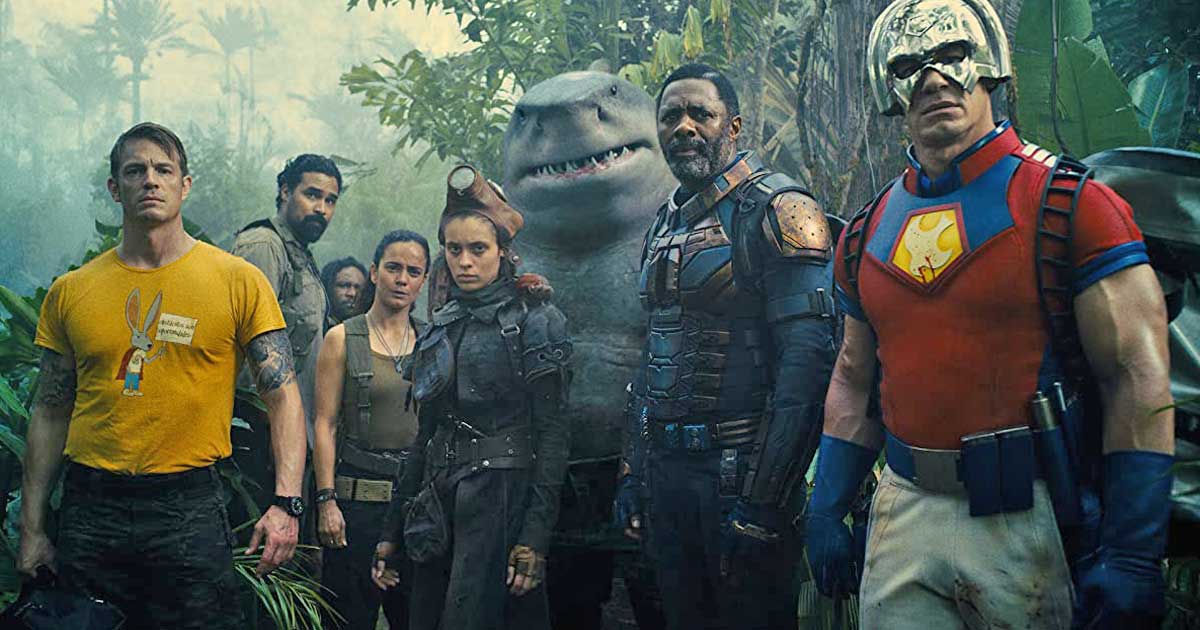
Mr. Khan’s Review on The Suicide Squad (2021)

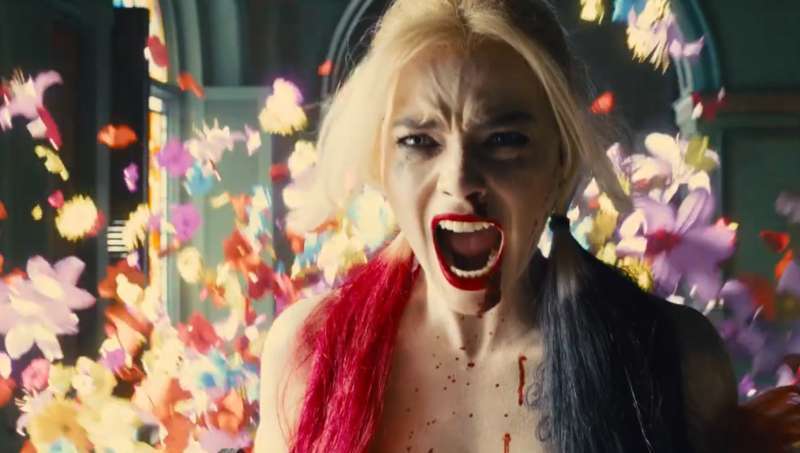
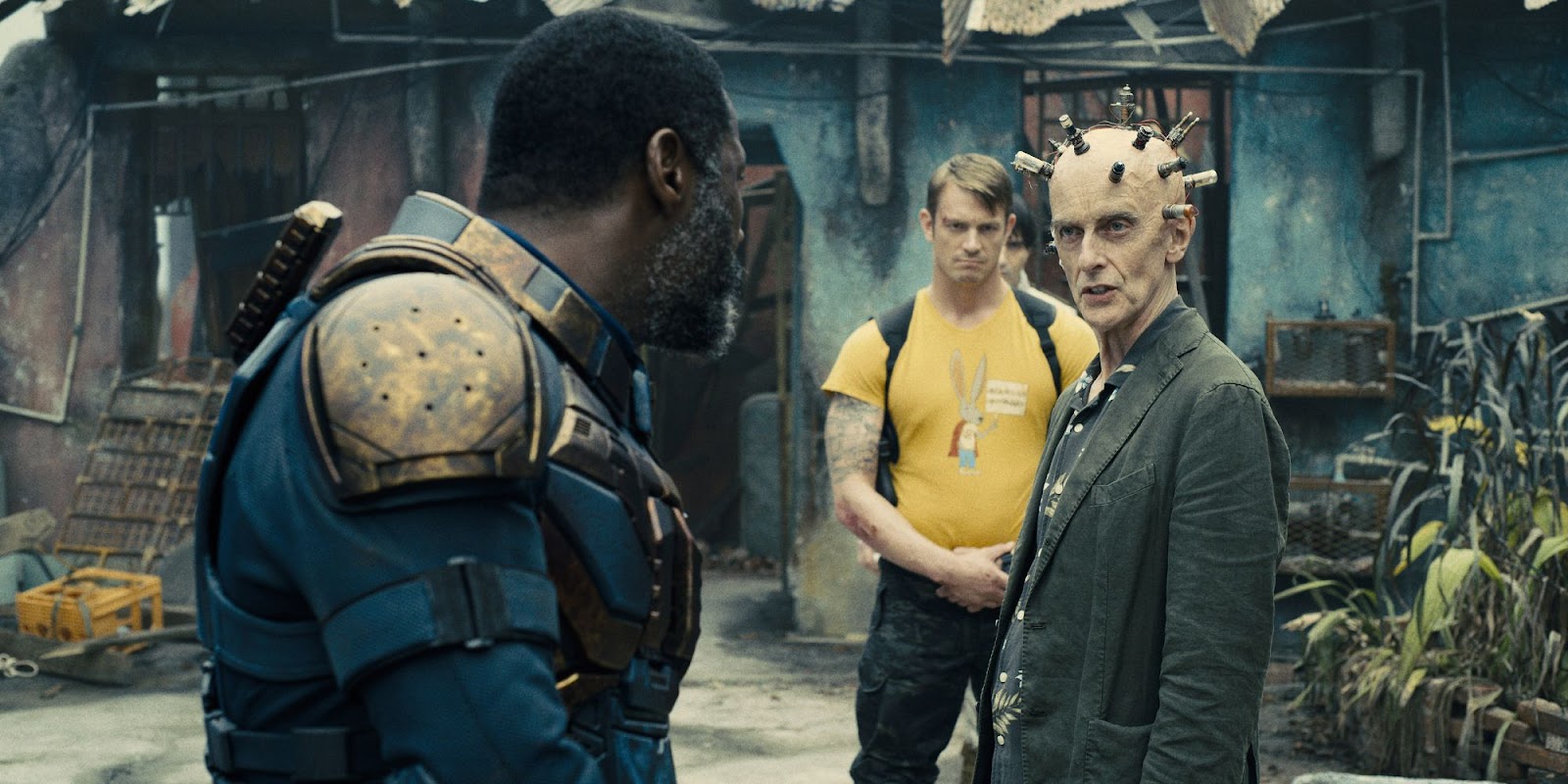
A review on American Superhero film, The Suicide Squad (2021). The film is considered a “soft reboot/ sequel” to the 2016 film Suicide Squad and is directed by James Gunn. The film includes a stacked cast of actors including Margot Robbie, Idris Elba, John Cena, Joel Kinnaman and Sylvester Stallone. The Suicide Squad is part of the DCEU and distributed by Warner Bros. Pictures.

+ Crew

  • Directed by James Gunn
  • Written by James Gunn
  • Cinematography by Henry Braham
  • Music by John Murphy
  • Edited by Fred Raskin and Christian Wagner
  • Production by DC Films, Atlas Entertainment and The Safran Company
  • Distributed by Warner Bros. Pictures

+ Note

After the surprise success of James Gunn’s film for MCU Guardians Of The Galaxy in 2014, Warner Bros. and DCEU introduced their own band of misfits known as the Suicide Squad and David Ayer was set to direct the film. Suicide Squad (2016) was unfortunately met with mostly negative reviews from the critics and fans as the film failed to encapsulate the fun and excitement of what made GOTG such a fun experience to watch. Many sources indicate that it was due Warner Bros.’ constant meddling, reshoots and re-edits of the film that sabotaged David Ayer’s original vision of the film. In order to rectify their mistake, Warner Bros. decided to approach the man himself, James Gunn to handle the “soft reboot/ sequel” to Suicide Squad, giving him virtually full creative control on the project. The director (this time around) optied for a hard R rating on the film with full of violence, gore and dark humor. Considering James Gunn’s previous cult classics like Slither (2006) and Super (2010) , he seemed very familiar with the genre.

Some actors (who already had a fan following) retained their roles from the first film, including Margot Robbie as the maniacal Harley Quinn and Viola Davis as Amanda Waller. But it also introduced strange, disposable D-List Superheroes/villains from DC Comics like Polka-Dot Man, Peacemaker and King Shark. The film was released in cinemas on July 30, 2021 and has met with praise from the critics and fans alike.

+ Main Cast

  1. Margot Robbie as Harley Quinn
  2. Idris Elba as Robert DuBois / Bloodsport
  3. John Cena as Christopher Smith / Peacemaker
  4. Joel Kinnaman as Colonel Rick Flag
  5. Sylvester Stallone as the voice of Nanaue / King Shark
  6. Viola Davis as Amanda Waller
  7. David Dastmalchian as Abner Krill / Polka-Dot Man
  8. Daniela Melchior as Cleo Cazo / Ratcatcher 2
  9. Michael Rooker as Brian Durlin / Savant
  10. Jai Courtney as George “Digger” Harkness / Captain Boomerang
  11. Peter Capaldi as Gaius Grieves / The Thinker
  12. Alice Braga as Sol Soria
  13. Pete Davidson as Richard “Dick” Hertz / Blackguard

+ Plot

The American government needs a team to counter their foreign enemies. A team of super powered individuals who are instantly disposable and never to be mentioned again. Enter: The Suicide Squad! Lead by Amanda Waller and includes loveable characters like the psychopath Harley Quinn, the redeemable Bloodsport, the patriot Peacemaker and many other losers. Can the team band together and fight an adversary which threatens humanity’s very existence on planet Earth?

+ High Points

i – James Gunn knows how to make a fun premise. Judging by his filmography, he is very familiar with dark humor and cartoonishly absurd gore and violence in his films. Unlike the disaster that was Suicide Squad (2016), THE Suicide Squad (2021) is hilarious, quince inducing and exciting from the start to finish. The characters are likable, the action is fast paced, the pacing is never stagnated, The Suicide Squad knows its absurd premise and runs away with it. It’s an acquired taste (most certainly) and will not be everyone’s cup of tea but then again, it never needs to be.

ii – The main cast of characters are all fun to watch. Harley Quinn (this time around) is much better handled, her psychotic character is better explored as compared to being an “eye candy” for the fan boys to slobber over. Also new characters such as Bloodsport (Idris Elba) is a much better fit to the film as compared to Will Smith, John Cena is great as Peacemaker and minor characters like Daniela Melchior as Ratcatcher 2, David Dastmalchian as Polka-Dot Man and Sylvester Stallone as King Shark also tend to grow on you throughout the film’s runtime. What made Guardians Of The Galaxy a likeable bunch was due to their offbeat characterizations and even though The Suicide Squad is way more darker, it still manages to find a place in your heart to root for at the end.

iii – Although the film is not as funny as James Gunn’s previous works (I’ll get to that later in the Low Points section), The Suicide Squad is still a blast to watch. Not all jokes land but the ones that do land will have you laugh out loud. Most of the gags poke fun at how absurd the whole concept of being a “superhero/ villain” is and how utterly disposable some of them are! You have absurd powers like throwing deadly Polka Dots at someone or having detachable arms or being an anthropomorphic Shark or a Weasel or… the list just goes on. It’s obvious that James Gunn just loves the absurdity of the D-List characters in Superhero comics and just wants to have a laugh at their expense!

iv – The R rating works perfectly for the film. The Suicide Squad would’ve never been half as enjoyable if not for its foul language, dark humor and brain exploding, blood splattering hardcore violence. The first film really suffered for not having a R rating and felt muted from the themes that the film could’ve explored. Even though I am an advocate that not all films need to be R rated, some films definitely need it to explore their true potential. And films like Deadpool (2016), Logan (2017) and The Suicide Squad thrive in entertainment because of that.

v – Some scenes like Harley Quinn’s escape sequence and the invasion of the Rebel Camp are incredibly well shot and directed. James Gunn and Henry Braham did an outstanding job in delivering those scenes with flair and excitement without overstaying their welcome. The camerawork was controlled but never stagnating, the timing of the humor was great and the film can become instantly memorable because of them. While Phase 4 Marvel films are becoming more and more stale and generic, The Suicide Squad injects some life onto the superhero films and how creative they can be.

vi – Even though the film’s pacing is not a complete smooth sail from start to finish, the Third Act could possibly be one of the most memorable fight scenes in recent memory. I will not spoil what it is but let’s just say it fully embraced the absurdity of the world of Superheroes.

+ Low Points

i – Not everything is perfect about the film, namely the humor. While some jokes landed well, others did feel a bit tiresome. The film does at times push the supposed “nudging” to the audience a bit too far. The Suicide Squad is not as funny as his previous Guardians Of The Galaxy films where I felt we genuinely loved each and every character in the group. Whereas with The Suicide Squad, (due to the character’s disposable nature) you can’t really fall in love with them because they are essentially murderers. While The Suicide Squad is a fun film to watch, there is a lack in emotional investment that the audience could potentially feel for our protagonists as compared to GOTG.

ii – Peter Capaldi as Gaius Grieves / The Thinker was unfortunately not a villain you could wholeheartedly hate upon. His character and motivations were not sufficiently built upon for us to despise him. And because of that, the rooting for the Suicide Squad to succeed seems a bit timid. The film needed a strong antagonist for our team to fight against and no matter how deplorable our “heroes” are, the film needed an even bigger baddy to counter against. There are other “villains” that are introduced later in the film but by that time, it was a tad bit too late.

iii –  As I mentioned earlier, there is a bit too much “winking” at the audience as if to say “Can you believe how crazy this all is??”. Some jokes perhaps should have been left on the cutting room floor but I suppose that is the risk a work of Art has when the creator is in (almost) full control of his project.

+ Overall

The Suicide Squad is a blast to watch from start to finish. And even though it will not serve as everyone’s cup of tea, it’s entertaining to see some life and creativity injected into the superhero genre once again.

Rate : out of 5 stars

Feature Length Films

Mr. Khan’s Review on Jinnah (1998)

A review on Pakistani Historical Biopic film, Jinnah (1998) starring Sir Christopher Lee as Jinnah. The film is co-written by Akbar S Ahmed and directed by Jamil Dehlavi. Jinnah was released in cinemas in 1998 and was distributed by Dehlavi Films Productions.

+ Crew

  • Directed by Jamil Dehlavi
  • Written by Akbar S Ahmed and Jamil Dehlavi
  • Cinematography by Nicholas D. Knowland
  • Edited by Robert M. Reitano and Paul Hodgson
  • Music by Nigel Clarke and Michael Csányi-Wills
  • Produced by Jamil Dehlavi

+ Note

The “never released” Jinnah film from 1983

After the release of Richard Attenborough’s Biopic on Mahatma Gandhi in 1982, the Pakistani government of Zia-ul-Haq was appalled by the abhorrent depiction of Mohammad Ali Jinnah (Founder of Pakistan) in the film as a stubborn, heartless monster who was hell bent on dividing India. In retaliation, the government of Zia-ul-Haq announced their very first film on the founder of Pakistan. According to Mushtaq Gazdar’s detailed book Pakistani Cinema 1947-1997, the film was to be named Stand Up From the Dust (in reference to the story where Jinnah saw school boys playing marbles on a dusty road and urged them to get up from the dust make something useful of themselves). Funded directly by the Pakistani government at the time, they micromanaged every aspect of the script, spending millions of rupees on the expenses of the crew and production.

According to Gazdar, the film was just an alibi to “legitimize” the government of Zia-ul-Haq as the true “Islamic State” vision of Pakistan, just as Jinnah would have intended. Apparently the film was somehow completed and privately screened for Zia-ul-Haq. Upon the film’s conclusion, Zia admitted: “Very good effort… but the film lacks in feeling…”. Since the production of the film was found unsatisfactory, Stand Up From the Dust was shelved in the vaults of the Pakistani government, never to be released for the general public.

Another attempt at the film

With the advent of Pakistan’s 50th Anniversary, Akbar S Ahmed (writer and Scholar) wanted to fulfill his personal wish of completing a film on the founder of Pakistan. With the Pakistani Independent Director Jamil Dehlavi onboard, the government of PPP Benazir Bhutto and the Pakistani Army acknowledged to help finance the film. But as the pre-production started, the PPP government was toppled and Nawaz Sharif’s PML-N came into power. The film project was immediately disapproved by the government and were threatened to shut down the production altogether. It felt like Akbar S Ahmed’s dream of working on a film about Jinnah would not be brought to fruition once again. But with the help and support of the Pak Army, Jamil Dehlavi and many others, the film went ahead with its Pre-production. 

After searching high and low for lead actor to play the Quaid, from Daniel Day Lewis to Jeremy Irons to local Pakistani actors, the producers of the film finally settled on a British veteran actor Christopher Lee who was at the time known for playing the role of Dracula in the 1970s and a James Bond villain in The Man with the Golden Gun (1974). The casting was immediately followed with backlash from many Pakistani publications who claimed that the film producers tried to equate the leader of Pakistan to a “blood sucking vampire”. Nonetheless, the film went into production and was scheduled for 11 weeks of shoot in Karachi, Lahore and London. According to Akbar S Ahmed, numerous funds promised by the government never materialized.

Despite resistance from the PML-N government and several news outlets (mainly Imran Aslam, the editor of The News) hell-bent on destroying any credibility of the film, Jinnah finally made it to the theaters in 1998. Upon release, the film was met with very positive reviews from critics and the general public. 

Controversies and legal battles surrounding Jinnah

Unfortunately, the controversies surrounding the film grew as a legal battle ensued between the writer and the director regarding the rights of the film. Around the same time, another new controversy surfaced that it was in fact Farrukh Dhondy who ghost wrote the script to the film. His work was kept secret due to the fact that Farrukh was an Indian born. 

Even after almost 25 years since its release, the film is still shrouded in controversies and never received a proper foreign market distribution. 

 + Main Cast

  1. Christopher Lee as Mohammad Ali Jinnah
  2. Shashi Kapoor as Narrator
  3. James Fox as Lord Louis Mountbatten
  4. Maria Aitken as Edwina Mountbatten
  5. Richard Lintern as Muhammad Ali Jinnah (Younger)
  6. Shireen Shah as Fatima Jinnah
  7. Indira Varma as Rattanbai (‘Ruttie’) Jinnah
  8. Robert Ashby as Jawaharlal Nehru
  9. Sam Dastor as Mahatma Gandhi
  10. Shakeel as Liaquat Ali Khan

+ Plot

As Jinnah (Christopher Lee) stands at the gates of Afterlife, he is greeted by the “Narrator” (Shashi Kapoor) who recalls Mohammad Ali Jinnah’s life as a lawyer, husband, father, politician and of course, the leader of the Nation called Pakistan. 

+ High Points

i – Looking back at this film once again (23 years since its release), this is arguably the best rendition of Mohammad Ali Jinnah that could have ever been approved by the Pakistani government and the censor board. The writers of the film, Akbar S Ahmed, Jamil Dehlavi (and ghost writer Farrukh Dhondy) have done a magnificent job in presenting the Quaid, with all his integrity, all his strength and ambitions and most importantly, with all his flaws. Although his political goals were never to be compromised, Jinnah perhaps could not devote the time that he could have to his family. He was perhaps not the greatest husband or father to his child but that was the price Jinnah had to pay if that meant that the muslims of India would finally have their own separate homeland. 

Biographical films are meant to be case studies of famous figures of our history. Legends that inspire us to fulfill our ambitions in life, no matter what the cost. Jinnah was not a “mahatma”, he was a man who learned with time why he believed that the muslims of India will never be free unless they have their own separate homeland. The film Jinnah does a splendid job in portraying him with all his ambitions and flaws as a political leader, a husband and a father.

ii – While Richard Attenborough’s Gandhi (1982) was a straightforward Biopic, Akbar S Ahmed and Dehlavi strived for something different. The script gave Jinnah a chance to witness (in third person) his own political career and personal life. That for me, is a vastly more creative way of tackling the story of Independence. The Indian Independence movement is intricate and layered with many sides and opinions. The Congress Party had one for a united India whereas Jinnah had one (later on) for a separate Muslim Homeland. This “meta” introspective was a brilliant move by the director of the film Dehlavi and the film brings a whole new perspective on the partition once again. Was it inevitable? Could Muslims have coexisted in a united India? Was it Jinnah’s political ambition or conviction that drove him towards the Independence movement? While there will never be concrete answers, there will always be varying opinions from the audience of the film.

iii – As the narrative of the film is never linear, we get to go on a journey with the Quaid himself as he takes us through his younger days as a lawyer, a newly wedded Husband, loss of his loved one and eventually, striving for the birth of Pakistan. The pacing of the film works seamlessly, bringing a sense of awe and fascination towards the subject once again. I must admit, I am absolutely flabbergasted how the financiers of the film gave Jamil Dehlavi the freedom to convey a non-linear story to its audience. Perhaps this still might not be the film that Jamil intended but the film Jinnah can never be accused of taking a “safe” approach in its storytelling.

iv – The casting of Christopher Lee as Jinnah. Regardless of him having a striking resemblance to the leader of the Nation, Lee was mostly known for playing low life, villainous characters in commercial or low budget films. Jinnah was his chance to prove that he in fact did possess the talent needed to rightfully portray such a larger than life political figure and he did not disappoint. Lee’s dedication and conviction to the role is admirable. From his stern yet accurate dialogue delivery to his stature on the podium as he delivers speeches to the masses all across the country, Christopher Lee did justice to the Quaid-e-Azam and is certainly one of his most iconic roles of his career.

v – Due to Christopher Lee’s astounding performance, Richard Lintern as the younger Jinnah never gets the proper recognition that he deserves. His naive but determined outlook towards Sub continent politics is stupendously portrayed by the young actor. His convincing performance in the film is one of the main reasons why Jinnah works so well as a non linear biopic. Richard Lintern had some essential, emotional scenes to pull off in order for the narrative to blend into the older Jinnah and suffice to say, he did a fine job.

vi – The opening scene contains some splendid editing where the last dying breaths of Jinnah are transitioned into the opening of the library of “Afterlife”. It’s a perfect way to invite viewers to join Jinnah into his epic journey towards his own previous life. Also the scene where the young and the old Jinnah coincide one another was a stroke of genius. It was a pivotal moment in Jinnah’s life where his resistance to embrace Gandhi’s non-violent movement would lead to more chaos and separation between the Hindus and Muslims of India.

vii – The supporting cast also plays its part well. Indira Varma as Ruttie brings out the softer side of Jinnah. A woman who he was in love with but did not dare to comprise his political ambitions in return for that family life. 

viii – With the modest budget of just over $ 2 million, Dehlavi and team did a wonderful job of bringing authenticity to the film. The set design, the early 20th century cars, costumes bring the era of British Colonialism alive in moving images. A lot of credit should go to Nicholas D. Knowland’s cinematography. The slight overexposed film footage makes the images illusive, a past that can never be recreated, only re-imagined.

 + Low Points

i – Although I have praised Akbar S Ahmed and Jamil Dehlavi in their depiction of Jinnah as a leader of the nation and his private life, there is still a subject perhaps left virtually untouched; Jinnah’s relationship to his religion. By many accounts (prior to his goals later in life), Islam never played a massive part in his life. He preferred speaking English, wore three piece suits, smoked a cigar and dined as a proper British would do. Although Jinnah fought for muslim identity in the Subcontinent, how did he viewed his own identity? Unlike Gandhi (who wore his Hindu heratige on his sleeve), Jinnah had a more subtle relationship with his muslim background. It would have been fascinating to have explored that on screen but unfortunately, would never get past the Pakistan censorship board (and ultimately, hurting sentiments of the public along the way).

ii – The “Trial” scene at the end does feel a bit tacked on to the overall narrative. Perhaps this was the only moment I felt that the “meta” commentary went a bit too far for its own good. The information revolves around the injustices the Pakistani government had to face after its Independence and regardless what side you take, subtlety was most probably lost in that scene. I realise that Jinnah’s journey throughout his own life needed to reach its end destination but perhaps there could have been a better way to conclude the film. 

iii – While Gandhi’s portrayal is more sympathetic and understandable, Nehru (on the other hand) is depicted as a conniving, devious politician who solely had lust for power to become the first Prime Minister of India. One too many scenes were focused on his affair with Lady Mountbatten which (understably) had an unfair advantage in judgment of the division of India. Even though it’s nowhere near as bad as Jinnah’s portrayal in Richard Attenborough’s Gandhi (1982), a better understanding of Nehru the politician could have served this film well.

+ Overall

With inventive storytelling and brilliant performances by the main cast, Jinnah is by far one of the greatest Pakistani films ever made.

Rate: out of 5 stars