Feature Length Films

Mr. Khan’s Review on Mank (2020)

A review on American feature length film, Mank (2020). The film is directed by David Fincher (The Game, Fight Club, Zodiac) and is produced by Ceán Chaffin, Eric Roth and Douglas Urbanski. Mank is a Netflix Original Film. 

+ Crew

  • Directed by David Fincher 
  • Cinematography by Erik Messerschmidt
  • Written by Jack Fincher
  • Music by Trent Reznor and Atticus Ross
  • Edited by Kirk Baxter
  • Produced by Ceán Chaffin, Eric Roth and Douglas Urbanski

+ Note

Mank’s screenplay was conceived as early as 1997 by David Fincher’s father Jack Fincher and originally, Kevin Spacey and Jodie Foster were considered for the lead roles. The project never came to fruition due to insistence by Fincher to shoot it in Black and White. At first, Jack Fincher’s script closely followed the claim made by Pauline Kael’s article ‘Raising Kane’ which argued that the script for the legendary film Citizen Kane was solely written by Herman J. Mankiewicz and Orson Welles had no involvement in it whatsoever. Following rewrites, David changed the “Anti-Welles” stance to a more neutral perspective over this argument. The film closely follows Mankiewicz’s journey in the Golden Age of Hollywood and his initial first draft of arguably the greatest film of all time, Citizen Kane.

+ Main Cast

  1. Gary Oldman as Herman J. Mankiewicz
  2. Amanda Seyfried as Marion Davies
  3. Lily Collins as Rita Alexander, 
  4. Arliss Howard as Louis B. Mayer
  5. Tom Pelphrey as Joseph L. Mankiewicz
  6. Charles Dance as William Randolph Hearst
  7. Sam Troughton as John Houseman
  8. Ferdinand Kingsley as Irving Thalberg
  9. Tuppence Middleton as Sara Mankiewicz, Herman’s wife
  10. Tom Burke as Orson Welles

+ Plot

The film follows the life of a famous Hollywood screenwriter Herman J. “Mank” Mankiewicz who is most famously known for co-writing the screenplay for the legendary film, Citizen Kane. While being a creative genius, Mank is an alcoholic and his witty yet pessimistic view of the world runs deep into the absurd Hollywood lifestyle of the Golden Age of Cinema.

For a decent amount of cash, Orson Welles hires Mank to write a screenplay for his debut film in Hollywood, serving as a ghostwriter to the script. But upon working on the script in just a few weeks time, Mank instantly grows attached to his work and perhaps the cynicism of his finally breaks down as he starts considering Citizen Kane as his most personal work ever.

+ High Points

i – Since its a David Fincher film, one can expect precision in its craftsmanship and Mank does not disappoint in the slightest. Sharp, witty banter between the legendary idols of Hollywood really brings authenticity yet charm to the center stage. The composition, set designs, aluminous lighting, montages (especially the election night scene); everything comes together to convince the audience that they are in fact, watching a film from the Golden Age of Hollywood.

ii – Mank was originally filmed in 8k but brought significantly down to film resolution of the 1940s. With cigarette burns, dust particles added to create the illusion of a dusty old film reel, Mank is visually impressive and remarkably visualized.

iii – As a film buff myself, it’s so much fun to see Hollywood greats like Louis B. Mayer, Irving Thalberg and of course, Orson Welles himself depicted onscreen and played wonderfully by all the actors embracing their counterparts.

iv – As far as performances go, Gary Oldman once again steals the show with his impeccable performance as the tired, old alcoholic genius of a writer Mank. This film would’ve never worked if not for its enigmatic lead and Oldman is more than up for the task.

v – The slow, anonymous music by Trent Reznor and Atticus Ross really brings out the deceptive atmosphere of the Studio mandated Hollywood at the time. The full orchestral soundtrack has a touch of ‘Hitchcock’ to it. It’s memorable, brilliant and in the same vain as many works of John Williams, Bernard Herrmann and Alexandre Desplat.

+ Low Points

i – The biggest issue with Mank is the inaccessibility of anyone who is not knees deep into the Citizen Kane lore. As a viewer, you really need to have certain knowledge of William Randolph Hearst and the making of Citizen Kane in order to follow the film. Audience members who are not well rehearsed into any of this will most probably find the film dull and I really can’t blame them.

ii – Mank is very similar to Fincher’s previous film; The Social Network, for better and for worse. While its characters are all mostly interesting, each scene is cluttered with snappy dialogue and the result is mostly a dwindling sense of interest throughout the film. Not each scene is terribly interesting which endangers the viewer’s investment he/she has for the film. 

iii – For all that’s good about the film, Mank does lack the thread that binds the whole film together. There is no sense investment as a viewer that you want Mank to succeed writing that avant garde script that defies all expectations of Hollywood screenwriting. Scenes blend into one another, not creating any sense of progression as a narrative. By jumping between different timelines (the mid 30s and 1940), the film does try to justify Mank’s path to self-destruction but unfortunately, it’s not engaging enough to captivate your attention. 

iv –  The fictitious election night scene and fraud newsreel footage in the film really serve no purpose to the overall narrative of the film. MGM manipulated the media to spread false information? Sure, it fits the political climate of today but a baffling scene to insert into the film since this whole ordeal never happened in real life!

+ Overall

Mank is an Ode to old Hollywood and all its glorious past. In terms of its skills and craftsmanship, Fincher does everything right. But while you can admire and respect Fincher’s craftsmanship, the film lacks a sense of engagement to the overall narrative and is ultimately not an exciting experience that you would like to rewatch time and time again.

Rate: 3.25 out of 5 stars

Feature Length Films

Mr. Khan’s Review on Tribhanga: Tedhi Medhi Crazy (2021)

A review on Indian family drama feature length film, Tribhanga: Tedhi Medhi Crazy (2021). The film is directed by Renuka Shahane and is co-produced by the real life husband of the lead actress, Ajay Devgn. The film is an Ajay Devgn FFilms, Banijay Asia and Alchemy Films Production and is a Netflix Original Film. 

+ Crew

  • Directed by Renuka Shahane
  • Cinematography by Baba Azmi
  • Written by Renuka Shahane
  • Music by Sanjoy Chowdhury
  • Edited by Jabeen Merchant
  • Produced by Ajay Devgn, Parag Desai, Deepak Dhar, Rishi Negi, Siddharth P Malhotra and Sapna Malhotra

+ Note

Tribhanga is a standing dance pose in Odissi where the body bends in one direction at the knees while the other at its hips and the upper body leaning the other way with the shoulders and neck. Its characteristics are supposed to represent the three leading women of the film, played by Azmi, Kajol and Palkar. The film is also a debut for Kajol in her very first Netflix film. 

Tribhanga was originally supposed to be a low budget Marathi film but later turned into a Hindi Netflix original when big name stars like Kajol came onboard.

+ Main Cast

  1. Kajol as Anuradha “Anu” Apte
  2. Tanvi Azmi as Nayantara “Nayan” Apte
  3. Shweta Mehendale as young Nayantara
  4. Mithila Palkar as Masha
  5. Kunaal Roy Kapur as Milan
  6. Vaibhav Tatwawaadi as Robindoro
  7. Kanwaljit Singh as Raina
  8. Manav Gohil as Raghav

+ Plot

Anu, a famous, well renowned performer, receives news that her Mother is in a coma and is in critical condition at the hospital. This makes Anu revisit and finally come to terms with her disturbing past so that she could eventually provide a prosperous future for her daughter Masha in the process.

Tribhanga is a family drama and its plot revolves around its three female protagonists; Nayanthara, Anu and Masha. Each one is different from the other but one thing that always binds them together is the hardships that they go through Life; being a female in a male dominated society of India.

+ High Points

i – Netflix Originals usually are always technically sound films and Tribhanga is no exception. The cinematography captures the vibrancy and atmosphere of the city of Mumbai quite well. Each frame is carefully crafted to excellence. 

ii – The music by Sanjoy Chowdhury is noteworthy and plays a vital role in creating the sense of dread and solitude that our female protagonists feel as they have to face different hardships and obstacles in Life.

iii – Tanvi Azmi’s performance is exceptional throughout the film. The consistency of her greatness whenever she was onscreen really elevated the even tiresome, badly written scenes and dialogues of the movie.

+ Low Points

i – The script is a total disaster. I cannot imagine how this film even made it to the library of Netflix originals. The plot is arbitrary, the emotions are completely misplaced in almost every scene, the dialogue is cringeworthy and completely absurd to the most dramatic moments of the film. It is truly amazing to me how Shahane got his very own script so wrong! For most of the film, Azmi’s coma is laughed off as a hilarious inconvenience. As a viewer, I was completely baffled how the story almost failed in every single set piece of the film. 

ii – There is waaay too much happening in its 90 min runtime! Although the film’s main core is the severed relationship that Anu has with her mother, new unnecessary plotlines are introduced mid to late into the film’s end. And thus, the story feels bloated with its message and lacks focus on what it really wants to be; a tragedy or a comedy? Also the laughable dialogue does not help either.

iii – Speaking of laughable dialogue, Kajol is supposed to be playing a strong female lead. So how could you depict that in a film? Easy! Give her a vocabulary which could make a Scottish sailor blush! There is absolutely a place for violence, nudity and vulgar language in the medium of film but it does indeed need to fit in with the overall tone of the movie. Kajol’s obsessive cursing felt extremely forced and the absolute wrong idea of how a “strong female protagonist” should be depicted on screen.

iv –  SPOLIER ALERT! (skip to the next point if you would like to watch the film):

Sigh… as mentioned above, the film tries its very best to make you feel emotional and connected with its characters by introducing unnecessary plot twists throughout its runtime and in turn, over compensating its lack of coherent storytelling. Sexual Abuse and forced Abortions are used as plot points just to add even more emotional weight to the plot and in the process, everything just comes off as trivial at the end. These topics deserved much more exploration and depth and sadly, should never be used as tear jerking techniques to exploit your audience’s emotions. Each one of these issues are either quickly resolved or just mentioned in the climax scene of the film which leaves the audience no time to react to it.

Also, the resolution to the estranged Mother/ daughter relationship is swiftly resolved near the end after a few measly dialogues which were already mentioned a couple of times throughout the film. Why? Cause the film needed to end I suppose.

v – Almost all characters are deplorable or uninteresting (namely the doppy documentary maker in the film) . But Kajol’s hokey performance really takes the cake! Her exaggerated performance does not at all fit with the overall tone of the film. There was no scene which made me sympathize with her plight. An actress like Nandita Das would’ve knocked this role out of the park but unfortunately, Kajol is a total, unfortunate miscast.

vi – The costume design and makeup is completely at odds with the dire situation presented in the film. Every day, Anu does a whole new fancy wardrobe change and makeup just so she could visit her mother who is suffering from a coma (and potentially, life threatening) at the hospital. I mean, good grief…

vii – Now here is a problem which many feminist films suffer from; over compensation. Almost all male characters in the film are either idiots or a**holes just to present an opportunity for the female protagonists to fight through. Most of the issues that women face in our society are seeped extremely deep into our culture and psyche. Women are not necessarily tough by depicting their world solely in black and white. Societies are much more complicated than that and should not be insulted by depicting antagonists purely as two dimensional obstacles to overcome. 

+ Overall

Tribhanga is a bloated mess of a film. Kajol’s exaggerated performance and a directionless, half baked script really destroyed any chances of this being a good film. The premise is great and had so much potential of being even a brilliant, low key family drama but unfortunately, almost nothing lands in this film. What a total debacle.

Rate: 1.25 out of 5 stars

TV series

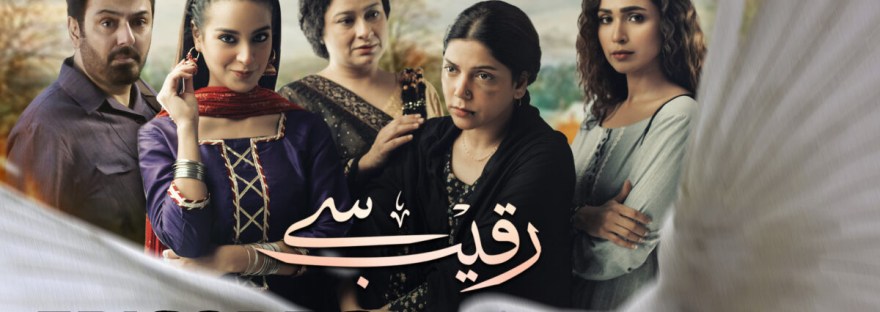
Mr. Khan’s Review on Raqeeb Se – Episode II (2021)

A review on Pakistani drama TV series, Raqeeb Se – Episode 2 (2021). The new TV series is directed by Kashif Nisar and is a production of Momina Duraid Productions. Raqeeb Se is a HUM TV Production.

(Note: If you’ve already read the review of the previous episode, you can skip directly ahead to the High points section).

+ Crew

  • Directed by Kashif Nisar
  • Written by Beegul
  • DOP by Hassam Mairaj
  • Music Composed by Hadiqa Kiani
  • Produced by Momina Duraid Productions

+ Note

Raqeeb Se is the newest HUM TV Production and is once again the collaboration of the award winning Writer/ Director duo of Bee Gul and Kashif Nisar. 

The title of the show is heavily inspired by a poem from the legendary poet Faiz Ahmed Faiz when the young poet fell in love with a girl next door in Sialkot. But alas, as luck would have it, she one day unexpectedly left the city, only to be reunited years later when Faiz was already an established poet in the circles of Urdu literature. This encounter inspired Faiz to write a poem “Raqib Se!”. The backstory of this poem plays a crucial role in the premise of the show.

 + Main Cast

  1. Hadiqa Kiani as Sakina
  2. Noman Ijaz as Maqsood
  3. Sania Saeed as Hajra
  4. Faryal Mehmood as Insha
  5. Iqra Aziz as Ameera
  6. Saqib Sameer as Rafiq

+ Plot

Raqeeb Se is a call of Maqsood’s dark past that could potentially destroy his present life. In order to escape her abusive husband, Sakina, along with her daughter Ameera, flees from her village to find shelter at her former lover’s place, Maqsood. Unfortunately Maqsood, who still holds a grudge against Sakina’s past actions, refuses to aid her in her most dire situation. But his wife, Hajra, seems much more sympathetic to the situation and lets Sakina stay at their home till things are figured out for the future.

But can Sakina be trusted to stay out of Maqsood’s life or will they be tempted to rekindle their lost love and in the process, destroy what Maqsood and his wife Hajra have built together?

+ High Points

i – While the first episode was busy in setting up the plot, the second episode had the time to flesh out its characters and make them resonate more with its audience. There is much depth into Ameera’s character as to why she lets out these sudden bursts of anger or even if Hajira is sympathetic to Sakina’s plight, she also has her fears of her seeping back into Maqsood’s life. This episode also had much more interactions of characters with opposite personalities which creates a certain sense of awe and excitement for the viewers.

ii – The cinematography was much more creative this time around. The camera floats around the huge bungalow, giving a sense of beauty but loneliness inside the mansion, the shot through the netting of a back of a chair to reveal Insha’s angst of entrapment in her world. Good stuff.

iii – What is also great about Raqeeb Se is the costume design of each character. Just by looking at the clothes, one could tell what kind of personality they possess. 

iv – The cliffhanger for episode 02 was great and much more impactful than last time. This will definitely make the viewers wait impatiently for episode 03 to come around.

 + Low Points

i – In terms of plot, episode 02 comes to a screening halt. Even though the episode obviously focused much more on character development, there is almost no sense in watching this episode IF you watch TV dramas for the sole purpose of plot progression (with exception to the last scene of the episode). The dialogue which jumps back and forth with:

Mujhe tum ko usi Raat bahar phek dena chahiye tha!

Tuo mai kiya karta? Un ko usi Raat bahar phek deta!?

And it does become tiresome after the first three times.

ii – The scenes between Insha and Raqib are only there for the sole purpose of expository dialogue, change of scenery and characters reflecting back on the current plot of the show. One can easily switch channels, come back to it after and wouldn’t miss a thing.

iii – The show depicts mother and daughter sleeping in one bed while Maqsood sahib sleeping alone in his massive, luxurious bed. Why? Will there be an explanation in the next episodes? I hope so because this seems extremely odd and unrealistic. Perhaps Maqsood sahib’s snoring is too extreme for Hajira’s tolerance…

iv – There are at times issues with how music is being used in the show. There plays a scene of high voltage dialogue between two characters; as a viewer, you could at times assume that it’s a tense moment but then light hearted music starts playing in the background to ease the tension out. Each scene is at times too reliant on the music to make the audience understand the mood of the scene, rather than just by dialogue and performances. A bit less reliant on the music please.

 + Overall

Although Raqeeb Se Episode 02 is an improvement with its character interactions, it unfortunately has nothing to offer with its plot development. But the episode is never dull because the performances once again keep you engaged throughout the show. There might be one or two repetitive scenes but can easily be forgiven due to the cliffhanger of the episode.

I am still interested where the tale of Maqsood sahib’s mysterious past will lead us to. No real change in the rating for me since its premiere episode unfortunately but can very well potentially go much higher if Raqeeb Se plays its cards right and takes its audience in a direction where no other Pakistani TV drama dares to.

 Rate: 2.5 out of 5 stars

TV series

Mr. Khan’s Review on Raqeeb Se – Episode I (2021)

A review on Pakistani drama TV series, Raqeeb Se – Episode 1 (2021). The new TV series is directed by Kashif Nisar and is a production of Momina Duraid Productions. Raqeeb Se is a HUM TV Production.

+ Crew

  • Directed by Kashif Nisar
  • Written by Beegul
  • DOP by Hassam Mairaj
  • Music Composed by Hadiqa Kiani
  • Produced by Momina Duraid Productions

+ Note

Raqeeb Se is the newest HUM TV Production and is once again the collaboration of the award winning Writer/ Director duo of Bee Gul and Kashif Nisar. 

The title of the show is heavily inspired by a poem from the legendary poet Faiz Ahmed Faiz when the young poet fell in love with a girl next door in Sialkot. But alas, as luck would have it, she one day unexpectedly left the city, only to be reunited years later when Faiz was already an established poet in the circles of Urdu literature. This encounter inspired Faiz to write a poem “Raqib Se!”. The backstory of this poem plays a crucial role in the premise of the show.

 + Main Cast

  1. Hadiqa Kiani as Sakina
  2. Noman Ijaz as Maqsood
  3. Sania Saeed as Hajra
  4. Faryal Mehmood as Insha
  5. Iqra Aziz as Ameera
  6. Saqib Sameer as Rafiq

+ Plot

Raqeeb Se is a call of Maqsood’s dark past that could potentially destroy his present life. In order to escape her abusive husband, Sakina, along with her daughter Ameera, flees from her village to find shelter at her former lover’s place, Maqsood. Unfortunately Maqsood, who still holds a grudge against Sakina’s past actions, refuses to aid her in her most dire situation. But his wife, Hajra, seems much more sympathetic to the situation and lets Sakina stay at their home till things are figured out for the future.

But can Sakina be trusted to stay out of Maqsood’s life or will they be tempted to rekindle their lost love and in the process, destroy what Maqsood and his wife Hajra have built together?

+ High Points

i – The performances from the leads are great and is what makes this TV drama compelling to watch. The family relationships in the show seem effortlessly natural and are undoubtedly the heart of the show. Hadiqa Kiani is fantastic in portraying the hardships of an abused housewife and even without any dialogue, her face tells a thousand stories.

ii – Speaking of dialogue, Beegul’s writing is poetic and plays a vital role for the audience to create sympathy for the characters on screen.

iii – The Production design of the bungalow is a visual maze of objects that creates an atmosphere of tension and claustrophobia for the three main leads.

iv – The makeup department (especially of Sakina’s wounds) are believable and quite well executed. 

v – The soundtrack by Hadiqa Kiani ‘Raqeeb Say’ is great and melancholic. It perfectly encapsulates the longing of past love which is the overarching narrative of the show.

 + Low Points

i – While the show is captivating to watch, it really takes it time to get its point across each scene. This might leave some viewers changing channels quickly if they do not possess the patience for it.  

ii – Even though most performances are great, Faryal Mehmood for me, falls a bit short. Her dialogues do not seem convincing to the character she is supposed to be portraying. It’s almost as if she isn’t comfortable enough to read the dialogues out loud.

iii – As we all know, stories about past lovers/ unsolicited affairs always play a key role in soap operas all over the world. But a show like Raqeeb Se is also a reminder that women on TV cannot be portrayed in any other way than bickering against one another for their ‘man’. I hope the show takes itself to an unknown territory and not tread similar waters of narrative that countless other HUM TV dramas have done before.

iv – By just judging from the first episode, the characters of Insha and Rafiq have really nothing to add to the overall narrative. They seem like mindless filler just to extend the length of an episode. Let’s hope that the characters end up contributing a lot more in the next coming episodes.

v – The outburst of a certain character near the end was unearned and not really a great cliffhanger to end the first episode. The show just unceremoniously ends and leaves a perplexed thought in a viewer’s head as to what to make of it.

 + Overall

Raqeeb Se follows a safe, coherent structure that even with its bold subject matter, refuses to take risks with its presentation. But it is the performances of Kiani, Noman and Sania that makes the show riveting to watch. If you like slow but gripping dramas with a plot that moves at its own pace, you will enjoy what Bee Gul and Kashif Nisar have brought onto the TV screens.

 Rate: 2.75 out of 5 stars

TV series

Mr. Khan’s Review on WandaVision (Ep 1-3) (2021)

A review on American Television miniseries, WandaVision (2021). The miniseries is directed by Matt Shakman and stars Elizabeth Olsen as Wanda/ Scarlet Witch and Paul Bettany as Vision. The show is a continuance of the saga from the Marvel Cinematic Universe and is a Disney Plus Original series.

+ Crew

  • Directed by Matt Shakman
  • Cinematography by Jess Hall
  • Music by Christophe Beck
  • Produced by Chuck Hayward
  • Created by Jac Schaeffer
  • Production by Marvel Studios
  • Distributed by Disney Platform Distribution 

+ Note

WandaVision is continuation of the Marvel Cinematic Universe (Phase 4) where we get to explore more the relationship between the two popular Marvel characters; Scarlet Witch and Vision. The series is cleverly disguised as an American vintage comedy sitcom with multi camera setup and canned laughter from the audience in a (supposedly) TV Studio. WandaVision is clearly inspired from 50s-60s sitcoms like ‘I Love Lucy’, ‘Bewitched’ and later in color, ‘The Brady Bunch’, where situational comedy plays a key role to the show’s premise. Since Disney Plus has only released three episodes up till now, it is still unclear where they are heading with this but one can safely assume, WandaVision is unlike anything MCU has produced up till now.

+ Main Cast

  1. Elizabeth Olsen as Wanda Maximoff / Scarlet Witch
  2. Paul Bettany as Vision
  3. Debra Jo Rupp as Mrs. Hart
  4. Fred Melamed as Arthur Hart
  5. Kathryn Hahn as Agnes
  6. Teyonah Parris as Monica Rambeau
  7. Kat Dennings as Darcy Lewis
  8. Randall Park as Jimmy Woo

+ Plot

WandaVision starts off in 1950s suburban America. A husband and a loving wife have just moved in a house next door but unbeknownst to the neighbourhood, they are no ordinary couple. In fact, they are the famous Avengers; Scarlet Witch and Vision who hide their super powers in order to live a happy, wholesome life. But something doesn’t seem right about this scenario. It’s almost too… perfect? How did present day Avengers end up in decades old American TV sitcoms? Where or how did they enter this delightful comedy of errors? What is exactly wrong with WandaVision?

+ High Points

i – The “I Love Lucy” meets “Bewitched” 50s situational comedy is perfectly replicated to a tee. The dialogue, costume design, make up, Production design; it perfectly fits to the vision (no pun intended) of what Marvel Studios were going for.

ii – Since working together in the Marvel Cinematic Universe, Elizabeth Olsen and Paul Bettany have really grown accustomed to each other’s performances and are just picture perfect. For this show to work, their onscreen chemistry is undeniably vital and it’s always a treat to see them together onscreen.

iii – Ever since the trailer for the show came out, WandaVision felt unique and bold to what MCU fans were, for many years, accustomed to. After the end of the Thanos and the Infinity stones saga, MCU needed to move into a fresh new direction as the lack of innovative ideas made MCU films (for the most part) extremely predictable. And WandaVision does exactly that.

iv – The dialogues and humor of the show is witty, charming and at times, also very dark. The show does have a slight “David Lynch” surrealist vibe to it. One minute, you are witnessing a cute sing and dance number, the next you see someone on the dinner table, choking himself on a piece of meat. I loved it!

v – The multiple opening theme songs/ jingles are memorable and composed wonderfully by Kristen Anderson-Lopez, Robert Lopez and Christophe Beck.

vi – The “Hand drawn” animations in between live action set-pieces play wonderfully to the overall vibe and atmosphere of the show. Love these little but essential touches that they’ve given to it!

vii – The “advertisements” in between the show are the “Bees knees!”. ‘Nuff said!

viii – Although only 3 episodes are out at the moment, the show has me hooked! The story and pacing takes its time but is extremely rewarding in the grand scheme of things. Let’s see where it all leads us to.

+ Low Points

i – The length of each episode is inconsistent. Not a huge drawback by any stretch of the imagination but old vintage TV shows had very strict time limitations. So if the show is going for that, might as well stick to a consistent 3 Act structure and the time constraints that come with making a TV broadcast episode.

ii – Although it’s hinted that the show doesn’t actually take place in decades old American history (or does it?), the racial diversity in the show seems too modern for the 1950s sequences and takes you out of the show time and time again. Segregation was unfortunately very prevalent in the US in the 50s so to see the characters mention contempt for the “Bolsheviks/ Communists” but are fine and dandy with a colored person sitting next to them at the dinner table, it’s just odd and the show seems a bit confused as to what it really wants to be. Even in a ‘make believe’ reality, the horrors of history should never be ignored (the perfect example could be the highly underrated 1998 film Pleasantville).

iii – Even after 3 episodes, the mystery of “what reality they are living in” might be a tad bit obvious to loyal MCU fans. Perhaps we all might be rightfully swerved by the end of the season. 

iv – Among all the episodes available, episode 3 was the weakest due to its lack of focus to the overall narrative and the situational comedy slightly overstaying its welcome. But cliffhanger at the end did make up for it I suppose.

+ Overall

WandaVision is fun, eerie and exactly what MCU needed to kick start their ‘Phase 4’ list of films and TV shows. The performances are wonderful by the two main leads and the show proves that Superheroes are not all about “Good Guy vs Bad Guy”. Comics is a medium explored to such vast lengths of ideas and it’s tremendous to see a commercial, crowd pleasing Disney corporation try something very different. Of course, this could all change for better or worst in the review for the next episodes so stay tuned! 

Rate: 4 (subject to change) out of 5 stars

Feature Length Films

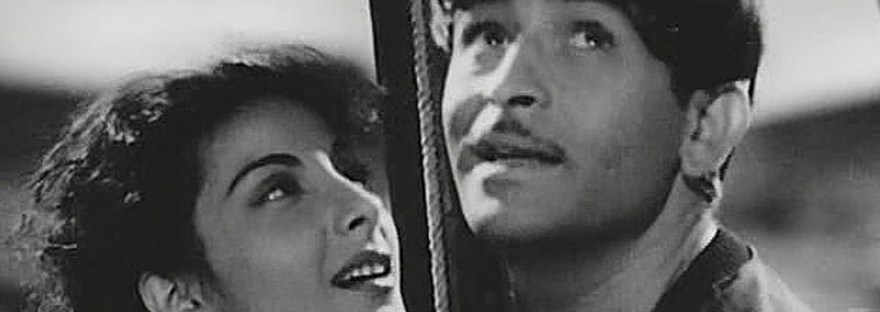
Mr. Khan’s Review on Awāra (1951)

A review on Indian melodrama feature length classic film, Awāra (1951). The film is directed and produced by Raj Kapoor and stars the famous onscreen couple of Raj Kapoor and Nargis. The film is an All Indian Film Corporation production and is also produced and distributed by R.K.Films.

+ Crew

  • Directed by Raj Kapoor 
  • Cinematography by Radhu Karmakar
  • Written by Khwaja Ahmad Abbas
  • Music by Shankar-Jaikishan
  • Edited by G.G. Mayekar
  • Produced by Raj Kapoor

+ Note

Awāra is considered to be one of the greatest, all time classic of Bollywood cinema and also a film that solidified Raj Kapoor’s influence on Indian Cinema. It tackles themes like crime and social issues, accompanied by musical melodrama. Upon its release, Awāra became an instant sensation not just in India but also overseas in Africa, Middle east and the Soviet Union for its socialist/ reformist approach on poverty and lack of social justice for the common man. The film is estimated to have sold over 200 Million tickets worldwide and considered to be one of the most successful films of all time. In 2012, the film was even included into the 20 new entries added to the All-Time 100 greatest films by TIME magazine.

+ Main Cast

  1. Raj Kapoor as Raj
  2. Shashiraj as Young Raj (child artist)
  3. Nargis as Rita
  4. Baby Zubeida as Young Rita
  5. Prithviraj Kapoor as Judge Raghunath (Raj’s father)
  6. K. N. Singh as Jagga
  7. Cuckoo as Bar dancer
  8. B. M. Vyas as Dubey (Rita’s father)
  9. Leela Misra as Mr. Raghunath’s Sister-In-Law
  10. Leela Chitnis as Leela Raghunath
  11. Honey O’Brien as Dancer
  12. D. Basheshernath (Grand Pa) as a Judge

+ Plot

The film is a quintessential Bollywood melodrama; a young boy named Raj (Raj Kapoor) is born in the slums of India after his mother was rejected by his biological father (Prithviraj Kapoor) due to the suspicion of having an extramarital affair with another man. While living the life of a petty criminal, Raj has a change of heart when he meets the love of his life, Rita (Nargis) who is his childhood friend but is brought up in a higher social class. Will an alleged son of a criminal remain one by association or can one change himself for the better? Will Raj be able to successfully redeem himself or is doomed to live the rest of his life as a petty thief? 

+ High Points

i – The Raj Kapoor/ Nargis duo is and will always be one for the ages. The enigmatic onscreen chemistry that these two permeate will remain unmatched.

ii – Whenever Raj Kapoor is onscreen, his magnetic personality will always draw you into the film. No matter if you’re a Bollywood fan or not, his wit and charm is unparalleled with anyone else that has graced the silver screen of Bollywood.

iii – Awāra was the beginning of the creative collaboration between Raj Kapoor and Khwaja Ahmad Abbas who made several films together after this, spanning almost 30 years of work together. When analysing its script, direction, music and performances; one cannot be much surprised as to why their minds came together so well, time and time again.

iv – Some of the most memorable songs that we all know and love originate from this film; “Awaara Hoon”, “Tere Bina Aag Yeh Chandni”, “Ghar Aaya Mera Pardesi”, sung by the great Lata Mangeshkar. Shankar Jaikishan’s composition is in a league of its own and Awāra’s Soundtrack really solidified its place in the early decades of Bollywood cinema.

v – Awāra stars generations of Kapoor family all in one film; Raj Kapoor plays the protagonist, his real life father Prithviraj Kapoor plays his father, Raj’s brother Shashi Kapoor plays Raj’s younger self and finally, Raj’s grandfather D. Basheshernath also has a cameo role as the Judge in the film. Since they were so familiar with each other’s acting skills, the Kapoor family played off one another with such ease and surprisingly, this conglomerate of Nepotism never proved to be detrimental to the film.

vi – Some of the superimposition of pictures and sequences to visually depict grief and longing are very clever and innovative for its time. 

vii – A man who is born in criminal lifestyle destined to become a criminal?  Does he deserve redemption for his wrongdoings? Will he ever be accepted by society? The social issues addressed in the film were and are still very relevant in the modern day.

viii – The ending is surprisingly very convincing and well written. It refuses to be seduced by the typical “Bollywood happy ending” and leaves a slight question mark in our hearts and minds.

ix – The gritty Set Design of the slums of India, rain sequences convey gorgeously the feeling of emotional solitude and isolation.

+ Low Points

i – Although the film is mostly entertaining, it does drag on from time to time, namely the childhood sequence which could’ve been easily reduced for the betterment of the film as a structural, coherent narrative.

ii – The melodrama and dialogue can be very tacky and eye rolling at times. 

iii – Jagga as the antagonist is incredibly silly, does not pertain to have the viciousness and imminent threat that a Bandit should have. One could easily compare him to Gabbar Singh from Sholay (1975) who had the ruggedness and tenacity of being Evil. Even during his most menacing scenes, Jagga comes off goofy and has definitely not aged well.

iv – So as the main plot of the film goes, Jagga kidnaps the Lawyer’s wife because he wrongfully accused Jagga of his crime. When Jagga finds out that the lawyer’s wife is pregnant, he decides to let her go back to her husband in order to create a misunderstanding that perhaps she had an affair with Jagga while being in his vicinity. Okay… but what if she had already told her husband before the kidnapping that she was pregnant? Jagga didn’t know that, how was he so sure that she didn’t? The catalyst to the plot apparently has no strong basis to it.

v – Although the dream sequence contains one of the most memorable Bollywood song of all time “Ghar Aaya Mera Pardesi”, it does bring the whole film to a halt and disrupts the overall flow of the narrative. The costumes design and makeup of “savages” in the dream sequence have also unfortunately not aged too well.

+ Overall

It certainly goes without saying that Awāra will always remain a classic and a pinnacle of artistry in Bollywood cinema. Even after Sixty plus years, it has certainly stood the test of time. Although the melodrama is laid on thick, the charm lies in its performances by the two main leads (Raj Kapoor and Nargis) and the timeless songs of yesteryear. If the modern audiences can get past the “Black and White”-phobia, this timeless classic has a lot to offer. 

Rate: 4 out of 5 stars

Feature Length Films

Mr. Khan’s Review on Dukhtar (2014)

A review on Pakistani Drama feature length film, Dukhtar (2014). The film is a directorial debut by Afia Nathaniel and is also responsible for writing and producing the film. It is a Zambeel Films and The Crew Films Production and is distributed by Geo Films.

+ Crew

  • Directed by Afia Nathaniel 
  • Cinematography by Armughan Hassan & Najaf Bilgrami
  • Written by Afia Nathaniel 
  • Music by Sahir Ali Bagga & Peter Nashel
  • Edited by Armughan Hassan and Afia Nathaniel
  • Produced by Afia Nathaniel and Muhammad Khalid Ali

+ Note

Dukhtar is a film that tackles the unfortunate hardship of being a female in the tribal areas of Northern Pakistan. In order to settle disputes between tribes, young girls are used as “peacemakers” and are forcibly married off at a very young age. The film premiered at 2014 Toronto Film Festival and was also released in Pakistan that same year. Dukhtar was an official entry from Pakistan for the 87th Academy Awards but was not nominated.

+ Main Cast

  1. Samiya Mumtaz as Allah Rakhi
  2. Mohib Mirza as Sohail
  3. Saleha Aref as Zainab
  4. Asif Khan as Daulat Khan
  5. Ajab Gul as Shehbaz Khan
  6. Samina Ahmad as Rukhsana
  7. Adnan Shah as Ghorzang Khan
  8. Abdullah Jaan as Tor Gul / Hikmatullah
  9. Omair Rana as Zarak Khan

+ Plot

In the depths of Northern areas of Pakistan, two tribal families are in the midst of a battle for their honor. In order to settle the dispute once and for all, Daulat Khan is presented with an opportunity to give his young 13 year old daughter’s hand in marriage to Tor Gul, a man five times her age. The child’s mother Allah Rakhi (Samiya Mumtaz) sees no alternative but to run away with her daughter and escape the fate that she once also had to face many years ago. Along the way, they meet a sympathetic Truck Driver Sohail (Mohib Mirza) who tries to help them reach their destination. 

Will Allah Rahki and her daughter be able to escape fate and live their new lives away from the clutches of barbaric tribal customs of child marriage?

+ High Points

i – The cinematography is absolutely gorgeous. Even though it’s not a hard task to present the Northern region of Pakistan as eye pleasing visuals, it takes skilled Cinematographers to present it so fantastically. Kudos to Armughan Hassan & Najaf Bilgrami!

ii – Speaking of beautiful images, the lighting or even the natural sunlight has been brilliantly used to its full potential. The seeping sunlight through the cracks of wooden boards, the busy street corners of Lahore, it’s simply amazing what visual poetry moving images can come up with.

iii – Although her dialogues were limited, Saleha Aref did a fairly decent job as Zainab and brought a convincing fictional character onto the screen.

iv – Music was not the most prevalent but was skilfully used during the dark times throughout the film and added the much needed ‘mystical’ element to the mother/ daughter’s plight and the dream sequences.

v – The mother/daughter relationship is very well explored and presented visually to its viewers. It captures well the innocence of the relationship that the filmmaker was going for.

vi – The quieter scenes where there are no spoken dialogue or music, only ambient sounds of bird chirping are mesmerizing to look at/ listen to.

+ Low Points

i – The script is almost a complete mess. The first act moves fairly well but upon halfway through the film, it falls badly off its rails. The tension is highly subdued, there are no stakes left for the viewer to be invested in by the halfway point. The pacing is uneven to say the least. It’s almost as if the film was originally a tele film but was prolonged to meet the feature length requirement of 90 minutes.

ii – The romance was forced, unconvincing and quite frankly, abysmal. Not every film needs a romantic plotline and felt like an obvious studio mandate. 

iii – The third act is sloppy, carries no weight to where it started from and the film then just decides to end.

iv – Some of the performances are (for a lack of a better word) cheesy as hell. Most prominent being Samina Ahmad who had her TV Soap Opera acting chops on, completely out of place for the realistic tone that the movie was going for.

v – Some of the shots in the movie were unnecessarily “shaky” and felt amateurish in execution. 

+ Overall

Dukhtar is definitely on the right path in moving away from the glitz and glamour of Lollywood and has its own unique, gritty realistic feel to it. But when it comes to writing, it just fails miserably and that is extremely disappointing. I really wanted to like this film because the barbaric culture of child marriages is very prevalent in some part of Pakistan and needs to be addressed by the artists of Pakistan. It is fairly obvious that Afia has all the right intentions of making this film but the script really needed some time in the oven before it was ready. It is unfortunate that Afia has not made a film since Dukhtar but I definitely would like to see more from her. Perhaps not as a writer but more so, her directorial work. 

But is it worth a watch? I’m really on the fence with this one but ultimately, Dukhtar gets the benefit of the doubt due to its gorgeous imagery and the intention of being different from most of Pakistani cinema.

Rate: 2.5 out of 5 stars

Animated Feature Length Films

Mr. Khan’s Review on Soul (2020)

A review on Animated feature length film, , Soul (2020). It is directed by Pete Docter (Monsters Inc. (2001), Up (2009), Inside Out (2015) ) and is produced by Pixar Animation Studios and Walt Disney Pictures. The film is also distributed by Walt Disney Studios Motion Pictures and is a Disney Plus Original film.

+ Crew

  • Directed by Pete Docter 
  • Cinematography by Matt Aspbury & Ian Megibben
  • Written by Pete Docter, Mike Jones & Kemp Powers
  • Music by Trent Reznor & Atticus Ross
  • Edited by Kevin Nolting
  • Produced by Dana Murray

+ Note

Soul is the fourth animated film directed by Peter Docter for Pixar Animation Studios. The theme of the film is very familiar territory for Docter as it once again deals with concepts of human personalities, determinism and of course, the human Soul. Since the main protagonist of the film is a Jazz musician, the music plays an important role throughout the movie. Soul was first premiered in October 2020 at London Film Festival and then was released in December 2020 as a ‘Disney Plus Original’ film, exclusive on their streaming service.

+ Main Cast

  1. Jamie Foxx as Joe Gardner
  2. Tina Fey as 22
  3. Graham Norton as Moonwind
  4. Rachel House as Terry
  5. Alice Braga and Richard Ayoade as two of the soul counselors 
  6. Phylicia Rashad as Libba Gardner
  7. Donnell Rawlings as Dez
  8. Questlove as Lamont “Curley” Baker
  9. Angela Bassett as Dorothea Williams

+ Plot

Joe Gardner (Jamie Foxx) gets by as a High school music teacher in the heart of New York City when suddenly, out of sheer luck, lands a huge gig at a local Jazz club. As Joe prepares for his big break, he accidently falls into a manhole and his Soul ends up in the ‘Great Beyond’. There, he meets another fellow soul named “22” (Tina Fey) who is in search of her special “spark” which will allow her to be born and start her life on Planet Earth. 

Together, they must help each other and find a way to reach their goals and discover throughout their odyssey, what it means to have a Soul.

+ High Points

i – I guess this is always a ‘no-brainer’ compliment for Pixar films but the animation is absolutely gorgeous to look at. The beautiful lighting effects (especially scenes on Earth) brings out the warmth from the screen and onto your hearts.

ii – The character designs are brilliantly thought-out and executed. Although the facial features are exaggerated, they never feel too “cartoony” or stray away from reality too far. 

iii – The designs of soul counselors are especially unique (kinda like Apple “Mac Finder”-esque) and creative. They lack details or a coherent body structure but play beautifully to the concept of beings who handle the abstract land of ‘Great Beyond’.

iv – The film is simply outstanding with the more “quieter” moments of the story where instead of dialogue; the music, animation and visuals consume the screen. Even though Pixar/ Disney is a big money making conglomerate, such scenes show that it still inherits that creative spark; the spark that made Pixar resonate so much with the audiences to begin with. 

v – Joe Gardner is a sympathetic and lovable main protagonist with whom people from different parts of the world can relate to.

vi – Even though the subject matter deals with the afterlife, Soul never becomes religious or preachy but keeps a good balance with people all over the world with different faiths (or none for that matter).

vii – The voice acting is great from everyone involved. No celebrity voice felt forced or out of place with the overall theme of the film.

viii – Trent Reznor & Atticus Ross have done a fantastic job with the Soundtrack of the film. They had the daunting task to make the music a central part of the film and they delivered in spades. The “In the Zone” scenes were probably the biggest highlight of the movie.

+ Low Points

i – As a fan of Docter’s previous Pixar film Inside Out (2009), the biggest disappointment for me was the plot of the film itself. It was once again treading the same waters as before of determination, Persona, finding oneself. Did ‘Soul’ have anything new to say? Not really.

ii – Some of the comedy doesn’t work and unnecessarily drags the movie. Why did the cat have to give a haircut? Why the madcap subway chase? It seemed that the film was struggling with what it really wants to be; An honest, spiritual look at what makes human life special or an odd couple, hijinx comedy of errors?

iii – It is obvious that Pixar’s spark as a creative force in Animation has been massively subdued since pairing with Disney Animation Studios and unfortunately, it still shows. The overall structure of the film is nothing more than a list of checkmarks that need to be fulfilled in order to please the audience (and the company’s stockholders!). Challenge the audience’s intelligence a bit like WALL- E (2008), don’t hand them solutions to conflicts on a silver platter like any other regular animation studio.

iv – Speaking of conflicts, they just felt really unconvincing and seemed like they were only added as a necessity to have a conclusive, feel good resolution to the film. The Cat/ Human switch did not make much sense but hey, talking animals are always funny, right?

v – The last act of the film was forcefully wrapped into a neat little package and made no sense to the overall theme of the film. I’ve elaborated it a bit further… 

NOTE: SPOILER ALERT! (Skip ahead to the “Overall” if you would like to avoid it)

The “Noble” sacrifice by Gardner never paid off and was immediately reversed in order to have a happy ending to the film. Why does he get his life back but no one else on the conveyor belt? Why tease this bold move if you don’t have the guts to go through with it? Children films have successfully dealt with issues like death before (The Lion King (1994), The Land Before Time (1988)) so it can be done. At times, it is necessary for kids to learn that not everything works out in Life the way you want it.

+ Overall

Soul does bring out the best in Pixar when it comes to animation, voice acting and music but unfortunately, it is quite lacklustre when compared to their other long list of great films. There are a couple of really great sequences and It’s still a fun time with the kids but don’t expect this experience to be a memorable one.

Rate: 3.25 out of 5 stars

Feature Length Films

Mr. Khan’s Review on AK vs AK (2020)

A review on Indian/ Hindi language black comedy thriller film, AK vs AK (2020). It is directed by Vikramaditya Motwane and the Production House is Andolan Films. The film is distributed by Netflix.

+ Crew

  • Directed by Vikramaditya Motwane
  • Cinematography by Swapnil Sonawane
  • Written by Anurag Kashyap (dialogues)
  • Screenplay by Avinash Sampath and Vikramaditya Motwane
  • Produced by Deepa De Motwane

+ Note

Ak vs Ak is a dark, comedic look into the culture and impact that Bollywood has on everyday life of India. AK vs AK is unique for its “film within a film” style of storytelling and everyone is playing as “themselves” makes everything seem authentic. The idea was initially pitched in 2013 with Shahid Kapoor playing the title role alongside Anurag and Vikramaditya Motwane attached to the project as its director. But delays and rewrites pushed the project further back to 2019. Finally, Motwane decided to cast Anil Kapoor for the role instead as he has been a bigger “commercial” star of Bollywood and fits the narrative of India’s obsession with its stars much better.

+ Main Cast

  1. Anil Kapoor as himself
  2. Anurag Kashyap as himself
  3. Yogita Bihani as herself
  4. Sonam Kapoor Ahuja as herself
  5. Harshvardhan Kapoor as himself
  6. Sucharita Tyagi as herself
  7. Boney Kapoor as himself
  8. Nawazuddin Siddiqui as himself (voice, cameo)

+ Plot

While attending the MAMI event, Bollywood icon Anil Kapoor and renegade director Anurag Kashyap get into a major public feud with one another as to who the bigger “star” of Bollywood is. This leads to Kashyap writing and directing his best film yet; kidnapping Anil Kapoor’s real life daughter (Sonam Kapoor) and forcing him to search for her within 10 hours time (till sunrise) while being filmed throughout this ordeal. No breaks, no cuts, no reshoots. Everything goes!

+ High Points

i – Its safe to say that the filmmakers had a lot of fun making the film and it shows! Every scene/ performance was taken up to 11. Nothing was off limits. All real life actors made fun of themselves and their dwindling careers. Is Anil Kapoor just a relic of the past? Is Kashyap just a talentless hack who only knows how to write obscene dialogue? 

ii – Unsurprisingly, the snappy dialogue of the film is written by none other than Kashyap himself and its always fun to witness how he blends spoken dialogue with a sprinkle of ‘Bollywood masala’ mixed into it.

iii – The film (very successfully) takes shots at Bollywood and how deeply rooted it is to the lives of every person growing up in the slums of India. The Bollywood stars are not mere actors but dancing gods who cannot be separated from their onscreen personas.

iv – The dark humor is hilarious. There were numerous times I chuckled at the absurdity of the scene or just burst out laughing. The collaboration of Kashyap and Motwane always bring out the best in both of them.

v – The performances are great all across the board. Surprisingly, even as a non-professional actor, Kashyap kept up with Anil Kapoor pretty well throughout the film!

vi – The ‘Lakhan’ scene. ‘Nuff said!

vii – The city of Mumbai is as vibrant as ever and is undoubtedly a character on its own.

+ Low Points

i – Although the film was engaging for the most part, the last act of the movie felt a bit like a deadend with its creativity and the filmmakers really had to take a very “uninspiring” way to end the story. Predictable and lackluster end to what was a very fun ride.

ii – Such an ‘off the wall’ script could’ve been accompanied by experimental editing but unfortunately, that was not the case. The footage was sped up numerous times throughout the film (to save time I suppose) but it just felt tacky and amateurish. 

iii – As you would expect from a Kashyap/ Motwane project, the film throws every idea they can concoct onto the wall to see what sticks. Some do, some don’t, namely the presentation of the film. Video game sprites and text don’t match up well to the dark, humorous tone that they were going for. It belongs more to Scott Pilgrim vs. the World (2010) rather than the gritty streets of Mumbai.

iv – The music is (for the most part) pretty forgettable. I thought Kashyap/ Motwane projects always had an excellent soundtrack to them (Dev.D (2009), Raman Raghav 2.0 (2016), Sacred Games (2018-19)). What happened?

+ Overall

AK vs AK is definitely a fun ride but the somewhat predictable/ disappointing ending will leave you a bit deflated at the end. But the duo of Anil Kapoor and Anurag Kashyap play off each other hilariously and for that alone, its definitely worth a watch!

Rate: 3.75 out of 5 stars

Feature Length Films

Mr. Khan’s Review on Wonder Woman 1984 (2020)

A review on Hollywood feature length film, ‘Wonder Woman 1984‘ (or WW84) (2020). The Film’s distributor is Warner Bros. Pictures and is part of the continuing DC Extended Universe.

+ Crew I

  • Directed by Patty Jenkins
  • Cinematography by Matthew Jensen
  • Written by Patty Jenkins, Geoff Johns, Dave Callaham
  • Produced by Charles Roven, Deborah Snyder, Zack Snyder, Patty Jenkins, Gal Gadot, Stephen Jones

+ Crew II (Production Houses)

  • DC Films
  • The Stone Quarry
  • Atlas Entertainment

+ Note

Wonder Woman 1984 is the direct sequel to the film Wonder Woman (2017) and stars once again Gal Gadot as arguably the most famous female superhero, Wonder Woman. After the success of the first film (critically and commercially), Patty Jenkins obtained the faith of Warner Bros. executives to this time, write and direct the movie herself and in-turn, pursuing a larger and more creatively driven story with less studio driven constraints. Will Patty Jenkins be able to pull off yet another ‘Wonder’ in the long list of Superhero movies?

+ Main Cast

  1. Gal Gadot as Diana Prince / Wonder Woman
  2. Chris Pine as Steve Trevor
  3. Kristen Wiig as Barbara Minerva / Cheetah
  4. Pedro Pascal as Maxwell Lord
  5. Robin Wright as Antiope
  6. Connie Nielsen as Hippolyta

+ Plot

Its the Eighties! Wonder Woman/ Diana has continued to save the world since her last major encounter but her heart still wishes for her love Steve Trevor to return. Enter Maxwell Lord; a low life businessman/ con artist who dreams of striking big in the Oil business with not much luck. He then discovers that the archaeologist at the Smithsonian Barbara Minerva (villainess Cheetah) has the possession of a “Wish Stone”; An ancient stone which can grant any wish you can desire, with consequential results. 

It is now up to Wonder Woman to stop this destructive chain reaction of “wishful events” and rid the world of Evil once again.

+ High Points

i – If you were a fan of the original Superman movies from the Richard Donner/ Richard Lester era, the vibe in some parts of the film (especially the Shopping Mall fight scene) perfectly encapsulates it, giving it a comedic yet charming look to it. 

ii – The cinematography works well for the most part. The pictures are mostly vibrant, colorful and very reminiscent of the Golden age of Wonder Woman comics.

iii – Kristen Wiig as Barbara Minerva / Cheetah is entertaining and holds up quite well throughout the film’s runtime. She knows when to play it straight and when to ‘ham’ her performance up a bit.

iv – The depiction of the 80s is very prominent but never overbearing. The overpaded shoulders, the crazy hairdos, the aerobics outfits. I’m a sucker for anything 80s so I quite enjoyed it.

v – The film remains faithful to the Wonder Woman principles of truth and justice. Its nice to see the film not be tainted by the dark/ brooding or the overtly comedic/ quip machine superhero movies of the modern era.

+ Low Points

i – This film is tedious with its “message”. It hits you on the head with it so many times that as an audience member, it literally insults your intelligence.

ii – The opening scene on the Amazon Island is long and uninteresting. If the first scene of the film fails to capture your attention, then that’s always not a good sign for the rest of the film. The Wonder Woman character was already established in the last film, why not start with the 80s Shopping Mall scene? So many baffling decisions…

iii – This time around, Patty Jenkins decided to co-write the script and it unfortunately shows. She has written some good films in the past (for e.g. Monster (2004)) but this is definitely not one of them. The pacing is all over the place, the dialogue is hokey (even for a silly superhero movie!) and worst of all, there are too many “filler” sequences which add nothing to the overall narrative.

iv – Remember when I said that WW84 is reminiscent of the 80’s Superman films? Apparently this also applies to its special effects! The CGI is embarrassingly atrocious and pulls you out of the movie every time Wonder Woman flies through badly greenscreened clouds or the murky, dark final battle between WW and Cheetah (the fight obviously takes place at night to hide the horrible CGI effects). Terrible!

v – In the last film, Gal Gadot’s Israeli accent and not so great acting chops kind of brought a certain charm to the “fish out of water” story. Unfortunately one cannot say that now since she has been saving the world for decades now. Her lack of acting skills are too obvious at this point.

vi – Donald Trum— uh, I mean, Maxwell Lord as the main antagonist is lame. Couldn’t the filmmakers come up with something rather more original and interesting?

vii – So where does WW84 fit into the DCEU? Is it part of the Zack Snyder universe or the Joaquin Phoenix’s Joker universe? Or the Shazam/ Aquaman universe? At this stage, it is clear that Warner Bros. has no plan where they are going with all this.

+ Overall

This has unfortunately been quite a letdown. The film has potential to be good but playing it safe with its over simplistic plot and bad CGI really makes it into yet another below average DCEU movie. Here’s hoping that Robert Pattinson’s The Batman (2022) will save DCEU from mediocrity. 

Rate: 2 out of 5 stars