Feature Length Films

Mr. Khan’s Review on Zack Snyder’s Justice League (2021)

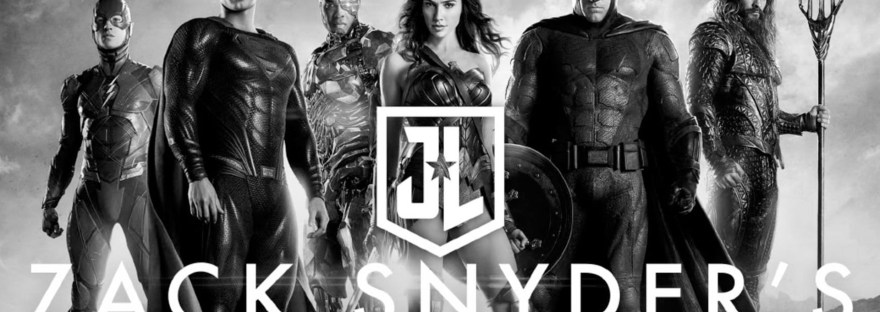
A review on Hollywood feature length film, Zack Snyder’s Justice League (2021). The film is distributed by HBO Max streaming service and is part of the continuing DC Extended Universe.

+ Crew

  • Directed by Zack Snyder
  • Cinematography by Fabian Wagner
  • Edited by David Brenner
  • Written by Chris Terrio
  • Music by Tom Holkenborg
  • Produced by Charles Roven and Deborah Snyder

+ Crew II (Production Houses)

  • Warner Bros. Pictures
  • DC Films
  • Atlas Entertainment
  • The Stone Quarry

+ Note

During the Production of Justice League (2017), a terrible family tragedy occurred and the director Zack Snyder had to leave the project. Whilst adding the finishing touches to the film, the executives at Warner Bros. decided to hire Joss Whedon (who had prior experience on directing the massive Marvel success The Avengers (2012)) as the replacement for Snyder. But during Post Production, the WB executives became skeptical as to how they would compete and market Synder’s dark vision of Superheroes against a massive conglomerate like Marvel Studios. This led the company to add numerous reshoots, cut down the runtime from 4 hours to 2, rewrite certain scenes, shoot completely new footage and of course, the infamous ‘Moustache-gate’. The film was finally released in 2017, to a critical and commercial disappointment. The film was not the Snyder vision that DCEU fans were accustomed to neither was it the fun, light hearted ‘marvelesque’ superhero film that the WB execs were going for. It was obvious at that point that the DC cinematic Universe was in trouble.

In the coming years, fans started speculating that in the vaults of Warner Bros., lies an uncut Zack Snyder’s version of Justice League. Pretty soon, hashtags like #ReleaseTheSnyderCut were trending on social media and a massive cult following began for the unreleased version. Due to its strong popularity and demand, Zack Snyder and Warner Bros. reached an agreement with the streaming platform HBO Max to exclusively release the Zack Snyder’s version Justice League, as it was originally intended. The project began taking shape in early 2020. The film was then reassembled from ground up, excluding all reshot scenes and dialogue, instead opting for what Snyder had intended the film to be. There were a couple of scenes reshot exclusively for the Snyder Cut but most importantly, Zack Snyder got to revisit and fulfill his vision of Justice League. The film was finally finished and released on March 18 2021, garnering praise from critics and fans alike.

+ Main Cast

  1. Ben Affleck as Bruce Wayne / Batman
  2. Henry Cavill as Kal-El / Clark Kent / Superman
  3. Amy Adams as Lois Lane
  4. Gal Gadot as Diana Prince / Wonder Woman
  5. Ray Fisher as Victor Stone / Cyborg
  6. Jason Momoa as Arthur Curry / Aquaman
  7. Ezra Miller as Barry Allen / The Flash
  8. Willem Dafoe as Nuidis Vulko
  9. Jesse Eisenberg as Lex Luthor
  10. Jeremy Irons as Alfred Pennyworth
  11.  J. K. Simmons as James Gordon
  12. Ciarán Hinds as Steppenwolf

+ Plot

Superman is dead. And a new world threatening event is on the horizon. Wonder Woman and Batman need to assemble a team of superheroes (calling themselves ‘Justice League’) in order to fight for the very existence of the human race. Flash, Cyborg, Aquaman, all ultimately join in to fight against Steppenwolf, the destroyer of civilizations across the universe. Will the Justice League be able to defend the planet or would they need the help of the Man of Steel in order to fight this new wrath of Evil?

+ High Points

i – Zack Snyder’s Justice League is an improvement over the original theatrical cut in every possible way. The narrative flows a lot smoother, each character’s motivations are much better explained and get to bask in their own spotlight. It is truly baffling to me why Warner Bros. decided to chop the film and reshoot scenes which were perfectly good/ serviceable to begin with! And in most cases, better! The Snyder cut is yet another example why Studio execs should only focus on marketing the film rather than making creative choices. After the less than expected Box Office returns for Man of Steel and Batman v Superman, Warner Bros. execs panicked and tried their best to emulate the “Marvel Formula”. From badly written quips to light hearted banter, the film ended up resonating with neither the Marvel fans nor the Snyder fans. Thanks to active petition from the fans, we get to see the “behind the scenes” drama of how a creative force gets destroyed in order to have a safe financial return. Now, even Zack Snyder’s Justice League has its own set of flaws (which I will get to later on in the review) but it is safe to assume that the film exceeded my expectations (considering what a mess his last two DCEU films were).

ii – Unlike Whedon’s Justice League, Snyder’s film has a much better explanation of the plot; the three mother boxes, how they got awakened and what consequences it would have once they are all synchronised together. This way, the story has much more stakes going in and keeps the viewer invested throughout the film.

iii – There are two characters that clearly benefited from this recut of Justice League and one of them is Cyborg. His complete backstory was cut out from the original film, left him utterly unrelatable and useless throughout the film. Here, his character (before his transformation) had a lot going for him, gives enough time for the viewer to sympathise with his unfortunate situation and probably, the most emotional backstory of all of the Justice League characters.

iv – The second has to be Barry Allen/ the Flash. In Whedon’s version, Flash was the supposite “comic relief” of the film. But in reality, he was an annoying, bad quip machine that quickly became the least likable character of the Justice League. In Snyder’s version, he is still a comic relief of the film but his personality traits fit much better this time around. Barry Allen’s introduction scene of the film has to be the best, most poetic moment throughout the film. It was simply delightful to watch and was just shaking my head throughout the scene wondering “Why was this scene ever cut from the theatrical release!?”. Not only that, Flash also ends up being pretty integral to the final climactic battle at the end.

v – Less bad jokes. No obnoxious rant on “What is Brunch!?” or awkward Batman dialogue “Guess we’re not getting the Band back together!” or “Do you talk to fish?” or Superman responding to being resurrected from the dead as “Itchy!”. Ugh.

vi – No CGI removal of Superman’s mustache. Funny how a film significantly improves with its exclusion, huh?

vii – One of the most significant improvements that the Snyder cut has is that Justice League really works as a team. They are not overly dependent just on Superman to do the job for them. Each member has their own task to fulfil and in the process, gets to resonate with the audience.

viii – Unlike Snyder’s Man of Steel and Batman v Superman, Justice League is much better paced, the dialogues are much better written and each character has their own story arcs. I am by no means a Zack Snyder advocate, I am still not a fan of his portrayal of Superman and his “dark” cinematic universe but I do have sympathy for him with this film. Invertedly, the studio execs took advantage of Snyder’s personal tragedy, butchered his work without his consent and what is even worse, they spent millions of dollars on something which was actually good to begin with! Sheer, utter madness!

+ Low Points

i – For all that’s good with Synder’s original vision, it is at times very self-indulgent and bloated with numerous unnecessary scenes and dialogue. There is a 5 minute scene where Lois Lane hands Clark a shirt. Why do we need to see that? The film is at 4 hour runtime and even though Snyder fans will enjoy every minute of it, it feels completely tacked on and unnecessary to the overall experience. On one hand, I can understand why the Studio execs panicked when they saw a 4 hour nightmare. Three hours or so would have benefited the film perfectly. 

ii – Unlike Thanos from the Marvel films, Steppenwolf is an utterly dull and tiresome villain of the week. True, his motivations have been a bit more explored compared to the original film but sadly, not enough. At best, Steppenwolf is just a plot device for the Justice League to band together to fight the big baddy at the end.

iii – Midway through the film, a certain character makes a very brief cameo appearance and there was no reason for this to happen other than fan service. It will probably leave most audience members completely baffled by it and I don’t blame them.

iv – The last climactic battle is still a dark, muddy CGI mess. The strength of the film lies in its First to Second Act but ultimately suffers from the same Third Act issues as its theatrical counterpart.

v – Speaking of Bad CGI, this whole film is riddled with it. The CGI characters have no weight to them, the movement/ details are jerky and unresponsive at times, it’s amazing that with all that budget, Warner Bros. still can’t accompany their summer blockbusters with decent special effects.

vi – For lack of a better phrase, the film just looks ugly. Yes, the original had color saturation up to 11 but at least you could actually understand what was happening on screen. Snyder always opts for dark, flat colors which are in complete odds with what the Justice League should represent. 

vii – I wish I did not have to say this but… Lois Lane in Snyder films just plain sucks. She is treated by the plot as someone extremely important but her demeanor says otherwise. I cannot (for the life of me) care why she is focused so much during the film when all she has done up till now is mop and being rescued by Superman. 

viii – The 4:3 aspect ratio was supposedly Snyder’s original vision of the film (to fit the large IMAX screens). There is no obvious benefit that Justice League has from this format and it also doesn’t make any sense to release it in IMAX format only to end up being viewed by everyone on their 16:9 Television screens on HBO Max. 

ix – SPOILER ALERT!!! (if you would like to avoid it, please skip directly to the Overall Section):

Snyder’s Justice League has the “LOTR: The Return of the King” effect. Too many ridiculous endings that serve no purpose to the film. Did we really needed to see Martian Manhunter approach Bruce and painstakingly explain to him what will happen in the next coming sequels (which are apparently abandoned by WB/Snyder as of now), how “Lois is the key to all this” nonsense, a badly written dystopian future with hilarious R Rated dialogue between the Batman and Jared Leto’s Joker. Please, I really do not want to hear Joker make a “reach around” joke with Batman. That really is Zack Snyder at his worst. Being pointlessly “dark and edgy”. The film should’ve ended when Darkseid’s threat was averted.  

+ Overall

While the film suffers at times with its incredibly long runtime and overindulgence, Zack Snyder’s Justice League is still a massive improvement over the original. It is a picture perfect example of how a film studio destroys a vision that filmmaker has and why creativity should be left best to the creators. 

Rating: 2.0 out of 5.0 stars (Theatrical release)

Rating: 3.75 out of 5.0 stars (Zack Snyder’s)

TV series

Mr. Khan’s Review on Raqeeb Se – Episode X (2021)

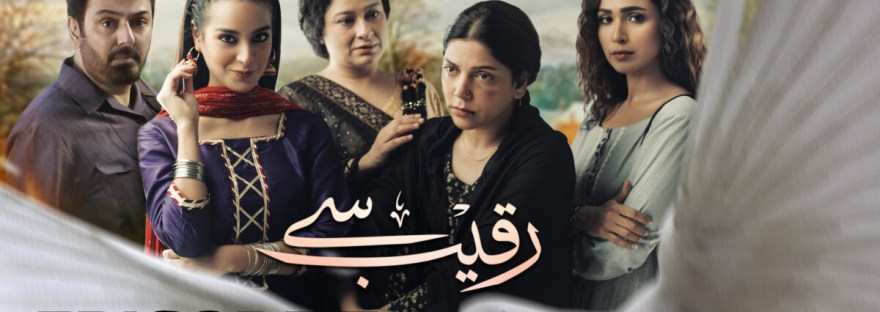
A review on Pakistani drama TV series, Raqeeb Se – Episode 10 (2021). The new TV series is directed by Kashif Nisar and is a production of Momina Duraid Productions. Raqeeb Se is a HUM TV Production.

(Note: If you’ve already read the review of the previous episode, you can skip directly ahead to the High points section).

+ Crew

  • Directed by Kashif Nisar
  • Written by Beegul
  • DOP by Hassam Mairaj
  • Music Composed by Hadiqa Kiani
  • Produced by Momina Duraid Productions

+ Note

Raqeeb Se is the newest HUM TV Production and is once again the collaboration of the award winning Writer/ Director duo of Bee Gul and Kashif Nisar. 

The title of the show is heavily inspired by a poem from the legendary poet Faiz Ahmed Faiz when the young poet fell in love with a girl next door in Sialkot. But alas, as luck would have it, she one day unexpectedly left the city, only to be reunited years later when Faiz was already an established poet in the circles of Urdu literature. This encounter inspired Faiz to write a poem “Raqib Se!”. The backstory of this poem plays a crucial role in the premise of the show.

 + Main Cast

  1. Hadiqa Kiani as Sakina
  2. Noman Ijaz as Maqsood
  3. Sania Saeed as Hajra
  4. Faryal Mehmood as Insha
  5. Iqra Aziz as Ameera
  6. Saqib Sameer as Rafiq

+ Plot

Raqeeb Se is a call of Maqsood’s dark past that could potentially destroy his present life. In order to escape her abusive husband, Sakina, along with her daughter Ameera, flees from her village to find shelter at her former lover’s place, Maqsood. Unfortunately Maqsood, who still holds a grudge against Sakina’s past actions, refuses to aid her in her most dire situation. But his wife, Hajra, seems much more sympathetic to the situation and lets Sakina stay at their home till things are figured out for the future.

But can Sakina be trusted to stay out of Maqsood’s life or will they be tempted to rekindle their lost love and in the process, destroy what Maqsood and his wife Hajra have built together?

+ High Points

i – Episode 10 was the introduction of Insha’s boyfriend to her family and the whole sequence of events were very well handled throughout the episode. Abdul’s anxiety and nervousness to Maqsood seeing a bit of his younger self in Abdul brings some much needed tension and interest other than the main plot of the show (which is unfortunately slowly deteriorating into obscurity).

ii – It is also worth a mention that the dynamics between Insha and Abdul have also significantly improved since the earlier episodes. The interactions between them seem better written and acted. Also their body language gives off fairly well that they have known each other for years now.

iii – The show’s production is excellent since its premiere and one of the most visually unique shows out there on Pakistani television at the moment. Most Pak TV shows heighten the color saturation just to make it more “eye catching”. Raqeeb Se achieves just that and much more by merely playing with light and shadows. Props should go to the Raqeeb Se’s production design team.

iv – While her performance during the show is slightly over the top, Iqra Aziz is nonetheless always entertaining whenever she is onscreen. And that is a God sent compared to the rest of the lifeless, dull characters of the show.

 + Low Points

i – As a reviewer, it is at times so frustrating to watch this show. Repetition, illogical scenes and dialogues have become so common that it becomes a chore just to sit through the entire episode without feeling exasperated. Half way through the episode, Rafiq Ali is sitting at Maqsood sahib’s Bungalow, having tea with Hajira. How!? Why? How did he get here? Why was he invited in? They know he can be dangerous, could potentially take Sakina back home by force, why take the risk? Would the show care to explain this to the viewers?

ii – In the last five episodes or so, Sakina and Hajira have undoubtedly become mere plot devices to the show rather than having any sort of characterization of their own. Sakina curses her fate while Hajira does everything Maqsood wants and praises him for it. A white sheet of paper has more dimension than these two characters!

iii – The crush that Ameera has on Maqsood sahib is incredibly tacked on and awkward. For now, it serves nothing to the overall plot of the show but perhaps the writer Beegul has something up her sleeve that we as viewers are not aware of. But for now, it does not work.

iv – The background music during the Rafiq Ali/ Hajira scene was extremely odd. I wish I could comment on it more but I have absolutely no idea what kind of feeling they were going for there.

+ Overall

Episode 10 goes back again to status quo. Lethargic plot development, lack of strong character motivations, repetition of scenes/ dialogues. Even though Adbul and Insha’s subplot is well integrated into the story, Raqeeb Se needs to give a clear reason why viewers should stick around till the end.

 Rate: 2.5 out of 5 stars

TV series

Mr. Khan’s Review on Khaas (2019)

A review on Pakistani drama TV series, Khaas (2019). The 27 Episode limited TV series is directed by Danish Nawaz and is a Momina Duraid production. Khaas was aired on HUM TV.

+ Crew

  • Directed by Danish Nawaz
  • Written by Sarwat Nazir
  • Edited by Mehmood Ali and Nasir Inayat
  • DOP by Tameen Nizami
  • Music Composed by Sohail Haider
  • Opening Theme song “Woh Jo Tha Bahut Hi Khaas” by Natasha Baig
  • Produced by Momina Duraid

+ Note

Back in 2019, Khaas was a show which strived to be unlike any no other on Pakistani Television. On the surface level, Khaas could be your typical run of the mill drama between In laws and daughter in law but Sarwat Nazir’s writing strives the show to be much more than what it seems to be. Khaas is about an emotional plight of a woman in a male dominated culture. Where certain expectations are required from the woman of the house. The show is primarily a case study of what emotional abuse a woman has to face in order to be loved and respected by the Pakistani society; be that sustaining composure while your Husband makes hurtful jokes about you or extinguishing your goals and ambitions in order to please the traditional “norm” of being a housewife. Although this word is treated as poision by most of the Pakistani community, Khaas is in fact a ‘feminist’ drama in which the target audience is not necessarily women but also the male counterparts of our everyday life.

Khaas was a critical and commercial success throughout the country, garnering praise and applause from audiences who saw themselves in the protagonist Saba. The drama was nominated by Lux Style Awards for Best Writing and Best Original Soundtrack.

 + Main Cast

  1. Sanam Baloch as Saba Faraz
  2. Ali Rehman Khan as Ammar Saud
  3. Haroon Shahid as Fakhir
  4. Behroze Sabzwari as Faraz Ahmed; Saba’s father
  5. Lubna Aslam as Sadaf Faraz; Saba’s mother
  6. Saba Faisal as Kanwal Saud; Ammar’s mother
  7. Mashal Khan as Sonia
  8. Anam Goher as Nida Saud
  9. Sajida Syed as Nusrat

 + Supporting Cast

  1. Natasha Ali as Farah
  2. Amna Malik as Javeria
  3. Shehryar Zaidi as Saud; Ammar’s father
  4. Sonia Nazir as Anam
  5. Areesha Shah as Mehak Faraz
  6. Sanam Baloch as Fakhir’s late mother 
  7. Danish Nawaz as Fakhir’s late father (only seen in flashbacks)
  8. Hira Tareen as Salma

+ Plot

Khaas is a story of an ambitious woman named Saba (played by Sanam Baloch) who strives for her career and other goals in Life. That all unfortunately gets cut short once Ammar (Ali Rehman Khan) proposes to her and her family. Due to unwarranted pressure from her parents and society, Saba accepts the proposal and focuses on her married life instead. Even though Ammar is considered charming and loved by everyone around him, something seems not right about him. Slowly, the façade of Ammar breaks down and Saba gets to see what lies behind the curtain.

Meanwhile Fakhir (Haroon Shahid), a timid, shy artist who falls in love with Saba and steadily, a friendship brews between them, proving that within all that is dark, there is a glimpse of light at the end of the tunnel.

+ High Points

i – Khaas is a textbook example of how it should be done! Engaging storyline, memorable characters, cliffhangers after each episode, never once did my attention span falter while watching the show. The show hit every narrative beat picture perfect and its success and admiration by the fans is the living proof of it. 

ii – A lot of praise and attention should be devoted towards the main cast as each one of them portrayed their characters with absolute perfection. Sana Baloch as the strong yet sympathetic protagonist, Ali Rehman Khan as the narcissistic, petty manchild and Haroon Shahid as the shy, timid artist who sees good in everything. That’s a perfect dynamic of characters one could have for any TV show. And their performances were excellent throughout the series. 

iii – The character arcs of each of the main cast is also incredibly well written and realized onto the small screen. As a viewer, you can empathize with Saba’s journey from a shy, dominated girl to an empowered, striving woman. Experiences made her change, become more stronger in a cut throat environment of male domination. In Pakistan, men usually get away with a whole lot more than a woman can and Khaas highlights that aspect with total honesty and sincerity. And that is one of the main reasons why Khaas was such a mainstream success.

iv – Apart from the main cast, some of the supporting characters also resonate incredibly well, mainly Saba Faisal as Ammar’s mother. Saba is such a versatile actress that she could adapt to any character she would like and this one is no exception. Her perception towards womanhood and blindness towards her son Ammar is a story seen numerous times in our culture. Men mainly get away with such ruthless behaviour because there are certain women who support and tolerate them.

v– The production of the show is also a key aspect of its success. The colors are vibrant, the sets and costumes are adapted well to its narrative. Momina Duraid’s shows are usually top notch in quality and Khaas is no different.

vi– The story progression of the show is meticulously handled and executed. With each episode, you get to learn more about each of our main cast of characters, their motivations and their ambitions in life. Each episode just revealed enough for the audience to eagerly anticipate what would happen next.

vii– The dream sequence scene involving Fakhir’s parents was inventive and brilliantly executed. Especially casting Sanam Baloch as the mother (since Fakhir sees his mother in Saba) and the father played the director of the show Danish Nawaz.

viii– SPOILER ALERT!!! In the next point, I will talk about the controversial ending of the show. You can skip directly to the Low Points if you would like to avoid it:

So the most vital question in each viewer’s mind was how the show will conclude? Would Saba and Fakhir live happily ever after? Would Ammar learn the error of his ways and rekindle his love with Saba? The answer is; perhaps a little bit of it all? A lot of people were disappointed not to see Saba and Fakhir happily living together and granted, his supposed life threatening accident was a forced narrative decision (which I will elaborate more in the Low Points) but to see Saba, even in her most vulnerable position with her new born child, reject Ammar’s proposal for remarriage was the absolute right outcome. Fakhir’s untimely death and Saba’s decision to live her own life the way she wants it is the most logical conclusion to the story. She needed the conflict of decision making when life doesn’t go as planned. 

Saba’s experiences living under Ammar’s thumb and eventually self-emancipating herself from the shackles of society would have been in vain if not for this conclusion. Fakhir taught her to be responsible, to live her own life the way she sees fit. With his passing away, Saba can put all of this to the test. Whether she would ever remarry, could be anyone’s guess but Saba decided to raise her child on her own was the right outcome of the show. And a lot of praise and admiration should go to the writer Sarwat Nazir for making this happen in a mainstream TV show.

 + Low Points

i – While I really applaud the show’s audacity and determination to show such a unique storyline of how women are emotionally abused in Pakistani culture, what Khaas really should’ve done is make the show as close to reality as possible. This was necessary in order for the audience to relate to the protagonist beyond the world of TV dramas. Unfortunately, this is what the show failed to accomplish. The script is merely written for the sole purpose of melodrama entertainment. And sadly, that is what Khaas ends up being. A TV show. There are too many unrealistic scenarios, coincidences (in convenience to the plot), characters act completely dumb in order for the misunderstandings to happen, too many times where two characters gossip about someone and that “someone” is eavesdropping at that exact moment. Yes, it is possible to brush all of this off and say “It is just a TV show!”. Well, that is why one cannot take the story of Khaas seriously. It’s only true within the confines of your TV screen.

ii – Speaking of dumb characters, Behroze Sabzwari as Saba’s dad should really be awarded the “Worst Father of the Year” award. Judging how the character was written, even the slightest words of encouragement from anyone in the show would persuade him to jump off a cliff. Unless of course, you are his daughter. Then he will not believe a single word you could say. Saba’s father was incredibly dumb and gullible whenever the script wanted him to be. He was written with absolutely zero intelligence, arriving at the most awkward of moments and did not possess the intelligence to even put 2 and 2 together. Sabzwari ‘s character is by far one of the worst written characters I have come across and is the embodiment of what a bad writing looks like.

iii – There are way too many flashbacks in the show. There are several flashbacks of scenes and dialogues that happened just a few minutes ago! Does the show think we have a memory of a goldfish? It’s a bad move from the creative team’s part to treat its audience like they are not intelligent enough to follow a single episode without a reminder every five minutes of each character’s motivations. 

iv – Whenever a dramatic moment occurs, this show just abuses it with a barrage of slow motions, melodramatic cheesy music and anything they could get their hands on. The first episode especially was the worst offender in all this. In visual art, subtlety is always the best option and Mehreen Jabbar’s TV dramas have proven that.

v –  That “twisted ankle and rubbing ointment on it” scene. Just a perfect example of forced romantic moments between the two protagonists. Ugh.

vi – SPOILER ALERT!!! In the next point, I will talk about the controversial ending of the show. You can skip directly to Overall section if you would like to avoid it:

Even though I praised the ending of the show above, the demise of Fakhir’s character was incredibly lazy writing. In every good script, there needs to be a set up and a pay off. Granted, Fakhir had this one nightmare and kept reminding Saba to be brave if she ends up alone but that is not enough to earn that pay off. A terminal illness of Fakhir could’ve been hinted at right at the beginning of the show and then his passing away in the final episode would’ve made a lot more sense. In short, the script wanted to kill off Fakhir so Saba could have her moment of realization that she could live and be happy on her own. It feels very unearned and possibly divides the audience on this decision.

+ Overall

Khaas has a very unique story to tell. It is bold and pulls no punches when it comes to exposing the hypocrisy against women in Pakistani culture. Unfortunately it also gets muddled up with too many TV drama cliches and mediocre writing. But at the end of the day, it is the cast of the show that makes Khaas special. True, the show could’ve accomplished a lot more than it ended up with but for what the show is, Khaas is definitely worth your time.

 Rate: 3.25 out of 5 stars

TV series

Mr. Khan’s Review on Raqeeb Se – Episode IX (2021)

A review on Pakistani drama TV series, Raqeeb Se – Episode 9 (2021). The new TV series is directed by Kashif Nisar and is a production of Momina Duraid Productions. Raqeeb Se is a HUM TV Production.

(Note: If you’ve already read the review of the previous episode, you can skip directly ahead to the High points section).

+ Crew

  • Directed by Kashif Nisar
  • Written by Beegul
  • DOP by Hassam Mairaj
  • Music Composed by Hadiqa Kiani
  • Produced by Momina Duraid Productions

+ Note

Raqeeb Se is the newest HUM TV Production and is once again the collaboration of the award winning Writer/ Director duo of Bee Gul and Kashif Nisar. 

The title of the show is heavily inspired by a poem from the legendary poet Faiz Ahmed Faiz when the young poet fell in love with a girl next door in Sialkot. But alas, as luck would have it, she one day unexpectedly left the city, only to be reunited years later when Faiz was already an established poet in the circles of Urdu literature. This encounter inspired Faiz to write a poem “Raqib Se!”. The backstory of this poem plays a crucial role in the premise of the show.

 + Main Cast

  1. Hadiqa Kiani as Sakina
  2. Noman Ijaz as Maqsood
  3. Sania Saeed as Hajra
  4. Faryal Mehmood as Insha
  5. Iqra Aziz as Ameera
  6. Saqib Sameer as Rafiq

+ Plot

Raqeeb Se is a call of Maqsood’s dark past that could potentially destroy his present life. In order to escape her abusive husband, Sakina, along with her daughter Ameera, flees from her village to find shelter at her former lover’s place, Maqsood. Unfortunately Maqsood, who still holds a grudge against Sakina’s past actions, refuses to aid her in her most dire situation. But his wife, Hajra, seems much more sympathetic to the situation and lets Sakina stay at their home till things are figured out for the future.

But can Sakina be trusted to stay out of Maqsood’s life or will they be tempted to rekindle their lost love and in the process, destroy what Maqsood and his wife Hajra have built together?

+ High Points

i – These past few episodes has really fleshed out the love story of Abdul/ Insha and is finally now being integrated into the overall narrative of the show. Also the development of both characters has significantly been improved upon and is slowly becoming the highlight of each episode.

ii – In Episode 9, the dramatic tension within Maqsood sahib’s compound was very well written and brought some life into the ongoing tense moments of the show (which for the past few episodes have been frankly dull and repetitive).

iii – Noman Ijaz as Maqsood finally gets to emote and show his full potential in this episode. Maqsood eventually breaks his stoic mannerisms and lets his true emotions be put on display for the audience to witness. Noman Ijaz seems very comfortable playing the main protagonist who has an obvious chip on his shoulder.

iv – With tense, visual atmosphere and soft lighting, Raqeeb Se might be one of the best looking TV dramas out there at the moment. Even if the narrative falters at times, the visuals are always pleasant to marvel at.

v – Compared to other episodes, Episode 9 had good pacing/ plot progression and was a slight improvement from the rest of the show. The scenes were well set up, the actors got to display their acting chops; from here on-out, this is how the show should move forward!

 + Low Points

i – Hadiqa Kiani as Sakina has really become a drag to watch. Her one note line delivery and lack of any character development has really hurt her performance in the show. She has never had anything interesting to say, her regret of “setting foot into Maqsood sahib’s house” is over and done with by now. The show really needs to give her something more interesting to do than just mop and whine about her fate. 

ii – As far as one note characters, Hajira’s motivations have also not developed since the first episode. She is by far the least interesting character of the main cast. She has nothing to do throughout the show other than to remind the audience how grateful she is to Maqsood sahib and lacks any motivations of her own. The manner in which Hajira is written makes her a mere “plot device” to the overall narrative rather than having a character of her own.

iii – Although the cliffhanger of the show was an interesting one, let us also not forget that Hajira is not onboard with any of Maqsood’s decisions. Are we supposed to sympathize with how noble Maqsood is in vowing to take care of Sakina? If his own wife is not completely in agreement with this “new arrangement” then it is not a noble but selfish act from Maqsood’s part. If the show wants us to sympathize with Maqsood’s selflessness without his wife’s consent then that is an abhorrent decision from the creative team of Raqeeb Se. Whether the show runners will work on this upcoming angle remains to be seen…

+ Overall

Episode 9 brings back some of the tension and drama from the first few episodes. It’s a much needed character dynamic that the show was lacking in the previous few weeks. With a stellar cast like this, Raqeeb Se most certainly has the potential to become a must see television show.

 Rate: 3.0 out of 5 stars

Animated Feature Length Films

Mr. Khan’s Review on Tom & Jerry (2021)

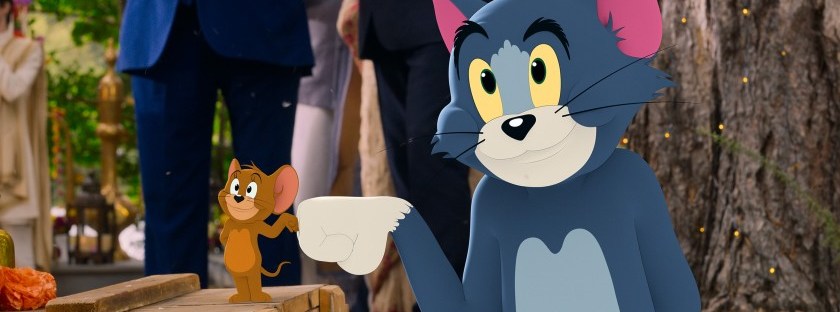
A review on Hollywood live action animated film, Tom & Jerry (2021). The film is based on the popular MGM studios cartoon characters ‘Tom & Jerry’, created by William Hanna and Joseph Barbera. The live action animated film is directed by Tim Story and stars Chloë Grace Moretz in the lead role. The film is distributed by Warner Bros. Pictures and is released on HBO Max streaming service.

+ Crew I

  • Directed by Tim Story
  • Cinematography by Alan Stewart
  • Screenplay by Kevin Costello
  • Edited by Peter S. Elliot
  • Music by Christopher Lennertz
  • Produced by Chris DeFaria

+ Crew II (Production Houses)

  • Warner Animation Group
  • The Story Company
  • Turner Entertainment Co.

+ Note

Tom & Jerry are an extremely popular cartoon duo where the premise most likely revolves around the cat (Tom) chasing the mouse (Jerry) with lots of slapstick comedy in between. The characters were first conceived and presented as an MGM animated short “Puss gets the Boot” in 1940. Since then, they rapidly became pop cultural icons and are beloved by children and adults alike. In 1993, the cat and mouse duo made their silver screen debut with their feature length animated film Tom & Jerry: The Movie. The film was an unfortunate financial and critical failure, earning only $57.2 million at the box office from their $79 million budget. 

A live action version of Tom & Jerry was announced back in 2009 and the film was supposed to incorporate animated Tom & Jerry cells within a live action setting of New York City. The film was shot around 2019 and was released in February 2021 on HBO Max streaming service.

+ Main Cast

  1. Chloë Grace Moretz as Kayla 
  2. Michael Peña as Terence
  3. Colin Jost as Ben
  4. Rob Delaney as Mr Dubros
  5. Ken Jeong as Chef Jackie

+ Plot

Kayla (Chloë Grace Moretz) lands a job in a fancy Hotel in the Big Apple and is made in charge of leading a massive Indian wedding of a celebrity couple. But there seems to be a problem; a mouse problem by the name of Jerry. In order for the wedding plans to go smooth, Kayla hires a cat by the name of Tom in order to take care of the ‘mouse in the house’ situation. Will Kayla be able to lead the wedding and in the process, bring peace and friendship between the two arch rivals Tom and Jerry?

+ High Points

i – If you grew up watching Tom & Jerry and have diligently watched most of their animated shorts, you will find a lot of things to appreciate about it. The film at times pays homage to classic Tom & Jerry moments, makes cameo appearances from the Bulldog Spike, the alleyway cats like Butch, Sound Effects directly taken from the classic shorts, such instances clearly show that the creative team loves and respects the source material.

ii – The animation cells of Tom & Jerry and their animated anitics are brilliantly realised. Although the animation is a 2D/3D hybrid, it still gives the feeling that you are watching the animated shorts from the 40s but with live action footage within it.

iii – Unlike the animated film from 1993, Tom & Jerry do not talk. And thank God for that! The classic Tom & Jerry was all visual gags and slapstick comedy and that’s all it needs to be. 

iv – In this universe, all the animals solely exist as animated characters. That I feel, is a great way to explain how Tom and Jerry are among live action characters without going too much into needless exposition. Good on the movie for that.

+ Low Points

i – With Tom & Jerry, there has always been the vital question; how do you convert 5 min short animation skits into a feature length film? The first film tried and failed, would this live action film fare any better? The answer is an unfortunate No. In feature length narrative, Tom & Jerry does not work. They always end up becoming mere side characters in their own feature length film and the audience has to patiently wait for the uninteresting live action actors to pass by before we momentarily get back to the Cat and Mouse duo. If there is a way to make a successful Tom and Jerry feature length story I am not sure but for now, Tom & Jerry fails yet again to make a successful transition onto the silver screen.

ii – Speaking of boring live action characters, none of the non-animated characters make any lasting impression in the film. The dialogue delivery from every actor makes one feel that they are just part of this film to collect their pay check and move on with their careers. The minimal character arc that Kayla has seems incredibly forced and unearned by the end. Honestly, there is probably more depth to Tom & Jerry’s character than there is to the whole live action cast of the film.

iii – The catalyst to the premise makes no sense. For some odd reason, Tom is a musical street performer, pretending to be blind (..why?) so he can earn cash but then Jerry seizes that crowd to earn his own cash by dancing to Tom’s tune and in the process, garnering sympathy towards him. Um…what? How does anything have to do with the hotel later on? It is needlessly complicated. Why not just make the premise of Tom being the Hotel cat, who has Jerry as his new adversary? It’s simple and to the point. The charm of Tom & Jerry has always been in its simplistic premise.

iv – Although the animation itself looks good, it has not been integrated well into the live action footage. The actors have no clue where to look, or how to hold an animated animal in their arms which makes the production look cheap and unconvincing. There is a lack of details on animated characters whenever they are walking from light to shadow, they seem a bit ‘floaty’ at times whenever they are standing on a solid surface. The best example of integrating animation with live action is Who Framed Roger Rabbit (1988) a film which is more than 30 years old! 

v – The premise of the film itself is uninteresting. Who cares about the hotel and how many great fancy rooms it has? Why should the audience care about this celebrity Indian wedding if the characters themselves are more 2 dimensional than their animated co-stars? The whole “ beloved animated characters in live action New York City” plot is old and tired and Tom & Jerry feels like a movie 12 years too late.

vi – The rap music, pop cultural references, Tom doing the floss dance (seriously, stop that please); it all makes the film so desperate for kids to like this film. Sure, it might be entertaining for children up till the age of 6 but I can’t imagine anyone enjoying this film beyond that age group.

vii – Too many unfunny scenes. One too many poop/ fart jokes. Because the film is desperate to make you laugh and fits nowhere into Tom & Jerry’s sense of humor from the cartoons.

viii – A cartoon which is famous for its inventive ways to present the same old premise of Cat and Mouse is now a tired old film, trying to rip off from the success of other lackluster kids films like The Smurfs. As a fan of Tom & Jerry, it makes me sad and depressed to even watch this film for the review.

+ Overall

Tom & Jerry (2021) is nothing more than a lifeless cash grab. It’s yet another lackluster take on the beloved duo who have made generations of kids and adults laugh. Please do not pay to watch this film. Watch it only when it’s free on cable and you would like something in the background to keep the kids occupied. Or better yet, someone will be kind enough to compile all the animated Tom & Jerry sequences from the film on Youtube. Watch that instead.

Rate: 1.5 out of 5 stars

Tele-Films

Mr. Khan’s Review on Rozi (1990)

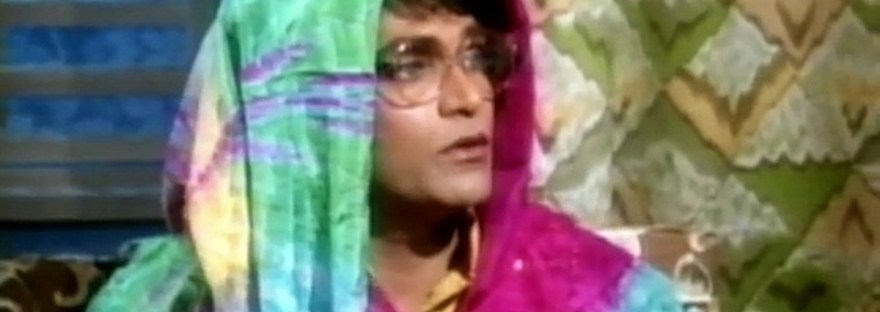
A review on Pakistani telefilm, Rozi (1990). The telefilm is directed by Sahira Kazmi and stars the legendary Moin Akhtar in one of his most iconic roles of his career. Rozi is an Urdu adaptation of Dustin Hoffman’s classic Tootsie (1982). Rozi is a ‘Tele Theater’ Production. 

+ Crew

  • Directed by Sahira Kazmi
  • Written by Imran Saleem
  • DOP by Aem Nawaz, Jameel Akhtar and Arif Saheel
  • Make up by Shamina Kaisar
  • Editing by Ahfaq Ahmed

+ Note

Before we proceed any further, let us first discuss the Elephant in the room. Rozi is now cited as an “Urdu adaptation” of the Hollywood classic Tootsie (1982) starring Dustin Hoffman. But it has been clearly not credited anywhere in the End credits of the telefilm and I severely doubt if the producers took the permission from Columbia Pictures to adapt Tootsie into a Pakistani telefilm. As a reviewer and fan of the original film, it makes it harder for me to judge Rozi based on its own writing merit since every scene and dialogue has been directly lifted from the Hollywood classic. But for the sake of the review, I will judge the telefilm on its own achievements here on out and analyse what the Pakistani creative team managed to accomplish on its own. 

Apart from the controversy, Rozi was clearly a role tailor made for the talents that Moin Akhtar possessed and unsurprisingly, Rozi elevated Akhtar to stardom and proved to be one of his personal favorite roles of his career.

 + Main Cast

  1. Moin Akhtar as Haroon/Rozi
  2. Fazela Qazi as Nazia
  3. Akbar Subhani as Rashid
  4. Fariha Altaf as Sahana

+ Plot

Haroon (Moin Akhtar) is a down on his luck actor who is sick and tired of the Pakistani TV industry and its lack of originality. Therefore, Haroon disguises himself as a woman Rozi in order to land a role in a major TV soap opera. Along the way, Haroon falls in love with Nazia (Fazela Qazi) and realizes what difficulties a woman has to face in the world of Television.

+ High Points

i – As far as adaptations go, Rozi has very seamlessly been adapted from an American setting into Pakistani culture and Urdu dialogue by Imran Saleem. 

ii – There was arguably no one in Pakistani Industry at the time who could have played the role of Rozi other than the legendary Moin Akhtar. Since the character within the story is a disguise, Moin Akhtar had the monumental task of playing two fictional characters within one narrative; Haroon and Rozi and its safe to say that Akhtar played it off with such flair and tenacity that leaves viewer not only charmed by his performance but are right alongside him throughout the narrative. Rozi might arguably be the pinnacle of Moin Akthar’s career in Television. 

iii – Speaking of role models, Rozi speaks to many female actors how hard it is for them to be recognized for their talent and not brushed aside once they reach a certain age. Although the character of Rozi is fictional, her plight for self-respect and recognition is very much real. And just for that, this telefilm was incredibly groundbreaking in Pakistan for its time.

iv – Rozi is full of excellent performances. And although Moin Akthar undoubtedly takes the center stage, Fariha Altaf as Sahana is clearly the highlight of the film. Her desperation and anger plays hilariously to the comedy of errors that Haroon has concocted in order to salvage his acting career. Whenever these two were on screen together, you know there will be laugh out loud moments.

v – Comedy is all about timing. And Rozi nails it with such impeccable precision that even after 30 years, Imran Saleem’s writing has still lost none of its charm. 

vi – The makeup of Rozi is not the most believable out there but honestly, it never needed to be. The wig, fake eyelashes, lip stick work are sufficient enough to make the viewer buy into the fact that most characters would not be able to recognize Haroon in disguise. And I am completely onboard with some ‘suspension of disbelief’ in order to enjoy the story.

vii – The scenes between Rozi and Nazia’s father are hilarious and they play fantastically off one another.

viii – The ending of Rozi will leave a warm, fuzzy feeling inside you long after you are done watching it. It’s the perfect ending you could have to the story.

 + Low Points

i – Rozi consists of such a talented team of writers, actors, producers which makes it so frustrating to see that they “adapted” every scene, every dialogue from the film Tootsie. With all this effort, why could they have not just taken the premise of Tootsie and wrote original scenes and situational comedy around it? If you have already seen the Hollywood film, It is so utterly frustrating to know what is going to come next. In Urdu, one says:

“Nakal ke liye Akaal ki bhi zaroorat parhti hai!”

(To plagiarize, one still needs the smarts to pull it off!)

But why not just use the “smarts” to write something original instead?   

ii – The telefilm sadly feels incredibly low budget and cheap. The set design looks exceptionally dull and uninspiring. It’s obvious that absolutely no location scouting was done prior to the production of the telefilm. The team just arrived on location and had to shoot X number of scenes for the day. This approach unfortunately does no favours to all the hard work that the actors put into each scene.

iii – Director of Photography is pretty much non-existent. There is absolutely no skill involved. The lack of proper framing a shot, not bothering to set proper light exposure, the camera moves arbitrarily as it please, regardless if the scene requires it or not; the only successful task they managed to accomplish was press the ‘rec’ button on the camera.

iv – The production quality (for lack of a better word) sucks. Visually, the telefilm is hideous (and I’m not talking about the VHS quality of it which is currently uploaded online). I know I should go easy on it since it’s 30 years old but Tele dramas before Rozi have accomplished so much more so there clearly is no excuse for it.

v – The editing is god awful. The telefilm (or tele theater) has two minds whether to edit it like a theater play or a telefilm. And it fails on both aspects. It’s lethargic and sometimes lingers far too long on one shot. Did the editor fall asleep while working mid scene? 

+ Overall

Even after 30 years, Rozi is fondly remembered due to its stellar performances and comedic writing but the lack of proper production makes it at times hard to watch. But just for Moin Akthar’s iconic performance alone, Rozi is worth a go.

 Rate: 3.0 out of 5 stars

TV series

Mr. Khan’s Review on Raqeeb Se – Episode VIII (2021)

A review on Pakistani drama TV series, Raqeeb Se – Episode 8 (2021). The new TV series is directed by Kashif Nisar and is a production of Momina Duraid Productions. Raqeeb Se is a HUM TV Production.

(Note: If you’ve already read the review of the previous episode, you can skip directly ahead to the High points section).

+ Crew

  • Directed by Kashif Nisar
  • Written by Beegul
  • DOP by Hassam Mairaj
  • Music Composed by Hadiqa Kiani
  • Produced by Momina Duraid Productions

+ Note

Raqeeb Se is the newest HUM TV Production and is once again the collaboration of the award winning Writer/ Director duo of Bee Gul and Kashif Nisar. 

The title of the show is heavily inspired by a poem from the legendary poet Faiz Ahmed Faiz when the young poet fell in love with a girl next door in Sialkot. But alas, as luck would have it, she one day unexpectedly left the city, only to be reunited years later when Faiz was already an established poet in the circles of Urdu literature. This encounter inspired Faiz to write a poem “Raqib Se!”. The backstory of this poem plays a crucial role in the premise of the show.

 + Main Cast

  1. Hadiqa Kiani as Sakina
  2. Noman Ijaz as Maqsood
  3. Sania Saeed as Hajra
  4. Faryal Mehmood as Insha
  5. Iqra Aziz as Ameera
  6. Saqib Sameer as Rafiq

+ Plot

Raqeeb Se is a call of Maqsood’s dark past that could potentially destroy his present life. In order to escape her abusive husband, Sakina, along with her daughter Ameera, flees from her village to find shelter at her former lover’s place, Maqsood. Unfortunately Maqsood, who still holds a grudge against Sakina’s past actions, refuses to aid her in her most dire situation. But his wife, Hajra, seems much more sympathetic to the situation and lets Sakina stay at their home till things are figured out for the future.

But can Sakina be trusted to stay out of Maqsood’s life or will they be tempted to rekindle their lost love and in the process, destroy what Maqsood and his wife Hajra have built together?

+ High Points

i – Whenever Sabiq Sameer and Saba Faisal are part of an episode, that is where Raqeeb Se shines the most. Their performances and characters are compelling enough to keep you interested throughout the episode. Salman Shahid’s introduction in the past few episodes is also a great addition to lower the monotony of the four main core characters.

ii – Episode 8 might be the first time that Abdul showed some depth in his characterization. His inability to find a decent, secure job makes him uncomfortable in front of his lover and brings some inferiority complex into the mix. Great! This actually gives a purpose of sorts why the viewer should be interested in the development of their relationship. More of this please!

iii – The tension and banter between Maqsood and Rafiq is always fun to watch. Noman Ijaz and Saqib Sameer always have great onscreen chemistry together and their performances show that they are having fun playing their respective roles.

iv – When it comes to production, Raqeeb Se is one of the best looking TV dramas in Pakistan. The cinematography, lighting, editing (with exception to music selection) are all brilliant. What is commendable about the show is that even with minimal plot progression, the visuals command the audience to continue watching the show. 

v – The dynamics between Maqsood and his estranged elder Brother is intriguing and would love to see where it develops by the end of the show. The car scene near the end of the episode was a clear reminder that Raqeeb Se can have great writing and excellent conflicts whenever it needs to. 

 + Low Points

i – Raqeeb Se is primarily a show centered around its five main protagonists and its takes its time with its plot progression. Which is all great but you need sharp writing in order to pull this off. And unfortunately, this show does not accomplish that. The characters are not compelling enough to rely solely on them and therefore, suffers from repetitive scenarios and plot stagnation. 

ii – Even though Hadiqa Kiani has mostly been great throughout the show, Episode 8 was not her best outing to date. Her character Sakina has slowly become a one note character, crying and complaining about leaving back to her village, never should’ve set foot at Maqsood sahib’s door etc. Due to repetitive writing and lack of developing character arcs, Hadiqa Kiani’s acting chops are also proving to be monotonous, one note dialogues. Please give her something else to do. I’m sure Hadiqa Kiani is more than up for the task of showing a different range of emotions!

iii – Faryal Mehmood and Hamza Sohail still remain the two sore spots of the show as their performances are significantly lesser in quality compared to the other leads of the show like Noman Ijaz, Sania Saeed, Saqib Sameer  or even Iqra Aziz. But they are not the ones at fault here. They both feel uncomfortable whenever they are sprouting out their dialogues which clearly shows that the director Kashif Nisar is not guiding them enough with their performances. 

Iv– Even if Episode 8 was a slight improvement from the previous one, the show still lacks stakes and has major pacing issues. And with lack of plot progression from episode to episode, the characters are not interesting enough to hold the viewer’s interest on their own. And sadly, I don’t see any new developments in the near future.

+ Overall

Episode 8 showed some signs of improvement but the core pacing issue of the show is still a major factor for me to further recommend this show. Raqeeb Se is far from engaging television but at least it’s great to have something in the background if you have some free time on your hands.

 Rate: 2.75 out of 5 stars

TV series

Mr. Khan’s Review on WandaVision (Ep VII-IX) – Series Finale! (2021)

A review on American Television miniseries, WandaVision ep VII- IX (2021) which marks the finale of the show. The mini-series is directed by Matt Shakman and stars Elizabeth Olsen as Wanda and Paul Bettany as Vision. The show is a continuation of the saga from the Marvel Cinematic Universe and is a Disney Plus Original series.

(Note: If you’ve already read the review of the previous episodes, you can skip directly ahead to the High points section).

+ Crew

  • Directed by Matt Shakman
  • Cinematography by Jess Hall
  • Music by Christophe Beck
  • Produced by Chuck Hayward
  • Created by Jac Schaeffer
  • Production by Marvel Studios
  • Distributed by Disney Platform Distribution 

+ Note

WandaVision is continuation of the Marvel Cinematic Universe (Phase 4) where we get to explore more the relationship between the two popular Marvel characters; Scarlet Witch and Vision. The series is cleverly disguised as an American vintage sitcom with multi camera shots and canned Laughter from the audience in a (supposedly) TV Studio. WandaVision is clearly inspired from 50s-60s sitcoms like ‘I Love Lucy’, ‘Bewitched’ and later in color, ‘The Brady Bunch’, where situational comedy plays a key role to the show.

+ Main Cast

  1. Elizabeth Olsen as Wanda Maximoff / Scarlet Witch
  2. Paul Bettany as Vision
  3. Debra Jo Rupp as Mrs. Hart
  4. Fred Melamed as Arthur Hart
  5. Kathryn Hahn as Agnes
  6. Teyonah Parris as Monica Rambeau
  7. Kat Dennings as Darcy Lewis
  8. Randall Park as Jimmy Woo

+ Plot

WandaVision starts off in 1950s suburban America. A husband and a loving wife have just moved in the neighborhood and get along with their neighbors quite well. But unbeknownst to the neighbourhood, they are no ordinary couple. In fact, they are the famous Avengers; Scarlet Witch and Vision who hide their super powers in order to live a happy, wholesome life. But something doesn’t seem right about this scenario. It’s almost too… perfect? How did present day Avengers end up in decades old American TV sitcoms? Where or how did they enter this delightful comedy of errors? What is exactly wrong with WandaVision?

+ High Points

SPOILER ALERT!: (From here on out, there will be spoilers for the show as it is impossible to discuss the plot points without spoiling anything. If you still haven’t seen the show and would like to see it, you can skip directly to Overall section below).

i – So the last three episodes of the show have all been about ‘Revelations’. Agnes, the nosy neighbor from the previous episodes, is the master manipulator Agatha Harkness who played the puppet master of sorts behind the curtain. Kathryn Hahn’s heel turn has been magnificently handled by the actress and was fully aware of the fine balance between campy and solemnity when necessary. Although it was far from perfect, Agnes serves great and memorable as Scarlet Witch’s formidable adversary in the series finale (and the catchy jingle at the end of episode 7 was just the icing on the cake!).

ii – Episode 8 “Previously On” was the best episode in the series. The emotional journey of what Wanda had to go through to become what she is now, was brilliantly handled and executed. It is indeed tragic to see in the past few MCU movies, how Wanda slowly lost everyone she ever cared for; her brother Pietro Maximoff (aka Quicksilver) to Vision’s sacrifice in Avengers: Infinity War (2018). The scene when Wanda has to witness the autopsy/ dismemberment of Vision’s body was gut wrenching and one could easily forget that WandaVision is supposed to be a mere superhero show. The question was set up in the first episode; why or what is WandaVision? And the answer has been well delivered. Kudos to the writing of the show.

iii – Although very short lived, the dynamics of Wanda’s family; her husband Vision and her twin sons, was fantastic. The actors work great off one another and bring a much needed warmth and empathy to the show.

iv – The newly designed costume of Scarlet Witch is slick but also does not deviate too far from its source material. The leathery, muted red can work very well on the silver screen.

v – Once again, I have to praise the lead actors of WandaVision. They were incredibly well rehearsed with the script, delivered with such impeccable precision and skill that quite frankly, is hard to pull off. WandaVision was comedic and dramatic whenever it needed to be and none of this would have been possible if not for Elizabeth Olsen and Paul Bettany’s outstanding onscreen chemistry together. WandaVision is essentially a tragic love story between a Witch and an A.I. And as silly as it sounds, the lead actors managed to make it not only believable but relatable at the same time.

vi – While in the previous episodes, the scenes involving the S.W.O.R.D. were the more ‘boring’ aspects of the show, the last three episodes manage to make them more essential and interesting for the developing plot so that the center conflict of the show could flourish. As the show went on, the characters of Jimmy Woo and Rambeau became more central and integral to the plot and with good writing, became much more fleshed out as the show reached its climax.

vii – Even with the greenscreen fight scene at the end, the Special Effects were brilliant throughout the show and never faltered at any point. 

viii – After reaching its conclusion, one can mention countless assets to credit WandaVision’s success but none can be more important than the writing itself. Jac Schaeffer and co. really knocked this one out of the park and while the finale did turn out to be just another epic MCU battle in the sky (more on that in the Low Points section), the writing was consistent in quality throughout its nine episodes. And it cannot be emphasized enough how integral the writing was to WandaVision’s success.

ix – The emotional send off from Wanda to her family was tragic but beautifully handled. After 9 Episodes, the show gave enough time and space to understand Wanda’s actions and her motivations. The loss of her loved one and her wish to have a family became a distant dream. The show meticulously handles Wanda’s character arc, the crescendo and the finale of it. Where will Wanda go from here? That is a question MCU fans will be eagerly looking forward to. 

+ Low Points

i – With all that was great about the show, the finale was a disappointment of sorts. Instead of a clever and unique way to resolve the conflict, the producers felt the necessity to end this in the most generic fashion they could think of. Wanda battles Harkness in the red greenscreened sky, shooting magic lasers out of their hands. Yawn. The show really lost its luster during the fight and will leave viewers and fans disappointed with lack of creativity. Come on, Jac Schaeffer. I’m sure your team could have come up with something more inventive than that…

ii – It was also a disappointment that Evan Peters’ introduction as Quicksilver in the MCU was used as a punchline for a lackluster joke. Why? Evan Peters was fantastic as Quicksilver and a major asset to the franchise. Why throw it all away? A baffling decision really. 

iii –  So the two Visions have a go at one another, they talk and for some reason, the reprogramed ‘white’ Vision just gets up and leaves? Were the writers really clueless what to do with him? I understand they will introduce him later on sometime in MCU but this whole conflict turned out to be pretty forgettable at the end.

iv – By taking the whole town of Westview hostage, Wanda was psychologically torturing the citizens of the town. In the end, Wanda does the right thing and gives up on her fantasy life to release the Westview citizens of torment but are there no repercussions to Wanda’s actions? Is the S.W.O.R.D.  just going to let Wanda walk away from all this? Although it is understandable that the anguish Wanda had to endure after losing her loved ones but for Wanda to just walk away from all this scott free….it just feels wrong.

+ Overall

WandaVision is a show of many accomplishments. Not only was it engaging television but it proved that even with the current pandemic, Marvel Cinematic Universe can still flourish as a miniseries on the streaming platform Disney Plus. The finale was an unfortunate and predictable letdown but nonetheless, the show was still a triumph and a brilliant in depth look into the psyche and relationship of Wanda and Vision. 

The 9 episode mini-series is now complete and available on Disney Plus.

Rate (Ep VII – IX): 3.5 out of 5 stars

Rate (WandaVision): 4.0 out of 5 stars

TV series

Mr. Khan’s Review on Raqeeb Se – Episode VII (2021)

A review on Pakistani drama TV series, Raqeeb Se – Episode 7 (2021). The new TV series is directed by Kashif Nisar and is a production of Momina Duraid Productions. Raqeeb Se is a HUM TV Production.

(Note: If you’ve already read the review of the previous episode, you can skip directly ahead to the High points section).

+ Crew

  • Directed by Kashif Nisar
  • Written by Beegul
  • DOP by Hassam Mairaj
  • Music Composed by Hadiqa Kiani
  • Produced by Momina Duraid Productions

+ Note

Raqeeb Se is the newest HUM TV Production and is once again the collaboration of the award winning Writer/ Director duo of Bee Gul and Kashif Nisar. 

The title of the show is heavily inspired by a poem from the legendary poet Faiz Ahmed Faiz when the young poet fell in love with a girl next door in Sialkot. But alas, as luck would have it, she one day unexpectedly left the city, only to be reunited years later when Faiz was already an established poet in the circles of Urdu literature. This encounter inspired Faiz to write a poem “Raqib Se!”. The backstory of this poem plays a crucial role in the premise of the show.

 + Main Cast

  1. Hadiqa Kiani as Sakina
  2. Noman Ijaz as Maqsood
  3. Sania Saeed as Hajra
  4. Faryal Mehmood as Insha
  5. Iqra Aziz as Ameera
  6. Saqib Sameer as Rafiq

+ Plot

Raqeeb Se is a call of Maqsood’s dark past that could potentially destroy his present life. In order to escape her abusive husband, Sakina, along with her daughter Ameera, flees from her village to find shelter at her former lover’s place, Maqsood. Unfortunately Maqsood, who still holds a grudge against Sakina’s past actions, refuses to aid her in her most dire situation. But his wife, Hajra, seems much more sympathetic to the situation and lets Sakina stay at their home till things are figured out for the future.

But can Sakina be trusted to stay out of Maqsood’s life or will they be tempted to rekindle their lost love and in the process, destroy what Maqsood and his wife Hajra have built together?

+ High Points

i – Regardless of the problems with writing and plot development, what Raqeeb Se has been consistently good with is its presentation. The Director of Photography Hassam Mairaj’s work has been great throughout the show. And the praise should also be upheld for the entire crew behind the camera. 

ii – Saba Faisal’s performance as the sassy, uptight Punjabi lady is outstanding. Since her introduction, she is magnetic in every scene she is a part of and brings a much needed flair to the show.

iii – Even though nothing much happens in Episode 7, the interaction between characters with conflicting personalities was interesting enough for the episode to breeze through.

iv – The short biryani scene between Insha and her lover was a nice touch and visually depicted that even with so much uncertainty surrounding their secure future, they still love each other enough to just simply enjoy the finer moments in Life.

 + Low Points

i – Like watching paint dry…”. This perfectly sums up Raqeeb Se’s plot development since its premiere on Hum TV. Episode 7 yet again adds nothing to the overall plot development of the show. It’s characteristically tedious and lingers far too long on its premise than it has any right to. And the worst part is, Raqeeb Se has such a stellar cast and creative team but nothing engaging to offer to its viewers. It’s been quite a letdown up till now.

ii – It has to be mentioned that Insha’s interaction with her parents is extremely cold and alien at times. There seems to be a total loss of love and affection that one has for her parents. She even sometimes refers to her father as “Maqsood sahib”. Even with the backstory of Maqsood that we know now, her actions are not justifiable. Is there any other reasoning behind all this that has currently not been revealed?

iii – Hajra is unconvincingly depicted as extremely naive and quite frankly, ridiculous at times. She has mentioned a couple of times how Maqsood has done so much for her but why is Hajra so eager to keep Sakina at their place when ultimately, it’s clear that this will bring nothing but trouble to her marriage? The writing of the show is very vague and inconsistent on this issue and it’s getting really hard and frustrating for the viewer to sympathise with Hajra anymore.

+ Overall

Although Episode 7 was interesting enough through its compelling characters, the consistent plot development is still severely lacking in order to make the viewer look forward every week to watch the show. But with the recent cliffhanger of Episode 7, can Raqeeb Se make a comeback?

 Rate: 2.75 out of 5 stars

Feature Length Films

Mr. Khan’s Review on His House (2020)

A review on British Horror feature length film, His House (2020). The film is the directorial debut by Remi Weekes who is most commonly known for working as a Film Editor in the Industry. The film is co-produced by BBC Films and after premiering at the Sundance Film Festival 2020, His House was acquired by Netflix for distribution.

+ Crew I

  • Directed by Remi Weekes
  • Cinematography by Jo Willems
  • Screenplay by Remi Weekes
  • Edited by Julia Bloch
  • Music by Roque Banos
  • Produced by Aidan Elliott, Martin Gentles, Arnon Milchan, Ed King and Roy Lee

+ Crew II (Production Houses)

  • Regency Enterprises
  • BBC Films
  • Vertigo Entertainment
  • Starchild Pictures

+ Note

His House is an independent British film by Remi Weekes and it is a tale of countless horror experiences that refugees have to face in order to enter their “promised land”. Although His House is essentially a horror film, Weekes indulges further into what it’s like adjusting in a foreign country, facing racism on a semi-regular basis while maintaining the phrase “But we’re one of the good ones…”. The allocated house is a complete dump, there are countless holes in the walls but that is only where the nightmares are about to begin. The film emphasizes themes like traumatic pasts which the director cleverly converts into visual memories, curses and undying spirits coming back to haunt you.

+ Main Cast

  1. Wunmi Mosaku as Rial
  2. Sope Dirisu as Bol
  3. Matt Smith as Mark
  4. Javier Botet and Cornell John as The Witches
  5. Emily Taaffe as Dr. Hayes
  6. Malaika Abigaba as Nyagak

+ Plot

A refugee couple from South Sudan escape their terrorized village in order to seek asylum in Great Britain. Upon receiving their newly allocated home, they realize that the nightmares that the couple left behind have only been lurking deep within their own psyche.

+ High Points

i – What’s always great about Independent films and debut directors is that they are fearless with their art. They have a clear vision and they are not afraid to pull any punches toward making you as a viewer squirm in the comfort of your home. His House is masterful storytelling. The delicate blend of horror and drama brings the poignant premise out on the forefront. And Weekes directorial debut shows a lot of promise and conviction in his art.

ii – Since the film is a chamber play for the most part, the two leads (Mosaku and Dirisu) are superb throughout the film. Their chemistry is what makes this film so utterly convincing and heartbreaking. Although I was never a refugee nor did I have to endure the pain that the two characters went through, I do know what it’s like to adjust in a foregin land, trying to please people, make them believe that you are “the good one”. Weekes’ screenwriting hits its mark with such persuasion and tenacity. 

iii – The horror of the film is timed and executed with perfection. His House relies heavily on the “drama” aspect of the premise which was undoubtedly the right decision for this subject matter. Visuals are meaningless if they do not provoke any emotion into you. The film knows that very well which is why it stands tall above any other low budget horror film out there.

iv – The visual effects are (for the most part) surprisingly convincing and do not ever overstay their welcome. Most of the CGI masked characters are in the shadows which is always a clever way to disguise the film’s lack of budget.

v – The dinner table scene is exceptional with its pacing and visuals. This one scene alone can encapsulate the sense of dread and solitude the film entails within its masterful storytelling.

vi – The Soundtrack of the film (by Roque Banos) is beautiful and haunting. With its synthesized and minimal instrumentals, the music will linger within your mind long after you are done watching the movie.

+ Low Points

i – As mentioned, His House has great visual effects for an Independent film but there are some sore spots here and there, mainly the zombie-like figures. They look great in short bursts but if revealed for too long, one can begin to see the cracks.

ii – The third act is slightly lacking in what the first two accomplished. The visual composite of “Fear” at the end was a slightly underwhelming conclusion to a gem of a film.

+ Overall

A haunting, excellent tale on Humanity, His House is the perfect example of why we always need to encourage and promote Independent filmmakers and their abundant creativity that comes with it. This film deserves to be seen by the mainstream audience.

Rate: 4.5 out of 5 stars