TV series

Mr. Khan’s Review on Raqeeb Se – Episode XXII (2021)

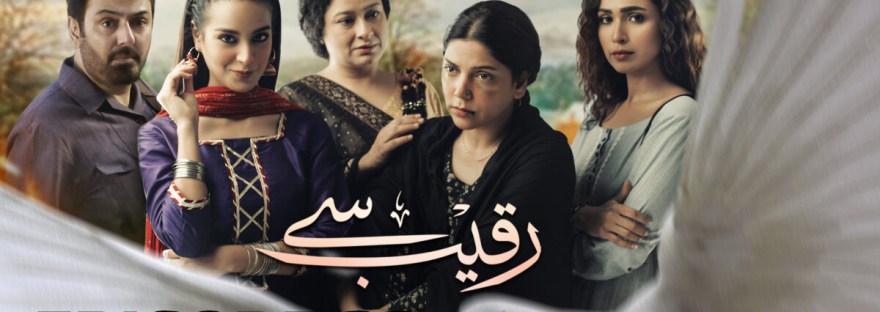
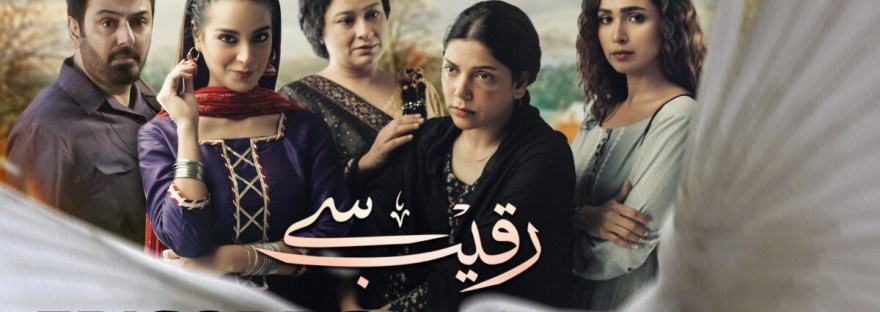
A review on Pakistani drama TV series, Raqeeb Se – Episode 22 (2021). The new TV series is directed by Kashif Nisar and is a production of Momina Duraid Productions. Raqeeb Se is a HUM TV Production.

(Note: If you’ve already read the review of the previous episode, you can skip directly ahead to the High points section).

+ Crew

  • Directed by Kashif Nisar
  • Written by Beegul
  • DOP by Hassam Mairaj
  • Music Composed by Hadiqa Kiani
  • Produced by Momina Duraid Productions

+ Note

Raqeeb Se is the newest HUM TV Production and is once again the collaboration of the award winning Writer/ Director duo of Bee Gul and Kashif Nisar. 

The title of the show is heavily inspired by a poem from the legendary poet Faiz Ahmed Faiz when the young poet fell in love with a girl next door in Sialkot. But alas, as luck would have it, she one day unexpectedly left the city, only to be reunited years later when Faiz was already an established poet in the circles of Urdu literature. This encounter inspired Faiz to write a poem “Raqib Se!”. The backstory of this poem plays a crucial role in the premise of the show.

 + Main Cast

  1. Hadiqa Kiani as Sakina
  2. Noman Ijaz as Maqsood
  3. Sania Saeed as Hajra
  4. Faryal Mehmood as Insha
  5. Iqra Aziz as Ameera
  6. Saqib Sameer as Rafiq

+ Plot

Raqeeb Se is a call of Maqsood’s dark past that could potentially destroy his present life. In order to escape her abusive husband, Sakina, along with her daughter Ameera, flees from her village to find shelter at her former lover’s place, Maqsood. Unfortunately Maqsood, who still holds a grudge against Sakina’s past actions, refuses to aid her in her most dire situation. But his wife, Hajra, seems much more sympathetic to the situation and lets Sakina stay at their home till things are figured out for the future.

But can Sakina be trusted to stay out of Maqsood’s life or will they be tempted to rekindle their lost love and in the process, destroy what Maqsood and his wife Hajra have built together?

+ High Points

i – As the show is reaching its conclusion, an abundance of sharp screenwriting, performances and set pieces are on display. Characters are confronted, lines have been drawn and revelations have been made. And it’s great to see that the whole cast is up to the task.

ii – Episode 22 is probably the first in the show that Insha really gets the limelight. A lot of the episode was centered around her, she gets to confront the truth and perhaps once and for all, come to terms with it. I have criticized Faryal Mehmood’s performance during dramatic scenes in the past but I’m glad to say that she was more than up for the task when it really counted.  

iii – Insha’s journey from a naive, impressionable girl to a mature woman was very awe-inspiring. A lot of credit should go to the writing of Beegul and performance of Iqra Aziz as both aspects were brilliantly realized onscreen. The scene between Ameera and Hajira was modest and restrained but was nonetheless impactful (and quite possibly, my favourite scene of the episode).

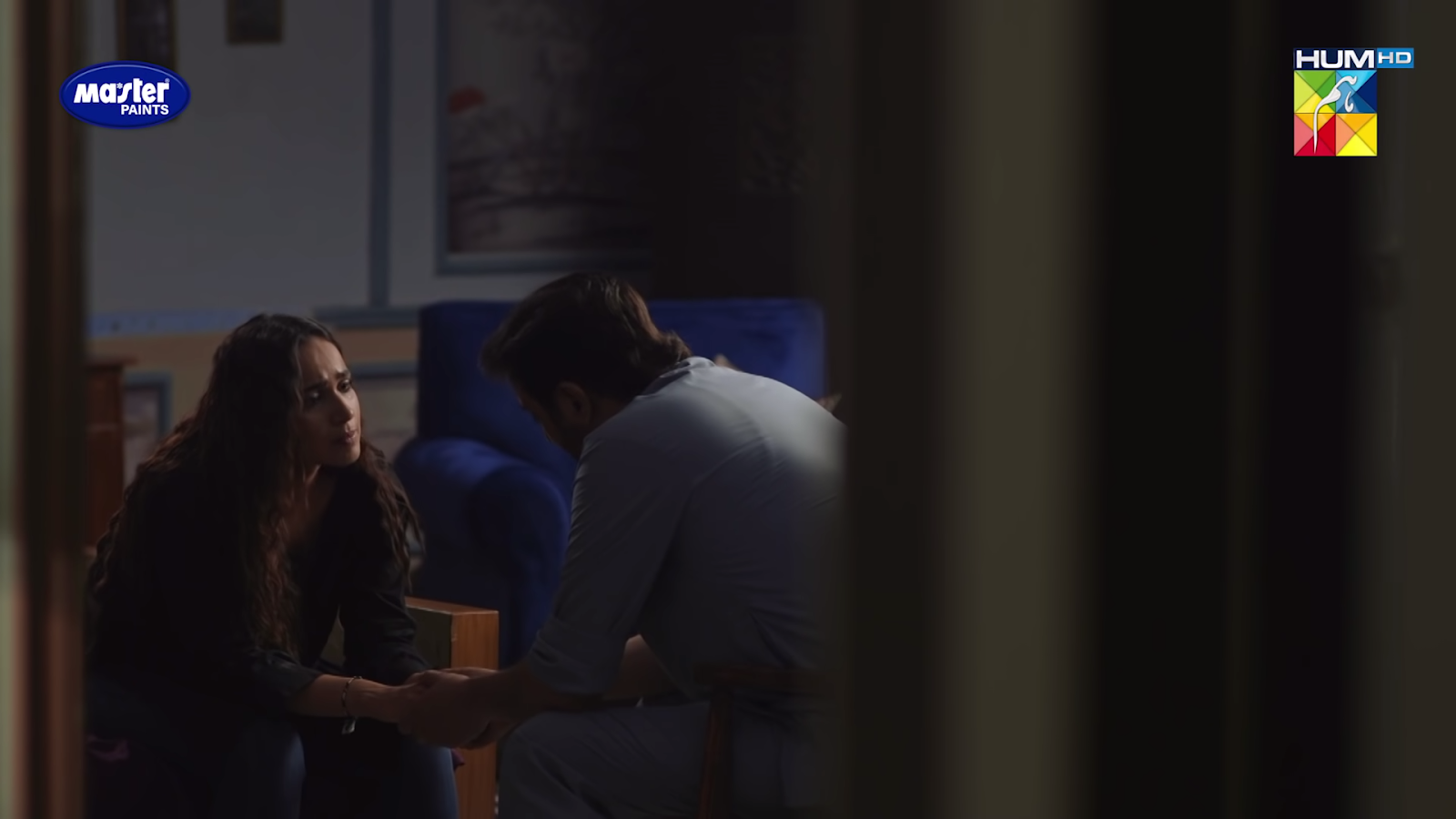
iv – Once again, the cinematography was outstanding for this episode. I am always of the belief that a picture does tell a thousand tales and Raqeeb Se is excellent in depicting visual stories. Just take this framing as an example here:

Framing through the open door, characters engulfed into their surroundings, Insha’s face exposed, it gives the audience a sense of illusion that (perhaps) we are the ones eavesdropping into their private conversation. This kind of visual artistry is sadly missing from a lot of Pakistani TV shows but Raqeeb Se has always been pretty much consistent with its production quality. 

v – MAJOR SPOILER ALERT COMING UP!!! (If you would like to avoid it, please skip to Overall section)

So a lot of fan speculation and theories were proven true, Insha is, indeed, not the daughter of Maqsood. And this is a revelation that truly pays off. Why? Because they did set up this twist throughout the series and slowly built it up to its crescendo. So when it is finally revealed, it feels earned. Of course, it could be argued that it was perhaps a tad bit too obvious as many viewers already speculated it but sometimes, predictability is not detrimental to the show. The plot twist works fine to the context of the story. Although I do have another issue to this revelation but I’ll get to that in the low points section.

 + Low Points

i – Even though the revelation of Insha was great, I am completely perplexed why the creators decided to reveal it at the BEGINNING of the episode?? Guys, this is TV episodic writing 101! Make an earth shattering revelation at the END of the last episode so that the viewers would tune in for the next episode for more clarification. Right now, it feels like the show just wanted to get it over with and the payoff could’ve been utilized a lot more than it should have.

ii – The end of the road for Insha and Abdul’s short lived marriage. Where Insha’s revelation worked, this plot element, for me, just fails to live up to its expectations. From what was built up about Abdul’s character till now, I cannot imagine him having the cunningness to manipulate someone he loves without Insha realizing it. It was never even well hinted at and comes completely out of left field. If the divorce angle was really necessary, the reason could have been the obvious one that Insha was just sick and tired of playing “mama” to Abdul’s manchild personality. In this very episode, Insha does confess that fact to her cousin Kashif and that reason alone could have been more believable as compared to Abdul playing her to his future endeavours. Unlike Insha’s, this plot twist doesn’t work at all because it was never well set up to begin with. The show needed the marriage to end and here we are. 

iii – Also Rafiq Ali’s emotional scene with Sakina was a total bust. There is already too much going on in this episode and by the time we get to Rafiq Ali’s emotional outburst, the audience is completely drained out. You can’t expect that in one hour runtime, the audience should empathize with Insha’s secret upbringing, Ameera’s realization of her naivety towards life, the falling apart of the marriage between Insha and Abdul, the unsolved future between Maqsood, Sakina and Hajira and now, we are suppose to care for Rafiq Ali? It’s already an uphill task to empathize with him since he is a wife beater and the scene between him and Sakina doesn’t work in this episode. I hope that’s the last we see of him as his character arc should be done and dusted by now.

+ Overall

With a major plot revelation and confrontations, Raqeeb Se is full steam ahead to its grand finale! 

 Rate: 3.25 out of 5 stars

TV series

Mr. Khan’s Review on Raqeeb Se – Episode XXI (2021)

A review on Pakistani drama TV series, Raqeeb Se – Episode 21 (2021). The new TV series is directed by Kashif Nisar and is a production of Momina Duraid Productions. Raqeeb Se is a HUM TV Production.

(Note: If you’ve already read the review of the previous episode, you can skip directly ahead to the High points section).

+ Crew

  • Directed by Kashif Nisar
  • Written by Beegul
  • DOP by Hassam Mairaj
  • Music Composed by Hadiqa Kiani
  • Produced by Momina Duraid Productions

+ Note

Raqeeb Se is the newest HUM TV Production and is once again the collaboration of the award winning Writer/ Director duo of Bee Gul and Kashif Nisar. 

The title of the show is heavily inspired by a poem from the legendary poet Faiz Ahmed Faiz when the young poet fell in love with a girl next door in Sialkot. But alas, as luck would have it, she one day unexpectedly left the city, only to be reunited years later when Faiz was already an established poet in the circles of Urdu literature. This encounter inspired Faiz to write a poem “Raqib Se!”. The backstory of this poem plays a crucial role in the premise of the show.

 + Main Cast

  1. Hadiqa Kiani as Sakina
  2. Noman Ijaz as Maqsood
  3. Sania Saeed as Hajra
  4. Faryal Mehmood as Insha
  5. Iqra Aziz as Ameera
  6. Saqib Sameer as Rafiq

+ Plot

Raqeeb Se is a call of Maqsood’s dark past that could potentially destroy his present life. In order to escape her abusive husband, Sakina, along with her daughter Ameera, flees from her village to find shelter at her former lover’s place, Maqsood. Unfortunately Maqsood, who still holds a grudge against Sakina’s past actions, refuses to aid her in her most dire situation. But his wife, Hajra, seems much more sympathetic to the situation and lets Sakina stay at their home till things are figured out for the future.

But can Sakina be trusted to stay out of Maqsood’s life or will they be tempted to rekindle their lost love and in the process, destroy what Maqsood and his wife Hajra have built together?

+ High Points

i – Episode 21 was eventful to say the least. Lots of emotional set pieces and confrontations. Good character building moments and high tension all around as the narrative is reaching its overarching and inevitable conclusion to the Maqsood/ Sakina saga.

ii – Iqra Aziz was particularly good in this episode. Her subtle gestures and dialogue delivery shows how much she has developed since the introduction to her character in the show. The events that take place in this episode also brings a certain epiphany to her character and matures her mindset as Ameera reaches adulthood.

iii – The “Talk” that Maqsood has with Ameera was brilliantly written and poignant to that moment. It’s exactly what it needed to be. The phrase “Stars can be admired from a distance but never touched upon” brings a lot of depth to the scene. It also signifies the amount of experience and pain Maqsood has and he genuinely wants Ameera to avoid the mistakes that Maqsood made in his youth.

iv – Even though Rafiq Ali is now out of the picture, it was a nice touch for writer Beegul to have Sakina reminiscent over him. He obviously was a terrible husband but sharing years of your life together does leave an impression on you. It was great piece of writing for Beegul to address that, giving some further depth to Sakina’s character.

v – The episode ends on a tense note and rightfully leaves the viewer eagerly awaiting for next week. 

 + Low Points

i – Even though the episode was significant to the narrative, there were way too many emotional set pieces crammed into a 1 hour mark. One can endure only a handful of sobbing scenes before becoming desensitized to it by the end of the episode.

ii – SPOILER ALERT!!! (If you would like to avoid it, please skip to Overall section).

So there were two massive turns of events in this episode. And unfortunately, both have not been handled particularly well for the audience to follow. So the first was Ameera’s attempted suicide. Arguably, there seems to be some scenes missing which should be vital before such a drastic step. Granted, Maqsood (in the previous episode or so) had a short talk with Ameera about her feelings for him but there was never a scene where Ameera felt hopeless or emotionally charged enough to take such a life threatening step. The scene before, Ameera is just (in her trance state) justifying her love for Maqsood and suddenly in the next, the whole family rushes to see her in a critical condition. Was it all leading up to Ameera attempting suicide? Perhaps but it needed a few more scenes (even an episode or so) to build upon. As if now, the whole turn of events feel rushed and not earned enough for the audience to be fully onboard with this.

iii – The whole Insha/ Abdul situation. It seems very out of character for both sides to act so impulsively in such circumstances. If what lies on the surface is accurate, it’s incredibly hard to imagine that Abdul would be capable of manipulating people to his advantage. It’s very hard to buy into all that. Insha, on the other hand, seems totally convinced of Abdul’s unfaithful behaviour and impulsively has decided to file for Khula (divorce). Is she being played by her father? Or her cousin Kashif? Perhaps that could be the case but her sudden life changing decisions seem out of character for her as she was always the most level headed of the main cast of the show. 

+ Overall

Episode 21 was eventful, dramatic and essential to the story of Raqeeb Se. Perhaps it went overboard in a few places and the emotional twists did not make complete sense but the episode was a breeze to watch.

 Rate: 3.0 out of 5 stars

Tele-Films

Mr. Khan’s Review on Teri Meri Kahani (2021)

A review on Pakistani telefilm Drama, Teri Meri Kahani (2021). The TV film is directed by Aehsun Talish and is written by Saima Akram Chaudhry. The telefilm stars Haroon Kadwani and Sehar Khan as leads while veterans such as Javed Sheikh, Bushra Ansari and Usman Peerzada serve as supporting cast. Teri Meri Kahani is a Geo TV exclusive and a 7th Sky Entertainment.

+ Crew

  • Directed by Aehsun Talish
  • Written by Saima Akram Chaudhry
  • Produced by Abdullah Kadwani & Asad Qureshi
  • Production House: 7th Sky Entertainment

+ Note

Teri Meri Kahani is a light hearted portrayal of young love. It is the modern Romeo and Juliet induced romantic comedy. With this telefilm, Geo TV gave two relatively newcomers, Haroon Kadwani and Sehar Khan to play the leading roles along with veteran actors as supporting cast. This project was handed to Aehsun Talish since he already has experience directing comedy such as the TV series Suno Chanda (2018) and also has received a nomination for the Lux Style Award for Best Director.

 + Main Cast

  1. Haroon Kadwani as Arman
  2. Sehar Khan as Zara
  3. Javed Sheikh as Zara’s father
  4. Bushra Ansari as Arman’s mother
  5. Usman Peerzada as Arman’s father

+ Plot

Teri Meri Kahani plays the oldest of love tales; Arman is the son of a wealthy businessman who takes life easy and finds his passion in sports & luxury cars. Zara, on the other hand, wants to succeed in Life and make her only surviving parent proud of her accomplishments. The two play pranks at one another which eventually leads to a comedic, romantic predicament. 

+ High Points

i – The only way I could see Teri Meri Kahani being “worth a watch” if you have it in the background and you’re busy during house chores on a lazy weekend. And this is the biggest praise I could give this hot garbage.

ii – The telefilm can be unintentionally hilarious at times during its dramatic moments. While the whole film is not consistent in this tone, parts of it can fall into the “it’s so bad, its enjoyable” category.

 + Low Points

i – Teri Meri Kahani is honestly the worst telefilm/ drama I’ve reviewed on this website. It’s bad in every conceivable way; the direction is horrid, the script looks like it was written by a computer bot on the pretenses of every cliché of a romantic comedy imaginable and the actors are obviously there just to collect their paychecks. There is absolutely nothing praiseworthy about this telefilm. Its badly acted, predictable nonsense that gives television a bad reputation.

ii – The “comedy” is pathetic. The only way that this telefilm made me chuckle was how terrible and desperate it really is. To top it off, none of the veteran actors could save this abomination. 

iii – SPOILER ALERT!!! If you would like to avoid it (I’m not sure why you would even bother), skip to the next point):

(This is how probably a conservation with the creative team go regarding the plot and conclusion of this telefilm):

xxxx

Audience: Why did the protagonists fall in love with each other? They have absolutely nothing in common. Did just playing abhorrent pranks on each other somehow equals love?

Geo TV: Um…why not?

Audience: Wait, why is there a conflict all of a sudden? Why didn’t Zara’s father just ask Zara what she really thinks of Arman before having an anger fit in front of his most trusted friend? 

Geo TV: Does it matter? Oh look, Javed Sheikh is in the hospital now.

Audience: Huh? He faked his own heart attack?? And Arman’s dad was also into this? How does this all make sense? Why was this necessary?

Geo TV: Oh look, the telefilm ended. Thanks for dropping by.

xxxx

In short, conflicts are forced, resolutions are swift just as the telefilm is about to end, nothing makes sense in this world…

iv – There is absolutely no perception of the director Aehsun Talish leading his actors through each scene. It seems like the crew had probably incredibly limited days of shoot and each scene has the exact same flow, regardless of how lighthearted or essential that scene is to the narrative. It’s obviously terrible writing but even worse how minimal effort you find from the director and crew themselves.

v – If you ever want to see money being burnt on screen well, there you have it folks! It is fascinating that with all the budget, luxury mansions, lavish gardens you see on your TV screens, the telefilm still somehow looks incredibly cheap. Perhaps it lacks the talent or artistry that you need to make good Set designs or even just a sense of what visually looks good on screen and what looks tacky. And no money on earth can buy you that kind of talent.

vi – Bushra Ansari’s character is apparently an addict to Pakistani dramas but not any other dramas… no, no….only Geo TV dramas of course! Did that play any role or quirk to her character? Nope. Just a cheap, pathetic way for Geo TV to promote their content onto the viewers.

vii – I can’t fault the young talent for being part of this telefilm as they have a massive opportunity to be the leads of a telefilm but the veterans? Don’t they have any sense of moral integrity? I was embarrassed just to see them being actively part of this monstrosity. How they didn’t feel uncomfortable to be part of this project is beyond me.

viii – The sound editing/ mixing is one of the worst offenders of this telefilm. Each emotion has to be spoon fed to the audience because the creatives behind this project have zero confidence in their skills to convey emotions on screen with skilful dialogue and meaningful performances.

+ Overall

Teri Meri Kahani is devoid of any sort of originality. Its writing is terrible, acting is insanely exaggerated, it’s arguably one of the worst Pakistani telefilms I’ve ever seen. Avoid it like the plague.

Rate: 0.5 out of 5 stars

TV series

Mr. Khan’s Review on Raqeeb Se – Episode XX (2021)

A review on Pakistani drama TV series, Raqeeb Se – Episode 20 (2021). The new TV series is directed by Kashif Nisar and is a production of Momina Duraid Productions. Raqeeb Se is a HUM TV Production.

(Note: If you’ve already read the review of the previous episode, you can skip directly ahead to the High points section).

+ Crew

  • Directed by Kashif Nisar
  • Written by Beegul
  • DOP by Hassam Mairaj
  • Music Composed by Hadiqa Kiani
  • Produced by Momina Duraid Productions

+ Note

Raqeeb Se is the newest HUM TV Production and is once again the collaboration of the award winning Writer/ Director duo of Bee Gul and Kashif Nisar. 

The title of the show is heavily inspired by a poem from the legendary poet Faiz Ahmed Faiz when the young poet fell in love with a girl next door in Sialkot. But alas, as luck would have it, she one day unexpectedly left the city, only to be reunited years later when Faiz was already an established poet in the circles of Urdu literature. This encounter inspired Faiz to write a poem “Raqib Se!”. The backstory of this poem plays a crucial role in the premise of the show.

 + Main Cast

  1. Hadiqa Kiani as Sakina
  2. Noman Ijaz as Maqsood
  3. Sania Saeed as Hajra
  4. Faryal Mehmood as Insha
  5. Iqra Aziz as Ameera
  6. Saqib Sameer as Rafiq

+ Plot

Raqeeb Se is a call of Maqsood’s dark past that could potentially destroy his present life. In order to escape her abusive husband, Sakina, along with her daughter Ameera, flees from her village to find shelter at her former lover’s place, Maqsood. Unfortunately Maqsood, who still holds a grudge against Sakina’s past actions, refuses to aid her in her most dire situation. But his wife, Hajra, seems much more sympathetic to the situation and lets Sakina stay at their home till things are figured out for the future.

But can Sakina be trusted to stay out of Maqsood’s life or will they be tempted to rekindle their lost love and in the process, destroy what Maqsood and his wife Hajra have built together?

+ High Points

i – The relationship between Insha and Abdul is going through turbulence of sorts. It’s hard to say exactly where this turn of events are heading but I’m nonetheless intrigued.

ii – Probably sounds a tad bit awkward to say this but it was very satisfying to see Hajira show a bit of aggression and frustration in this episode. Throughout the show, she has mostly been stoic and calm so it was gratifying to see a different side of Hajira’s personality. 

iii – For once, Ameera was calm and collected in this episode. Iqra Aziz got to display some good, dramatic performance and in turn, shows a class of character maturity and development. This is the character progression that Raqeeb Se badly needs for the rest of the cast as well.

 + Low Points

i – Earlier in the episode, Masood asks his younger brother out of frustration: “What do you want?” 

I think Masood is acting as a composite for the viewers to the writer of the show. Since the past few episodes, Raqeeb Se has lost its sense of direction and is just meandering in Purgatory. 20 Episodes in and the show has no overarching conflict to overcome. The conflicts that are already present are not dramatic enough for the audience to tune in every week for it. Sakina’s fate can easily be resolved since Maqsood wants to keep her in his house and Hajira wants them to get married so she can “repay” Maqsood for marrying her. So what crucial, overbearing problem is there to be solved?

 When it comes to storytelling, Raqeeb Se is a drag to watch. 

ii – The scene with Kashif and her sassy Punjabi mom was a complete waste of time. Granted it wasn’t really time consuming but why have such moments where nothing is being really said other than the show fulfilling its 1 hour episode mark?

iii – SPOILER ALERT!!! (If you would like to avoid it, please skip to Overall section).

So the big revelation of Episode 20 was that Ameera has admitted to her mother (and everyone else) that she has fallen in love with Maqsood…. Um, was that not obvious? She didn’t exactly hide her emotions before. Her body language and gestures (even her dialogue) made it pretty clear that she at least has a crush on Maqsood sahib. In this scenario, only Insha was the one who was not utterly shocked by this revelation (and arguably the most sensible of the bunch). This was such a lazy, mundane technique to deliver some tension and drama into the show. 

+ Overall

Episode 20 was, at times, entertaining to watch (due to some good performances) but the big revelation really fell flat on its face.

Rate: 2.75 out of 5 stars

Interviews

Mr.Khan’s Gup Shup with: Naveen Anwar

In the highly acclaimed PTV longplay Zikr Hai Kai Saal Ka! (1995), the then child actress Naveen Anwar played the role of young Nida, the onscreen daughter of Rahat Kazmi’s character Sikandar. I had the chance to have a quick interaction with her for the review on Zikr Hai Kai Saal Ka!, only on mrkhansreviews.com. Link to the full review at the end of the interview :

1) Thank you Miss Naveen Anwar for allowing me to conduct this interview with you. My first question would be; How did the producers approached you and your family for this role? Was there an audition process? How was your and your family’s reaction when they found out that you would be working alongside a Pakistani Television legend like Rahat Kazmi?

Most welcome, Mr Khan. The Kazmi’s are our family friends since my older sister Sabeen and their daughter Nida were classmates. There was no audition process as I was an acclaimed child artist at that time. My parents were spoken to and they happily agreed. As a child, I was unaware of how famous “Rahat” uncle was and his humble nature made working with him very easy.

2) Being a child actor at the time, how did you prepare yourself for playing the role of Nida? Did you have training/ advice from your co-stars? What was the process behind your performance? 

I was explained the role by Sahira (aunty) and she spoke to me in a clear and candid manner. Her expectations were that my actual personality flows into the role, as the character was not far from my real self. Having their son Ali share the screen with me in most of the scenes made the environment friendly.

3) How was your relationship with the director Sahira Kazmi? Was she helpful in leading you through the script and bringing out the performance in front of the camera?

This was a small role and my existing relationship with Sahira (aunty) helped very much. Her direction is second to none. I remember her being strict with her instructions yet lenient with the number of takes it would take to perfect the scene.

4) There is a scene later on in the longplay where you interact solely with a young Ali Kazmi (playing the role of Suhail) who is the real life son of Rahat Kazmi. In the scene, you both discuss the marital problems that your parents have. How did you two stage and rehearse the scene together?

The seriousness of the scene was explained to us and I was told Ali would deliver most of the dialogues while I had to focus on my reactions. The scene was so natural, more like a conversation. I do remember the name of my character being changed to Nida as Ali would constantly call me Nida during the shoot (his real life sister’s name).

5) Are there any interesting behind the scenes stories that you could share with the readers?

Not much support staff was available at the time and I remember being lost having to iron my clothes for a shot. Guess who volunteered? Rahat uncle. This incident is an example of humble talented artists.

6) How was your reaction after watching the long play on PTV? Was it as good as you could’ve expected?

I was ecstatic. The play was an instant hit! People would refer to me as Nida in restaurants and shopping malls. I felt like a star!

7) After the success of the longplay, did you want to pursue your acting career further? And if the right opportunity arrives, would you ever want to dip your toes back into the world of Pakistani television?

I was often encouraged and told I would be the Reema of Pakistani television but my mother’s vision of this being a hobby was very clear. At turning 10 years old, all this came to an end.

You can read the full review of Zikr Hai Kai Saal Ka! (1995) here:

Mr. Khan’s Review on Zikr Hai Kai Saal Ka! (1995)

Tele-Films

Mr. Khan’s Review on Zikr Hai Kai Saal Ka! (1995)

A review on Pakistani longplay Drama, Zikr Hai Kai Saal Ka! (1995). The PTV classic longplay is directed by the veteran Sahira Kazmi and is written by Dr. Anwar Sajjad. The longplay stars Rahat Kazmi and Atiqa Odho. This telefilm was aired on Pakistan Television in 1995.

+ Crew

  • Directed by Sahira Kazmi
  • Written by Dr. Anwar Sajjad
  • Edited by Salman Zaidi
  • DOP by Tanvir Malik
  • Theme Song Lyrics by Momin Khan Momin
  • Music Composed by Arshad Mehmood
  • Produced by Sahira Kazmi

+ Note

Zikr Hai Kai Saal Ka! is an in-depth look into such vital themes as marriage and relationship which are the cornerstone of Pakistani culture. Is it better to be married and unhappy or long for the one who you are truly content with? How does staying in a despondent marriage affect your children? Is it better off to be separated but happy instead? The longplay is an exploration of regret and remorse of past decisions and if we are forever damned to perish through them for the rest of our lives. Even back in 1995, this was a very controversial topic to discuss on National Television but Rahat and Sahira Kazmi both felt it was an essential social theme to explore in post Zia ul Haq’s Pakistani society.

 + Main Cast

  1. Rahat Kazmi as Sikandar
  2. Atiqa Odho as Neelofer
  3. Ali Kazimi as Suhail
  4. Arshad Mehmood as Amin
  5. Amber Rizvi as Fouzia
  6. Naveen Anwar as Nida

+ Plot

Sikandar (Rahat Kazmi) and Fouzia (Amber Rizvi) are confined in an unhappy marriage. After years of being together, bearing two kids, the couple has grown apart from one another and Sikandar contemplates if marrying Fouzia was the biggest mistake he made in his life. Upon travelling on a business trip to Karachi, Sikandar ends up meeting his previous love, Neelofer (Atiqa Odho). After a brief interaction with one another, they both realize that they still have feelings for one another. But with Sikandar now with his wife and family, is it wise for him to relive his past love or continue in remorse for the rest of his life?

+ High Points

i – Zikr Hai Kai Saal Ka! is considered a classic amongst the 90s Pakistani dramas and longplays. It touches upon such intricate yet human themes like marriage and happiness. Dr. Anwar Sajjad’s brilliant writing gives us a keen understanding behind the so-called formula of a perfect, content life. Is it necessary for us to be married at a certain stage in life, regardless if you are unsure of your decision? Are we even allowed to regret our past decisions and seek true happiness? It’s an excellent piece of storytelling, themes that are still essential to our society. Zikr Hai Kai Saal Ka! is a harsh look into our pakistani society and as decades have gone by, the longplay has aged like fine wine.

ii – Of course, the thematic elements in the longplay would’ve never been successfully conveyed to the audience if not for outstanding performances by Rahat Kazmi and Atiqa Odho. Whenever they are both onscreen, it is obvious that they have shared a past together, the endearment that they still have for one another is now unfortunately a relic of sorts. But can they reclaim it? Can they relive their past? Not taking anything away from Dr. Anwar Sajjad’s writing but just from instinct, I could tell that the delivery of some dialogues had been slightly improvised to give it a more “humane” touch to it. And that usually happens when the actors are in complete control of their characters in front of the camera. The performances from both leads show how deep they dived into their respective characters and made them sympathetic and relatable onscreen. I have to admit, this is arguably one of the best Rahat Kazmi’s performances I have ever witnessed. 

iii – Apart from the leads, even the supporting cast brings a lot of vibrance into the scenes. Amber Rizvi as the disgruntled mother and both the child actors (Ali Kazimi and Naveen Anwar) bring intriguing introspective into the life of the Sikandar family. A look into how unhappy marriages affect the children who are always the main casualties in such scenarios. 

Ali Kazimi (the real life son of Rahat Kazmi) plays off naturally to his father’s lead, bringing such a unique father and son dynamic that could potentially only occur if they also share a bond offscreen as well. Suhail looks up to his father but at the same time feels disoriented when he witnesses his father’s unsurety towards life. Perhaps he wonders: “will I also suffer the fate of uncertainty towards life?”. Of course, now Ali Kazimi is a well established Television actor but it’s fascinating to see such humble beginnings.

iv – Zikr Hai Kai Saal Ka! Is essentially driven by its set pieces. The narrative seamlessly flows from the dysfunctional family life to a life of endless possibilities. A chance for Sikandar to relive his past, rekindle his love with Neelofer. Fate has given an opportunity to perhaps correct his past mistake and have another shot at happiness once again. But is it all an illusion at the end? A lot of credit goes to Sahira Kazmi’s seamless direction which leads the viewer throughout Sikandar’s character arc and perhaps a definitive realization at the end.

v– The scene at the Karachi beach, the emotional confrontation between Sikandar and Neelofer is undoubtedly the highlight of the longplay. That scene alone defines why this longplay is fondly remembered as a classic of Pakistani television.

vi– The theme song/ Ghazal “Zikr Hai Kai Saal Ka!” by Nayyara Noor is absolutely gorgeous to listen to. It fits just fine with themes like reminiscing over the past and longing for unattainable happiness.

vii– The longplay ends on a perfect note, leaving the audience with a lingering thought of what might have been the right outcome from all this. It gives the viewer no definite answers but leaves them to ponder long after the end credits have rolled. It’s a perfect end to a brilliant PTV classic.

 + Low Points

i – For all that’s great about this longplay, Zikr Hai Kai Saal Ka! (in terms of its production) does feel like a product of its time. The camerawork is uninspiring at best, sound editing is amateurish, the mention of “dish antenna” was already dated in four years time and there is an incredibly corny “reminisenting of past love” montage which is just as cheesy as you would expect from a 90s TV drama. Thankfully, it’s only a one and done scene.

ii – Even though Arshad Mehmood as Amin is entertaining, it’s a tad bit hard to believe that he was a “class fellow” of Sikandar and Neelofer when he clearly looks a lot more older than them. 

+ Overall

With exceptional writing, brilliant performances from the two leads and a perfect conclusion, Zikr Hai Kai Saal Ka! is and will always remain a classic and pinnacle of Pakistani television.

Rate: 4.25 out of 5 stars

Click here for a short interview with Naveen Anwar, the child actress from Zikr Hai Kai Saal Ka! :

TV series

Mr. Khan’s Review on Raqeeb Se – Episode XIX (2021)

A review on Pakistani drama TV series, Raqeeb Se – Episode 19 (2021). The new TV series is directed by Kashif Nisar and is a production of Momina Duraid Productions. Raqeeb Se is a HUM TV Production.

(Note: If you’ve already read the review of the previous episode, you can skip directly ahead to the High points section).

+ Crew

  • Directed by Kashif Nisar
  • Written by Beegul
  • DOP by Hassam Mairaj
  • Music Composed by Hadiqa Kiani
  • Produced by Momina Duraid Productions

+ Note

Raqeeb Se is the newest HUM TV Production and is once again the collaboration of the award winning Writer/ Director duo of Bee Gul and Kashif Nisar. 

The title of the show is heavily inspired by a poem from the legendary poet Faiz Ahmed Faiz when the young poet fell in love with a girl next door in Sialkot. But alas, as luck would have it, she one day unexpectedly left the city, only to be reunited years later when Faiz was already an established poet in the circles of Urdu literature. This encounter inspired Faiz to write a poem “Raqib Se!”. The backstory of this poem plays a crucial role in the premise of the show.

 + Main Cast

  1. Hadiqa Kiani as Sakina
  2. Noman Ijaz as Maqsood
  3. Sania Saeed as Hajra
  4. Faryal Mehmood as Insha
  5. Iqra Aziz as Ameera
  6. Saqib Sameer as Rafiq

+ Plot

Raqeeb Se is a call of Maqsood’s dark past that could potentially destroy his present life. In order to escape her abusive husband, Sakina, along with her daughter Ameera, flees from her village to find shelter at her former lover’s place, Maqsood. Unfortunately Maqsood, who still holds a grudge against Sakina’s past actions, refuses to aid her in her most dire situation. But his wife, Hajra, seems much more sympathetic to the situation and lets Sakina stay at their home till things are figured out for the future.

But can Sakina be trusted to stay out of Maqsood’s life or will they be tempted to rekindle their lost love and in the process, destroy what Maqsood and his wife Hajra have built together?

+ High Points

i – The episode was a great showcase for Saqib Sameer’s wide range of acting chops. Rafiq Ali got some great dramatic moments throughout the episode and it was also a brilliant display of some humanity left within him.

ii – Speaking of great performances, Maqsood and Sakina had some fantastic moments to shine together as well. Maqsood remincienting over his deceased brother was quite tragic and heartfelt. 

iii – There were some wide range of locations within the episode which made for some great visuals. As I’ve mentioned before, Raqeeb Se is by far one of the best looking shows out there simply because the creative team knows how to tell visual stories. Even if there are no words uttered throughout the scene, one could tell the atmosphere in the room by simply observing the moving images.

 + Low Points

i – SPOILER ALERT!!! (If you would like to avoid it, please skip to Overall section).

(So with this single trial of thought, I will try to summarize the Elephant in the room, the most egregious flaw of Episode 19 and the show itself): 

With Episode 19, everything returns back to status quo. The main protagonist Rafiq Ali is out of the way, Sakina is back again in the vicinity of Maqsood sahib, Hajira is content with her husband having his ex lover around, Ameera fantasizes day and night about marrying her crush and…. This just seems like a dead end of storytelling. Where is the overall conflict of the show? Where is the obstacle that our protagonist has to overcome?  Unless some miraculous secrets are revealed in the next coming episodes, this show lacks a coherent sense of direction. The writing is afraid to even slightly experiment or develop its vast range of characters. And even if some episodes do experiment, they instantly return back to their status quo. 

I would like the readers themselves with a question: since Episode 1, how much has each character developed? What has been their character arcs? Where do you expect the show to go from here?

Raqeeb Se has some good actors, great production, a good premise even but it all falters in the end due to lack of any character/ story development. As a viewer, if I see Mr. Maqsood come to certain realisation about himself, situations that force him to develop as a person, I feel rewarded having sat through all the weekly episodes. But if the show itself is not clear which direction it wants to go into, it demotivates the viewer as well into tuning in every week. Which is why episode 19’s return to the status quo of Episode 1 left me utterly frustrated. The only real character development anyone ever got was Ameera who (rather abrasively) fell in love with Maqsood sahib.

When the dust has settled and the show ends up exactly where it started from, as a viewer, what do I have to look forward to?

+ Overall

Episode 19 does contain some good set pieces and performances but lack of character/ story progression are the shackles of Raqeeb Se that it never seems to truly shake off.

 Rate: 2.5 out of 5 stars

TV series

Mr. Khan’s Review on Raqeeb Se – Episode XVIII (2021)

A review on Pakistani drama TV series, Raqeeb Se – Episode 18 (2021). The new TV series is directed by Kashif Nisar and is a production of Momina Duraid Productions. Raqeeb Se is a HUM TV Production.

(Note: If you’ve already read the review of the previous episode, you can skip directly ahead to the High points section).

+ Crew

  • Directed by Kashif Nisar
  • Written by Beegul
  • DOP by Hassam Mairaj
  • Music Composed by Hadiqa Kiani
  • Produced by Momina Duraid Productions

+ Note

Raqeeb Se is the newest HUM TV Production and is once again the collaboration of the award winning Writer/ Director duo of Bee Gul and Kashif Nisar. 

The title of the show is heavily inspired by a poem from the legendary poet Faiz Ahmed Faiz when the young poet fell in love with a girl next door in Sialkot. But alas, as luck would have it, she one day unexpectedly left the city, only to be reunited years later when Faiz was already an established poet in the circles of Urdu literature. This encounter inspired Faiz to write a poem “Raqib Se!”. The backstory of this poem plays a crucial role in the premise of the show.

 + Main Cast

  1. Hadiqa Kiani as Sakina
  2. Noman Ijaz as Maqsood
  3. Sania Saeed as Hajra
  4. Faryal Mehmood as Insha
  5. Iqra Aziz as Ameera
  6. Saqib Sameer as Rafiq

+ Plot

Raqeeb Se is a call of Maqsood’s dark past that could potentially destroy his present life. In order to escape her abusive husband, Sakina, along with her daughter Ameera, flees from her village to find shelter at her former lover’s place, Maqsood. Unfortunately Maqsood, who still holds a grudge against Sakina’s past actions, refuses to aid her in her most dire situation. But his wife, Hajra, seems much more sympathetic to the situation and lets Sakina stay at their home till things are figured out for the future.

But can Sakina be trusted to stay out of Maqsood’s life or will they be tempted to rekindle their lost love and in the process, destroy what Maqsood and his wife Hajra have built together?

+ High Points

i – Episode 18 contains some good dramatic confrontations; namely Maqsood and Rafiq Ali. Noman Ijaz and Saqib Sameer play off brilliantly with each other’s dialogue and emotions. A man who is driven by moral integrity in contrast to one who cunningly finds a way to exploit every situation he could get his hands on. There is a clear sense of desperation on Maqsood’s face as he tries his best to save Sakina, his love from the clutches of this madman. Maqsood and Rafiq were undoubtedly the highlight of this episode.

ii – There’s a short but poignant interaction between Insha and Ameera as she explains to Insha how things would’ve been different if she was Maqsood’s lover instead. It sets up an incredibly awkward situation between the two “daughters” of the family and allows Insha to strongly retort back at her. Credit goes to Beegul for writing this scene so well.

iii – Although the end of the episode was far from spectacular, it was a nice, quiet way to conclude this chapter of affairs.

 + Low Points

i – SPOILER ALERT!!! (If you would like to avoid it, please skip to the next point).

This episode was frustrating to watch at times. Especially when it comes to Hajira and Insha. After pressing her mother on to reveal her dark past, Hajira finally caves in. Only to explain the facts that we as an audience already know! What? They already described the situation with her father several episodes ago. It might be new information for Insha but how does this retelling brings anything new to the table? What a letdown. Until and unless there are more secrets to be revealed in the upcoming episodes, this really has been one of the worst bait and switch this show has ever pulled off. And as a viewer, it frustrates me to no end!

ii – Unfortunately, the scenes between Insha and Abdul were really not on par with the quality of acting from the rest of the cast. When it comes to lofty dialogue or brief romantic moments, Insha and Abdul work great together but with intense, dramatic moments, their performances flounder and fall apart as the scene progresses. 

iii – Episode 18 also pertains to some unfortunately bad, unnatural dialogue. The graveyard scene between Hajira and Ameera could have been a perfect setting for some much needed character development but it once again devolves into worshipping Maqsood sahib. At this point of the show, it is getting tad ridiculous that the only personality trait that Ameera has is her falling head over heels for Maqsood… in front of his wife! And she finds it endearing? I’m just utterly surprised how badly (at times) the female characters are written in this show.

iv – Ever since Sakina has returned back to her villiage, the show has been struggling what to do with her. She has been starkly sidelined to Maqsood and Rafiq Ali. Aside from some minor interactions, Sakina hasn’t contributed much to the show.

+ Overall

Raqeeb Se has a terrible habit of taking one step forward and two steps back. Apart from the Maqsood and Rafiq Ali confrontation, nothing really stands out from this episode.

 Rate: 2.25 out of 5 stars

Feature Length Films

Mr. Khan’s Review on Mortal Kombat (2021)

A review on Hollywood feature length film, Mortal Kombat (2021). The film is based on a famous 90s video fighting game with the same name and is directed by the debutant Simon McQuoid. The film is distributed by Warner Bros. Pictures and is available in selected cinemas and HBO Max streaming service.

+ Crew

  • Directed by Simon McQuoid
  • Cinematography by Germain McMicking
  • Edited by Dan Lebental and Scott Gray
  • Screenplay by Greg Russo and Dave Callaham
  • Music by Benjamin Wallfisch
  • Produced by James Wan, Todd Garner, Simon McQuoid and E. Bennett Walsh

+ Note

After the disastrous Mortal Kombat: Annihilation (1997), the third film in the franchise was left in hiatus for decades before being finally decided to be rebooted for the younger audience. But due to the violent nature of the source material, several significant changes were to be made namely the hard ‘R’ rating. Unlike the first Mortal Kombat film, this allowed the creative team to freely depict the horrendous yet glorious fatalities directly from the video games. The film was also going to explore certain personal rivalries namely the Scorpion/ Sub-Zero story arc. Another major change that the reboot intended was to introduce a completely new character to the franchise by the name of Cole Young, serving as the main protagonist of the film.

On its opening weekend, Mortal Kombat grossed a worldwide total of $57.5 million, easily recovering its $ 55 million budget. The critical and commercial response has been mixed. Some praise it for being faithful to the source material while others felt it failed to live up as a coherent, entertaining film. Nevertheless, plans on releasing future sequels are now in the cards for the Mortal Kombat franchise.

+ Main Cast

  1. Lewis Tan as Cole Young
  2. Jessica McNamee as Sonya Blade
  3. Josh Lawson as Kano
  4. Tadanobu Asano as Lord Raiden
  5. Mehcad Brooks as Jax
  6. Ludi Lin as Liu Kang
  7. Chin Han as Shang Tsung
  8. Joe Taslim as Bi-Han / Sub-Zero
  9. Hiroyuki Sanada as Hanzo Hasashi / Scorpion
  10. Max Huang as Kung Lao
  11. Sisi Stringer as Mileena

+ Plot

Mortal Kombat is a tournament held amongst mortals and beyond in order to maintain balance among the many realms of the universe. Due to his dragon birthmark, Cole Young (Lewis Tan) is a wanted man as he might be the gateway for Raiden (Tadanobu Asano), Lord of Thunder and protector of Earth Realm, to save the planet from the wrath of Shang Tsung (Chin Han). Can Cole and the chosen fighters of Earth Realm protect and defeat the Outworld forces once and for all?

+ High Points

i – The opening scene of the film is just simply fantastic. Not only is it brilliantly shot and executed but it sets up the Scorpion/ Sub-Zero rivalry perfectly and in the process, inviting new fans into the world of Mortal Kombat. And a lot of credit goes to Joe Taslim and Hiroyuki Sanada for their outstanding performances. The gore, the violence, the dialogue, the art direction, all in service of the neverending rivalry between two of the most iconic video game characters ever. As a long time fan of the franchise, I could not have asked for a better opening scene to the film.

ii – Some of the characters are brilliantly brought on to the big screen; namely, Scorpion, Sub-Zero, Kabal and of course, everyone’s loveable a**hole, Kano. Whenever he was on screen, Kano’s charisma and personality just took over the whole scene. Josh Lawson did a wonderful job bringing the comedic, nihilistic yet self-serving Aussie onto the big screen. 

iii – Surprisingly, the humor was exactly what it needed to be; fun, dark but never overstaying its welcome. It’s not a coincidence that most of the humor came from Kano but even side characters such as Kung Lao had some great comedic timing to their performances. The film only takes itself seriously when it needs to be. The rest of it is quite self-aware in the absurdity of the plot. 

iv – Some say fan service is just a facade to hide lack of original ideas. But if done correctly, can prove to be quite rewarding for the long time fans of the franchise. Mortal Kombat definitely falls into the latter of the two. There are some sprinkles of “Finish HIM!” or “Flawless Victory” and barrage of the most violent fatalities lifted directly from the games (my favorite always being Kung Lao’s ‘Hat trick’ of course). The film is obviously very aware of what the fans anticipate from the film and to that respect, it delivers in spades.

v – I am happy to proclaim that the R rating was truly justified. With excessive gore, foul language and unapologetic violence, this is how a Mortal Kombat film should be. 

vi – Before going into the film, I was afraid of the Art direction and Costume Design just being ‘cosplay’ material but to the film’s credit, the costume department did a fantastic job with each and every character in the film.

vii – Just like the opening of the film, the end climatic fight scene is also brilliantly handled. The fight choreography was captivating and gets your blood pumping till the last drop of blood. 

+ Low Points

i – With all that’s good on surface level, Mortal Kombat suffers from major plot issues and character development. While an argument could be made that Mortal Kombat was never about the story per se but every good film or literature resonates much more if the audience can relate to the characters on screen. For a film called ‘Mortal Kombat’, the tournament unfortunately does not even really begin throughout the whole film! It’s rather quick skirmishes that frequently happen throughout its runtime in order to keep its audience occupied. 

ii – The whole concept of ‘birthmark’ and Arcana is just simply ludicrous and unnecessary. This is where I would say that the film was trying too hard to justify its absurd premise. Sure, it’s preposterous but that’s what makes the franchise so much fun. As a viewer, if I see concepts of different realms, creatures with 4 arms, human flesh functioning like jelly, I sure as heck not going to ask “Hey, how come you can throw fire from your hands?”. It’s inconsequential to the overall narrative.

iii – Speaking of underdeveloped characters, nothing could be more ‘vanilla’ than our main protagonist Cole Young. “Who?” you might ask.. well, get in line cause (for some pointless reason) he was solely created for this film so people can throw their expositions at him throughout the film. Although the film tries incredibly hard to make us sympathise with him and his family, it’s just not going to happen. He’s too underdeveloped, uninteresting of a character for us to care about him. And to top it off, his “Arcana” or special powers are so incredibly lame and generic, it’s unfathomable. 

iv – The CGI at times was questionable. Not a deal breaker by any means but could have been in the oven a bit more before being taken out.

v – Regardless of all the mishaps mentioned above, the biggest flaw that Mortal Kombat suffers from is that it never felt as epic as they wanted to make us believe. Since the Outworld had won all previous 9 tournaments, one more loss to the Earthrealm could potentially signify its extermination. With such a world threatening situation, you would expect to have a bit more investment into the plot but sadly, that is not the case here. The climactic fight at the end (although fantastic) did not feel epic at all and this for me, is the biggest failure of the reboot. It felt like a limited series episode. Probably a great conclusion to an episode but not to a feature length film. Maybe they should have released it as a HBO Max series instead.

+ Overall

While Mortal Kombat is far from being a “flawless victory”, it still possesses some entertaining sequences and fatalities to keep you entertained throughout its runtime.

Rate: 2.75 out of 5 stars

TV series

Mr. Khan’s Review on Raqeeb Se – Episode XVII (2021)

A review on Pakistani drama TV series, Raqeeb Se – Episode 17 (2021). The new TV series is directed by Kashif Nisar and is a production of Momina Duraid Productions. Raqeeb Se is a HUM TV Production.

(Note: If you’ve already read the review of the previous episode, you can skip directly ahead to the High points section).

+ Crew

  • Directed by Kashif Nisar
  • Written by Beegul
  • DOP by Hassam Mairaj
  • Music Composed by Hadiqa Kiani
  • Produced by Momina Duraid Productions

+ Note

Raqeeb Se is the newest HUM TV Production and is once again the collaboration of the award winning Writer/ Director duo of Bee Gul and Kashif Nisar. 

The title of the show is heavily inspired by a poem from the legendary poet Faiz Ahmed Faiz when the young poet fell in love with a girl next door in Sialkot. But alas, as luck would have it, she one day unexpectedly left the city, only to be reunited years later when Faiz was already an established poet in the circles of Urdu literature. This encounter inspired Faiz to write a poem “Raqib Se!”. The backstory of this poem plays a crucial role in the premise of the show.

 + Main Cast

  1. Hadiqa Kiani as Sakina
  2. Noman Ijaz as Maqsood
  3. Sania Saeed as Hajra
  4. Faryal Mehmood as Insha
  5. Iqra Aziz as Ameera
  6. Saqib Sameer as Rafiq

+ Plot

Raqeeb Se is a call of Maqsood’s dark past that could potentially destroy his present life. In order to escape her abusive husband, Sakina, along with her daughter Ameera, flees from her village to find shelter at her former lover’s place, Maqsood. Unfortunately Maqsood, who still holds a grudge against Sakina’s past actions, refuses to aid her in her most dire situation. But his wife, Hajra, seems much more sympathetic to the situation and lets Sakina stay at their home till things are figured out for the future.

But can Sakina be trusted to stay out of Maqsood’s life or will they be tempted to rekindle their lost love and in the process, destroy what Maqsood and his wife Hajra have built together?

+ High Points

i – Episode 17 was one of the quieter ones and that’s not necessarily a bad thing. This gave the show to explore more on the main cast dealing with the current situation and the tension filled atmosphere created due to it. The episode was a nice display of acting chops all across the board and perhaps sometimes, that’s all an episode needs.

ii – The episode clearly focused on the volatile yet saddened emotions of Rafiq Ali. He is the main antagonist and the show was not afraid to depict his unpredictable nature. In perhaps an eerie manner, Rafiq Ali longs for Sakina to show affection to him as she does for Maqsood but Rafiq’s volatile nature stops him to show any emotions other than jealousy or anger. 

iii – The last few episodes have been dedicated to exploring Hajira and her motivations. She has taken the centerstage and has shown some initiative to display her true intentions. Although it has been solely in service of Maqsood, it is still commendable that the show is showing some signs of attention to Hajira.

iv – Kashif is a new character added some episodes ago to the show and I think he has a lot of potential. He’s awkward, sophisticated (unlike the rest of his family) and probably serves as a gateway for Insha to let out her true emotions. 

 + Low Points

i – One of major sins that Raqeeb Se I feel commits on a regular basis is repetition. Whether its plot progression, character development or motivations, the show repeats its current themes once too often. How many times have we seen Hajira worrying about Sakina or Ameera flirting with Maqsood? Even if it’s all leading up to its conclusion, the pacing of a weekly show should never repeat the same themes if you would like to grow your weekly audience. And episode 17 unfortunately, suffers from the same trope.

ii – The usage of greenscreen with this show is extremely odd at times. Throughout the show, some scenes shot inside a moving car are shot with greenscreen in the background and frankly, it looks terrible. The lighting on the actor’s faces as compared to the background are completely at odds and looks amateurish at best. 

iii – At times, it’s hard to understand if Hajira just wants to see good in people or if she just has terrible character judgement. In this episode, Hajira describes Ameera as “gentle and innocent”. I understand its the “mother” in Hajira talking but to think that Ameera is “naive” about the world is like saying Rafiq Ali is “decent and well mannered”.

+ Overall

Episode 17 was a “middle of the road” journey to its destination. Although minimal plot progression, it contains good character development moments that will keep you entertained throughout its runtime.

 Rate: 3.0 out of 5 stars